Multi-Tenant Pluggable Widget Framework
Designing a frontend framework that hosts third-party extensions — dynamically loaded at runtime based on tenant configuration. This article covers the architectural decisions behind systems like VS Code extensions, Figma plugins, and Shopify embedded apps: module loading strategies (Module Federation 2.0 versus SystemJS / import maps), sandboxing techniques (iframe, Shadow DOM, Web Workers, WASM), manifest and registry design, the host SDK API contract, and multi-tenant orchestration that resolves widget implementations per user or organisation.
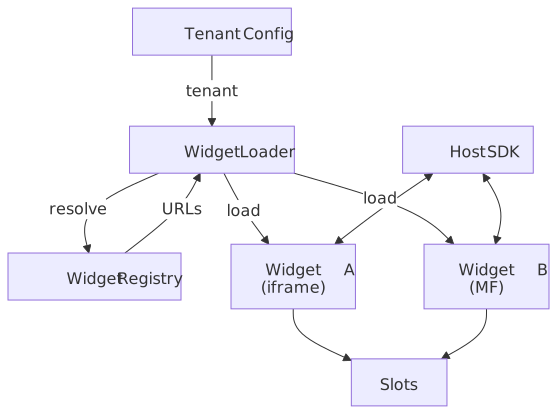
Abstract
A pluggable widget framework is a microkernel architecture: minimal core system + dynamically loaded extensions. The core decisions are:
-
Loading strategy: How does remote code enter the host?
- Module Federation 2.0: optimal sharing of host dependencies; works across Webpack, Rspack, and (with caveats) Vite; trusted code only
- SystemJS / import maps: standards-based, flexible, moderate performance
- iframe: complete isolation, highest security, communication overhead
-
Isolation boundary: How much can widgets affect the host?
- Same-origin (Module Federation): full DOM access, shared memory—trust required
- iframe sandbox: separate browsing context, postMessage only
- Shadow DOM: CSS isolation only, same JS context
- WASM sandbox (Figma model): isolated JS engine, strongest security
-
Extension points: Where can widgets appear?
- Contribution points: named slots in the UI that widgets register for
- Declarative via manifest: host reads manifest, renders widget in appropriate slot
-
Multi-tenancy: How do different tenants get different widgets?
- Tenant config service: maps tenant ID → enabled widget IDs
- Registry resolution: widget ID → implementation URL
- Feature flags: toggle widgets per tenant without redeployment
Key numbers (order-of-magnitude practitioner estimates — measure in your own environment):
| Aspect | Module Federation | iframe | WASM Sandbox |
|---|---|---|---|
| Load overhead | Tens of ms (shared deps) | ~100-200 ms (new context) | ~300-500 ms (engine init) |
| Memory per widget | Shared with host | Separate heap (~10-50 MB) | Separate (~5-20 MB) |
| Communication latency | Microseconds (in-process) | ~1-5 ms (postMessage) | Sub-ms to ~2 ms (WASM boundary) |
| Security | Same-origin trust | Strong isolation | Strongest isolation |
The Challenge
Why Build a Widget Framework?
Extensibility without deployments: Third parties add features without modifying host code. The VS Code marketplace lists tens of thousands of extensions (roughly 55k as of 2026, per third-party trackers1) — none of which the core team had to build, ship, or maintain.
Multi-tenant customization: Enterprise SaaS customers demand unique workflows. Widget A for Tenant X, Widget B for Tenant Y—without forking the codebase.
Ecosystem growth: A platform with extension capabilities attracts developers who build features you never considered.
Browser Constraints
Main thread budget: Loading and initializing widgets competes with the host application. A poorly designed loader blocks the UI during startup.
Memory limits: Each iframe creates a separate JavaScript heap. Loading 10 widgets as iframes can consume 100-500MB—problematic on mobile devices (50-100MB practical limit).
Network overhead: Fetching widget bundles from different origins means separate HTTP connections, no shared caching of common dependencies.
Security Requirements
Untrusted code execution: Third-party developers may write malicious or buggy code. Without isolation, a widget can:
- Access user credentials stored in localStorage
- Modify any DOM element, including login forms
- Make requests to any origin (CSRF)
- Crash the host application
Defense in depth:
| Threat | Mitigation |
|---|---|
| DOM manipulation | iframe sandbox, separate browsing context |
| CSS pollution | Shadow DOM, iframe |
| Data exfiltration | CSP, sandbox restrictions |
| CPU exhaustion | Web Worker isolation, timeout enforcement |
| Memory leaks | Widget lifecycle management, unload on deactivation |
Scale Factors
| Factor | Small Scale | Large Scale |
|---|---|---|
| Widgets loaded | 1-5 | 50-100 |
| Tenants | 1-10 | 10,000+ |
| Widget registry size | 10-20 widgets | 1,000+ widgets |
| Update frequency | Weekly | Continuous |
| Widget developers | Internal team | Third-party ecosystem |
Design Paths
Path 1: Webpack Module Federation
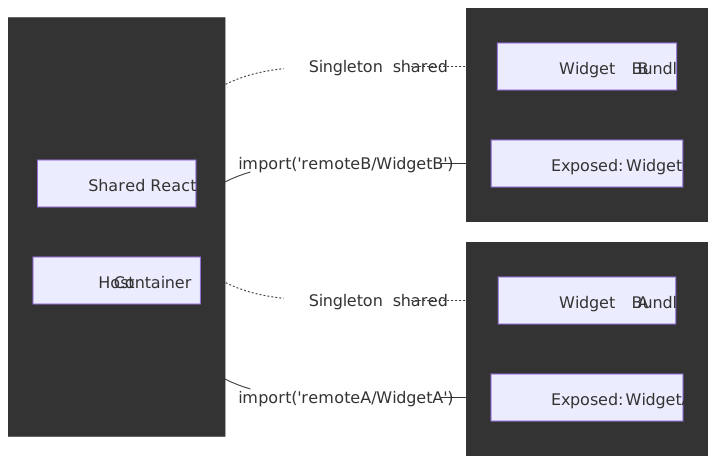
How it works:
Module Federation, originally introduced in Webpack 5, lets separate builds share code at runtime. The host declares remotes (external builds to consume) and shared dependencies (libraries to deduplicate). Module Federation 2.0 — stable since February 2026 and maintained by the ByteDance Web Infra team — decouples the runtime from any single bundler, with first-class plugins for Webpack, Rspack, Rsbuild, and a @module-federation/vite plugin (still maturing — ESM-only remotes, weaker dev-server HMR than the Webpack/Rspack variants).
const { ModuleFederationPlugin } = require("webpack").containermodule.exports = { // ... other config plugins: [ new ModuleFederationPlugin({ name: "host", remotes: { // Static remotes (known at build time) widgetA: "widgetA@https://cdn.example.com/widget-a/remoteEntry.js", // Dynamic remotes resolved at runtime widgetB: `promise new Promise(resolve => { const remoteUrl = window.__WIDGET_REGISTRY__["widgetB"]; const script = document.createElement("script"); script.src = remoteUrl; script.onload = () => resolve(window.widgetB); document.head.appendChild(script); })`, }, shared: { react: { singleton: true, requiredVersion: "^18.0.0" }, "react-dom": { singleton: true, requiredVersion: "^18.0.0" }, }, }), ],}const { ModuleFederationPlugin } = require("webpack").containermodule.exports = { plugins: [ new ModuleFederationPlugin({ name: "widgetA", filename: "remoteEntry.js", exposes: { "./Widget": "./src/Widget", // What this remote offers }, shared: { react: { singleton: true, requiredVersion: "^18.0.0" }, "react-dom": { singleton: true, requiredVersion: "^18.0.0" }, }, }), ],}Runtime loading:
import React, { Suspense, lazy } from "react";// Dynamic import of federated moduleconst WidgetA = lazy(() => import("widgetA/Widget"));export function WidgetSlot({ widgetId }: { widgetId: string }) { // In production: resolve widget ID to remote dynamically return ( <Suspense fallback={<WidgetSkeleton />}> <WidgetA /> </Suspense> );}Dependency sharing mechanics:
- Host starts, loads
remoteEntry.jsfor each remote - Remote entry registers available modules and shared dependencies
- When host imports a remote module, federation checks shared scope
- If compatible version exists, reuse; otherwise, load remote’s bundled copy
singleton: trueensures only one instance (critical for React context)
Best for:
- Trusted first-party widgets (internal teams)
- Micro-frontend architectures with shared design systems
- Performance-critical scenarios where bundle size matters
Device/network profile:
- Works well on: Desktop, fast networks, trusted widget sources
- Struggles on: Untrusted third-party code (no isolation), slow networks (remote entry overhead)
Implementation complexity:
| Aspect | Effort |
|---|---|
| Initial setup | High (webpack config complexity) |
| Adding new widgets | Low (configure remote URL) |
| Version management | Medium (shared version negotiation) |
| Security | Low (same-origin trust model) |
Real-world example:
ByteDance is the largest publicly-discussed Module Federation deployment: TikTok web, CapCut, Pico, and the ModernJS meta-framework all run on it, with a “shared services platform” that lets specialised teams ship slices of an app independently.2 In the wider ecosystem, the Module Federation 2.0 announcement tracks adopters across micro-frontend shells, design-system distribution, and white-labelled SaaS hosts.
Note
Earlier versions of this article cited Shopify Hydrogen as a Module Federation user. Hydrogen actually runs on Vite + React Router (formerly Remix) and does not use Module Federation — corrected April 2026.3
Trade-offs:
- Sharing common dependencies through
singleton: truecan meaningfully cut payload, but the actual savings depend on overlap between host and remote bundles — measure on your own builds rather than assuming a fixed percentage. - Same JavaScript context — widgets can access host globals, prototype-pollute, and read DOM state. Treat as same-origin trust.
- Vite and Rspack now have first-class support, but the upstream
@module-federation/viteplugin still trails the Webpack/Rspack experience for HMR and development ergonomics. - Shared-version mismatches surface as runtime errors. Configure
requiredVersionandstrictVersiondeliberately.
Caution
Module Federation provides no isolation. Widgets execute in the same origin with full DOM access. Use only for trusted code or combine with additional sandboxing.
Path 2: iframe Sandbox
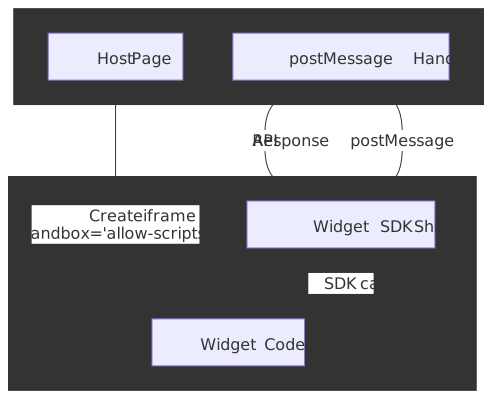
How it works:
The <iframe sandbox> attribute creates a separate browsing context with all flags off by default. A sandboxed iframe:
- Cannot execute scripts
- Cannot submit forms
- Cannot access parent DOM
- Cannot navigate the top-level browsing context
- Cannot use plugins
Capabilities are granted explicitly:
<iframe src="https://widget.example.com/widget-a" sandbox="allow-scripts allow-same-origin" allow="clipboard-read; clipboard-write" csp="script-src 'self'; style-src 'self' 'unsafe-inline'"></iframe>Sandbox attribute options:
| Attribute | Grants |
|---|---|
allow-scripts |
JavaScript execution |
allow-same-origin |
Treats content as same origin (dangerous with allow-scripts) |
allow-forms |
Form submission |
allow-popups |
Window.open(), target=“_blank” |
allow-modals |
alert(), confirm(), prompt() |
allow-top-navigation |
Navigate parent window |
Warning
Never combine allow-scripts and allow-same-origin when the iframe content is same-origin as the parent. Because the iframe is treated as same-origin, scripts inside it can reach into the parent DOM, find their own <iframe> element, and remove the sandbox attribute; on the next navigation the sandbox is gone.4 Cross-origin sandboxed iframes do not have this escape path (the same-origin policy still blocks parent DOM access), but the combination is widely flagged as a footgun and rejected by extension review tooling — host untrusted content on a separate origin.
Communication via postMessage:
interface WidgetMessage { type: string requestId: string payload: unknown}class WidgetBridge { private iframe: HTMLIFrameElement private pendingRequests = new Map<string, { resolve: Function; reject: Function }>() private trustedOrigin: string constructor(iframe: HTMLIFrameElement, trustedOrigin: string) { this.iframe = iframe this.trustedOrigin = trustedOrigin window.addEventListener("message", this.handleMessage) } private handleMessage = (event: MessageEvent<WidgetMessage>) => { // CRITICAL: Always validate origin if (event.origin !== this.trustedOrigin) return const { type, requestId, payload } = event.data if (type === "API_RESPONSE" && this.pendingRequests.has(requestId)) { const { resolve } = this.pendingRequests.get(requestId)! this.pendingRequests.delete(requestId) resolve(payload) } } async call(method: string, args: unknown[]): Promise<unknown> { const requestId = crypto.randomUUID() return new Promise((resolve, reject) => { this.pendingRequests.set(requestId, { resolve, reject }) this.iframe.contentWindow?.postMessage( { type: "API_CALL", requestId, method, args }, this.trustedOrigin, // CRITICAL: Specify target origin ) // Timeout to prevent hanging requests setTimeout(() => { if (this.pendingRequests.has(requestId)) { this.pendingRequests.delete(requestId) reject(new Error(`Widget call timed out: ${method}`)) } }, 5000) }) }}// Inside the iframe: SDK shim that talks to hostconst hostSDK = { async showNotification(message: string): Promise<void> { return callHost("showNotification", [message]) }, async getData(key: string): Promise<unknown> { return callHost("getData", [key]) },}function callHost(method: string, args: unknown[]): Promise<unknown> { const requestId = crypto.randomUUID() return new Promise((resolve) => { const handler = (event: MessageEvent) => { if (event.data.requestId === requestId && event.data.type === "API_RESPONSE") { window.removeEventListener("message", handler) resolve(event.data.payload) } } window.addEventListener("message", handler) window.parent.postMessage( { type: "API_CALL", requestId, method, args }, "*", // Widget doesn't know host origin; host validates on receive ) })}// Expose SDK to widget code;(window as any).hostSDK = hostSDKBest for:
- Untrusted third-party widgets
- Payment forms, authentication widgets (PCI/SOC2 compliance)
- Widgets that need strong isolation guarantees
Device/network profile:
- Works well on: All devices, any network (self-contained)
- Struggles on: Mobile (memory overhead), many simultaneous widgets
Implementation complexity:
| Aspect | Effort |
|---|---|
| Initial setup | Medium (iframe + postMessage) |
| Adding new widgets | Low (point to URL) |
| Performance tuning | High (message serialization overhead) |
| Security | Low (browser provides isolation) |
Real-world example:
Figma plugins use iframe for UI rendering combined with a WASM sandbox for document manipulation. The iframe displays the plugin UI; a separate QuickJS WASM sandbox runs the logic that reads/writes the Figma document.
Trade-offs:
- Strongest browser-native isolation
- Each iframe creates separate JS heap (10-50MB overhead)
- postMessage serialization adds 1-5ms latency per call
- No shared dependencies (duplicate React, etc.)
- Cross-origin communication requires careful origin validation
Path 3: Shadow DOM + Web Components
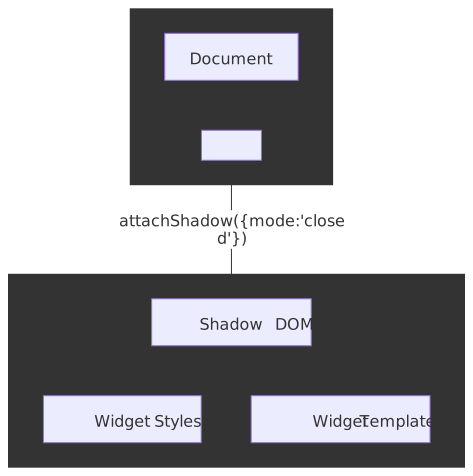
How it works:
Shadow DOM creates an encapsulated DOM subtree with its own style scope. Styles inside don’t leak out; external styles don’t leak in.
class WidgetContainer extends HTMLElement { private shadow: ShadowRoot constructor() { super() // 'closed' prevents external access to shadow root this.shadow = this.attachShadow({ mode: "closed" }) } async loadWidget(widgetUrl: string) { // Fetch widget bundle const response = await fetch(widgetUrl) const widgetCode = await response.text() // Create isolated style scope const style = document.createElement("style") style.textContent = await this.fetchWidgetStyles(widgetUrl) // Create widget container const container = document.createElement("div") container.className = "widget-root" this.shadow.appendChild(style) this.shadow.appendChild(container) // Execute widget code in this context // WARNING: No JS isolation—widget code runs in host context const widgetModule = new Function("container", "hostSDK", widgetCode) widgetModule(container, window.hostSDK) }}customElements.define("widget-container", WidgetContainer)CSS isolation guarantees:
- Widget styles scoped to shadow root
- Host styles don’t affect widget (unless using CSS custom properties)
- Widget cannot style host elements
::part()and CSS variables allow controlled customization
/* Widget internal styles (inside shadow DOM) */.button { /* This .button won't conflict with host's .button */ background: var(--widget-primary, blue); /* Customizable via CSS var */}/* Host can customize via CSS custom properties */widget-container { --widget-primary: red; /* Passes through shadow boundary */}Best for:
- Design system components with style encapsulation
- Trusted widgets that need CSS isolation but not JS isolation
- Web Components-based architectures
Device/network profile:
- Works well on: All modern browsers, any device
- Struggles on: Scenarios requiring JavaScript isolation
Implementation complexity:
| Aspect | Effort |
|---|---|
| Initial setup | Low (native browser API) |
| CSS isolation | Low (automatic) |
| JS isolation | None (same context) |
| Framework integration | Medium (React/Vue wrappers needed) |
Trade-offs:
- Lightweight: No separate heap or context
- CSS isolation is complete
- No JavaScript isolation—widgets can access globals, DOM, etc.
- Requires combining with other techniques for untrusted code
Path 4: WASM Sandbox (Figma Model)
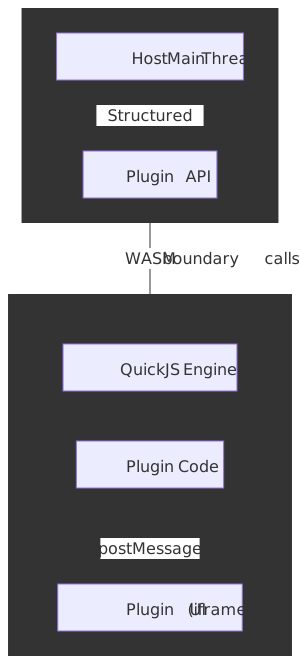
How it works:
Figma’s approach: compile a JavaScript engine (QuickJS, originally Duktape — Figma swapped engines while keeping the architecture) to WebAssembly. Plugin code runs inside this embedded JS engine on the host page’s main thread, completely isolated from the host’s JavaScript globals and DOM.5
Why QuickJS + WASM?
- No
eval: Running untrusted JS in the host page would normally requireeval()ornew Function(), both blocked by a strict CSP. QuickJS evaluates plugin source itself, inside the WASM module — no host-side dynamic code. - Capability-based security: A WASM module gets no I/O by default. Plugins reach the Figma document only through methods the host explicitly exposes on the sandboxed
figmaglobal; everything else (DOM,fetch, browser APIs) is unavailable until the host wires it throughpostMessageto the separate UI iframe. - Deterministic execution: Same code, same inputs produce the same outputs — important for a collaborative editor where every plugin invocation must apply the same transformation on every client.
import { newQuickJSWASMModule, QuickJSWASMModule, QuickJSContext } from "quickjs-emscripten"class PluginSandbox { private vm: QuickJSWASMModule private context: QuickJSContext async initialize() { this.vm = await newQuickJSWASMModule() this.context = this.vm.newContext() // Expose host API to sandbox this.exposeHostAPI() } private exposeHostAPI() { const hostAPI = this.context.newObject() // Expose showNotification const showNotification = this.context.newFunction("showNotification", (msgHandle) => { const message = this.context.getString(msgHandle) // Call actual host notification system window.hostNotifications.show(message) return this.context.undefined }) this.context.setProp(hostAPI, "showNotification", showNotification) this.context.setProp(this.context.global, "figma", hostAPI) showNotification.dispose() hostAPI.dispose() } async executePlugin(code: string): Promise<void> { const result = this.context.evalCode(code) if (result.error) { const error = this.context.dump(result.error) result.error.dispose() throw new Error(`Plugin error: ${JSON.stringify(error)}`) } result.value.dispose() } dispose() { this.context.dispose() this.vm.dispose() }}Two-part plugin architecture (Figma):
- UI iframe: Renders plugin UI using HTML/CSS. Communicates with logic via postMessage.
- WASM sandbox: Runs plugin logic. Has access to Figma document API. No DOM access.
This separation prevents plugins from both manipulating the document AND accessing arbitrary DOM.
Best for:
- Highest security requirements
- Platforms where plugins manipulate sensitive documents
- When you cannot trust third-party code at all
Device/network profile:
- Works well on: Desktop, modern mobile (WASM support universal since 2017)
- Struggles on: Low-memory devices (WASM instance overhead), very complex plugins (QuickJS slower than V8)
Implementation complexity:
| Aspect | Effort |
|---|---|
| Initial setup | Very High (custom sandbox) |
| API surface design | High (every API must be explicitly exposed) |
| Performance tuning | High (WASM boundary crossing) |
| Security | Low (isolation is architectural) |
Trade-offs:
- Strongest isolation (capability-based security)
- Hundreds of milliseconds of one-time initialisation overhead to instantiate the WASM module and warm the QuickJS context — amortise by reusing one sandbox across plugin invocations.
- QuickJS is interpreter-only, so it runs roughly 20-100× slower than V8 with JIT for compute-heavy code, and ~2-3× slower than V8 with the JIT disabled.6 Acceptable when document-API calls dominate; not acceptable for tight numeric loops.
- Complex to implement from scratch; reach for existing libraries like
quickjs-emscriptenor itsquickjs-emscripten-coresplit. - Plugin capabilities are exactly what you expose — no accidental surface. The flip side: every API addition is an irreversible commitment.
Decision Matrix
| Factor | Module Federation | iframe Sandbox | Shadow DOM | WASM Sandbox |
|---|---|---|---|---|
| JS Isolation | None | Strong | None | Strongest |
| CSS Isolation | None | Complete | Complete | N/A (no DOM) |
| Shared dependencies | Yes | No | Manual | No |
| Load time | Fast (50ms) | Medium (100-200ms) | Fast (10ms) | Slow (300-500ms) |
| Memory per widget | Shared | 10-50MB | Shared | 5-20MB |
| Communication | Direct | postMessage (1-5ms) | Direct | WASM boundary (~1ms) |
| Trust model | Same-origin | Untrusted | Same-origin | Untrusted |
| Browser support | Webpack only | Universal | Universal | Universal |
Decision Framework
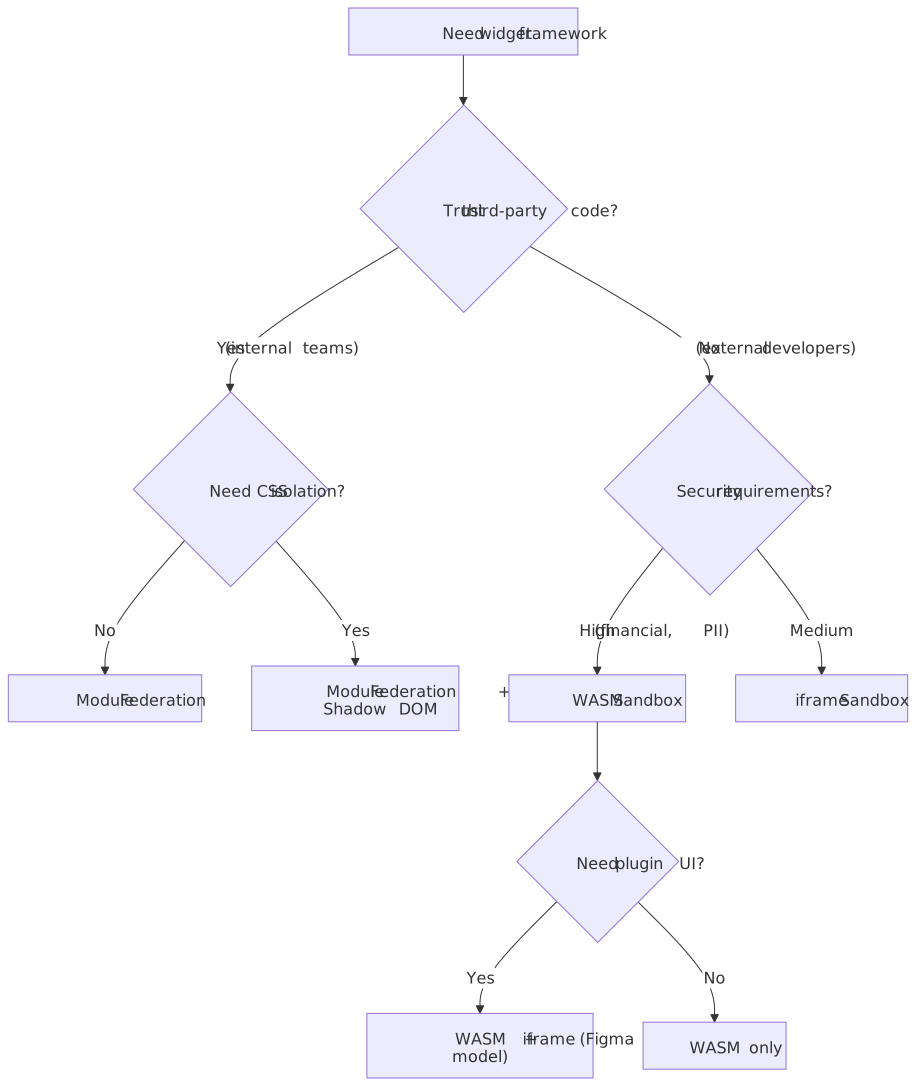
The Registry and Manifest
Manifest Structure
Every widget declares its capabilities, entry points, and requirements via a manifest file. This enables the host to:
- Validate widget compatibility before loading
- Render UI contributions without loading widget code
- Enforce permission boundaries
{ "$schema": "https://widgets.example.com/manifest.schema.json", "id": "com.example.video-player", "name": "Premium Video Player", "version": "2.1.0", "description": "HD video player with adaptive streaming", "author": { "name": "Example Corp", "email": "widgets@example.com", "url": "https://example.com" }, "host": { "minVersion": "3.0.0", "maxVersion": "4.x" }, "main": "./dist/widget.js", "styles": "./dist/widget.css", "remoteEntry": "./dist/remoteEntry.js", "contributes": { "slots": [ { "id": "content-area", "component": "VideoPlayer", "props": { "defaultQuality": "auto" } } ], "commands": [ { "id": "video-player.play", "title": "Play Video" }, { "id": "video-player.pause", "title": "Pause Video" } ], "settings": [ { "id": "video-player.autoplay", "type": "boolean", "default": false, "title": "Autoplay videos" } ] }, "permissions": ["storage.local", "network.fetch", "ui.notifications"], "dependencies": { "react": "^18.0.0", "react-dom": "^18.0.0" }, "activationEvents": ["onSlot:content-area", "onCommand:video-player.play"], "sandbox": { "type": "iframe", "allow": ["scripts", "forms"], "csp": "script-src 'self'; style-src 'self' 'unsafe-inline'" }}Key manifest fields:
| Field | Purpose |
|---|---|
id |
Globally unique identifier (reverse domain notation) |
host.minVersion |
Minimum host version for compatibility |
main |
Entry point for widget code |
remoteEntry |
Module Federation entry (if applicable) |
contributes.slots |
UI contribution points |
contributes.commands |
Registered commands |
permissions |
Required host capabilities |
activationEvents |
When to load the widget |
sandbox |
Isolation requirements |
Contribution Points (Slots)
Contribution points are named locations in the host UI where widgets can render content. The host declares available slots; widgets register for slots they want to fill.
interface Slot { id: string multiple: boolean // Can multiple widgets contribute? props: Record<string, unknown> // Props passed to widget}interface SlotContribution { widgetId: string slotId: string component: string priority: number}class SlotRegistry { private slots = new Map<string, Slot>() private contributions = new Map<string, SlotContribution[]>() registerSlot(slot: Slot) { this.slots.set(slot.id, slot) } registerContribution(contribution: SlotContribution) { const existing = this.contributions.get(contribution.slotId) || [] existing.push(contribution) existing.sort((a, b) => b.priority - a.priority) this.contributions.set(contribution.slotId, existing) } getContributionsForSlot(slotId: string): SlotContribution[] { const slot = this.slots.get(slotId) if (!slot) return [] const contributions = this.contributions.get(slotId) || [] return slot.multiple ? contributions : contributions.slice(0, 1) }}function ContributionPoint({ slotId }: { slotId: string }) { const contributions = useSlotContributions(slotId) return ( <div className="contribution-point" data-slot={slotId}> {contributions.map((contribution) => ( <WidgetRenderer key={contribution.widgetId} widgetId={contribution.widgetId} component={contribution.component} /> ))} </div> )}Slot patterns from VS Code:
| Slot Type | Example | Behavior |
|---|---|---|
viewContainer |
Sidebar panels | Multiple widgets, tabbed |
view |
Tree views | Single widget per view |
statusBarItem |
Status bar | Multiple, ordered by priority |
menu |
Context menus | Multiple, grouped |
Widget Registry
The registry is a service that maps widget IDs to their manifests and entry points. It handles:
- Widget discovery and search
- Version resolution
- Dependency validation
- URL resolution for loading
interface RegistryEntry { id: string manifest: WidgetManifest versions: { version: string url: string checksum: string publishedAt: Date }[]}interface ResolvedWidget { id: string version: string manifestUrl: string entryUrl: string checksum: string}class WidgetRegistry { private baseUrl: string private cache = new Map<string, RegistryEntry>() constructor(baseUrl: string) { this.baseUrl = baseUrl } async resolve(widgetId: string, versionConstraint: string = "latest"): Promise<ResolvedWidget> { // Fetch registry entry const entry = await this.fetchEntry(widgetId) // Resolve version constraint (semver) const version = this.resolveVersion(entry.versions, versionConstraint) if (!version) { throw new Error(`No version matching ${versionConstraint} for ${widgetId}`) } // Validate host compatibility const manifest = await this.fetchManifest(version.url) this.validateHostCompatibility(manifest) return { id: widgetId, version: version.version, manifestUrl: `${version.url}/manifest.json`, entryUrl: `${version.url}/${manifest.main}`, checksum: version.checksum, } } private async fetchEntry(widgetId: string): Promise<RegistryEntry> { if (this.cache.has(widgetId)) { return this.cache.get(widgetId)! } const response = await fetch(`${this.baseUrl}/widgets/${widgetId}`) if (!response.ok) { throw new Error(`Widget not found: ${widgetId}`) } const entry = await response.json() this.cache.set(widgetId, entry) return entry } private resolveVersion( versions: RegistryEntry["versions"], constraint: string, ): RegistryEntry["versions"][0] | undefined { if (constraint === "latest") { return versions[0] // Assumes sorted by version desc } // Semver matching return versions.find((v) => satisfies(v.version, constraint)) } private validateHostCompatibility(manifest: WidgetManifest) { const hostVersion = getHostVersion() const { minVersion, maxVersion } = manifest.host if (minVersion && !gte(hostVersion, minVersion)) { throw new Error(`Widget requires host >= ${minVersion}`) } if (maxVersion && !satisfies(hostVersion, maxVersion)) { throw new Error(`Widget incompatible with host ${hostVersion}`) } }}Registry API design:
GET /widgets # List all widgets (paginated)GET /widgets/{id} # Get widget metadataGET /widgets/{id}/versions # List versionsGET /widgets/{id}@{version} # Get specific versionPOST /widgets # Publish new widget (authenticated)DELETE /widgets/{id}@{version} # Unpublish version (admin)Host SDK (Extension API)
API Contract
The host exposes a controlled API surface that widgets use to interact with the system. This creates a stable contract and security boundary.
interface HostSDK { // Lifecycle readonly version: string onActivate(callback: () => void): Disposable onDeactivate(callback: () => void): Disposable // UI showNotification(options: NotificationOptions): Promise<void> showModal(options: ModalOptions): Promise<ModalResult> registerCommand(id: string, handler: CommandHandler): Disposable // Data getData<T>(key: string): Promise<T | undefined> setData<T>(key: string, value: T): Promise<void> subscribeToData<T>(key: string, callback: (value: T) => void): Disposable // Storage (widget-scoped) storage: { get<T>(key: string): Promise<T | undefined> set<T>(key: string, value: T): Promise<void> delete(key: string): Promise<void> } // Network (proxied through host) fetch(url: string, options?: RequestInit): Promise<Response> // Events onEvent(eventType: string, handler: EventHandler): Disposable emitEvent(eventType: string, payload: unknown): void}interface Disposable { dispose(): void}interface NotificationOptions { type: "info" | "warning" | "error" message: string duration?: number actions?: { label: string; action: () => void }[]}SDK Implementation for iframe Widgets
class IframeSDKHost { private iframe: HTMLIFrameElement private widgetId: string private handlers = new Map<string, Function>() constructor(iframe: HTMLIFrameElement, widgetId: string) { this.iframe = iframe this.widgetId = widgetId window.addEventListener("message", this.handleMessage) } private handleMessage = async (event: MessageEvent) => { // Validate origin matches expected widget origin if (!this.isValidOrigin(event.origin)) return const { type, requestId, method, args } = event.data if (type !== "SDK_CALL") return try { const result = await this.executeMethod(method, args) this.respond(requestId, { success: true, result }) } catch (error) { this.respond(requestId, { success: false, error: String(error) }) } } private async executeMethod(method: string, args: unknown[]): Promise<unknown> { // Permission check const permission = this.getRequiredPermission(method) if (permission && !this.hasPermission(permission)) { throw new Error(`Permission denied: ${permission}`) } switch (method) { case "showNotification": return this.showNotification(args[0] as NotificationOptions) case "getData": return this.getData(args[0] as string) case "setData": return this.setData(args[0] as string, args[1]) case "storage.get": return this.widgetStorage.get(this.widgetId, args[0] as string) case "fetch": // Proxy fetch to enforce CORS and CSP return this.proxyFetch(args[0] as string, args[1] as RequestInit) default: throw new Error(`Unknown method: ${method}`) } } private respond(requestId: string, response: unknown) { this.iframe.contentWindow?.postMessage( { type: "SDK_RESPONSE", requestId, ...response }, "*", // iframe origin already validated on receive ) } private getRequiredPermission(method: string): string | undefined { const permissionMap: Record<string, string> = { showNotification: "ui.notifications", fetch: "network.fetch", "storage.get": "storage.local", "storage.set": "storage.local", } return permissionMap[method] }}SDK Shim for Widget Side
class WidgetSDK implements HostSDK { private pendingRequests = new Map< string, { resolve: (value: unknown) => void reject: (error: Error) => void } >() constructor() { window.addEventListener("message", this.handleResponse) } private handleResponse = (event: MessageEvent) => { const { type, requestId, success, result, error } = event.data if (type !== "SDK_RESPONSE") return const pending = this.pendingRequests.get(requestId) if (!pending) return this.pendingRequests.delete(requestId) if (success) { pending.resolve(result) } else { pending.reject(new Error(error)) } } private call<T>(method: string, args: unknown[] = []): Promise<T> { return new Promise((resolve, reject) => { const requestId = crypto.randomUUID() this.pendingRequests.set(requestId, { resolve: resolve as any, reject }) window.parent.postMessage({ type: "SDK_CALL", requestId, method, args }, "*") // Timeout after 10 seconds setTimeout(() => { if (this.pendingRequests.has(requestId)) { this.pendingRequests.delete(requestId) reject(new Error(`SDK call timeout: ${method}`)) } }, 10000) }) } // Public API implementation get version(): string { return "1.0.0" } async showNotification(options: NotificationOptions): Promise<void> { return this.call("showNotification", [options]) } async getData<T>(key: string): Promise<T | undefined> { return this.call("getData", [key]) } storage = { get: <T>(key: string) => this.call<T>("storage.get", [key]), set: <T>(key: string, value: T) => this.call<void>("storage.set", [key, value]), delete: (key: string) => this.call<void>("storage.delete", [key]), } // ... other methods}// Export singletonexport const hostSDK = new WidgetSDK()Multi-Tenant Orchestration
Tenant Configuration Resolution
The tenant config service maps tenant identifiers to their widget configurations. This enables per-tenant customization without code changes.
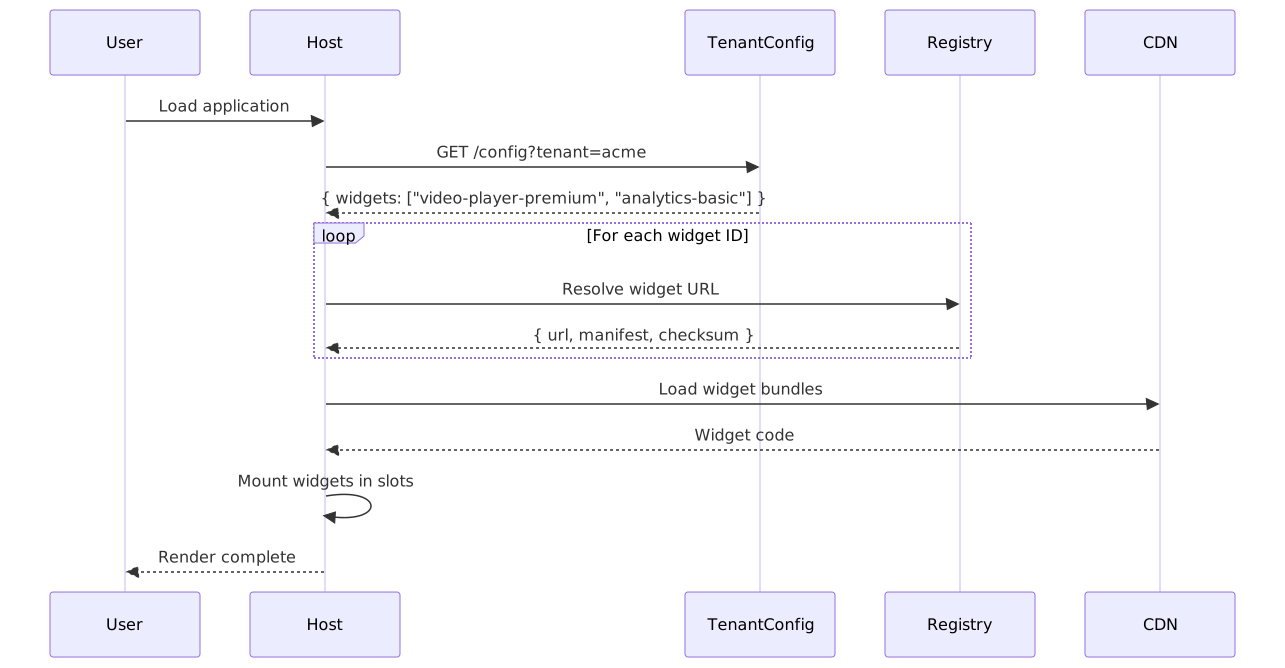
interface TenantWidgetConfig { widgetId: string version?: string // Optional: defaults to "latest" slot: string config?: Record<string, unknown> // Widget-specific config enabled: boolean}interface TenantConfig { tenantId: string widgets: TenantWidgetConfig[] featureFlags: Record<string, boolean> theme?: ThemeConfig}class TenantConfigService { private configCache = new Map<string, TenantConfig>() private baseUrl: string constructor(baseUrl: string) { this.baseUrl = baseUrl } async getConfig(tenantId: string): Promise<TenantConfig> { // Check cache first if (this.configCache.has(tenantId)) { return this.configCache.get(tenantId)! } const response = await fetch(`${this.baseUrl}/tenants/${tenantId}/config`) if (!response.ok) { // Fall back to default config return this.getDefaultConfig(tenantId) } const config = await response.json() this.configCache.set(tenantId, config) return config } private getDefaultConfig(tenantId: string): TenantConfig { return { tenantId, widgets: [], // No widgets by default featureFlags: {}, } } async refreshConfig(tenantId: string): Promise<TenantConfig> { this.configCache.delete(tenantId) return this.getConfig(tenantId) }}Widget Loader Orchestration
interface LoadedWidget { id: string version: string slot: string instance: WidgetInstance state: "loading" | "active" | "error" | "inactive"}class WidgetOrchestrator { private tenantConfig: TenantConfigService private registry: WidgetRegistry private loadedWidgets = new Map<string, LoadedWidget>() private slotRegistry: SlotRegistry async initialize(tenantId: string) { // 1. Fetch tenant configuration const config = await this.tenantConfig.getConfig(tenantId) // 2. Filter enabled widgets const enabledWidgets = config.widgets.filter((w) => w.enabled) // 3. Resolve all widgets in parallel const resolutions = await Promise.allSettled( enabledWidgets.map((w) => this.registry.resolve(w.widgetId, w.version)), ) // 4. Load successfully resolved widgets for (let i = 0; i < resolutions.length; i++) { const resolution = resolutions[i] const widgetConfig = enabledWidgets[i] if (resolution.status === "fulfilled") { await this.loadWidget(resolution.value, widgetConfig) } else { console.error(`Failed to resolve ${widgetConfig.widgetId}:`, resolution.reason) // Continue loading other widgets } } } private async loadWidget(resolved: ResolvedWidget, config: TenantWidgetConfig) { const loadedWidget: LoadedWidget = { id: resolved.id, version: resolved.version, slot: config.slot, instance: null!, state: "loading", } this.loadedWidgets.set(resolved.id, loadedWidget) try { // Fetch manifest to determine loading strategy const manifest = await this.fetchManifest(resolved.manifestUrl) // Load based on sandbox type const instance = await this.createWidgetInstance(manifest, resolved, config) loadedWidget.instance = instance loadedWidget.state = "active" // Register contribution points this.registerContributions(manifest, resolved.id) } catch (error) { loadedWidget.state = "error" console.error(`Failed to load widget ${resolved.id}:`, error) } } private async createWidgetInstance( manifest: WidgetManifest, resolved: ResolvedWidget, config: TenantWidgetConfig, ): Promise<WidgetInstance> { const sandboxType = manifest.sandbox?.type || "none" switch (sandboxType) { case "iframe": return this.createIframeWidget(resolved, manifest, config) case "shadow-dom": return this.createShadowDomWidget(resolved, manifest, config) case "wasm": return this.createWasmWidget(resolved, manifest, config) case "none": default: return this.createFederatedWidget(resolved, manifest, config) } } private async createIframeWidget( resolved: ResolvedWidget, manifest: WidgetManifest, config: TenantWidgetConfig, ): Promise<IframeWidgetInstance> { const iframe = document.createElement("iframe") // Apply sandbox restrictions const sandbox = manifest.sandbox! iframe.sandbox.add(...sandbox.allow.map((a) => `allow-${a}`)) // Set CSP via attribute (embedded enforcement) if (sandbox.csp) { iframe.setAttribute("csp", sandbox.csp) } iframe.src = resolved.entryUrl return new IframeWidgetInstance(iframe, resolved.id, config.config) } async unloadWidget(widgetId: string) { const widget = this.loadedWidgets.get(widgetId) if (!widget) return widget.state = "inactive" // Cleanup instance await widget.instance.dispose() // Remove contributions this.slotRegistry.removeContributions(widgetId) this.loadedWidgets.delete(widgetId) }}Feature Flag Integration
interface FeatureFlagService { isEnabled(flag: string, context: FlagContext): boolean getVariant<T>(flag: string, context: FlagContext): T | undefined}interface FlagContext { tenantId: string userId?: string environment: "production" | "staging" | "development"}class WidgetFeatureFlags { private flags: FeatureFlagService isWidgetEnabled(widgetId: string, tenantConfig: TenantWidgetConfig, context: FlagContext): boolean { // 1. Check tenant config first if (!tenantConfig.enabled) return false // 2. Check feature flag override const flagKey = `widget.${widgetId}.enabled` if (this.flags.isEnabled(flagKey, context) === false) { return false } // 3. Check rollout percentage const rolloutFlag = `widget.${widgetId}.rollout` const rollout = this.flags.getVariant<number>(rolloutFlag, context) if (rollout !== undefined) { const userHash = this.hashUser(context.userId || context.tenantId) return userHash < rollout } return true } private hashUser(userId: string): number { // Deterministic hash for consistent experience let hash = 0 for (let i = 0; i < userId.length; i++) { hash = (hash << 5) - hash + userId.charCodeAt(i) hash |= 0 } return Math.abs(hash) % 100 }}Browser Constraints
Main Thread Budget
Widget loading competes with the host application for main thread time. Poor loading strategies cause jank.
Loading waterfall (problematic):
[Host init]--[Fetch config]--[Fetch widget A]--[Parse A]--[Fetch widget B]--[Parse B] | [First paint]Optimized loading:
[Host init]--[Fetch config]--[Render host skeleton] | ├──[Fetch A]──[Parse A] └──[Fetch B]──[Parse B] | [Progressive paint]async function loadWidgetsOptimized(widgetConfigs: TenantWidgetConfig[]) { // 1. Render skeleton immediately renderSkeletons(widgetConfigs) // 2. Start all fetches in parallel const fetchPromises = widgetConfigs.map((config) => fetchWidgetBundle(config.widgetId)) // 3. Process widgets as they complete (not waiting for all) for await (const result of raceSettled(fetchPromises)) { if (result.status === "fulfilled") { // Yield to main thread between widget initializations await yieldToMain() await initializeWidget(result.value) } }}function yieldToMain(): Promise<void> { return new Promise((resolve) => { if ("scheduler" in window && "yield" in (window as any).scheduler) { ;(window as any).scheduler.yield().then(resolve) } else { setTimeout(resolve, 0) } })}async function* raceSettled<T>(promises: Promise<T>[]): AsyncGenerator<PromiseSettledResult<T>> { const remaining = new Set(promises.map((p, i) => i)) while (remaining.size > 0) { const results = await Promise.race( Array.from(remaining).map(async (i) => { try { const value = await promises[i] return { index: i, status: "fulfilled" as const, value } } catch (reason) { return { index: i, status: "rejected" as const, reason } } }), ) remaining.delete(results.index) yield results.status === "fulfilled" ? { status: "fulfilled", value: results.value } : { status: "rejected", reason: results.reason } }}scheduler.yield() ships in Chromium and in Firefox 142+, but Safari has not implemented the Prioritized Task Scheduling API as of 2026-Q2 — so the setTimeout(0) fallback above still matters in production rather than being a defensive nicety.7
Memory Limits
| Device Type | Practical JS Heap Limit | Widget Budget |
|---|---|---|
| Low-end mobile | 50-100MB | 5-10MB per widget |
| Mid-range mobile | 200-300MB | 20-30MB per widget |
| Desktop | 500MB-1GB | 50-100MB per widget |
Memory management strategies:
class WidgetMemoryManager { private readonly maxTotalMemory: number private readonly maxWidgetMemory: number private activeWidgets = new Map<string, WidgetMemoryStats>() constructor(config: { maxTotalMemory: number; maxWidgetMemory: number }) { this.maxTotalMemory = config.maxTotalMemory this.maxWidgetMemory = config.maxWidgetMemory // Monitor memory pressure if ("memory" in performance) { this.startMemoryMonitoring() } } canLoadWidget(estimatedMemory: number): boolean { const currentUsage = this.getTotalUsage() return currentUsage + estimatedMemory <= this.maxTotalMemory } onWidgetOverMemory(widgetId: string) { console.warn(`Widget ${widgetId} exceeded memory limit`) // Option 1: Unload widget // this.unloadWidget(widgetId); // Option 2: Notify widget to reduce memory this.notifyWidget(widgetId, "MEMORY_PRESSURE") } private startMemoryMonitoring() { setInterval(() => { const memory = (performance as any).memory const usedRatio = memory.usedJSHeapSize / memory.jsHeapSizeLimit if (usedRatio > 0.9) { // Critical memory pressure this.handleMemoryPressure("critical") } else if (usedRatio > 0.7) { // Warning level this.handleMemoryPressure("warning") } }, 5000) } private handleMemoryPressure(level: "warning" | "critical") { // Unload inactive widgets first for (const [widgetId, stats] of this.activeWidgets) { if (!stats.visible && level === "critical") { this.unloadWidget(widgetId) } } }}Storage Quotas
Widgets need persistent storage but share quotas with the host. Per MDN’s storage quotas reference:
| Storage Type | Quota | Widget Strategy |
|---|---|---|
| localStorage | ~5 MiB per origin (synchronous, blocks the main thread) | Avoid; use IndexedDB |
| IndexedDB | Up to ~60% of disk in Chrome/Edge; ~10% best-effort and 50% persistent in Firefox; ~60% in Safari (browser tab) | Namespace per widget; request persist |
| Cache API | Shares the same per-origin quota as IndexedDB (counted together by the Storage API) | Careful eviction; budget against quota |
class WidgetStorageManager { private db: IDBDatabase | null = null private readonly storeName = "widget_storage" async initialize() { this.db = await this.openDatabase() } private openDatabase(): Promise<IDBDatabase> { return new Promise((resolve, reject) => { const request = indexedDB.open("widget_host", 1) request.onerror = () => reject(request.error) request.onsuccess = () => resolve(request.result) request.onupgradeneeded = (event) => { const db = (event.target as IDBOpenDBRequest).result if (!db.objectStoreNames.contains(this.storeName)) { db.createObjectStore(this.storeName, { keyPath: "key" }) } } }) } async get<T>(widgetId: string, key: string): Promise<T | undefined> { const compositeKey = `${widgetId}:${key}` return this.dbGet(compositeKey) } async set<T>(widgetId: string, key: string, value: T): Promise<void> { const compositeKey = `${widgetId}:${key}` // Check quota before write const estimate = await navigator.storage.estimate() const usageRatio = (estimate.usage || 0) / (estimate.quota || 1) if (usageRatio > 0.9) { // Evict old widget data await this.evictOldData(widgetId) } return this.dbSet(compositeKey, value) } async getWidgetUsage(widgetId: string): Promise<number> { // Estimate storage used by this widget const keys = await this.getWidgetKeys(widgetId) let totalSize = 0 for (const key of keys) { const value = await this.dbGet(key) totalSize += new Blob([JSON.stringify(value)]).size } return totalSize }}Real-World Implementations
VS Code Extensions
Context: Desktop code editor with tens of thousands of extensions on the marketplace (~55k as of early 20261).
Architecture:
- Extensions run in a separate Extension Host process (Node.js).
- UI extensions use webviews (a Chromium iframe with a restricted API surface).
- Communication is IPC (Inter-Process Communication) between the renderer and the extension host.
Key design decisions:
| Decision | Rationale |
|---|---|
| Separate process | Misbehaving extensions can’t crash the editor. |
| Activation events | Lazy loading — extensions load only when needed; since VS Code 1.74+, most events are auto-derived from contributes. |
| Contribution points | Declarative UI integration via the contributes manifest section. |
| Sandboxed webviews | HTML panels isolated from VS Code’s DOM; communication strictly via postMessage. |
Manifest example:
{ "name": "my-extension", "activationEvents": ["onLanguage:javascript"], "contributes": { "commands": [{ "command": "ext.doThing", "title": "Do Thing" }], "menus": { "editor/context": [{ "command": "ext.doThing" }] } }}Outcome: Extensions enhance functionality without affecting editor stability. Process isolation means extension crashes are recoverable.
Figma Plugins
Context: Web-based design tool; plugins manipulate design documents.
Architecture:
- UI layer: Standard iframe for plugin UI
- Logic layer: QuickJS JavaScript engine compiled to WASM
- Document access only through controlled API
Why WASM sandbox?
- Cannot use
eval()(security) - Plugins must not access Figma’s DOM
- Need deterministic execution for collaborative editing
Two-process model:
Plugin UI (iframe) ←→ postMessage ←→ Plugin Logic (WASM) ←→ Figma API ←→ DocumentSecurity properties:
- Plugin cannot access browser APIs directly
- Plugin cannot manipulate Figma’s UI
- All document operations go through audited API
- Plugin code runs in capability-constrained sandbox
Trade-off accepted: QuickJS is interpreter-only — roughly 20-100× slower than V8 with JIT for compute-heavy code, ~2-3× slower than V8 with the JIT disabled.6 Acceptable here because document API calls dominate, not raw JavaScript execution.
Source: How Figma Built the Plugin System
Shopify Embedded Apps
Context: E-commerce platform; apps extend merchant admin functionality.
Architecture:
- Apps run in an iframe embedded in the Shopify admin.
- Communication uses the App Bridge runtime — modern apps load it from Shopify’s CDN, which auto-initialises a global
shopifyobject. The previouscreateAppfactory from@shopify/app-bridgeis deprecated. - OAuth for authentication; session tokens (JWT) for backend API access.
App Bridge today:
<!-- Pulled from Shopify's CDN; auto-initialises window.shopify --><meta name="shopify-api-key" content="%SHOPIFY_API_KEY%" /><script src="https://cdn.shopify.com/shopifycloud/app-bridge.js"></script>await shopify.toast.show("Order updated", { duration: 5000 })shopify.navigation.navigate("/orders")const sessionToken = await shopify.idToken()await fetch("/api/orders", { headers: { Authorization: `Bearer ${sessionToken}` },})In React, the useAppBridge hook returns the same shopify global; UI primitives (<s-modal>, <s-app-window>, etc.) ship as web components rendered by Shopify’s chrome, not the embedded iframe.
Multi-tenancy model:
- Each Shopify store is a tenant.
- Apps install per-store with store-specific credentials.
- App Bridge derives the shop context from the session token on every request.
Security properties:
- Apps cannot access other stores’ data.
- OAuth scopes limit API access per app.
- iframe sandbox prevents DOM manipulation against the admin shell.
Salesforce Lightning Web Components
Context: Enterprise CRM with third-party components from multiple ISVs.
Architecture:
- Components run in Lightning Web Security (LWS) virtual environment
- Namespace isolation:
c-myComponentvspartner-theirComponent - Shadow DOM for style encapsulation
Lightning Web Security:
┌─────────────────────────────────────────┐│ Salesforce Page │├─────────────────────────────────────────┤│ ┌──────────────┐ ┌──────────────┐ ││ │ Namespace A │ │ Namespace B │ ││ │ (Virtual Env)│ │ (Virtual Env)│ ││ │ Component1 │ │ Component2 │ ││ └──────────────┘ └──────────────┘ │└─────────────────────────────────────────┘Security properties:
- Components in different namespaces cannot access each other’s resources
- Distorted global objects prevent prototype pollution
- API calls go through Salesforce proxy with permission checks
Trade-off: Slightly different JavaScript semantics (global object distortion). Most code works unchanged; edge cases require adaptation.
Source: Lightning Web Security Architecture
Common Pitfalls
1. Loading All Widgets Eagerly
The mistake: Fetching and initializing all widgets on page load regardless of visibility.
Example: Dashboard with 20 widgets; user only sees 4 above the fold. Loading all 20 blocks main thread for 2+ seconds.
Why it happens: Simpler implementation; deferred loading requires tracking visibility.
Solution:
class LazyWidgetLoader { private observer: IntersectionObserver private pendingWidgets = new Map<Element, string>() constructor() { this.observer = new IntersectionObserver( this.handleIntersection, { rootMargin: "100px" }, // Preload slightly before visible ) } registerSlot(element: Element, widgetId: string) { this.pendingWidgets.set(element, widgetId) this.observer.observe(element) } private handleIntersection: IntersectionObserverCallback = (entries) => { for (const entry of entries) { if (entry.isIntersecting) { const widgetId = this.pendingWidgets.get(entry.target) if (widgetId) { this.loadWidget(widgetId, entry.target) this.pendingWidgets.delete(entry.target) this.observer.unobserve(entry.target) } } } }}2. Missing Origin Validation in postMessage
The mistake: Handling all messages without checking origin.
// DANGEROUS: No origin checkwindow.addEventListener("message", (event) => { if (event.data.type === "WIDGET_REQUEST") { handleWidgetRequest(event.data) // Attacker can send messages too }})Impact: Attacker opens your site in iframe, sends malicious messages, triggers actions with user’s credentials.
Solution:
const TRUSTED_ORIGINS = new Set(["https://widget1.example.com", "https://widget2.example.com"])window.addEventListener("message", (event) => { // CRITICAL: Always validate origin if (!TRUSTED_ORIGINS.has(event.origin)) { console.warn("Rejected message from untrusted origin:", event.origin) return } handleWidgetRequest(event.data)})3. Shared Dependency Version Conflicts
The mistake: Host uses React 18, widget bundled with React 17, both load.
Impact: Two React instances cause context mismatches, hooks fail mysteriously.
Solution:
// webpack.config.js (host)new ModuleFederationPlugin({ shared: { react: { singleton: true, requiredVersion: "^18.0.0", strictVersion: true, // Fail if incompatible }, },})Also validate in registry:
function validateWidgetCompatibility(manifest: WidgetManifest) { const hostReact = "18.2.0" const widgetReact = manifest.dependencies?.react if (widgetReact && !satisfies(hostReact, widgetReact)) { throw new Error(`Widget requires React ${widgetReact}, host has ${hostReact}`) }}4. No Widget Lifecycle Management
The mistake: Loading widgets but never unloading them when no longer needed.
Impact: Memory grows unbounded; 50 widgets loaded over time, only 5 visible.
Solution:
interface WidgetInstance { activate(): Promise<void> deactivate(): Promise<void> dispose(): Promise<void>}class WidgetLifecycleManager { private activeWidgets = new Map<string, WidgetInstance>() private visibleWidgets = new Set<string>() async handleVisibilityChange(widgetId: string, visible: boolean) { const widget = this.activeWidgets.get(widgetId) if (!widget) return if (visible) { this.visibleWidgets.add(widgetId) await widget.activate() } else { this.visibleWidgets.delete(widgetId) await widget.deactivate() // Unload after period of invisibility setTimeout(() => { if (!this.visibleWidgets.has(widgetId)) { this.unloadWidget(widgetId) } }, 60000) // 1 minute } } private async unloadWidget(widgetId: string) { const widget = this.activeWidgets.get(widgetId) if (widget) { await widget.dispose() this.activeWidgets.delete(widgetId) } }}5. Blocking Main Thread During Widget Init
The mistake: Synchronously parsing and executing large widget bundles.
Impact: UI freezes during widget load; user sees blank screen.
Solution:
async function initializeWidgetAsync(code: string, container: Element) { // Parse in chunks using requestIdleCallback const chunks = splitIntoChunks(code, 50000) // 50KB chunks for (const chunk of chunks) { await new Promise<void>((resolve) => { requestIdleCallback( () => { // Parse chunk parseChunk(chunk) resolve() }, { timeout: 100 }, ) }) } // Initialize widget after parsing await new Promise<void>((resolve) => { requestAnimationFrame(() => { mountWidget(container) resolve() }) })}Conclusion
Building a multi-tenant pluggable widget framework requires navigating three axes:
- Security vs Performance: iframe/WASM isolation is safest but has overhead; Module Federation is fast but trusts widgets
- Flexibility vs Complexity: More extension points enable richer widgets but increase API surface to maintain
- Per-tenant customization vs Operational simplicity: Feature flags add deployment complexity but enable fine-grained control
Recommended starting points by use case:
| Scenario | Isolation | Loading | Registry |
|---|---|---|---|
| Internal micro-frontends | Module Federation | Module Federation | npm/internal registry |
| Third-party app marketplace | iframe + postMessage | Dynamic script | Custom registry + OAuth |
| High-security (financial) | WASM sandbox | Dynamic fetch | Signed manifests |
| Design tool plugins | WASM (logic) + iframe (UI) | Controlled loader | Curated store |
Key design decisions to make early:
- What’s your trust model? Internal-only vs open marketplace changes everything
- What API surface will you support? Once published, it’s hard to change
- How will you version the host SDK? Widgets depend on stability
- How do you handle widget failures? Graceful degradation vs hard failure
The frameworks that succeed (VS Code, Figma, Shopify) share a common pattern: minimal core, maximal extensibility through well-defined contribution points, and strong isolation boundaries. Start with clear boundaries; relaxing them later is easier than adding them.
Appendix
Prerequisites
- Understanding of JavaScript module systems (ES modules, CommonJS)
- Familiarity with webpack or Vite bundling
- Knowledge of browser security model (same-origin policy, CSP)
- Basic understanding of iframe and postMessage APIs
Terminology
| Term | Definition |
|---|---|
| Module Federation | Webpack 5 feature allowing multiple builds to share code at runtime |
| Contribution Point | Named extension point in host UI where widgets can render |
| Manifest | JSON file declaring widget metadata, capabilities, and requirements |
| Activation Event | Trigger that causes a widget to load (e.g., slot visible, command invoked) |
| Sandbox | Restricted execution environment limiting widget capabilities |
| postMessage | Browser API for cross-origin communication between windows/iframes |
| Shadow DOM | Browser API for encapsulated DOM subtree with style isolation |
| WASM | WebAssembly; binary instruction format for sandboxed execution |
| QuickJS | Lightweight JavaScript engine; can be compiled to WASM for sandboxing |
| Singleton | Shared dependency constraint ensuring only one instance loads |
Summary
- Widget frameworks follow the microkernel pattern: minimal core + pluggable extensions
- Isolation strategies trade security for performance (iframe > WASM > Shadow DOM > Module Federation)
- Manifests declare capabilities declaratively; host renders contributions without loading all code
- Multi-tenancy uses config service + feature flags to determine per-tenant widget sets
- Registry resolves widget IDs to versioned URLs with compatibility validation
- Host SDK provides controlled API surface; widgets cannot access arbitrary host internals
- Memory and main thread budgets constrain how many widgets can load simultaneously
References
Module Federation:
- Webpack Module Federation Documentation — original Webpack 5 docs
- Module Federation 2.0 announcement — stable release, cross-bundler runtime
- Rspack: Module Federation guide — first-class Rspack integration
- Syntax #860 — Module Federation Microfrontends with ByteDance’s Zack Jackson (transcript) — production usage notes
Browser Sandboxing:
- WHATWG HTML —
iframesandboxattribute — normative spec <iframe>sandbox— MDN — author-facing reference- Content Security Policy — MDN — CSP documentation
- Playing safely in sandboxed iframes — web.dev — security guidance
Shadow DOM:
- Using Shadow DOM — MDN — API reference
- DOM Living Standard — Shadow tree — normative spec
Production Implementations:
- VS Code Extension Host — architecture documentation
- VS Code Activation Events — auto-derivation since 1.74
- How Figma built the plugin system — WASM sandbox rationale
- How plugins run — Figma developer docs — current main-thread + UI-iframe model
- Shopify App Bridge migration guide — modern CDN script + global
shopify - Salesforce Lightning Web Security — namespace isolation
Browser platform APIs:
- Storage quotas and eviction criteria — MDN — quota numbers per browser
Scheduler.yield()— MDN — current support matrix- Use scheduler.yield() to break up long tasks — Chrome for Developers — practical guidance
- Window.postMessage — MDN — API reference
Multi-tenancy:
- ConfigCat — multi-tenant feature flags — feature flag patterns
- AWS AppConfig multi-tenant configuration — config service architecture
Footnotes
-
Marketplace counts are not officially published; the DEV Community 2026 guide and similar trackers cite ~55k as of early 2026. ↩ ↩2
-
Syntax podcast — Module Federation Microfrontends with ByteDance’s Zack Jackson, 2024. ↩
-
Best-in-class developer experience with Vite and Hydrogen — Shopify Engineering, 2024. ↩
-
How plugins run — Figma developer docs and How we built the Figma plugin system. ↩
-
Practitioner benchmarks consistently land in the 20-100× range for compute-heavy workloads; see QuickJS benchmark thread (godotjs/javascript#16). The exact ratio depends heavily on workload — startup-bound or string-heavy code is much closer. ↩ ↩2
-
Scheduler: yield()— MDN and Use scheduler.yield() to break up long tasks — Chrome for Developers. ↩