Design an Email System
A system design for a Gmail- or Outlook-scale email service. This article walks through the four interlocking problems email infrastructure has to solve at internet scale — reliable SMTP delivery, sender authentication (SPF + DKIM + DMARC), spam filtering at 99%+ accuracy with a sub-0.1% false-positive rate, and sub-second full-text search over years of message history — and shows the trade-offs that fall out of each.
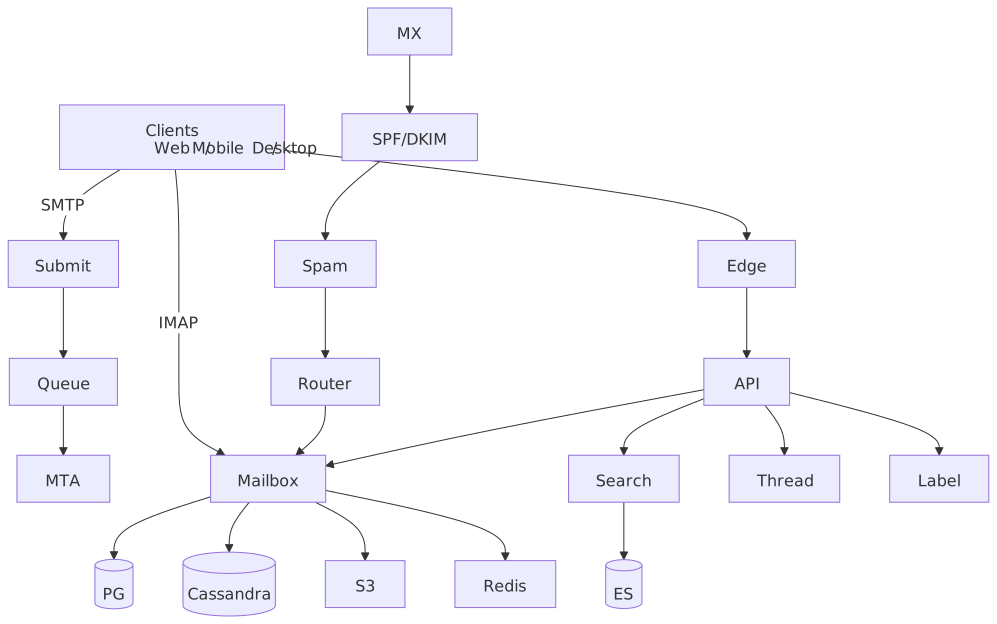
Abstract
Email systems solve four interconnected challenges: reliable delivery (messages must never be lost), authentication (prevent spoofing and phishing), spam filtering (99%+ spam blocked with minimal false positives), and fast retrieval (sub-second search across years of messages).
Core architectural decisions:
| Decision | Choice | Rationale |
|---|---|---|
| Inbound protocol | SMTP (RFC 5321) | Universal standard, store-and-forward resilience |
| Message format | MIME (RFC 2045–2049) | Multipart bodies, 7-bit-safe encoding, attachments |
| Client access | IMAP + JMAP + REST + POP3 | JMAP for new clients, IMAP for desktop, REST for web/mobile, POP3 as a compat shim |
| Authentication | SPF + DKIM + DMARC | Defense in depth: server auth, content auth, policy |
| Spam filtering | ML (Naive Bayes) + rules | 99.9%+ detection with low false positives |
| Message storage | Wide-column DB (Cassandra) | Time-series access pattern, horizontal scaling |
| Search | Inverted index (Elasticsearch) | Full-text search with field-specific filtering |
| Threading | RFC 5322 headers + heuristics | References header for chain, subject fallback |
Key trade-offs accepted:
- Store-and-forward adds latency (seconds to minutes) but ensures delivery reliability
- Per-message spam analysis increases CPU cost but reduces false positives vs. IP-only blocking
- Denormalized message storage increases write cost but enables fast mailbox queries
- Eventual consistency for search index (seconds delay) in exchange for write throughput
What this design optimizes:
- 99.99% delivery success rate with automatic retries
- Sub-100ms mailbox listing, sub-500ms full-text search
- Blocks 99.9% of spam while keeping false positive rate below 0.01%
- Horizontal scaling to billions of messages per day
Requirements
Functional Requirements
| Requirement | Priority | Notes |
|---|---|---|
| Send emails (SMTP submission) | Core | Authenticated sending via port 587 |
| Receive emails (SMTP inbound) | Core | Accept mail for hosted domains |
| Web/mobile mailbox access | Core | REST API for modern clients |
| IMAP access | Core | Desktop client compatibility |
| Spam filtering | Core | Block spam, phishing, malware |
| Email authentication | Core | SPF, DKIM, DMARC validation |
| Full-text search | Core | Search body, subject, participants |
| Conversation threading | Core | Group related messages |
| Labels/folders | Core | User organization |
| Attachments | Core | Store and retrieve file attachments |
| Contact autocomplete | Extended | Suggest recipients while composing |
| Scheduled send | Extended | Send at specified future time |
| Undo send | Extended | Brief cancellation window |
Non-Functional Requirements
| Requirement | Target | Rationale |
|---|---|---|
| Availability | 99.99% (4 nines) | Email is critical communication; 52 min/year downtime max |
| Delivery latency | p99 < 30 seconds | User expectation for “instant” delivery |
| Search latency | p99 < 500ms | Real-time search experience |
| Mailbox list latency | p99 < 100ms | Responsive UI on folder open |
| Spam detection rate | > 99.9% | Unusable inbox without effective filtering |
| False positive rate | < 0.01% | Legitimate mail must not be blocked |
| Message durability | 99.9999% | No email should ever be lost |
| Retention | 15+ years | Long-term archival for compliance |
Scale Estimation
Users:
- Monthly Active Users (MAU): 500M
- Daily Active Users (DAU): 200M (40% of MAU)
- Mailboxes: 500M (1 per user)
Traffic (inbound + outbound):
- Messages per user per day: 40 received, 10 sent
- Daily inbound: 500M × 40 = 20B messages/day
- Daily outbound: 200M × 10 = 2B messages/day
- Peak messages per second: 20B / 86400 × 3 (peak multiplier) = ~700K msgs/sec inbound
Storage:
- Average message size: 75KB (body + headers, excluding attachments)
- Average attachment size: 500KB (only 20% of messages have attachments)
- Daily message storage: 20B × 75KB = 1.5PB/day
- Daily attachment storage: 20B × 0.2 × 500KB = 2PB/day
- 15-year retention: ~20EB (with compression, ~5EB)
Search index:
- Index size: ~20% of message storage (text extraction)
- Daily index growth: ~300TB
Design Paths
Path A: Monolithic MTA (Traditional)
Best when:
- Smaller scale (< 1M mailboxes)
- On-premises deployment
- Simpler operations preferred
- Standard email features sufficient
Architecture:
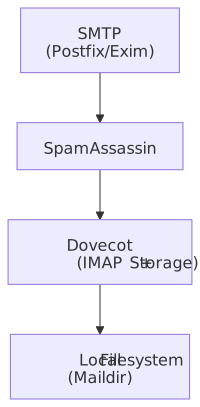
Key characteristics:
- Single MTA handles sending, receiving, storage
- File-based storage (Maildir or mbox format)
- Local spam filtering with SpamAssassin
- IMAP server (Dovecot) for client access
Trade-offs:
- ✅ Simple deployment and operations
- ✅ Mature, well-understood stack
- ✅ Low infrastructure cost
- ❌ Vertical scaling limits (~100K mailboxes per server)
- ❌ No built-in redundancy
- ❌ Limited search capabilities
- ❌ Manual spam rule updates
Real-world example: Traditional enterprise mail servers, small hosting providers, self-hosted mail (Mail-in-a-Box, Mailcow).
Path B: Microservices with Shared Storage (Cloud-Native)
Best when:
- Large scale (10M+ mailboxes)
- Cloud deployment
- Need for advanced features (smart compose, nudges)
- Global distribution required
Architecture:
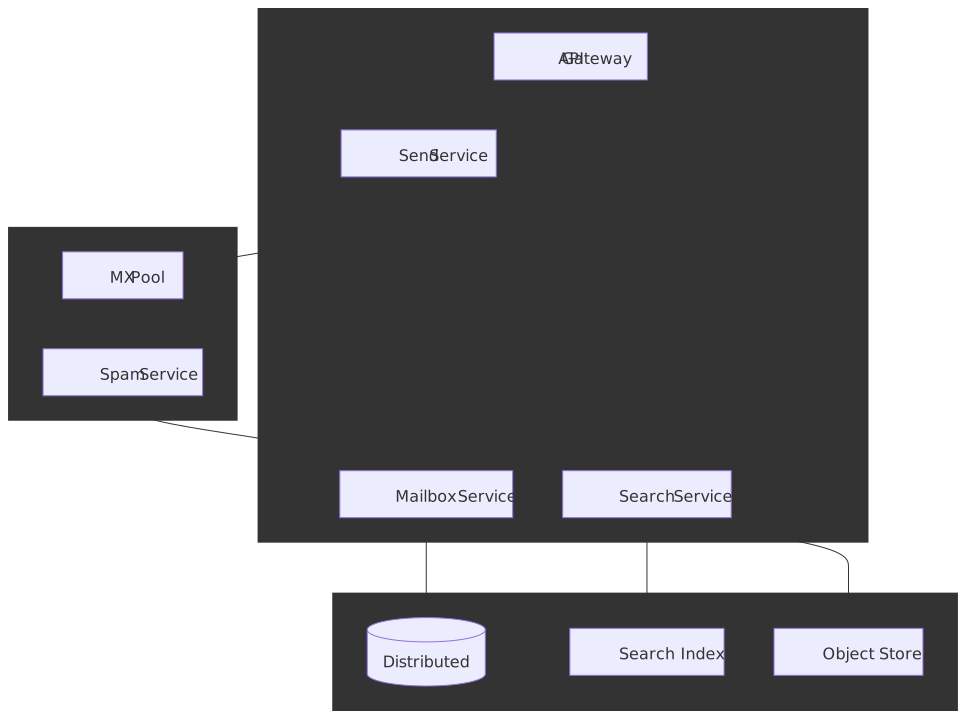
Key characteristics:
- Separate services for ingestion, storage, search, sending
- Distributed database for messages (Cassandra, Bigtable)
- Dedicated search cluster (Elasticsearch)
- Object storage for attachments
- ML-based spam filtering
Trade-offs:
- ✅ Horizontal scaling to billions of mailboxes
- ✅ Independent service scaling
- ✅ Advanced ML features possible
- ✅ Multi-region deployment
- ❌ Complex operations
- ❌ Higher infrastructure cost
- ❌ Eventual consistency challenges
Real-world example: Gmail (historically Bigtable; migrated to Spanner for the message store), Outlook.com (Exchange Online + Azure), Fastmail (custom Cyrus-derived stack).
Path C: Hybrid with ESP Integration
Best when:
- Need transactional + marketing email
- Deliverability is critical concern
- Limited email infrastructure expertise
- Variable sending volumes
Architecture:
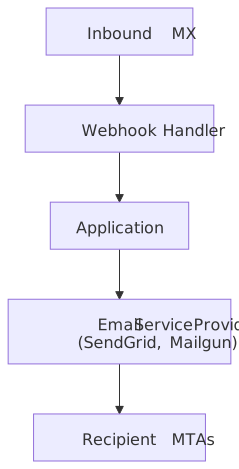
Key characteristics:
- Outbound via ESP (managed deliverability)
- Inbound via webhooks or forwarding
- ESP handles reputation, authentication, compliance
- Application focuses on business logic
Trade-offs:
- ✅ Managed deliverability and reputation
- ✅ Built-in analytics and tracking
- ✅ No MTA operations burden
- ✅ Elastic scaling
- ❌ Per-message cost at scale
- ❌ Less control over delivery timing
- ❌ Vendor lock-in concerns
- ❌ Limited for receiving mail
Real-world example: SaaS applications using SendGrid/Mailgun for transactional email, marketing platforms using dedicated ESPs.
Path Comparison
| Factor | Monolithic | Microservices | Hybrid/ESP |
|---|---|---|---|
| Scale | < 1M mailboxes | Billions | Variable |
| Complexity | Low | High | Medium |
| Cost at scale | Lower | Higher | Highest |
| Deliverability control | Full | Full | Delegated |
| Feature velocity | Slow | Fast | Medium |
| Ops burden | Medium | High | Low |
| Examples | Enterprise Exchange | Gmail, Outlook.com | SaaS apps |
This Article’s Focus
This article focuses on Path B (Microservices) because:
- Represents architecture of major email providers (Gmail, Outlook)
- Demonstrates scale challenges unique to email (spam, threading, search)
- Covers both sending and receiving infrastructure
- Addresses deliverability, authentication, and compliance concerns
High-Level Design
Inbound Mail Flow
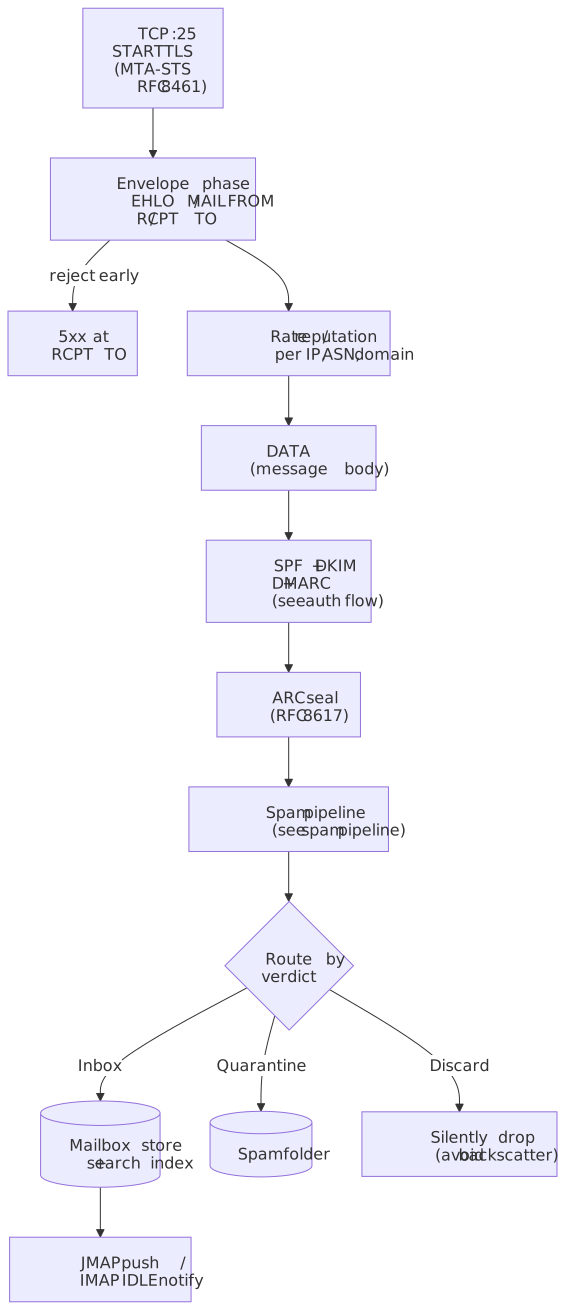
When an external server sends mail to your domain, the receive path runs as a sequence of cheap-to-expensive checks. Reject as early as possible — at connect, MAIL FROM, and RCPT TO — so the body never lands for traffic you can already classify.
The same pipeline expressed as a sequence between sender, MX, auth, spam, and mailbox stores:
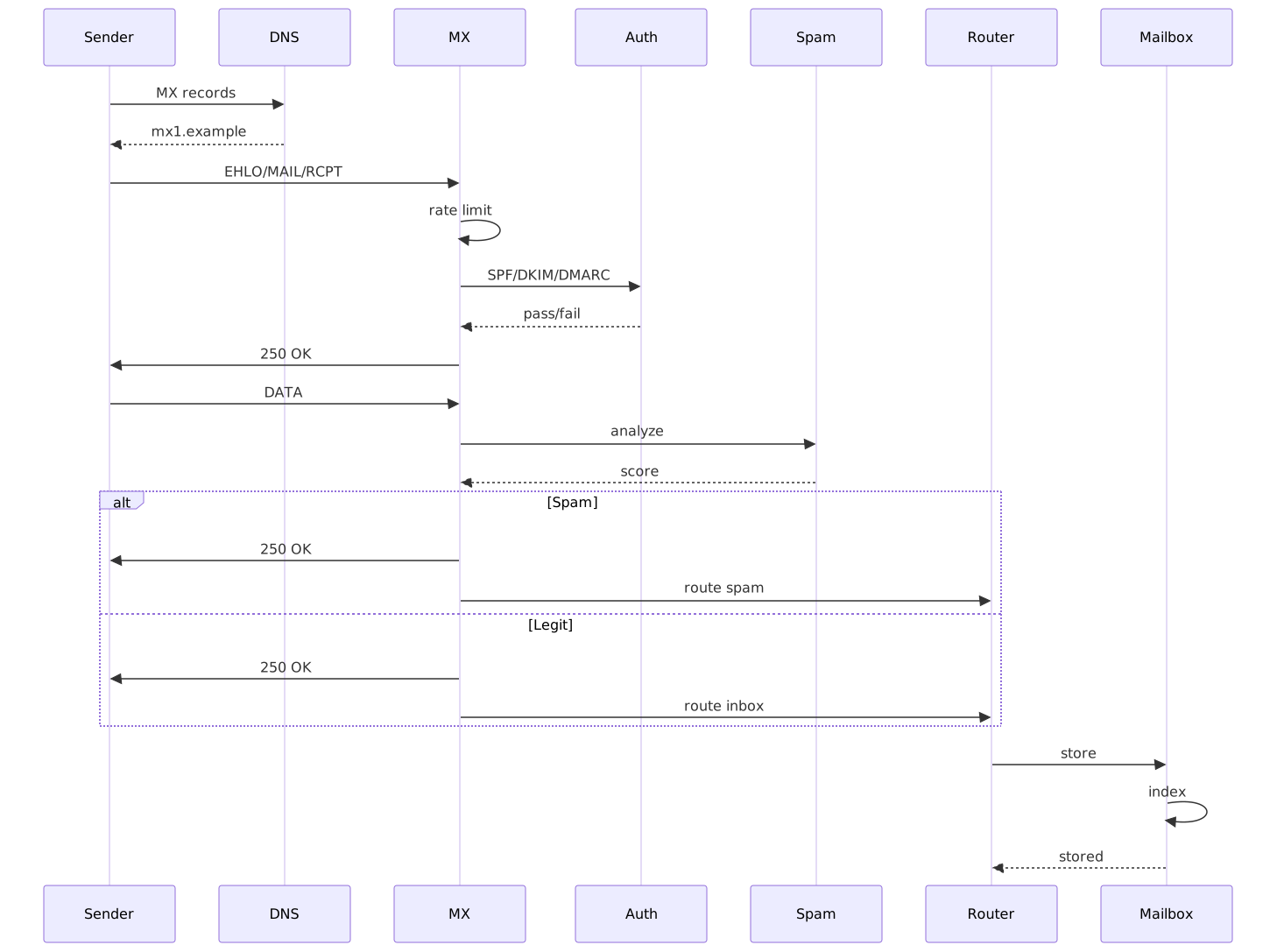
MX Server responsibilities:
- Connection handling: Accept SMTP connections, enforce rate limits
- Recipient validation: Verify mailbox exists before accepting
- Authentication checks: SPF, DKIM, DMARC validation
- Spam scoring: Pass to spam filter, act on classification
- Message queuing: Hand off to storage layer
Why accept-then-filter (not reject during SMTP)?
Rejecting content-detected spam after DATA causes the sender’s MTA to generate a non-delivery report. Spammers forge the envelope sender, so those bounces flood innocent third parties — the backscatter problem. RFC 5321 §6.2 explicitly recommends silently dropping (or quarantining) hostile content rather than generating a bounce. The corollary: reject as much as possible before the message body lands — at connect, MAIL FROM, and RCPT TO — and accept-then-discard only the spam you classify after DATA.
Outbound Mail Flow
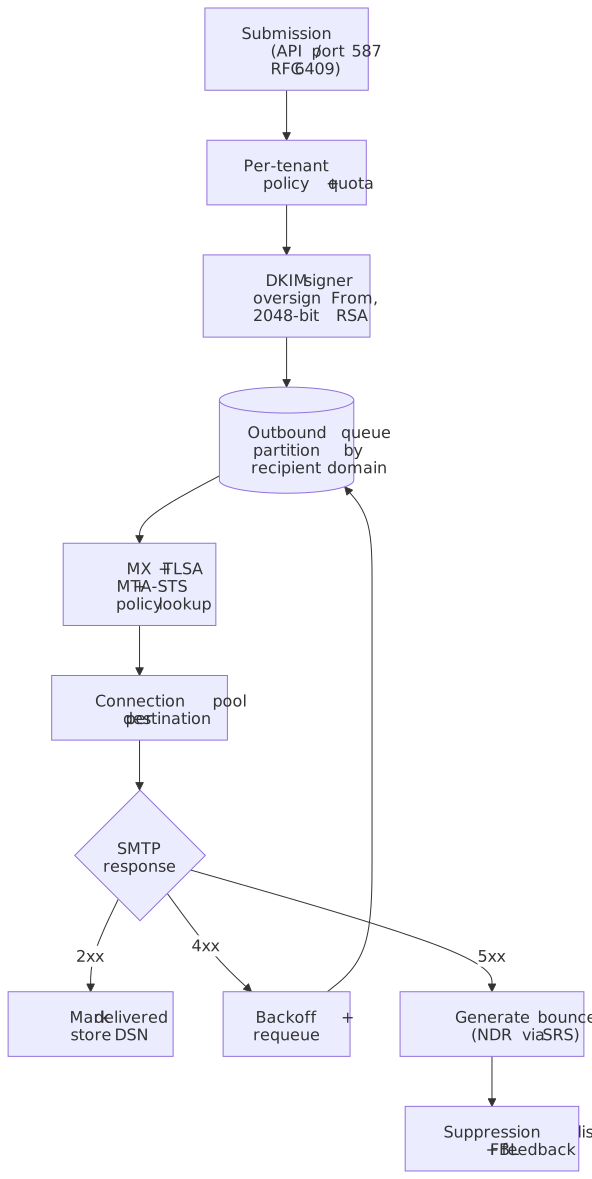
When a user sends an email, the submission API acknowledges synchronously and the heavy lifting (signing, DNS, TLS, retries) happens asynchronously off a per-domain queue.
The same pipeline as a sequence between client, API, queue, signer, MTA, and recipient:
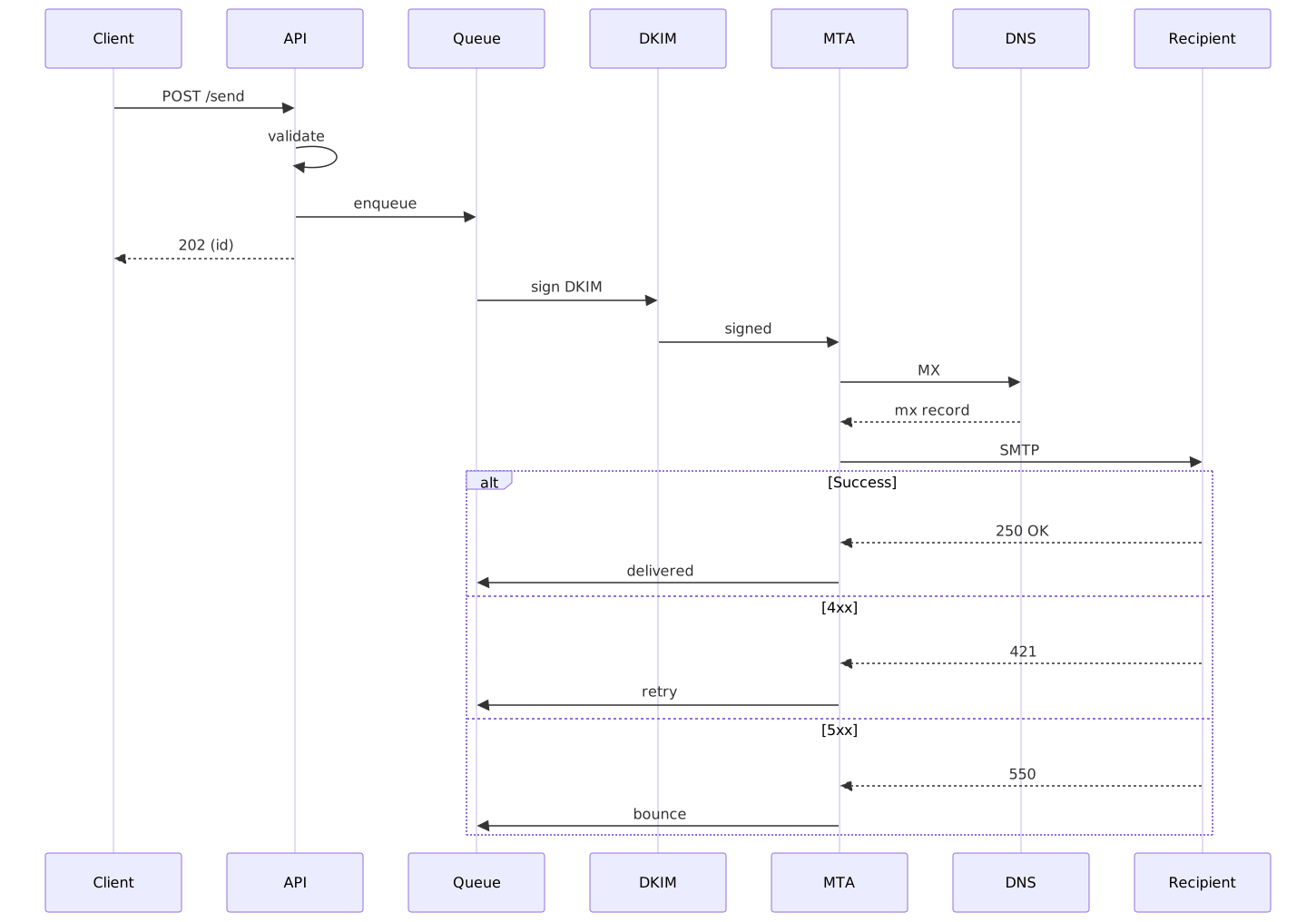
Outbound MTA responsibilities:
- DKIM signing: Cryptographically sign message for authentication
- MX resolution: Look up recipient mail servers
- Connection pooling: Reuse connections to frequent destinations
- Retry management: Exponential backoff for temporary failures
- Bounce handling: Process permanent failures, notify sender
Mailbox Service
Handles message storage, retrieval, and organization:
Key operations:
| Operation | Description | Access Pattern |
|---|---|---|
| List messages | Get messages in folder | Range query by folder + date |
| Get message | Retrieve full message | Point lookup by message_id |
| Move/label | Organize messages | Update metadata |
| Delete | Remove message | Soft delete (trash), hard delete |
| Search | Full-text query | Search index query |
| Sync | IMAP/API delta sync | Cursor-based pagination |
State per message:
interface EmailMessage { messageId: string // Globally unique (RFC 5322 Message-ID) internalId: string // System-assigned UUID mailboxId: string // Owner's mailbox threadId: string // Conversation grouping // Headers (denormalized for queries) from: EmailAddress to: EmailAddress[] cc: EmailAddress[] subject: string date: Date // From Date header receivedAt: Date // Server receive time // Threading headers inReplyTo?: string // Message-ID of parent references: string[] // Full ancestor chain // Content bodyText?: string // Plain text version bodyHtml?: string // HTML version snippet: string // First 200 chars for preview // Organization labels: string[] // User labels (INBOX, SENT, custom) isRead: boolean isStarred: boolean // Metadata sizeBytes: number hasAttachments: boolean attachments: AttachmentRef[] // Spam/security spamScore: number authenticationResults: AuthResult}interface AttachmentRef { attachmentId: string filename: string contentType: string sizeBytes: number storageUrl: string // S3/GCS URL}MIME Body Model
Every non-trivial message is a MIME tree, not a flat string. The receive pipeline parses headers per RFC 5322, then walks the body per RFC 2045–2049: multipart/alternative (text + HTML siblings), multipart/mixed (body + attachments), multipart/related (HTML + inline cid: references), and multipart/signed / multipart/encrypted for S/MIME. Header values that hold non-ASCII text (e.g. a Japanese display name in From:) use RFC 2047 encoded-word form (=?UTF-8?B?...?=); decode at parse time and store the canonical UTF-8 form, never the raw header. Two operational rules fall out of the MIME model:
- Pick the renderable part on read, not on write. Store the full MIME tree (or the raw RFC 822 stream plus a parsed index); let the client decide between
text/plainandtext/html. Lossy normalization at write time breaks reply quoting and signature verification. - Re-derive Content-Length and Content-Transfer-Encoding from canonical bytes. Many spam variants exploit ambiguous boundaries or
quoted-printable↔base64round-trip differences; canonicalize before scoring.
Search Service
Full-text search across all message content:
Index structure:
interface SearchDocument { messageId: string mailboxId: string // Partition key for isolation threadId: string // Searchable fields from: string // Tokenized email + name to: string[] cc: string[] subject: string // Tokenized body: string // Full-text, tokenized attachmentNames: string[] // Filterable fields labels: string[] date: Date hasAttachment: boolean isRead: boolean isStarred: boolean // Spam fields spamScore: number}Query capabilities:
- Full-text:
"quarterly report"(phrase match) - Field-specific:
from:alice@example.com - Boolean:
from:alice AND has:attachment - Date range:
after:2024/01/01 before:2024/06/01 - Labels:
label:work -label:newsletters
Threading Service
Groups related messages into conversations:
Algorithm (priority order):
Referencesheader (RFC 5322 §3.6.4) — full Message-ID chain of all ancestors; oldest first. Walk newest-to-oldest so an out-of-order reply still anchors to the closest known ancestor.In-Reply-Toheader — direct parent Message-ID; useful whenReferencesis missing or truncated.- Subject matching — same normalized subject (strip
Re:/Fwd:/Aw:/Sv:prefixes) within a bounded time window. - Participant overlap — same sender/recipient set within a similar timeframe; good defense against subject collisions across unrelated threads.
The canonical algorithm is Jamie Zawinski’s 1997 message threading writeup, still the best-documented reference and the basis of most mail-client implementations.
Threading data model:
interface Thread { threadId: string mailboxId: string // Aggregated from messages subject: string // From most recent message snippet: string // From most recent message participants: EmailAddress[] // Union of all From/To/Cc // Message list messageIds: string[] // Ordered by date messageCount: number // Thread-level flags hasUnread: boolean isStarred: boolean // Any message starred labels: string[] // Union of all labels // Timestamps oldestMessageDate: Date newestMessageDate: Date}Edge cases:
- Orphaned replies: Message references unknown Message-ID → create new thread, merge if parent arrives
- Subject collision: Different conversations with same subject → use timing + participants to disambiguate
- Long threads: Threads with 100+ messages → paginate message list
API Design
REST API
List Messages
Endpoint: GET /api/v1/mailboxes/{mailboxId}/messages
Query parameters:
| Parameter | Type | Description |
|---|---|---|
labelIds |
string[] | Filter by labels (default: INBOX) |
q |
string | Search query |
maxResults |
int | Page size (default: 50, max: 500) |
pageToken |
string | Cursor for pagination |
includeSpam |
bool | Include spam folder |
Response (200 OK):
{ "messages": [ { "id": "msg_abc123", "threadId": "thread_xyz789", "labelIds": ["INBOX", "IMPORTANT"], "snippet": "Hi team, please review the Q4 report...", "from": { "email": "alice@example.com", "name": "Alice Smith" }, "to": [{ "email": "bob@example.com", "name": "Bob Jones" }], "subject": "Q4 Report Review", "date": "2024-12-15T10:30:00Z", "isRead": false, "isStarred": false, "hasAttachments": true, "sizeBytes": 125000 } ], "nextPageToken": "cursor_def456", "resultSizeEstimate": 1250}Get Full Message
Endpoint: GET /api/v1/messages/{messageId}
Query parameters:
| Parameter | Type | Description |
|---|---|---|
format |
enum | minimal, metadata, full, raw |
Response (200 OK, format=full):
{ "id": "msg_abc123", "threadId": "thread_xyz789", "labelIds": ["INBOX", "IMPORTANT"], "headers": { "from": "Alice Smith <alice@example.com>", "to": "Bob Jones <bob@example.com>", "subject": "Q4 Report Review", "date": "Sun, 15 Dec 2024 10:30:00 -0800", "message-id": "<unique-id@example.com>", "in-reply-to": "<parent-id@example.com>", "references": "<grandparent@example.com> <parent-id@example.com>" }, "body": { "text": "Hi team,\n\nPlease review the attached Q4 report...", "html": "<html><body><p>Hi team,</p>..." }, "attachments": [ { "id": "att_file123", "filename": "Q4-Report.pdf", "mimeType": "application/pdf", "size": 2500000 } ], "authentication": { "spf": "pass", "dkim": "pass", "dmarc": "pass" }}Send Message
Endpoint: POST /api/v1/messages/send
Request:
{ "to": [{ "email": "bob@example.com", "name": "Bob Jones" }], "cc": [], "bcc": [], "subject": "Project Update", "body": { "text": "Hi Bob,\n\nHere's the update you requested...", "html": "<p>Hi Bob,</p><p>Here's the update you requested...</p>" }, "attachments": [ { "filename": "update.pdf", "mimeType": "application/pdf", "content": "base64-encoded-content" } ], "replyTo": "msg_parent123", "scheduledAt": null}Response (202 Accepted):
{ "id": "msg_new789", "threadId": "thread_xyz789", "labelIds": ["SENT"], "status": "queued"}Search Messages
Endpoint: GET /api/v1/mailboxes/{mailboxId}/messages?q={query}
Query examples:
from:alice@example.com- From specific sender"quarterly report"- Phrase matchhas:attachment larger:5M- With attachment > 5MBafter:2024/01/01 before:2024/06/30- Date rangein:inbox is:unread- Inbox, unread only
Response: Same format as List Messages.
Download Attachment
Endpoint: GET /api/v1/messages/{messageId}/attachments/{attachmentId}
Response: Redirects to signed URL (S3/GCS presigned URL, 15-minute expiry).
Error Responses
| Code | Error | When |
|---|---|---|
| 400 | INVALID_REQUEST |
Malformed request body |
| 401 | UNAUTHORIZED |
Invalid or expired token |
| 403 | FORBIDDEN |
No access to mailbox |
| 404 | NOT_FOUND |
Message/mailbox doesn’t exist |
| 413 | ATTACHMENT_TOO_LARGE |
Attachment exceeds 25MB limit |
| 429 | RATE_LIMITED |
Too many requests |
| 503 | SERVICE_UNAVAILABLE |
Temporary outage |
Rate limits:
| Operation | Limit | Window |
|---|---|---|
| Send | 500 messages | per day |
| Send (paid) | 2,000 messages | per day |
| API requests | 1,000 requests | per minute |
| Search | 100 queries | per minute |
IMAP and JMAP Protocol Support
For legacy desktop client compatibility, expose standard IMAP (RFC 3501; IMAP4rev2 is RFC 9051). For new clients, JMAP (RFC 8620 core, RFC 8621 for mail) is the modern HTTP/JSON alternative — batched requests, push over WebSocket, no persistent IMAP connection — and is what new mailbox APIs should target alongside (or instead of) IMAP. Fastmail and Apache James run production JMAP servers today.
POP3 is the third client-access protocol still in the wild. It is a download-and-(optionally-)delete protocol with no folder model, no server-side flags, and no concurrent-session semantics — fine for single-device download workflows but unable to express anything modern clients expect. Every major provider keeps a POP3 endpoint listening on port 995 (POP3S) for long-tail clients but routes new clients to IMAP or JMAP. Treat POP3 as a compatibility shim: same auth backend, same mailbox store, much smaller command surface (USER, PASS, STAT, LIST, RETR, DELE, QUIT).
Supported commands:
| Command | Description |
|---|---|
LOGIN |
Authenticate with username/password or OAuth |
SELECT |
Open mailbox/folder |
SEARCH |
Server-side search |
FETCH |
Retrieve message(s) |
STORE |
Update flags (read, starred, deleted) |
COPY |
Copy to another folder |
EXPUNGE |
Permanently delete |
IDLE |
Push notifications (RFC 2177) |
IMAP-to-API mapping:
- IMAP folder → API label
- IMAP UID → API message ID
- IMAP flags → API isRead, isStarred, labels
Data Modeling
Message Storage (Cassandra)
Table design for time-series mailbox access:
-- Messages by mailbox and date (primary access pattern)CREATE TABLE messages_by_mailbox ( mailbox_id UUID, label_id TEXT, received_at TIMESTAMP, message_id UUID, thread_id UUID, from_email TEXT, from_name TEXT, subject TEXT, snippet TEXT, is_read BOOLEAN, is_starred BOOLEAN, has_attachments BOOLEAN, size_bytes INT, PRIMARY KEY ((mailbox_id, label_id), received_at, message_id)) WITH CLUSTERING ORDER BY (received_at DESC, message_id ASC);-- Full message content (point lookup)CREATE TABLE messages ( message_id UUID PRIMARY KEY, mailbox_id UUID, thread_id UUID, raw_headers TEXT, body_text TEXT, body_html TEXT, attachments LIST<FROZEN<attachment>>, authentication_results MAP<TEXT, TEXT>, spam_score FLOAT, created_at TIMESTAMP);-- Thread aggregationCREATE TABLE threads_by_mailbox ( mailbox_id UUID, label_id TEXT, newest_message_at TIMESTAMP, thread_id UUID, subject TEXT, snippet TEXT, message_count INT, participant_emails SET<TEXT>, has_unread BOOLEAN, PRIMARY KEY ((mailbox_id, label_id), newest_message_at, thread_id)) WITH CLUSTERING ORDER BY (newest_message_at DESC, thread_id ASC);Why Cassandra:
- Time-series optimized (messages ordered by date)
- Partition per mailbox+label enables efficient folder queries
- Linear horizontal scaling
- Tunable consistency (eventual OK for reads, quorum for writes)
Partition sizing:
- Target: < 100MB per partition
- Heavy mailboxes: Partition by (mailbox_id, label_id, month) to bound growth
- Typical mailbox: 10K messages × 1KB metadata = 10MB per label partition
User and Label Metadata (PostgreSQL)
CREATE TABLE users ( id UUID PRIMARY KEY DEFAULT gen_random_uuid(), email VARCHAR(255) UNIQUE NOT NULL, display_name VARCHAR(100), password_hash VARCHAR(255), created_at TIMESTAMPTZ DEFAULT NOW(), last_login_at TIMESTAMPTZ, settings JSONB DEFAULT '{}');CREATE TABLE mailboxes ( id UUID PRIMARY KEY DEFAULT gen_random_uuid(), user_id UUID REFERENCES users(id) ON DELETE CASCADE, email_address VARCHAR(255) UNIQUE NOT NULL, storage_quota_bytes BIGINT DEFAULT 15000000000, -- 15GB default storage_used_bytes BIGINT DEFAULT 0, message_count INT DEFAULT 0, created_at TIMESTAMPTZ DEFAULT NOW());CREATE TABLE labels ( id UUID PRIMARY KEY DEFAULT gen_random_uuid(), mailbox_id UUID REFERENCES mailboxes(id) ON DELETE CASCADE, name VARCHAR(100) NOT NULL, type VARCHAR(20) DEFAULT 'user', -- 'system' or 'user' color VARCHAR(7), -- Hex color for UI message_count INT DEFAULT 0, unread_count INT DEFAULT 0, UNIQUE(mailbox_id, name));-- System labels created per mailbox: INBOX, SENT, DRAFTS, SPAM, TRASH, ALLCREATE INDEX idx_labels_mailbox ON labels(mailbox_id);Attachment Storage (S3/GCS)
Storage path convention:
s3://email-attachments/{mailbox_id}/{year}/{month}/{message_id}/{attachment_id}/{filename}Metadata in database:
CREATE TABLE attachments ( id UUID PRIMARY KEY, message_id UUID NOT NULL, filename VARCHAR(255) NOT NULL, content_type VARCHAR(100), size_bytes BIGINT, storage_bucket VARCHAR(100), storage_key TEXT, checksum_sha256 VARCHAR(64), scanned_at TIMESTAMPTZ, scan_result VARCHAR(20) -- 'clean', 'malware', 'pending');Lifecycle rules:
- Trash attachments: Delete after 30 days
- Spam attachments: Delete after 7 days
- Regular attachments: Keep until message deleted
Search Index (Elasticsearch)
Index mapping:
{ "mappings": { "properties": { "message_id": { "type": "keyword" }, "mailbox_id": { "type": "keyword" }, "thread_id": { "type": "keyword" }, "from_email": { "type": "keyword" }, "from_name": { "type": "text" }, "to_emails": { "type": "keyword" }, "to_names": { "type": "text" }, "cc_emails": { "type": "keyword" }, "subject": { "type": "text", "analyzer": "email_analyzer" }, "body": { "type": "text", "analyzer": "email_analyzer" }, "attachment_names": { "type": "text" }, "labels": { "type": "keyword" }, "date": { "type": "date" }, "size_bytes": { "type": "long" }, "has_attachment": { "type": "boolean" }, "is_read": { "type": "boolean" }, "is_starred": { "type": "boolean" } } }, "settings": { "analysis": { "analyzer": { "email_analyzer": { "type": "custom", "tokenizer": "standard", "filter": ["lowercase", "email_domain_filter"] } } } }}Index per mailbox:
- Shard by mailbox_id for query isolation
- Typical sizing: 1 shard per 10M messages
- Heavy users: Dedicated index with multiple shards
Inverted index mechanics (Lucene/Elastic). Elasticsearch is a distributed wrapper around Apache Lucene — every “shard” is a Lucene index made of immutable segments. Writes append to an in-memory buffer and a translog; a refresh (default 1 s) flushes the buffer to a new segment that becomes searchable; periodic merges compact small segments and physically delete soft-deleted documents. The operational consequences for a mailbox workload: (a) “near-real-time” search lag is bounded by refresh_interval, not write throughput — set it to 5s or 30s on the mailbox index to halve segment count and CPU; (b) deletes only reclaim space at merge time, so heavy spam-purge churn needs force_merge windows; (c) per-field analyzers (lowercase, ASCII-folding, language stemmer, edge-n-grams for autocomplete) are applied at index time, so changing them requires a reindex.
Gmail-scale precedent: Caribou. Gmail’s first generation of search used the underlying Bigtable row scan; it was rebuilt on a sharded inverted-index service called Caribou, introduced for real-time indexing of new mail and built on the Percolator incremental-processing framework (OSDI 2010). The takeaway for any Gmail-scale design: a separate, asynchronously fed index tier — Lucene/Elastic, Tantivy, or a custom Caribou-style service — beats trying to extend the OLTP store with secondary indexes, because mailbox writes are append-heavy and search is the only read pattern that is not a point lookup by (mailbox_id, label_id, time).
Database Selection Matrix
| Data Type | Store | Rationale |
|---|---|---|
| User profiles, labels | PostgreSQL | ACID, relational queries, moderate scale |
| Message metadata | Cassandra | Time-series access, horizontal scaling |
| Message bodies | Cassandra | Co-located with metadata |
| Attachments | S3/GCS | Object storage, CDN-compatible |
| Search index | Elasticsearch | Full-text search, aggregations |
| Session cache | Redis | Sub-ms latency, TTL support |
| Rate limiting | Redis | Atomic counters, sliding windows |
| Delivery queue | Kafka | Reliable async, retry support |
Low-Level Design
Email Authentication Pipeline
The receiver runs SPF, DKIM, and DMARC together — DMARC is the policy layer that combines the two underlying checks with identifier alignment against the visible From: header. RFC 7489 §6 describes the canonical evaluation order: extract the RFC5322.From domain, query the DMARC policy, run SPF and DKIM (in parallel is fine), then check alignment, then apply policy.
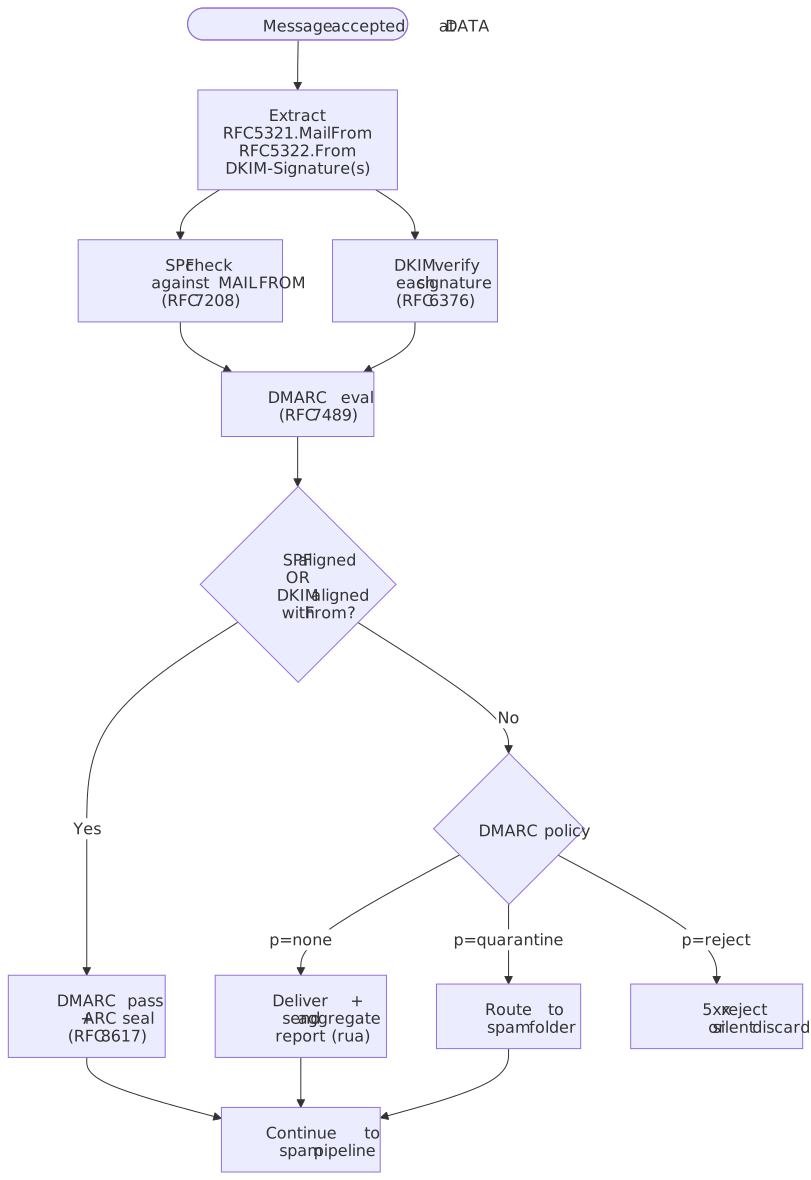
Alignment is computed against the organizational domain (the registrable base, e.g. example.com for mail.corp.example.com) using the Public Suffix List when in relaxed mode, or via FQDN match in strict mode. Get this wrong and a perfectly valid SPF/DKIM result still fails DMARC.
SPF Validation
Sender Policy Framework (RFC 7208) validates sending server authorization:
interface SPFResult { result: "pass" | "fail" | "softfail" | "neutral" | "none" | "temperror" | "permerror" domain: string clientIp: string explanation?: string}class SPFValidator { async validate(senderDomain: string, clientIp: string): Promise<SPFResult> { // 1. Query TXT record for SPF policy const spfRecord = await this.dns.queryTXT(`${senderDomain}`) // Example: "v=spf1 include:_spf.google.com ~all" if (!spfRecord || !spfRecord.startsWith("v=spf1")) { return { result: "none", domain: senderDomain, clientIp } } // 2. Parse and evaluate SPF mechanisms const mechanisms = this.parseSPF(spfRecord) for (const mechanism of mechanisms) { const match = await this.evaluateMechanism(mechanism, clientIp, senderDomain) if (match) { return { result: this.qualifierToResult(mechanism.qualifier), domain: senderDomain, clientIp, } } } // 3. Default result if no mechanism matches return { result: "neutral", domain: senderDomain, clientIp } } private qualifierToResult(qualifier: string): SPFResult["result"] { switch (qualifier) { case "+": return "pass" case "-": return "fail" case "~": return "softfail" case "?": return "neutral" default: return "pass" } }}SPF limitations:
- Only validates the envelope sender (
MAIL FROM), not the visibleFrom:header — DMARC alignment is what closes that gap. - Breaks on forwarding because the forwarder’s IP is not in the original sender’s SPF record. ARC (RFC 8617) was introduced to preserve authentication results across forwarding hops.
- RFC 7208 §4.6.4 caps SPF evaluation at 10 DNS lookups (mechanisms
include,a,mx,ptr,exists, modifierredirect) to prevent amplification attacks; exceeding the cap yieldspermerror. A separateSHOULDlimit of 2 void lookups (NXDOMAIN/NODATA) applies.
DKIM Verification
DomainKeys Identified Mail (RFC 6376) validates message integrity:
interface DKIMResult { result: "pass" | "fail" | "neutral" | "temperror" | "permerror" domain: string selector: string headerFields: string[]}class DKIMVerifier { async verify(message: RawEmail): Promise<DKIMResult> { // 1. Extract DKIM-Signature header const signature = this.extractDKIMSignature(message) if (!signature) { return { result: "neutral", domain: "", selector: "", headerFields: [] } } // DKIM-Signature: v=1; a=rsa-sha256; d=example.com; s=selector1; // h=from:to:subject:date; bh=base64-body-hash; b=base64-signature // 2. Fetch public key from DNS const publicKey = await this.dns.queryTXT(`${signature.selector}._domainkey.${signature.domain}`) // 3. Verify body hash const bodyHash = this.computeBodyHash(message.body, signature.canonicalization.body, signature.algorithm) if (bodyHash !== signature.bodyHash) { return { result: "fail", domain: signature.domain, selector: signature.selector, headerFields: signature.headers, } } // 4. Verify header signature const headerData = this.canonicalizeHeaders(message.headers, signature.headers, signature.canonicalization.header) const valid = this.verifySignature(headerData, signature.signature, publicKey, signature.algorithm) return { result: valid ? "pass" : "fail", domain: signature.domain, selector: signature.selector, headerFields: signature.headers, } }}DKIM key considerations:
- RFC 8301 requires signers to use at least 1024-bit RSA and recommends 2048-bit; verifiers must support 1024–4096 bits. Treat 2048-bit as the floor for new deployments — major mailbox providers reject or downgrade trust on shorter keys in practice.
- Selector rotation: publish a new key under a new selector, switch signers over, retire the old selector after a propagation window.
- Header field selection: always include
From,To,Subject,Date, andMessage-ID. SignFromtwice (oversigning) to prevent attackers from injecting an additionalFromafter the signature.
DMARC Policy Enforcement
Domain-based Message Authentication, Reporting, and Conformance (RFC 7489):
interface DMARCResult { result: "pass" | "fail" | "none" policy: "none" | "quarantine" | "reject" alignment: { spf: boolean dkim: boolean } domain: string}class DMARCEvaluator { async evaluate(headerFrom: string, spfResult: SPFResult, dkimResult: DKIMResult): Promise<DMARCResult> { const fromDomain = this.extractDomain(headerFrom) // 1. Query DMARC policy const dmarcRecord = await this.dns.queryTXT(`_dmarc.${fromDomain}`) // Example: "v=DMARC1; p=reject; rua=mailto:dmarc@example.com" if (!dmarcRecord) { return { result: "none", policy: "none", alignment: { spf: false, dkim: false }, domain: fromDomain, } } const policy = this.parseDMARC(dmarcRecord) // 2. Check alignment (domain in From matches authenticated domain) const spfAligned = spfResult.result === "pass" && this.domainAligns(fromDomain, spfResult.domain, policy.aspf) const dkimAligned = dkimResult.result === "pass" && this.domainAligns(fromDomain, dkimResult.domain, policy.adkim) // 3. DMARC passes if either SPF or DKIM is aligned const passes = spfAligned || dkimAligned return { result: passes ? "pass" : "fail", policy: policy.p, alignment: { spf: spfAligned, dkim: dkimAligned }, domain: fromDomain, } } private domainAligns( fromDomain: string, authDomain: string, mode: "r" | "s", // relaxed or strict ): boolean { if (mode === "s") { return fromDomain === authDomain } // Relaxed: organizational domain must match return this.getOrgDomain(fromDomain) === this.getOrgDomain(authDomain) }}DMARC policy actions:
| Policy | Action |
|---|---|
p=none |
Monitor only, no enforcement |
p=quarantine |
Deliver to spam folder |
p=reject |
Reject at SMTP level (or discard) |
Transport Security: MTA-STS and TLS-RPT
Opportunistic STARTTLS is downgrade-vulnerable — an active attacker on the path can strip the STARTTLS advertisement and the sender will fall back to cleartext. MTA-STS (RFC 8461) lets a receiving domain publish a policy at https://mta-sts.<domain>/.well-known/mta-sts.txt (advertised by a _mta-sts.<domain> TXT record) that pins the allowed MX hostnames and requires TLS 1.2+ with a PKIX-valid certificate. In enforce mode, conforming senders must not deliver if validation fails; testing mode logs failures without blocking. DANE for SMTP (RFC 7672) is the DNSSEC-anchored alternative — TLSA records bind the expected certificate directly, no out-of-band HTTPS fetch — and most large operators publish both.
SMTP TLS Reporting (RFC 8460) closes the loop: senders aggregate TLS-handshake outcomes per day and POST a JSON report to the URI in the receiver’s _smtp._tls.<domain> TXT record. Without TLS-RPT, an MTA-STS misconfiguration (expired certificate, wrong SAN, MX rename) is invisible until users complain. The standard sequence is deploy in testing mode → watch TLS-RPT for two reporting cycles → flip to enforce.
Forwarding: SRS, ARC, and the Forwarding Problem
Plain forwarding breaks SPF: when alice@example.com forwards a message from news@sender.com to alice@personal.com, the forwarder’s IP is not in sender.com’s SPF record, so SPF fails at the destination. Two complementary mitigations:
- SRS (Sender Rewriting Scheme) rewrites the envelope sender to a forwarder-local address (
SRS0=hash=tt=sender.com=news@forwarder.example) so SPF passes, while the local part still encodes the original sender for bounce routing. Postfix, OpenSRS, and most managed forwarders implement it. SRS does not help DKIM (signatures still cover the originalFrom:) or DMARC alignment; it only fixes the SPF break. - ARC (RFC 8617) preserves the authentication results across hops: each forwarder adds an
ARC-Sealchain attesting that “at my hop, SPF/DKIM/DMARC said X”. Receivers that trust the forwarder’s ARC seal can honor the original auth result even after SPF breaks at the boundary. Gmail, Office 365, and Fastmail all evaluate ARC; mailing lists in particular rely on it to survive forwarding.
Brand Indicators: BIMI
BIMI (draft-blank-ietf-bimi) lets a domain publish a verified logo SVG (and, for inbox-provider trust, a Verified Mark Certificate from a third-party CA) at default._bimi.<domain> that participating mailbox providers (Gmail, Yahoo, Apple Mail, Fastmail) render next to authenticated messages. BIMI requires DMARC at p=quarantine or p=reject — it is effectively a UX reward for getting the auth trifecta right.
Internationalized Addresses: SMTPUTF8 / EAI
RFC 6531 (SMTPUTF8) and RFC 6532 extend SMTP and message headers to allow UTF-8 mailbox local-parts and headers (測試@例子.中国). Servers advertise the SMTPUTF8 extension after EHLO; clients opt in with MAIL FROM:<…> SMTPUTF8. Adoption is uneven — fall back to ASCII (xn--/IDNA for the domain, transcoded local-part) when the next hop does not advertise the extension, and never store mixed-encoding addresses without a normalization pass.
Spam Filtering Pipeline
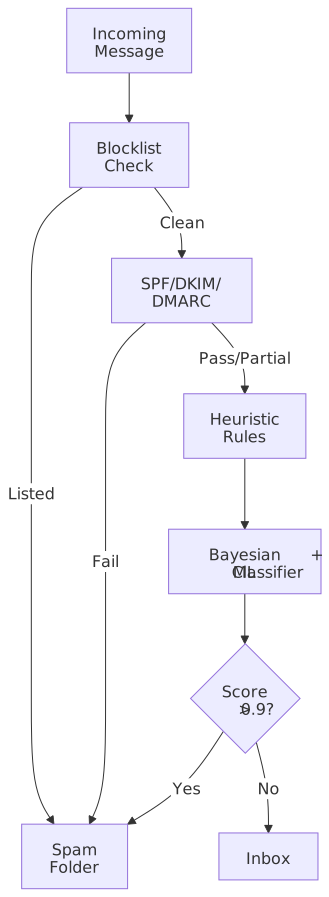
Multi-Stage Classification
Naive Bayes Classifier
Core spam detection algorithm:
class NaiveBayesSpamFilter { private spamWordCounts: Map<string, number> = new Map() private hamWordCounts: Map<string, number> = new Map() private totalSpam: number = 0 private totalHam: number = 0 // Training: update counts from labeled messages train(message: string, isSpam: boolean): void { const tokens = this.tokenize(message) const counts = isSpam ? this.spamWordCounts : this.hamWordCounts for (const token of tokens) { counts.set(token, (counts.get(token) || 0) + 1) } if (isSpam) this.totalSpam++ else this.totalHam++ } // Classification: compute P(spam|message) classify(message: string): { isSpam: boolean; score: number } { const tokens = this.tokenize(message) // Prior probabilities const pSpam = this.totalSpam / (this.totalSpam + this.totalHam) const pHam = 1 - pSpam // Log probabilities to avoid underflow let logPSpamGivenMessage = Math.log(pSpam) let logPHamGivenMessage = Math.log(pHam) for (const token of tokens) { // P(token|spam) with Laplace smoothing const spamCount = this.spamWordCounts.get(token) || 0 const hamCount = this.hamWordCounts.get(token) || 0 const pTokenGivenSpam = (spamCount + 1) / (this.totalSpam + 2) const pTokenGivenHam = (hamCount + 1) / (this.totalHam + 2) logPSpamGivenMessage += Math.log(pTokenGivenSpam) logPHamGivenMessage += Math.log(pTokenGivenHam) } // Convert back to probability const maxLog = Math.max(logPSpamGivenMessage, logPHamGivenMessage) const pSpamNormalized = Math.exp(logPSpamGivenMessage - maxLog) const pHamNormalized = Math.exp(logPHamGivenMessage - maxLog) const score = pSpamNormalized / (pSpamNormalized + pHamNormalized) return { isSpam: score > 0.9, // High threshold to minimize false positives score, } } private tokenize(text: string): string[] { return text .toLowerCase() .split(/\W+/) .filter((token) => token.length > 2 && token.length < 20) }}Why Naive Bayes works for spam:
- Handles high-dimensional feature spaces (thousands of tokens) efficiently.
- Trains incrementally — every “report spam” / “not spam” click updates the corpus.
- Achieves 99%+ catch rate at sub-0.1% false positives despite the independence assumption: Paul Graham’s original 2002 implementation reported 99.5% catch with ~0.06% FP, and Yerazunis (MIT, 2004) noted Bayesian filters hit an “accuracy plateau” around 99.9%.
- Computationally cheap —
O(n)in the number of tokens, single-pass scoring.
In production, Naive Bayes is rarely the only signal. Modern systems stack reputation (IP/ASN/domain), authentication results, URL/attachment analysis, and gradient-boosted or transformer-based content models on top, with the Bayesian model providing a fast, per-user-trainable baseline.
Spammer countermeasures and responses:
| Attack | Response |
|---|---|
| Bayesian poisoning (inject ham words) | Weight tokens by information gain |
| Image-only spam | OCR text extraction |
| Character substitution (V1agra) | Normalization, character n-grams |
| URL shorteners | Expand and analyze destination |
Heuristic Rules (SpamAssassin-style)
interface SpamRule { name: string score: number // Positive = spam indicator test: (message: ParsedEmail) => boolean}const SPAM_RULES: SpamRule[] = [ { name: "SUBJ_ALL_CAPS", score: 1.5, test: (msg) => msg.subject === msg.subject.toUpperCase() && msg.subject.length > 10, }, { name: "FROM_DISPLAY_MISMATCH", score: 2.0, test: (msg) => { // "PayPal <hacker@evil.com>" - display name doesn't match domain const displayDomain = msg.fromName?.match(/@?(\w+\.\w+)/)?.[1] const actualDomain = msg.from.split("@")[1] return displayDomain && displayDomain !== actualDomain }, }, { name: "MISSING_DATE", score: 1.0, test: (msg) => !msg.headers["date"], }, { name: "FORGED_OUTLOOK_TAGS", score: 3.0, test: (msg) => { // Claims Outlook but missing X-MS headers const ua = msg.headers["x-mailer"] || "" return ua.includes("Outlook") && !msg.headers["x-ms-exchange-organization"] }, }, { name: "URI_MISMATCH", score: 2.5, test: (msg) => { // Link text says paypal.com but href goes elsewhere const links = extractLinks(msg.bodyHtml) return links.some((l) => l.text.includes("paypal.com") && !l.href.includes("paypal.com")) }, },]function computeHeuristicScore(message: ParsedEmail): number { return SPAM_RULES.filter((rule) => rule.test(message)).reduce((sum, rule) => sum + rule.score, 0)}Message Delivery Queue
Outbound Queue with Retry Logic
interface QueuedMessage { messageId: string recipientDomain: string recipientEmail: string payload: Buffer // DKIM-signed message attempts: number nextAttemptAt: Date createdAt: Date expiresAt: Date // 5 days for bounce generation}class OutboundQueue { private readonly kafka: KafkaProducer async enqueue(message: OutboundMessage): Promise<void> { // Partition by recipient domain for connection pooling await this.kafka.send({ topic: "outbound-mail", messages: [ { key: message.recipientDomain, value: JSON.stringify({ messageId: message.id, recipientDomain: message.recipientDomain, recipientEmail: message.recipient, payload: message.signedContent, attempts: 0, nextAttemptAt: new Date(), createdAt: new Date(), expiresAt: new Date(Date.now() + 5 * 24 * 60 * 60 * 1000), }), }, ], }) }}class DeliveryWorker { private readonly RETRY_DELAYS = [ 0, // Immediate 5 * 60, // 5 minutes 30 * 60, // 30 minutes 2 * 60 * 60, // 2 hours 8 * 60 * 60, // 8 hours 24 * 60 * 60, // 24 hours ] async processMessage(queued: QueuedMessage): Promise<void> { try { const mxRecords = await this.dns.queryMX(queued.recipientDomain) const sortedMx = mxRecords.sort((a, b) => a.priority - b.priority) for (const mx of sortedMx) { try { await this.deliverToMx(mx.exchange, queued) await this.markDelivered(queued.messageId) return } catch (error) { if (this.isPermanentError(error)) { throw error // Don't try other MX servers } // Try next MX server continue } } throw new Error("All MX servers failed") } catch (error) { if (this.isPermanentError(error) || queued.attempts >= 6) { await this.generateBounce(queued, error) await this.markFailed(queued.messageId) } else { // Schedule retry const delay = this.RETRY_DELAYS[queued.attempts + 1] || this.RETRY_DELAYS[5] await this.scheduleRetry(queued, delay) } } } private isPermanentError(error: any): boolean { // 5xx errors are permanent (except 552 which can be transient) const code = error.responseCode return code >= 500 && code < 600 && code !== 552 }}Retry backoff schedule:
| Attempt | Delay | Cumulative |
|---|---|---|
| 1 | Immediate | 0 |
| 2 | 5 minutes | 5 min |
| 3 | 30 minutes | 35 min |
| 4 | 2 hours | 2h 35m |
| 5 | 8 hours | 10h 35m |
| 6 | 24 hours | 34h 35m |
| Bounce | - | ~5 days |
RFC 5321 §4.5.4.1 recommends a minimum retry interval of 30 minutes and a give-up time of “at least 4–5 days”; the schedule above is denser at the front end (where most transient failures resolve) and matches what Postfix, Sendmail, and Exchange ship by default. Senders should also emit a delayed-DSN warning if a message has been queued for ≥ 4 hours so the originator knows it is in flight.
Bounce-Handling State Machine
Each outbound message moves through a small lifecycle from the moment the API returns 202 until it is either delivered, hard-bounced, or aged out by the give-up timer:
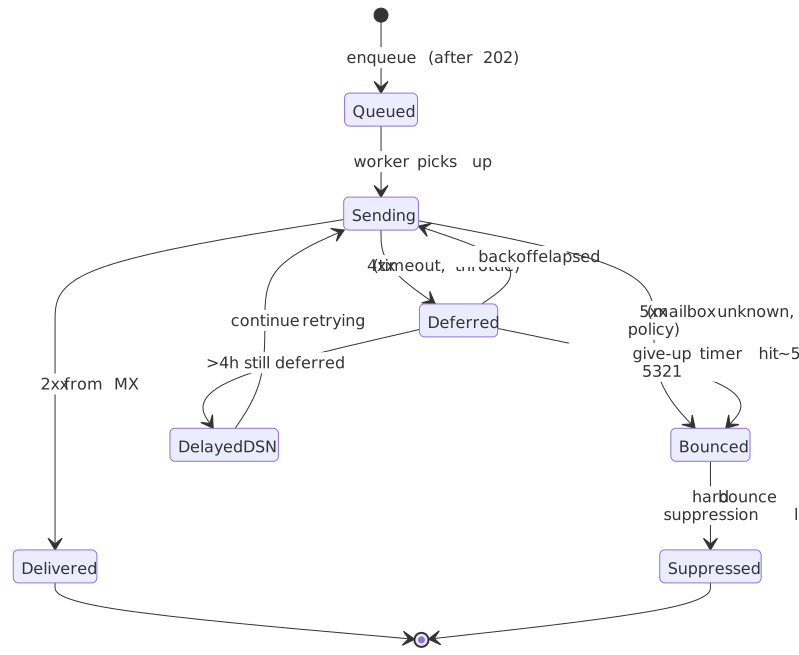
Two operational details often missed:
- Suppression list discipline. Hard bounces (5xx — invalid mailbox, blocked sender) must add the recipient to a per-tenant suppression list that the submission API checks on the next send. ESPs that fail this lose sender reputation fast — the same recipient repeatedly bouncing is a clear spam signal to receivers.
- Feedback loops (FBLs). Major mailbox providers (Yahoo, Microsoft, Comcast) publish ARF-formatted complaint feeds: when a user clicks “Report spam”, the receiver POSTs a structured report to the registered sender. Wire FBL processing into the same suppression pipeline as hard bounces. Gmail does not run a per-message FBL but exposes aggregate spam rate via Postmaster Tools; both signals feed the same reputation model.
Threading Algorithm
class ThreadingService { async assignThread(message: IncomingMessage): Promise<string> { // 1. Check References header (RFC 5322) if (message.references?.length > 0) { for (const ref of message.references.reverse()) { const existingThread = await this.findThreadByMessageId(ref) if (existingThread) { return existingThread.threadId } } } // 2. Check In-Reply-To header if (message.inReplyTo) { const parentThread = await this.findThreadByMessageId(message.inReplyTo) if (parentThread) { return parentThread.threadId } } // 3. Subject-based matching (fallback) const normalizedSubject = this.normalizeSubject(message.subject) const candidateThreads = await this.findThreadsBySubject(message.mailboxId, normalizedSubject, { withinDays: 30 }) // 4. Filter by participant overlap const messageParticipants = new Set([message.from, ...message.to, ...message.cc]) for (const thread of candidateThreads) { const overlap = thread.participants.filter((p) => messageParticipants.has(p)).length // Require at least 2 participants in common if (overlap >= 2) { return thread.threadId } } // 5. Create new thread return this.createThread(message) } private normalizeSubject(subject: string): string { // Remove Re:, Fwd:, Fw:, etc. prefixes return subject .replace(/^(re|fwd?|aw|sv|antw):\s*/gi, "") .trim() .toLowerCase() }}Frontend Considerations
Mailbox UI State Management
Normalized store for efficient updates:
interface MailboxState { // Normalized entities messages: Record<string, MessageSummary> threads: Record<string, Thread> labels: Record<string, Label> // View state currentLabelId: string messageOrder: string[] // Thread IDs in current view selectedThreadIds: Set<string> // Pagination nextPageToken: string | null isLoading: boolean // Optimistic updates pendingUpdates: Map<string, OptimisticUpdate>}// Update a single message without re-fetching listfunction updateMessage(state: MailboxState, messageId: string, updates: Partial<MessageSummary>) { const message = state.messages[messageId] if (!message) return state return { ...state, messages: { ...state.messages, [messageId]: { ...message, ...updates }, }, }}Why normalized:
- Marking read: Update 1 object, not scan array
- Thread operations: Update thread aggregate, individual messages unchanged
- Labels: Add/remove from set, no array reordering
Virtualized Message List
For mailboxes with thousands of messages:
interface VirtualListConfig { containerHeight: number itemHeight: number // Estimated row height overscan: number // Extra rows above/below viewport}class VirtualMailboxList { private readonly PAGE_SIZE = 50 calculateVisibleRange(scrollTop: number, config: VirtualListConfig): Range { const startIndex = Math.max(0, Math.floor(scrollTop / config.itemHeight) - config.overscan) const visibleCount = Math.ceil(config.containerHeight / config.itemHeight) const endIndex = startIndex + visibleCount + config.overscan * 2 return { start: startIndex, end: endIndex } } // Fetch more when approaching end async onScroll(scrollTop: number, scrollHeight: number): Promise<void> { const remainingScroll = scrollHeight - scrollTop - window.innerHeight if (remainingScroll < 500 && this.state.nextPageToken && !this.state.isLoading) { await this.fetchNextPage() } }}Compose Form with Autosave
interface DraftState { draftId: string | null to: EmailAddress[] cc: EmailAddress[] bcc: EmailAddress[] subject: string body: string attachments: AttachmentUpload[] replyToMessageId: string | null lastSavedAt: Date | null isDirty: boolean}class ComposeController { private autosaveTimer: NodeJS.Timeout | null = null private readonly AUTOSAVE_DELAY = 2000 // 2 seconds after last change onFieldChange(field: keyof DraftState, value: any): void { this.state = { ...this.state, [field]: value, isDirty: true } // Debounce autosave if (this.autosaveTimer) { clearTimeout(this.autosaveTimer) } this.autosaveTimer = setTimeout(() => this.saveDraft(), this.AUTOSAVE_DELAY) } async saveDraft(): Promise<void> { if (!this.state.isDirty) return const response = await this.api.saveDraft({ draftId: this.state.draftId, to: this.state.to, subject: this.state.subject, body: this.state.body, // ... }) this.state = { ...this.state, draftId: response.draftId, lastSavedAt: new Date(), isDirty: false, } } async send(): Promise<void> { // Optimistic: show "Sending..." immediately this.ui.showSendingIndicator() try { await this.api.sendMessage({ draftId: this.state.draftId, to: this.state.to, // ... }) // Success: close compose, show "Sent" with undo option this.ui.showSentWithUndo(5000) // 5 second undo window this.close() } catch (error) { this.ui.showError("Failed to send. Message saved as draft.") } }}Offline Support
class OfflineMailbox { private db: IDBDatabase // IndexedDB for local storage async cacheMessages(messages: MessageSummary[]): Promise<void> { const tx = this.db.transaction("messages", "readwrite") for (const msg of messages) { await tx.objectStore("messages").put(msg) } } async getMessagesOffline(labelId: string): Promise<MessageSummary[]> { const tx = this.db.transaction("messages", "readonly") const index = tx.objectStore("messages").index("by-label") return index.getAll(labelId) } // Queue actions when offline async queueAction(action: OfflineAction): Promise<void> { const tx = this.db.transaction("pendingActions", "readwrite") await tx.objectStore("pendingActions").add({ id: crypto.randomUUID(), action, createdAt: new Date(), }) } // Sync when back online async syncPendingActions(): Promise<void> { const tx = this.db.transaction("pendingActions", "readwrite") const actions = await tx.objectStore("pendingActions").getAll() for (const { id, action } of actions) { try { await this.executeAction(action) await tx.objectStore("pendingActions").delete(id) } catch (error) { // Keep in queue for retry console.error("Sync failed:", action, error) } } }}Infrastructure
Cloud-Agnostic Components
| Component | Purpose | Options |
|---|---|---|
| MTA | Inbound/outbound SMTP | Postfix, Haraka, custom |
| Message queue | Delivery queue, async processing | Kafka, Pulsar, RabbitMQ |
| Message store | Email body and metadata | Cassandra, ScyllaDB, DynamoDB |
| Search | Full-text indexing | Elasticsearch, OpenSearch, Solr |
| Object store | Attachments | MinIO, Ceph, S3-compatible |
| Relational DB | User, label metadata | PostgreSQL, CockroachDB |
| Cache | Session, rate limiting | Redis, KeyDB, Dragonfly |
AWS Reference Architecture
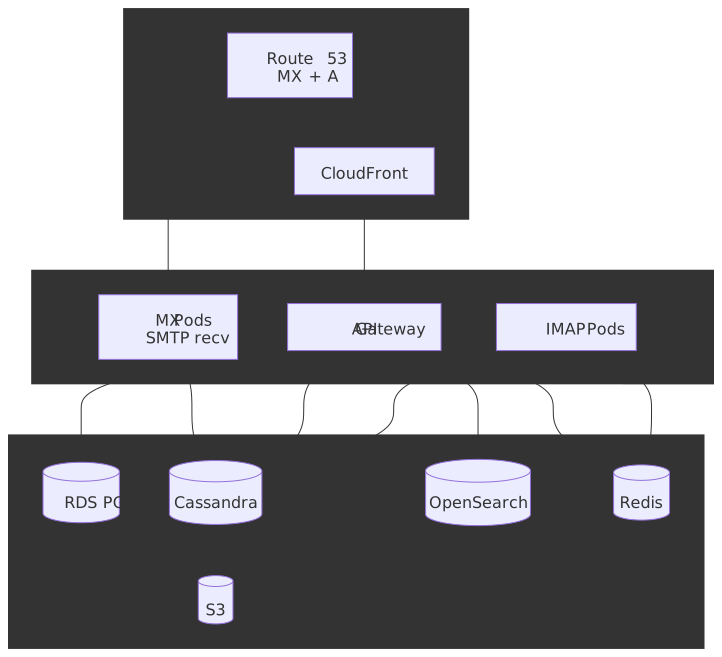
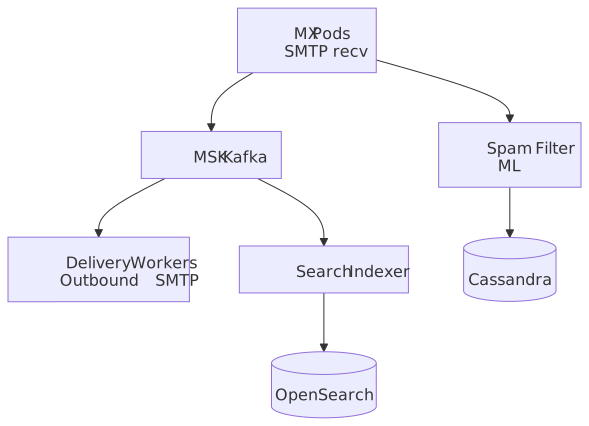
Service configurations:
| Service | Configuration | Rationale |
|---|---|---|
| MX Pods (Fargate) | 2 vCPU, 4GB, autoscale 10-100 | SMTP is CPU-bound |
| Spam Filter | 4 vCPU, 8GB, GPU optional | ML inference |
| API Gateway | 2 vCPU, 4GB | Stateless REST/GraphQL |
| IMAP Pods | 4 vCPU, 8GB | Connection state |
| Delivery Workers | 2 vCPU, 4GB, Spot | Async, retry-tolerant |
| Keyspaces | On-demand | Managed Cassandra |
| OpenSearch | r6g.xlarge × 3 | Search workload |
| ElastiCache Redis | r6g.large cluster | Session, rate limits |
| MSK | kafka.m5.large × 3 | Message queue |
Email-Specific Infrastructure
MX record configuration:
example.com. IN MX 10 mx1.example.com.example.com. IN MX 10 mx2.example.com.example.com. IN MX 20 mx-backup.example.com.DNS records for authentication, transport security, and reporting:
; SPFexample.com. IN TXT "v=spf1 ip4:203.0.113.0/24 include:_spf.google.com -all"; DKIMselector1._domainkey.example.com. IN TXT "v=DKIM1; k=rsa; p=MIIBIjANBg..."; DMARC (with aggregate + forensic reporting)_dmarc.example.com. IN TXT "v=DMARC1; p=reject; rua=mailto:dmarc@example.com; ruf=mailto:dmarc@example.com; pct=100; adkim=s; aspf=s"; MTA-STS (RFC 8461) — points senders at the policy hosted over HTTPS_mta-sts.example.com. IN TXT "v=STSv1; id=20260421T0000Z"; SMTP TLS Reporting (RFC 8460) — TLS handshake telemetry_smtp._tls.example.com. IN TXT "v=TLSRPTv1; rua=mailto:tls-rpt@example.com"; BIMI — verified brand indicator, requires DMARC enforcementdefault._bimi.example.com. IN TXT "v=BIMI1; l=https://example.com/logo.svg; a=https://example.com/vmc.pem"Scaling Considerations
Inbound throughput:
- Single MTA pod: ~10K messages/minute (connection limited)
- 700K messages/second peak → 4,200 MX pods minimum
- With headroom (2x): ~10,000 MX pods
Outbound throughput:
- Per-recipient daily caps at the destination side: Gmail consumer accounts allow 500 recipients/day; Google Workspace allows 2,000/day.
- Sender-side IP reputation warmup: start a fresh dedicated IP at a few hundred messages/day and roughly double daily until you hit the steady-state volume; back off immediately on spam complaints or 4xx throttling.
- Dedicated IPs per reputation tier (transactional vs marketing) so a marketing campaign can’t burn the password-reset IP.
- Bulk senders (≥5,000 messages/day to Gmail or Yahoo personal accounts) must keep Postmaster Tools spam rate below 0.3%, publish aligned DMARC, and support one-click unsubscribe per the 2024 Gmail/Yahoo bulk-sender requirements.
Search index lag:
- Target: < 30 seconds from receive to searchable
- Indexer throughput: ~5K documents/second per node
- 700K/second peak → 140 indexer pods
Storage growth:
- 3.5PB/day raw (messages + attachments)
- With compression (3:1): ~1.2PB/day
- 15-year retention: ~6.5EB
- Tiered storage: Hot (SSD, 30 days) → Warm (HDD, 1 year) → Cold (S3 Glacier)
Conclusion
This design provides a scalable email system with:
- Reliable delivery via store-and-forward queuing with exponential backoff retries
- Strong authentication and transport security through SPF + DKIM + DMARC, ARC across forwarders, and MTA-STS / TLS-RPT to prevent downgrade and surface failures
- Effective spam filtering using ML classification with heuristic rules
- Fast retrieval via time-series optimized storage and full-text search indexing
- Conversation threading using RFC 5322 headers with subject/participant fallback
Key architectural decisions:
- Separate inbound/outbound paths allow independent scaling and different reliability requirements
- Cassandra for messages provides time-series access patterns and horizontal scaling
- Elasticsearch enables sub-second full-text search across billions of messages
- Kafka queues decouple receipt from processing, enabling async spam filtering and indexing
Known limitations:
- Search index lag (up to 30 seconds) means very recent messages may not appear in search
- Spam model requires continuous training on user feedback to adapt to new attacks
- Threading heuristics can fail for long-running threads with subject changes
- Large attachments (>25MB) require chunked upload/download handling
Future enhancements:
- AI-powered smart compose and reply suggestions
- Proactive phishing detection using link analysis
- Federated identity for cross-organization encryption
- Real-time collaborative inbox for team email
Appendix
Prerequisites
- SMTP protocol fundamentals (commands, response codes, envelope vs. headers)
- DNS record types (MX, TXT, CNAME)
- Distributed systems concepts (eventual consistency, partitioning)
- Full-text search fundamentals (inverted indexes, tokenization)
Terminology
| Term | Definition |
|---|---|
| MTA | Mail Transfer Agent; server that routes email between domains (Postfix, Sendmail) |
| MUA | Mail User Agent; email client (Outlook, Thunderbird, web interface) |
| MX record | DNS record specifying mail servers for a domain |
| Envelope | SMTP-level sender/recipient (MAIL FROM, RCPT TO); distinct from message headers |
| SPF | Sender Policy Framework; DNS-based authorization of sending IPs |
| DKIM | DomainKeys Identified Mail; cryptographic message signing |
| DMARC | Domain-based Message Authentication, Reporting, and Conformance; policy layer |
| Bounce | Non-delivery report (NDR); message informing sender of delivery failure |
| Backscatter | Bounces sent to forged sender addresses; a form of spam |
Summary
- Email systems separate inbound (MX servers, spam filtering, storage) from outbound (submission, DKIM signing, delivery queue) flows
- Authentication trifecta (SPF + DKIM + DMARC) prevents spoofing: SPF checks sending IP, DKIM verifies content integrity, DMARC enforces policy
- Naive Bayes achieves 99%+ spam detection by computing P(spam|tokens) with incremental training from user feedback
- Cassandra provides time-series optimized message storage with partition-per-mailbox for efficient folder queries
- Elasticsearch enables sub-500ms full-text search across years of messages with field-specific filtering
- Threading uses RFC 5322 References/In-Reply-To headers with subject and participant matching as fallback
References
Protocol specifications:
- RFC 5321 — Simple Mail Transfer Protocol (SMTP).
- RFC 6409 — Message submission for mail (port 587).
- RFC 3501 — IMAP4rev1; superseded by RFC 9051 (IMAP4rev2).
- RFC 2177 — IMAP
IDLEextension. - RFC 1939 — Post Office Protocol v3 (POP3); legacy retrieve-and-delete client protocol.
- RFC 8620 / RFC 8621 — JMAP core and JMAP for Mail.
- RFC 5322 — Internet Message Format (headers, threading).
- RFC 2045 / RFC 2046 / RFC 2047 / RFC 2049 — MIME (format, media types, encoded-word headers, conformance).
- RFC 8058 — One-click
List-Unsubscribe.
Authentication standards:
- RFC 7208 — Sender Policy Framework (SPF).
- RFC 6376 — DomainKeys Identified Mail (DKIM); updated by RFC 8301 (algorithm and key sizes).
- RFC 7489 — DMARC.
- RFC 8617 — Authenticated Received Chain (ARC) for forwarding.
- RFC 8461 — SMTP MTA Strict Transport Security (MTA-STS).
- RFC 8460 — SMTP TLS Reporting (TLS-RPT).
- RFC 7672 — SMTP security via DNSSEC-anchored DANE TLSA records.
- RFC 5965 — Abuse Reporting Format (ARF) used by mailbox-provider feedback loops.
- RFC 6531 / RFC 6532 — SMTPUTF8 and internationalized message headers (EAI).
- BIMI draft — Brand Indicators for Message Identification.
- Sender Rewriting Scheme (SRS) — envelope rewriting that lets forwarded mail pass SPF.
- NIST SP 800-177r1 — Trustworthy Email.
Spam filtering:
- A Plan for Spam — Paul Graham (2002) — foundational Bayesian spam filter.
- Better Bayesian Filtering — Paul Graham (2003) — refinements and measured FP/FN rates.
- The Spam-Filtering Accuracy Plateau at 99.9% — Yerazunis, MERL, 2004.
- Machine Learning for Email Spam Filtering (PMC, 2019) — ML approaches survey.
Industry implementations and operations:
- Spanner is the engine behind Google services — Google Cloud Blog — Gmail’s migration off Bigtable onto Spanner.
- Large-scale Incremental Processing Using Distributed Transactions and Notifications (Percolator) — Peng & Dabek, OSDI 2010 — the framework Gmail’s Caribou real-time index was built on.
- Apache Lucene — Index file formats — segment layout that backs every Elasticsearch shard.
- Fastmail storage architecture.
- Email sender guidelines (Gmail / Google Workspace) — 2024 bulk-sender requirements (≥5,000/day, DMARC, one-click unsubscribe, <0.3% spam rate).
- Cloudflare — DMARC, DKIM, SPF explained.
- Jamie Zawinski — message threading — the canonical algorithm used by most mail clients.