Design Real-Time Chat and Messaging
A staff-level design for real-time chat at the scale of WhatsApp, Slack, and Discord — sub-second delivery to hundreds of millions of devices, no message loss, and stable per-conversation ordering — built around three deliberate trade-offs: WebSocket transport with stateful gateways, at-least-once delivery with client deduplication, and a hybrid fan-out that picks direct-push or queue-backed delivery per conversation size.
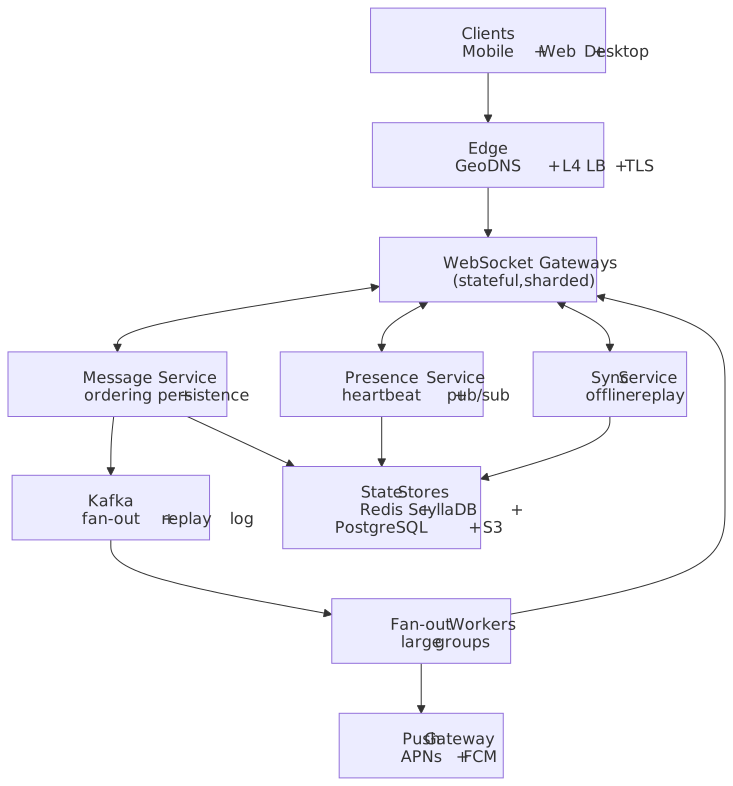
Abstract
A real-time chat system has to satisfy three constraints simultaneously:
- Low latency — messages appear within a few hundred milliseconds, even across regions.
- Reliable delivery — no message is lost across crashes, network partitions, or client offline windows.
- Stable ordering — every participant sees the same sequence per conversation; no time travel, no rewind on reconnect.
The deliberate trade-offs that make those constraints affordable:
| Decision | Choice | Why |
|---|---|---|
| Transport | WebSocket over TLS | Full-duplex, low-overhead frames after a single HTTP/1.1 upgrade (RFC 6455). |
| Delivery semantics | At-least-once + client dedup | Exactly-once is achievable but expensive; client-side idempotency on a stable messageId is simpler and faster. |
| Ordering | Server-assigned sequence numbers per conversation | Single source of truth per partition avoids cross-node clock-skew problems described by Lamport. |
| Fan-out | Hybrid push/pull | Direct push for small groups; queue-backed fan-out for large channels and celebrity feeds. |
| Presence | Heartbeat + Redis pub/sub | Ephemeral; reconstructed on connect; tolerates lossy updates. |
| Offline sync | Per-device sequence cursor | Replay from message store on reconnect; no server-side per-device queue to manage. |
Trade-offs accepted in exchange:
- A central server is on the critical path for ordering; pure peer-to-peer is excluded.
- Clients must deduplicate on
messageId. - Presence is eventually consistent (a few seconds of staleness).
- Durable queues and replicated stores cost more than fire-and-forget delivery.
What this design optimizes for:
- p99 message delivery under 500ms within a region.
- Zero message loss across reconnects, gateway restarts, and Kafka rebalances.
- Seamless offline → online transitions on flaky mobile networks.
- Linear horizontal scaling to billions of messages per day.
Requirements
Functional Requirements
| Requirement | Priority | Notes |
|---|---|---|
| 1:1 direct messaging | Core | Private conversations between two users |
| Group messaging | Core | Up to ~1000 members per group |
| Sent / delivered receipts | Core | Per-recipient state on each message |
| Typing indicators | Core | Bursty, ephemeral, lossy-by-design |
| Online/offline presence | Core | Show user availability status |
| Offline message delivery | Core | Queue and deliver when user reconnects |
| Multi-device sync | Core | Same account on phone + tablet + web simultaneously |
| Message history sync | Core | Retrieve past messages across devices |
| Read receipts | Extended | Per-conversation watermark |
| Media attachments | Extended | Images, videos, files (out of detailed scope) |
| End-to-end encryption | Extended | Signal Double Ratchet for 1:1; Sender Keys or MLS for groups |
Non-Functional Requirements
| Requirement | Target | Rationale |
|---|---|---|
| Availability | 99.99% (≤52 min/year) | Communication is critical; failover must be seamless. |
| Message delivery latency | p99 < 500ms intra-region | Required for “real-time feel”. |
| Message durability | 99.9999% (six nines) | A lost message is a product-killing bug. |
| Offline sync time | < 5s for 1000 missed messages | Fast reconnection on flaky mobile networks. |
| Concurrent connections | 10M per region | Mobile-scale. |
| Message retention | 30 days default, configurable | Storage cost vs. user expectations. |
Scale estimation
Users:
- Monthly Active Users (MAU): 500M
- Daily Active Users (DAU): 200M (40% of MAU)
- Peak concurrent connections: 50M (25% of DAU)
Traffic:
- Messages per user per day: 50 (mix of 1:1 and group)
- Daily messages: 200M × 50 = 10B/day
- Peak messages per second: 10B / 86,400 × 3 (peak multiplier) ≈ 350K msgs/sec
Storage:
- Average message size: 500 bytes (text + metadata)
- Daily storage: 10B × 500B = 5TB/day
- 30-day retention: 150TB
- With 3× replication: 450TB
Connections:
- WebSocket connections per gateway pod: ~500K (memory-bound; the kernel can do more — WhatsApp reportedly ran ~2M concurrent TCP connections per server on tuned FreeBSD/Erlang, then dialed back to ~1M for headroom).
- Gateway pods needed: 50M / 500K = 100 minimum
- With 2× redundancy and burst headroom: 200 pods
Mental model: what makes chat hard
Two ideas explain almost every design choice in this system.
1. The message service is the truth, not the network. The send is not “complete” when the WebSocket frame leaves the sender; it’s complete when the message has a server-assigned sequence number and is durable. Everything before that is best-effort UI. Everything after is replayable.
2. Conversations, not users, are the unit of consistency. Ordering is per-conversation. Two unrelated conversations don’t need a global clock. Two devices for the same user can disagree on what they’ve seen; they reconcile against the per-conversation cursor on reconnect.
A senior engineer reading the rest of the article should be able to map every component back to one of these ideas.
Design paths
Three viable architectures sit at different points on the latency-vs-fan-out spectrum.
Path A — Connection-centric (server-routed)
Every gateway holds a user_id → connection_id map; the message service does direct RPC into the recipient’s gateway.
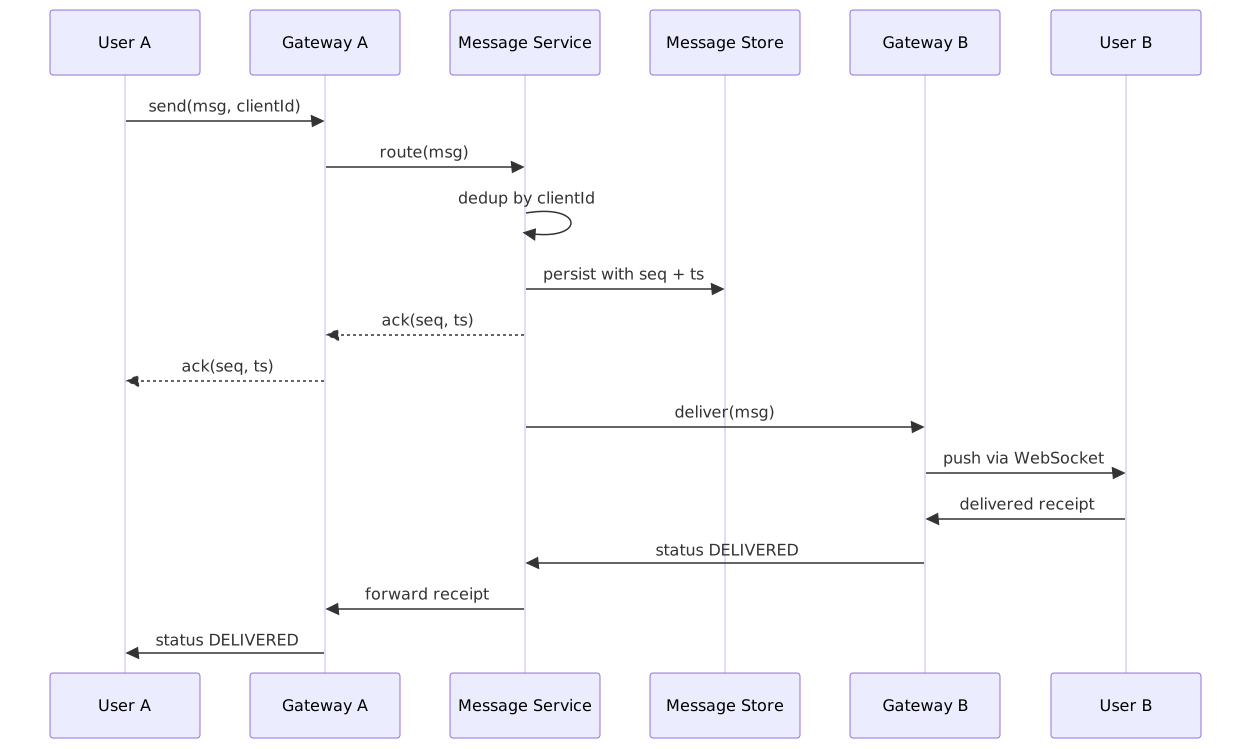
Best when:
- Latency is the dominant requirement.
- Group sizes are bounded (say, < 500 members).
- Strong per-conversation ordering is required and cross-region traffic is moderate.
Trade-offs:
- Lowest possible latency; the path is one RPC hop.
- Simple mental model.
- Strong per-conversation ordering — the message service serializes writes.
- Gateway state management complexity: graceful drain, connection migration on shutdown.
- Limited group size — fan-out cost is borne synchronously by the message service.
Real-world parallel: WhatsApp scaled long-running TCP connections on FreeBSD/Erlang to ~1–2M connections per box, with messages routed directly between connection-holding nodes.
Path B — Queue-centric (async fan-out)
Messages get persisted, then published to a partitioned log; fan-out workers consume and deliver.
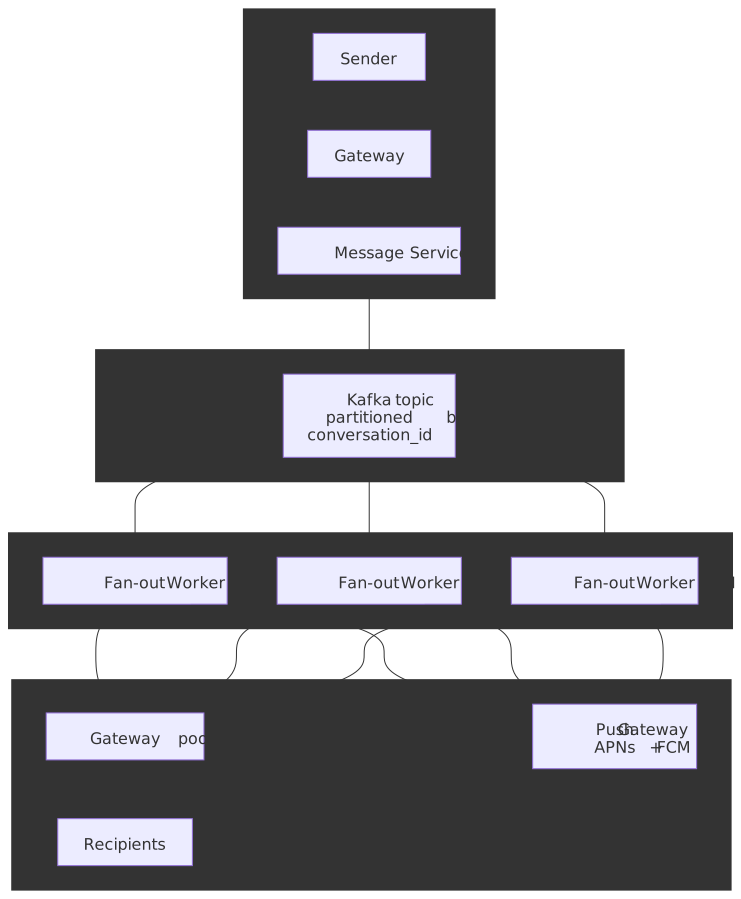
Best when:
- Very large groups or channels (1,000+ members).
- Geographic distribution across regions.
- 100–500ms extra latency is acceptable.
- You need replay and audit (e.g., compliance, analytics).
Trade-offs:
- Handles large fan-out efficiently and back-pressure flows naturally through partition lag.
- Built-in replay capability; consumers can rewind.
- Better failure isolation — a slow consumer affects one partition, not the whole gateway pool.
- Higher latency: the queue hop adds tens to hundreds of milliseconds.
- More moving parts (Kafka itself is a system to operate).
- Ordering only holds within a partition, so the partition key matters.
Real-world parallel: Slack runs a self-driving Kafka platform at ~6.5 Gbps peak across 10 clusters and ~700 TB — but Kafka is the backbone for jobs, logs, billing, and analytics rather than the chat fan-out itself. Their per-channel fan-out is handled by Channel Servers using consistent hashing, with edge Gateway Servers terminating WebSocket sessions.
Path C — Hybrid (push for small, pull for large)
Pick per message based on conversation size.
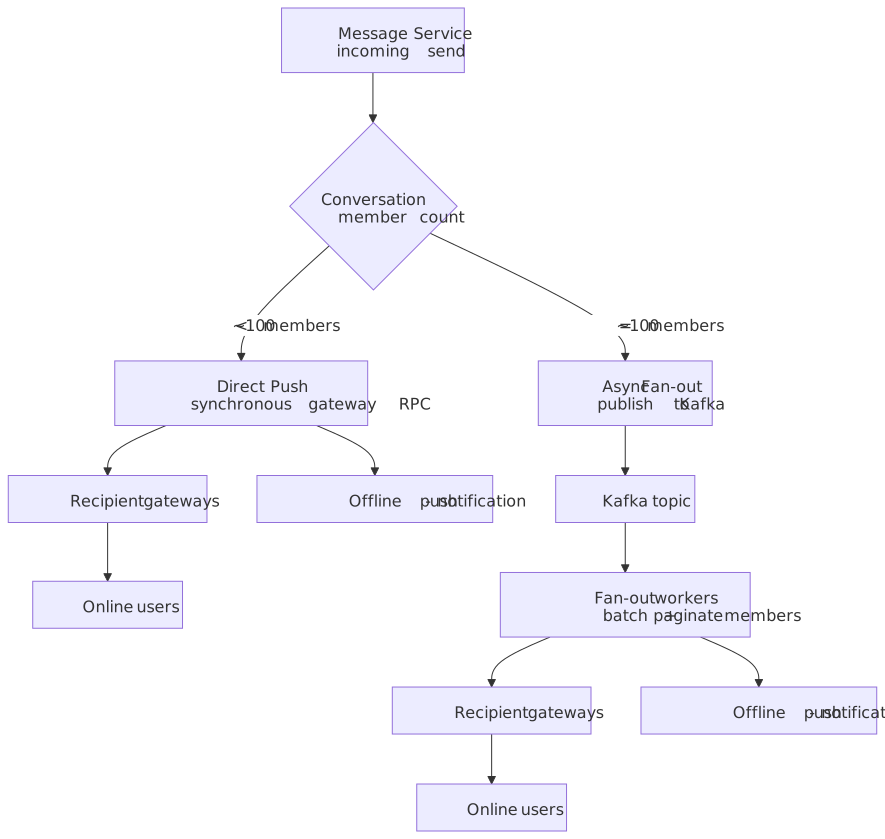
Best when:
- Mix of 1:1, small groups, and large channels (most consumer messengers).
- You need to balance latency for the common case against back-pressure for the long tail.
- Some conversations have celebrity-level fan-out.
Trade-offs:
- Optimal latency for the common case (1:1 and small groups stay on direct push).
- Scales to large channels without overwhelming the message service.
- Two code paths to operate and observe.
- The threshold (~50–100 members) needs tuning against actual gateway CPU and tail latency.
- Slightly inconsistent delivery timing across conversation sizes.
Real-world parallel: Discord uses a different mechanism but the same idea — every guild runs as a single Elixir GenServer that fans out via BEAM message passing through the Manifold library. For huge guilds Discord layers in Relays (intermediate fan-out processes) and Passive Sessions, which together cut fan-out cost by ~90% by skipping inactive viewers. Notably, Kafka is not on the chat-message hot path at Discord.
Path comparison
| Factor | Connection-Centric | Queue-Centric | Hybrid |
|---|---|---|---|
| Latency (p50) | 50–100ms | 100–300ms | 50–300ms |
| Max group size | ~500 | unbounded | unbounded |
| Ordering guarantee | per-conversation | per-partition | per-conversation |
| Failure isolation | gateway-level | partition-level | mixed |
| Replay | weak | native | mixed |
| Production parallel | Slack (jobs/logs); LinkedIn messaging | Discord (BEAM-native); WhatsApp/Telegram for some flows |
Why this article picks Path C
The hybrid approach:
- Covers the full spectrum of use cases (1:1 to large channels).
- Mirrors how production messengers actually behave — even when their plumbing differs (Discord’s
GenServer+ Manifold is conceptually a hybrid). - Forces the most interesting trade-offs to surface — threshold tuning, ordering inside vs across paths, hot-shard mitigation.
High-Level Design
The overview diagram at the top of the article is the system’s component map; this section drills into the four service boundaries that matter.
WebSocket Gateway
The gateway terminates client connections and routes everything else.
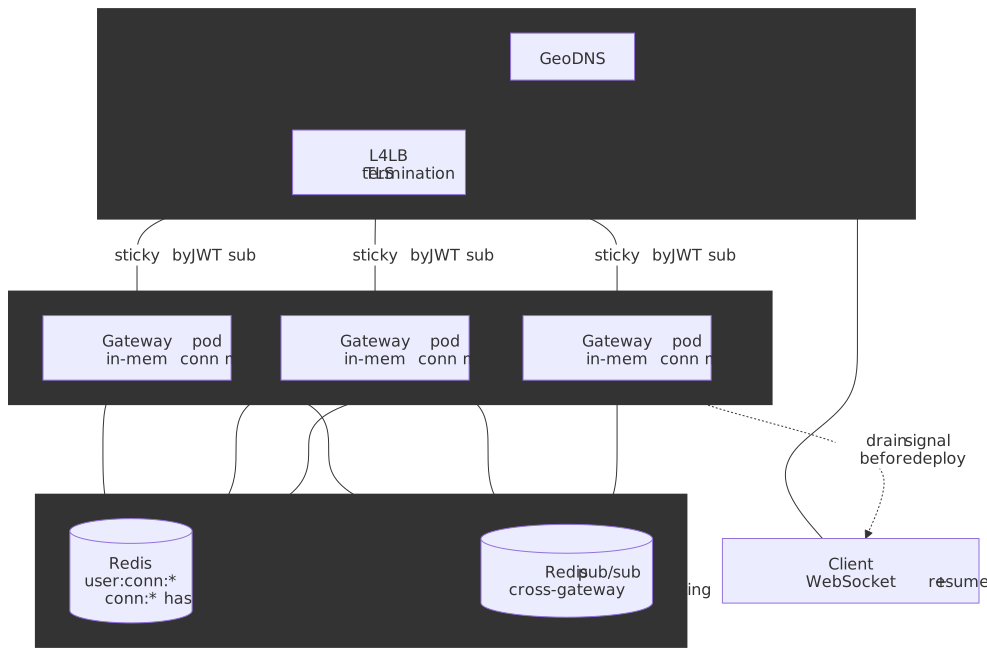
Responsibilities:
- WebSocket connection lifecycle (upgrade, heartbeat, drain, close).
- Authentication and session validation.
- Routing client → service and service → client.
- Presence event broadcasting on connect/disconnect.
- Graceful drain on rolling deploys (notify clients to reconnect with a hint of which gateway to try next).
Design decisions:
| Decision | Choice | Rationale |
|---|---|---|
| Protocol | WebSocket over TLS (RFC 6455) | Full-duplex; minimum 2-byte frame header server→client, 6 bytes client→server (mandatory mask, §5.3). |
| Session affinity | Consistent hashing by user_id, sticky at the L7 LB by JWT sub (or a srv_id cookie for browser fallbacks) |
Predictable routing simplifies presence and per-user state. Cookie-based stickiness avoids the NAT/VPN clumping that pure source-IP hashing causes. |
| Cross-pod delivery | Redis pub/sub (or gRPC) keyed by connection_id |
A message for a user on a different pod looks up the gateway in Redis and is routed there in one hop, without losing per-conversation ordering (which is enforced upstream at the message service). |
| Heartbeat | 30s ping/pong (RFC 6455 §5.5.2) | Balance between detection speed and battery/cell-radio drain on mobile. |
| Connection timeout | 90s (3 missed heartbeats) | Survives short cell handovers without dropping the session. |
| Max connections / pod | ~500K | Memory-bound (~few KB per connection); kernel can do more after sysctl tuning. |
| Resume token | Opaque, short-TTL | Allows fast reconnect to the same logical session without re-establishing presence subscriptions. |
| Fallback transport | Long-poll receive + HTTP POST send | Some corporate proxies/firewalls block the WebSocket upgrade. Slack documents this “degraded mode” path. |
Scaling approach:
- Horizontal scaling with consistent hashing.
- User → gateway mapping stored in Redis with short TTL.
- Graceful drain: send
connection.drainwith a 30s deadline; clients reconnect during the window.
Important
Gateway pods are stateful in memory but stateless on disk. Treat the in-memory connection_id → user_id map as a cache of Redis. If a pod dies, clients reconnect, repopulate the map, and the system keeps moving — there is no on-disk state to recover.
Note
The capability-negotiation pattern from IRCv3 CAP LS 302 and labeled responses is worth borrowing for the handshake: advertise feature flags up front, let clients opt into typing tags / read receipts / batched chat history, and correlate every request with a server response via an explicit label. It avoids version-skew bugs as the protocol grows.
Message Service
The message service is the linearization point per conversation. Everything else can be eventually consistent; this cannot.
State per message:
interface Message { messageId: string // UUID, client-generated for idempotency conversationId: string // 1:1 or group conversation senderId: string content: MessageContent timestamp: number // server-assigned epoch millis sequenceNumber: bigint // per-conversation monotonic status: MessageStatus // PENDING | SENT | DELIVERED | READ expiresAt?: number // optional TTL}interface MessageContent { type: "text" | "image" | "file" | "location" text?: string mediaUrl?: string metadata?: Record<string, unknown>}type MessageStatus = "PENDING" | "SENT" | "DELIVERED" | "READ"Message flow on send:
- Receive — gateway forwards
message.sendwith the client-generatedmessageId. - Deduplicate — check
messageIdin the recent-message Redis cache (idempotent retry). - Validate — sender membership, rate limits, content checks.
- Sequence + persist — assign sequence number atomically; write to ScyllaDB with server timestamp.
- Acknowledge — return
(sequenceNumber, timestamp)to the sender. - Route — direct push or Kafka, based on member count.
- Fan-out — distribute to recipient gateways and the push gateway.
Presence Service
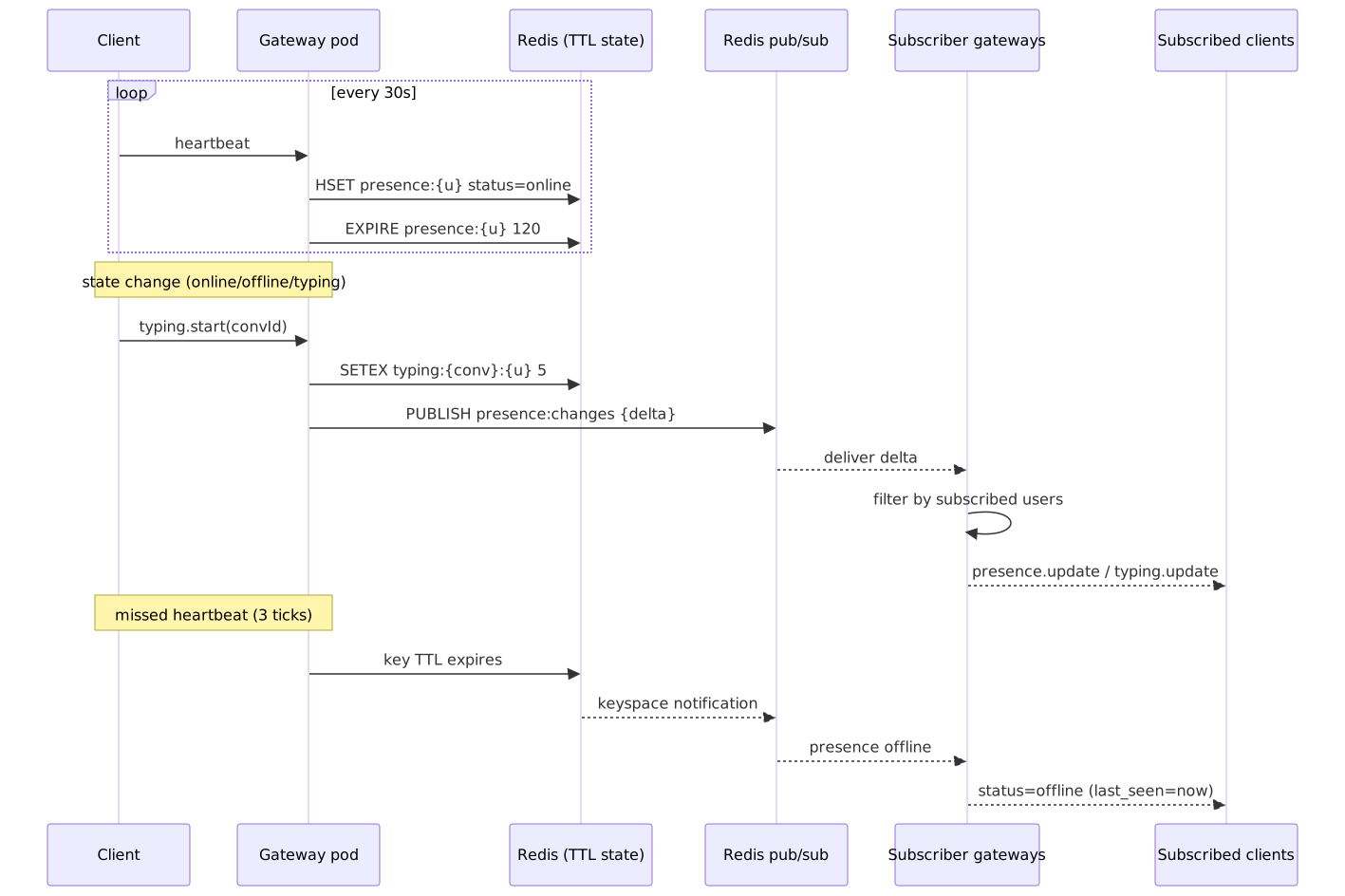
Presence is intentionally low-fidelity. The service holds heartbeat-derived TTL state in Redis and broadcasts deltas via pub/sub. The conceptual model — “online” as a TTL-bounded subscription, with deltas pushed to subscribers — is the same one XMPP RFC 6121 §3 defines for presence subscriptions, just realised with Redis instead of XML stanzas.
Design decisions:
- No persistence — presence is reconstructed from heartbeats; nothing on disk.
- TTL-based — keys auto-expire; “last seen” is the negative space.
- Pub/sub distribution — Redis pub/sub for delta updates between gateways.
- Throttled — at most one presence update per user per second; typing indicators capped at one event per second.
Data structures:
interface UserPresence { userId: string status: "online" | "away" | "offline" lastSeen: number // epoch millis deviceType: "mobile" | "web" | "desktop" typingIn?: string // conversationId if typing typingExpires?: number // auto-clear after 5s}Presence subscription:
- Users subscribe to presence of their contacts on connect.
- Changes broadcast via Redis pub/sub channels keyed by
user_id. - Gateways filter and forward to the relevant connected clients.
Note
LinkedIn’s presence platform sits at the same conceptual point — persistent connections (in their case Server-Sent Events, not WebSocket), an Akka actor per session, and a target end-to-end publish latency under 100ms. They explicitly smooth out connection flapping on lossy mobile networks; design for that early.
Sync Service
The sync service replays missed messages on reconnect. It is the boring but load-bearing service nobody talks about.
Sync protocol:
- Each device maintains
(conversationId → lastSequenceNumber)locally. - On reconnect, the device sends the list to the sync service.
- The service returns all messages with
sequenceNumber > lastSequenceNumberper conversation. - The client merges into its local store, deduplicating by
messageId.
Pagination:
- Default page size: 50 messages.
- Cursor:
(conversationId, sequenceNumber). - Bidirectional — forward (newer) and backward (older) fetching for history scrubbing.
API Design
WebSocket protocol
Connection handshake
wss://chat.example.com/ws?token={jwt}&device_id={uuid}Initial server → client message:
{ "type": "connected", "connectionId": "conn_abc123", "serverTime": 1706886400000, "heartbeatInterval": 30000, "resumeToken": "resume_xyz789"}Client → server messages
Send Message:
{ "type": "message.send", "id": "req_001", "payload": { "messageId": "msg_uuid_client_generated", "conversationId": "conv_abc123", "content": { "type": "text", "text": "Hello, world!" } }}Typing Indicator:
{ "type": "typing.start", "payload": { "conversationId": "conv_abc123" }}Mark Read:
{ "type": "message.read", "payload": { "conversationId": "conv_abc123", "upToSequence": 1542 }}Heartbeat:
{ "type": "heartbeat", "timestamp": 1706886400000}Server → client messages
Acknowledgment:
{ "type": "message.ack", "id": "req_001", "payload": { "messageId": "msg_uuid_client_generated", "sequenceNumber": 1543, "timestamp": 1706886400123 }}New message:
{ "type": "message.new", "payload": { "messageId": "msg_xyz789", "conversationId": "conv_abc123", "senderId": "user_456", "content": { "type": "text", "text": "Hi there!" }, "sequenceNumber": 1544, "timestamp": 1706886401000 }}Delivery receipt:
{ "type": "message.delivered", "payload": { "conversationId": "conv_abc123", "messageIds": ["msg_uuid_1", "msg_uuid_2"], "deliveredTo": "user_456", "timestamp": 1706886402000 }}Read receipt:
{ "type": "message.read_receipt", "payload": { "conversationId": "conv_abc123", "readUpToSequence": 1544, "readBy": "user_456", "timestamp": 1706886403000 }}Presence update:
{ "type": "presence.update", "payload": { "userId": "user_456", "status": "online", "typingIn": null }}Typing update:
{ "type": "typing.update", "payload": { "conversationId": "conv_abc123", "userId": "user_456", "isTyping": true }}REST API
Sync messages (offline recovery)
POST /api/v1/sync
{ "conversations": [ { "conversationId": "conv_abc", "lastSequence": 1500 }, { "conversationId": "conv_xyz", "lastSequence": 2300 } ], "limit": 100}{ "conversations": [ { "conversationId": "conv_abc", "messages": [ { "messageId": "msg_001", "senderId": "user_123", "content": { "type": "text", "text": "Hello" }, "sequenceNumber": 1501, "timestamp": 1706886400000, "status": "DELIVERED" } ], "hasMore": false } ], "serverTime": 1706886500000}Create conversation
POST /api/v1/conversations
{ "type": "direct", "participantIds": ["user_456"] }Create group
POST /api/v1/groups
{ "name": "Project Team", "participantIds": ["user_456", "user_789"], "settings": { "onlyAdminsCanPost": false, "allowMemberInvites": true }}Message history
GET /api/v1/conversations/{id}/messages?before={sequence}&limit=50
Error responses
| Code | Error | When |
|---|---|---|
| 400 | INVALID_MESSAGE |
Message format invalid |
| 401 | UNAUTHORIZED |
Invalid or expired token |
| 403 | FORBIDDEN |
Not a member of conversation |
| 404 | CONVERSATION_NOT_FOUND |
Conversation doesn’t exist |
| 409 | DUPLICATE_MESSAGE |
messageId already processed |
| 429 | RATE_LIMITED |
Too many messages |
{ "error": "RATE_LIMITED", "message": "Message rate limit exceeded", "retryAfter": 5, "limit": "100 messages per minute"}Data Modeling
Message storage (ScyllaDB)
Per-conversation time-series access dominates the workload, so we partition by conversation_id and cluster by sequence_number.
CREATE TABLE messages ( conversation_id UUID, sequence_number BIGINT, message_id UUID, sender_id UUID, content_type TEXT, content_text TEXT, content_media_url TEXT, timestamp TIMESTAMP, status TEXT, expires_at TIMESTAMP, PRIMARY KEY ((conversation_id), sequence_number)) WITH CLUSTERING ORDER BY (sequence_number DESC);Why ScyllaDB:
- Time-series-friendly partitioning matches the access pattern.
- Shard-per-core C++ runtime — no JVM GC pauses.
- Linear horizontal scaling.
- Discord migrated from Cassandra to ScyllaDB and reported p99 historical-fetch latency dropping from 40–125ms to a steady 15ms, with inserts dropping from 5–70ms to a steady 5ms — and the cluster collapsing from 177 Cassandra nodes to 72 ScyllaDB nodes.
Partitioning rules of thumb:
- ScyllaDB defaults to a 1000MB partition warning threshold, but the practical “large partition” line is around 100MB — about 200K messages per conversation at 500B each.
- For very active conversations, add a time bucket to the partition key:
((conversation_id, time_bucket), sequence_number)with daily buckets for active chats and monthly for archives.
Message deduplication cache (Redis)
SETEX msg:dedup:{message_id} 86400 1EXISTS msg:dedup:{message_id}24h TTL covers the longest realistic retry window from a flaky mobile client.
User and conversation metadata (PostgreSQL)
CREATE TABLE users ( id UUID PRIMARY KEY DEFAULT gen_random_uuid(), username VARCHAR(50) UNIQUE NOT NULL, display_name VARCHAR(100), avatar_url TEXT, phone_hash VARCHAR(64) UNIQUE, created_at TIMESTAMPTZ DEFAULT NOW(), last_active_at TIMESTAMPTZ);CREATE TABLE conversations ( id UUID PRIMARY KEY DEFAULT gen_random_uuid(), type VARCHAR(20) NOT NULL, -- 'direct' or 'group' name VARCHAR(100), -- NULL for direct avatar_url TEXT, created_by UUID REFERENCES users(id), created_at TIMESTAMPTZ DEFAULT NOW(), updated_at TIMESTAMPTZ DEFAULT NOW(), last_message_at TIMESTAMPTZ, last_sequence BIGINT DEFAULT 0, member_count INT DEFAULT 0, settings JSONB DEFAULT '{}');CREATE TABLE conversation_members ( conversation_id UUID REFERENCES conversations(id) ON DELETE CASCADE, user_id UUID REFERENCES users(id) ON DELETE CASCADE, role VARCHAR(20) DEFAULT 'member', -- 'admin' or 'member' joined_at TIMESTAMPTZ DEFAULT NOW(), last_read_sequence BIGINT DEFAULT 0, muted_until TIMESTAMPTZ, PRIMARY KEY (conversation_id, user_id));CREATE INDEX idx_members_user ON conversation_members(user_id);CREATE INDEX idx_conversations_updated ON conversations(updated_at DESC);Session and connection state (Redis)
SADD user:conn:{user_id} {connection_id}SREM user:conn:{user_id} {connection_id}HSET conn:{connection_id} gateway "gateway-1.us-east-1" user_id "user_123" device_id "device_abc" connected_at 1706886400000HSET presence:{user_id} status "online" last_seen 1706886400000 device_type "mobile"EXPIRE presence:{user_id} 120SETEX typing:{conversation_id}:{user_id} 5 1Database selection matrix
| Data | Store | Why |
|---|---|---|
| Messages | ScyllaDB | Time-series partitioning, low latency, horizontal scale |
| User profiles | PostgreSQL | ACID, complex queries, moderate scale |
| Conversation metadata | PostgreSQL | Relational queries, ACL management |
| Sessions, presence | Redis Cluster | Sub-ms latency, TTL, pub/sub |
| Message dedup cache | Redis | Fast lookups, automatic expiry |
| Media files | S3 | Object storage with CDN integration |
| Analytics events | Kafka → ClickHouse | High-volume time-series analytics |
Low-Level Design
Message delivery pipeline
Direct push (small groups)
For conversations with < 100 members:
class DirectPushHandler { private readonly redis: RedisCluster private readonly messageStore: MessageStore async deliverMessage(message: Message): Promise<void> { const members = await this.getConversationMembers(message.conversationId) const deliveryTasks = members .filter((m) => m.userId !== message.senderId) .map(async (member) => { const connections = await this.redis.smembers(`user:conn:${member.userId}`) if (connections.length > 0) { await Promise.all(connections.map((connId) => this.pushToConnection(connId, message))) return { userId: member.userId, status: "pushed" as const } } else { await this.queuePushNotification(member.userId, message) return { userId: member.userId, status: "queued" as const } } }) const results = await Promise.all(deliveryTasks) const deliveredTo = results.filter((r) => r.status === "pushed").map((r) => r.userId) if (deliveredTo.length > 0) { await this.notifyDeliveryReceipt(message, deliveredTo) } } private async pushToConnection(connId: string, message: Message): Promise<void> { const connInfo = await this.redis.hgetall(`conn:${connId}`) const gateway = connInfo.gateway await this.gatewayClient.send(gateway, { type: "deliver", connectionId: connId, message, }) }}Kafka fan-out (large groups)
For conversations with ≥ 100 members:
class KafkaFanoutHandler { private readonly kafka: KafkaProducer private readonly FANOUT_TOPIC = "messages.fanout" async publishForFanout(message: Message, memberCount: number): Promise<void> { await this.kafka.send({ topic: this.FANOUT_TOPIC, messages: [ { key: message.conversationId, // partition for ordering value: JSON.stringify({ message, memberCount, publishedAt: Date.now(), }), }, ], }) }}class FanoutConsumer { private readonly BATCH_SIZE = 100 async processMessage(record: KafkaRecord): Promise<void> { const { message, memberCount } = JSON.parse(record.value) let offset = 0 while (offset < memberCount) { const memberBatch = await this.getMemberBatch(message.conversationId, offset, this.BATCH_SIZE) await Promise.all(memberBatch.map((member) => this.deliverToMember(member, message))) offset += this.BATCH_SIZE } }}Message ordering and sequencing
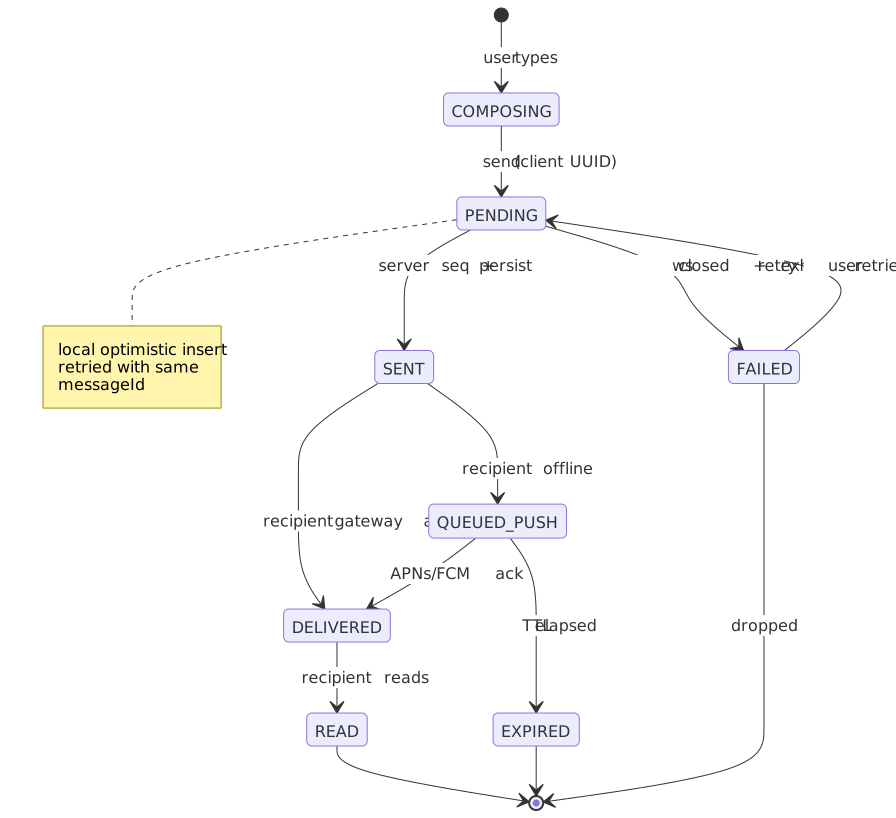
Every message walks the same state machine, regardless of fan-out path. Treat the diagram as the contract between the client UI and the server: anything the UI shows has to map to one of these states.
Sequence number assignment
class SequenceGenerator { private readonly redis: RedisCluster async getNextSequence(conversationId: string): Promise<bigint> { const sequence = await this.redis.incr(`seq:${conversationId}`) return BigInt(sequence) }}class MessageProcessor { async processIncoming(conversationId: string, message: IncomingMessage): Promise<ProcessedMessage> { const lock = await this.acquireLock(`lock:msg:${conversationId}`, 5000) try { const sequenceNumber = await this.sequenceGenerator.getNextSequence(conversationId) const timestamp = Date.now() const processed: ProcessedMessage = { ...message, sequenceNumber, timestamp, status: "SENT", } await this.messageStore.insert(processed) return processed } finally { await lock.release() } }}Caution
Per-conversation Redis INCR is the single most contended operation in this system. For very hot conversations, shard sequence assignment by routing all writes to one logical owner (the Channel Server pattern Slack uses) so the increment becomes a local memory op rather than a distributed lock.
Client-side ordering
class ClientMessageBuffer { private pendingMessages: Map<string, Message[]> = new Map() private lastSequence: Map<string, bigint> = new Map() onMessageReceived(message: Message): void { const expected = (this.lastSequence.get(message.conversationId) || 0n) + 1n if (message.sequenceNumber === expected) { this.deliverToUI(message) this.lastSequence.set(message.conversationId, message.sequenceNumber) this.flushBuffer(message.conversationId) } else if (message.sequenceNumber > expected) { this.bufferMessage(message) this.requestMissing(message.conversationId, expected, message.sequenceNumber) } // sequence < expected → duplicate → ignore } private flushBuffer(conversationId: string): void { const buffer = this.pendingMessages.get(conversationId) || [] buffer.sort((a, b) => Number(a.sequenceNumber - b.sequenceNumber)) let expected = (this.lastSequence.get(conversationId) || 0n) + 1n while (buffer.length > 0 && buffer[0].sequenceNumber === expected) { const msg = buffer.shift()! this.deliverToUI(msg) this.lastSequence.set(conversationId, msg.sequenceNumber) expected++ } this.pendingMessages.set(conversationId, buffer) }}Multi-device sync
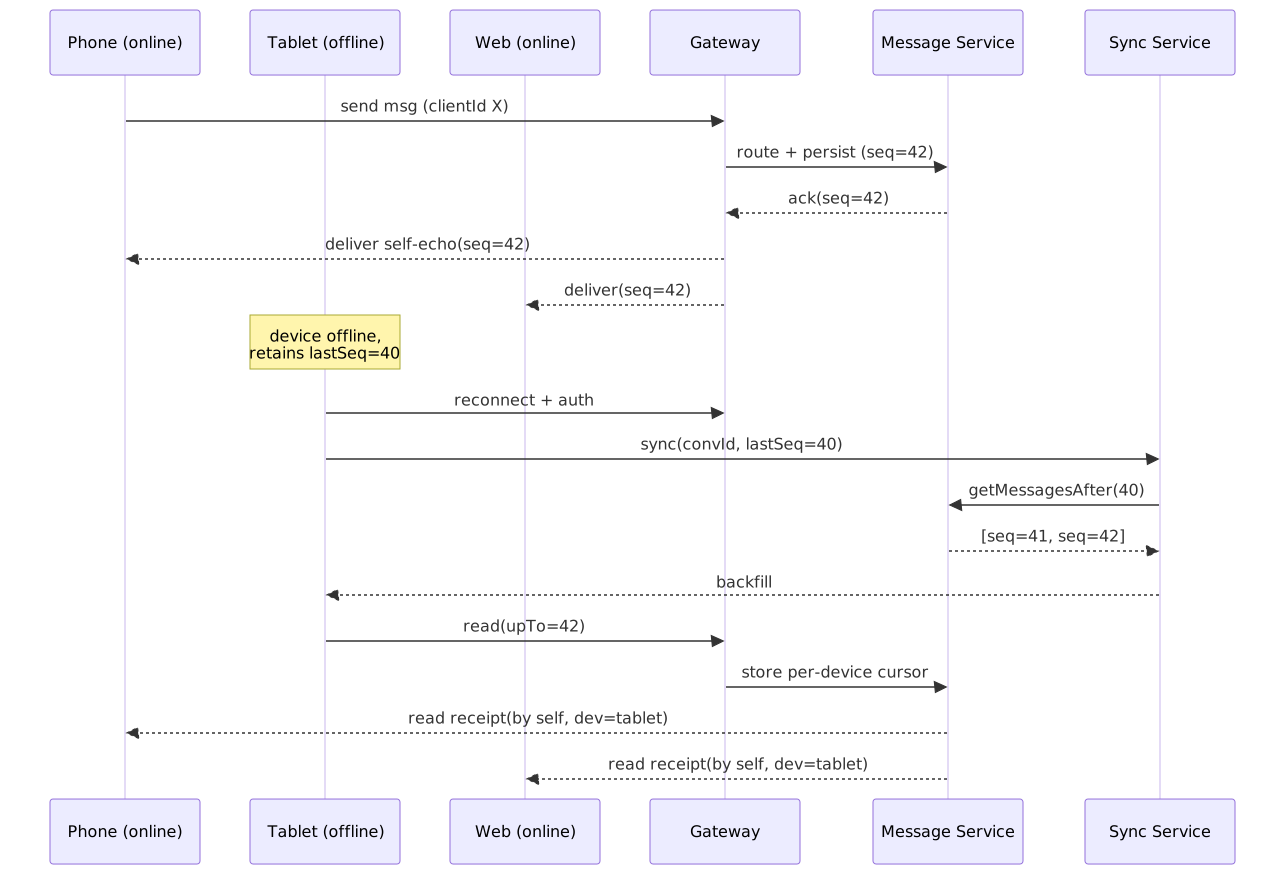
A user with phone, tablet, and laptop logged in is the common case, not the edge case. The model:
- Each linked device is its own connection with a stable
device_id. - The message service maintains a per-device cursor:
(user_id, device_id, conversation_id) → lastSeq. - Messages are fanned out to all online devices for the user, including the sender’s own non-active devices (“self-echo”).
- Read receipts collapse across devices: any device marking
upToSequence = Nadvances the user’s per-conversation watermark; the other devices receiveread_receiptevents to dim notifications.
Note
WhatsApp’s multi-device design is the reference for E2EE messengers — each device has its own identity key and the sender encrypts once per device. For non-E2EE messengers like Telegram cloud chats, the model collapses to “the server-stored conversation is the truth and every device pulls from it” — simpler at the cost of giving up E2EE guarantees.
Presence system
Heartbeat processing
class PresenceManager { private readonly PRESENCE_TTL = 120 private readonly TYPING_TTL = 5 async handleHeartbeat(userId: string, deviceType: string): Promise<void> { const now = Date.now() await this.redis .multi() .hset(`presence:${userId}`, { status: "online", last_seen: now, device_type: deviceType, }) .expire(`presence:${userId}`, this.PRESENCE_TTL) .exec() await this.redis.publish( `presence:changes`, JSON.stringify({ userId, status: "online", timestamp: now }), ) } async handleDisconnect(userId: string): Promise<void> { const connections = await this.redis.smembers(`user:conn:${userId}`) if (connections.length === 0) { const now = Date.now() await this.redis.hset(`presence:${userId}`, { status: "offline", last_seen: now }) await this.redis.publish( `presence:changes`, JSON.stringify({ userId, status: "offline", lastSeen: now }), ) } } async setTyping(userId: string, conversationId: string): Promise<void> { await this.redis.setex(`typing:${conversationId}:${userId}`, this.TYPING_TTL, "1") await this.redis.publish( `typing:${conversationId}`, JSON.stringify({ userId, isTyping: true }), ) }}Presence subscription
class PresenceSubscriber { private subscribedUsers: Set<string> = new Set() async subscribeToContacts(userId: string, contactIds: string[]): Promise<void> { const pipeline = this.redis.pipeline() contactIds.forEach((id) => pipeline.hgetall(`presence:${id}`)) const results = await pipeline.exec() const presences = contactIds.map((id, i) => ({ userId: id, ...(results[i][1] || { status: "offline" }), })) this.sendToClient({ type: "presence.bulk", payload: { presences } }) contactIds.forEach((id) => this.subscribedUsers.add(id)) } onPresenceChange(change: PresenceChange): void { if (this.subscribedUsers.has(change.userId)) { this.sendToClient({ type: "presence.update", payload: change }) } }}Push notifications for offline delivery
When a recipient has no live WebSocket, the gateway hands the message envelope to the push gateway, which bridges to APNs (iOS) and FCM (Android, Web). The boundary matters — these vendors have their own delivery semantics that the chat system has to design around:
- Best-effort delivery, not guaranteed. APNs and FCM coalesce queued notifications when a device has been offline for too long; the push is a hint that the device should reconnect and replay via the sync service, not the durable copy.
- Collapse keys /
apns-collapse-id. Use a per-conversation collapse key so a flurry of messages while the device is offline shows up as one badge, not 50. - Silent / data-only pushes (
content-available: 1, FCMdatapayload) wake the app to fetch the actual message over the chat channel, which avoids leaking message text into the OS notification payload — essential for E2EE messengers, where the server has no plaintext to put in the visible body. - TTL. Set a short TTL (
apns-expiration/ FCMtime_to_live) so a queue that has aged past usefulness drops cleanly instead of floods the user on reconnect. - Throttling. APNs and FCM both throttle abusive senders; back off on
429/Too many requestsand surface the throttle to product (don’t retry blindly).
This layer is the most common source of “the system says delivered but the user never saw it” bug reports — design for the push to be advisory and the sync replay on reconnect to be authoritative.
Offline sync protocol
class SyncService { async syncConversations( userId: string, syncState: Array<{ conversationId: string; lastSequence: bigint }>, ): Promise<SyncResponse> { const results: ConversationSync[] = [] for (const { conversationId, lastSequence } of syncState) { const isMember = await this.checkMembership(userId, conversationId) if (!isMember) continue const messages = await this.messageStore.getMessagesAfter(conversationId, lastSequence, 100) const conversation = await this.conversationStore.get(conversationId) results.push({ conversationId, messages, hasMore: messages.length === 100, lastSequence: messages.length > 0 ? messages[messages.length - 1].sequenceNumber : lastSequence, unreadCount: await this.getUnreadCount(userId, conversationId), }) } const newConversations = await this.getNewConversations(userId, syncState) return { conversations: results, newConversations, serverTime: Date.now() } }}Frontend Considerations
Connection management
Reconnect with capped exponential backoff and jitter:
class WebSocketManager { private ws: WebSocket | null = null private reconnectAttempt = 0 private readonly MAX_RECONNECT_DELAY = 30000 private readonly BASE_DELAY = 1000 connect(): void { this.ws = new WebSocket(this.buildUrl()) this.ws.onopen = () => { this.reconnectAttempt = 0 this.onConnected() } this.ws.onclose = (event) => { if (!event.wasClean) this.scheduleReconnect() } this.ws.onerror = () => { // surfaces as onclose } } private scheduleReconnect(): void { const delay = Math.min( this.BASE_DELAY * Math.pow(2, this.reconnectAttempt) + Math.random() * 1000, this.MAX_RECONNECT_DELAY, ) this.reconnectAttempt++ setTimeout(() => this.connect(), delay) }}Local message storage
IndexedDB schema for offline support:
interface LocalDBSchema { messages: { key: [string, number] // [conversationId, sequenceNumber] value: Message indexes: { "by-conversation": string "by-timestamp": number "by-status": string } } conversations: { key: string // conversationId value: ConversationMeta indexes: { "by-updated": number } } syncState: { key: string // conversationId value: { lastSequence: number; lastSync: number } }}class LocalMessageStore { private db: IDBDatabase async saveMessage(message: Message): Promise<void> { const tx = this.db.transaction("messages", "readwrite") await tx.objectStore("messages").put(message) } async getMessages( conversationId: string, options: { before?: number; limit: number }, ): Promise<Message[]> { const tx = this.db.transaction("messages", "readonly") const index = tx.objectStore("messages").index("by-conversation") const range = IDBKeyRange.bound( [conversationId, 0], [conversationId, options.before || Number.MAX_SAFE_INTEGER], ) const messages: Message[] = [] let cursor = await index.openCursor(range, "prev") while (cursor && messages.length < options.limit) { messages.push(cursor.value) cursor = await cursor.continue() } return messages }}Optimistic updates
class MessageSender { async sendMessage(conversationId: string, content: MessageContent): Promise<void> { const clientMessageId = crypto.randomUUID() const optimisticMessage: Message = { messageId: clientMessageId, conversationId, senderId: this.currentUserId, content, timestamp: Date.now(), sequenceNumber: -1n, status: "PENDING", } this.messageStore.addOptimistic(optimisticMessage) this.ui.appendMessage(optimisticMessage) await this.localDb.saveMessage(optimisticMessage) try { const ack = await this.ws.sendAndWait({ type: "message.send", payload: { messageId: clientMessageId, conversationId, content }, }) const confirmedMessage = { ...optimisticMessage, sequenceNumber: ack.sequenceNumber, timestamp: ack.timestamp, status: "SENT" as const, } this.messageStore.updateOptimistic(clientMessageId, confirmedMessage) await this.localDb.saveMessage(confirmedMessage) } catch (error) { this.messageStore.markFailed(clientMessageId) this.ui.showRetryOption(clientMessageId) } }}Virtual list for message history
interface VirtualListConfig { containerHeight: number itemHeight: number // estimated; variable heights supported overscan: number}class VirtualMessageList { private visibleRange = { start: 0, end: 0 } private heightCache = new Map<string, number>() calculateVisibleRange(scrollTop: number): { start: number; end: number } { const messages = this.getMessages() let accumulatedHeight = 0 let start = 0 let end = messages.length for (let i = 0; i < messages.length; i++) { const height = this.getItemHeight(messages[i]) if (accumulatedHeight + height > scrollTop - this.config.overscan * 50) { start = i break } accumulatedHeight += height } accumulatedHeight = 0 for (let i = start; i < messages.length; i++) { accumulatedHeight += this.getItemHeight(messages[i]) if (accumulatedHeight > this.config.containerHeight + this.config.overscan * 50) { end = i + 1 break } } return { start, end } } render(): MessageItem[] { const { start, end } = this.visibleRange return this.getMessages().slice(start, end) }}Failure Modes and Operational Behavior
A senior reviewer will ask the same five questions about every distributed system. Here are the answers for this design.
| Failure | Detection | Recovery | User-visible impact |
|---|---|---|---|
| Single gateway pod dies | Health check fails; Redis presence keys for that pod expire | Clients reconnect via the load balancer; consistent-hash ring rebalances; sync service backfills missed messages | A few seconds of stale presence; in-flight sends retried via dedup |
| Gateway rolling deploy | Drain signal | Pod sends connection.drain to its clients with a 30s deadline; clients reconnect to a new pod during the window |
Brief reconnect blip; no message loss |
| Message service node crash | Heartbeat to control plane fails | Stateless service; new pod takes over; in-flight requests time out and are retried by the gateway with the same messageId |
Slightly higher tail latency for the few seconds of failover |
| Redis pub/sub partition | Subscriber lag metric | Presence updates degrade gracefully — TTL-based fallback still works; typing indicators may be lost | Stale presence and missing typing indicators; messages unaffected |
| Kafka broker loss | ISR shrinks; producer ack timeouts | Producer retries with idempotence; partition leadership fails over within seconds; consumers resume from committed offsets | Brief delivery latency spike for large groups; small groups unaffected |
| ScyllaDB node loss | Coordinator notices unavailable replicas | RF=3 quorum still satisfies reads/writes; node rejoins; repair restores data | None at the user level |
| Hot conversation (celebrity, megagroup) | Partition CPU saturation, sequence-INCR contention, fan-out lag | Pin to dedicated channel-server affinity; coalesce writes; promote to queue-backed fan-out; downsample passive viewers (Discord-style) | Non-active viewers see slightly stale state; active conversation stays responsive |
| Network partition between regions | Inter-region link health checks | Each region serves its local users; cross-region messages queue and replay on heal; conversations split-brained for the partition window | Cross-region delivery degraded; intra-region unaffected |
| Total WebSocket failure (firewall, proxy) | Client cannot upgrade | Fall back to long-polling for receive and HTTP POST for send (Slack’s “degraded mode”) |
Higher latency; receipts delayed; basic functionality preserved |
Warning
The single most common production-killer in chat systems is the thundering herd on reconnect after a regional gateway restart. Always randomize reconnect delay with jitter, cap concurrent connection attempts per region, and pre-warm the gateway pool before draining the old fleet.
Hot-conversation mitigation
A tiny number of conversations carry an outsized fraction of the load. Three patterns work in practice:
- Channel-server affinity — pin a conversation’s writes to one in-memory owner. Slack’s Channel Server design uses consistent hashing so a host owns ~16M channels at peak. This makes per-conversation
INCRa local op. - Active vs passive sessions — only fan out real-time updates to viewers actively reading. Discord’s Maxjourney post reports a ~90% reduction in fan-out cost from this single change.
- Relay tier — insert intermediate fan-out processes between the conversation owner and the connected sessions so the owner only has to send to a handful of relays (which then fan out further). Discord’s Relays make 1M+ online users in a single guild tractable.
End-to-end encryption
E2EE is structurally different from server-side encryption: the server never holds plaintext, so it cannot search, moderate, or transcode messages, and the work of key management is pushed onto the clients. The protocol choice splits cleanly along conversation cardinality.
1:1 — X3DH + Double Ratchet
The Signal Protocol is the de facto baseline. It composes two pieces:
- X3DH (Extended Triple Diffie-Hellman) is an asynchronous key-agreement protocol. The recipient publishes a prekey bundle — long-term identity key, signed prekey, and one-time prekeys — to the server. The sender can derive a shared secret without the recipient being online, by combining four DH operations: identity↔signed-prekey, ephemeral↔identity, ephemeral↔signed-prekey, and (when available) ephemeral↔one-time-prekey, fed through HKDF. This gives mutual authentication, forward secrecy, and cryptographic deniability.
- Double Ratchet drives the per-message keys after X3DH. A symmetric KDF chain produces a unique message key for every message (forward secrecy: compromising the current chain key does not reveal past keys), and a fresh DH ratchet step on every reply rotates the root secret (post-compromise security: an attacker who steals state at time t loses access once both sides have ratcheted past t).
Operationally this means the server stores ciphertext only, plus an opaque envelope (recipient_device_id, ciphertext, iv, mac, prekey_id) per recipient.
Group — Sender Keys vs MLS
Two designs dominate, with very different cost curves.
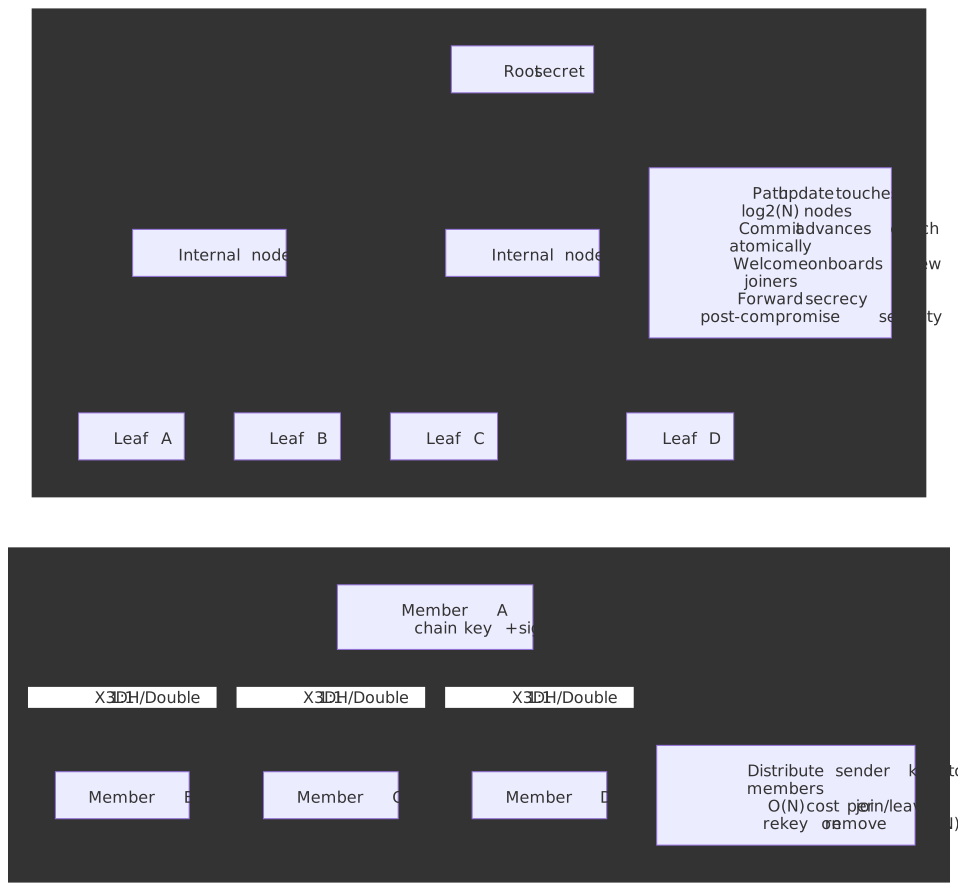
Sender Keys (Signal-style group): every member generates a per-group symmetric sender chain key and signature key, and distributes it to every other member over a pairwise Double Ratchet channel. Sending a message is then one symmetric encrypt + one broadcast. The cost is membership churn: adding or removing a member requires re-keying for everyone (O(N) ciphertexts), and post-compromise security is awkward at large group sizes.
MLS / RFC 9420: members sit at the leaves of a left-balanced binary ratchet tree (TreeKEM). Each interior node holds a secret known only to its subtree; the root secret keys the group. A Commit applies a batch of Add/Remove/Update Proposals, and the committer encrypts the new path keys to the copath, so every member can derive the new root in O(log N) work. A Welcome message bootstraps a new joiner with the current group state. Each Commit advances an epoch, providing built-in forward secrecy and post-compromise security across the whole group, with transcript continuity guaranteed by the epoch chain.
| Property | Sender Keys | MLS (RFC 9420) |
|---|---|---|
| Send cost | O(1) symmetric encrypt + broadcast | O(1) symmetric encrypt + broadcast |
| Membership change | O(N) pairwise re-key | O(log N) path update via TreeKEM |
| Post-compromise security | Hard at scale; needs O(N²)-ish rotation | Built in; every Commit refreshes the tree |
| Async joiners | Pairwise Sesame-style negotiation | Welcome message + ratchet-tree extension |
| Practical sweet spot | Small/medium groups (≤ ~50) | Medium-to-large groups (hundreds to thousands) |
| Production examples | WhatsApp groups, Signal groups | Wire, Cisco Webex (Secure Messaging), RingCentral. WhatsApp’s EU DMA interop bridge keeps its own chats on the Signal Protocol and exposes a Signal-based gateway to third parties. |
Multi-device E2EE
Multi-device complicates everything because the server can’t read the message but still has to fan it out to the right device set. WhatsApp’s multi-device design treats every device as its own client with its own identity key; the sender encrypts the message once per recipient device, and the server treats the encrypted bundle as opaque payloads keyed by (recipient_user_id, recipient_device_id). History sync to a newly linked device is its own protocol — the primary device encrypts a recent-history blob and ships it over an E2EE channel.
Operational implications
E2EE constrains the rest of the design in concrete ways:
- No server-side search. Search is entirely client-side, against the local message store.
- No server-side spam/abuse heuristics on content. Defences move to metadata (rate limits, sender reputation, reported messages, on-device classifiers) and to user-driven reporting that ships the offending ciphertext + key for review.
- Backups need their own key derivation. End-to-end encrypted backups (Signal’s, WhatsApp’s recently rolled-out E2EE backups) require an HSM or user-passphrase-derived key, not the messaging keys.
- Key transparency (Keybase-style logs, or WhatsApp’s auditable directory) is the practical answer to “is the key the server gave me really the recipient’s?”
- Push notification content must be a placeholder (“New message from Alice”); the actual message decrypts on-device.
Caution
Do not bolt E2EE onto an existing chat system as an afterthought. The control-plane operations — group membership, device addition, history transfer, lost-device recovery — are where E2EE designs fail in production, not the cipher. Pick the protocol (Signal vs MLS) before fixing the rest of the architecture in stone.
Infrastructure
Cloud-agnostic component map
| Component | Purpose | Options |
|---|---|---|
| WebSocket Gateway | Persistent connections | Envoy, HAProxy, Nginx (ws) |
| Message Queue | Async delivery, ordering | Kafka, Pulsar, NATS JetStream |
| KV Store | Sessions, presence | Redis, KeyDB, Dragonfly |
| Message Store | Message persistence | ScyllaDB, Cassandra, DynamoDB |
| Relational DB | User/group metadata | PostgreSQL, CockroachDB |
| Object Store | Media files | MinIO, Ceph, S3-compatible |
| Push Gateway | Mobile notifications | Self-hosted bridge to APNs / FCM |
AWS reference architecture
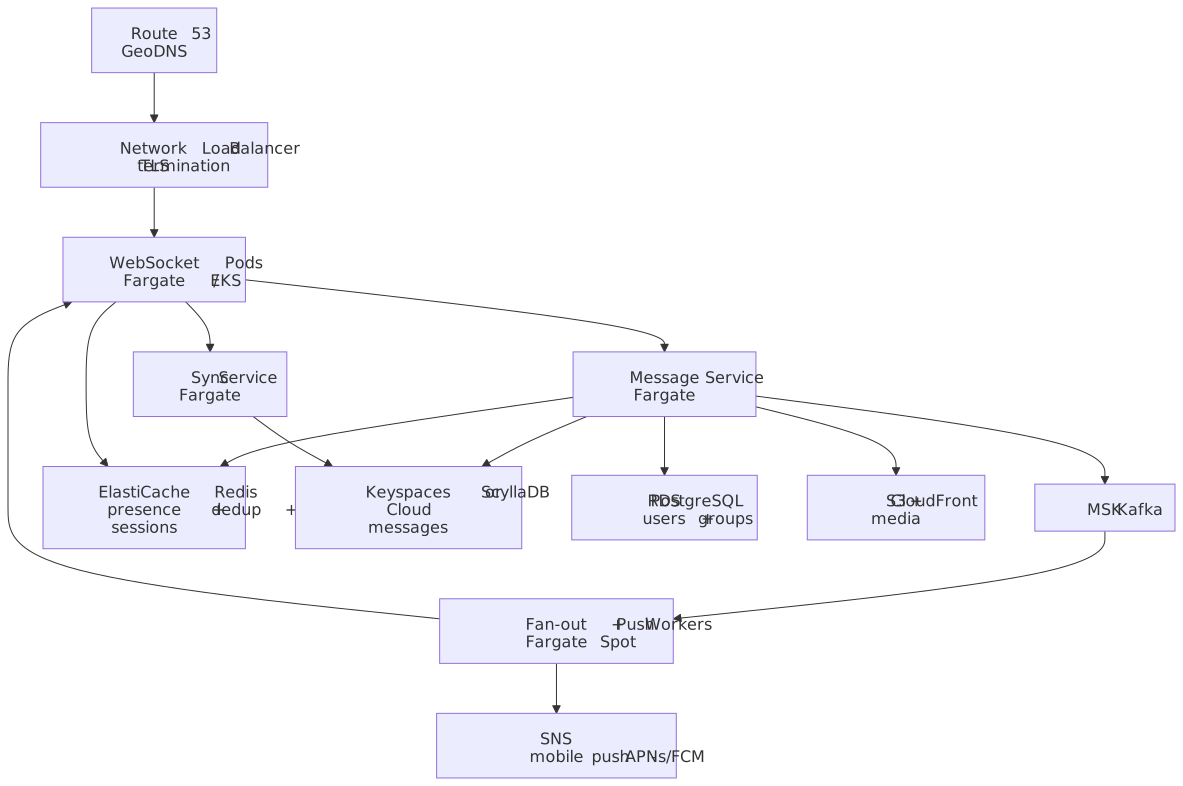
Service configurations:
| Service | Configuration | Rationale |
|---|---|---|
| WebSocket (Fargate) | 4 vCPU, 8GB, ~500K conn/pod | Memory-bound; ~500K connections/pod |
| Message Service | 2 vCPU, 4GB | Stateless, CPU-bound |
| Fan-out Workers | 2 vCPU, 4GB, Spot | Cost optimization for async |
| ElastiCache Redis | r6g.2xlarge cluster mode | Sub-ms presence lookups |
| Keyspaces | On-demand | Serverless Cassandra-compatible |
| RDS PostgreSQL | db.r6g.xlarge Multi-AZ | Metadata, moderate write load |
| MSK | kafka.m5.large × 3 brokers | Fan-out throughput |
Scaling considerations
WebSocket connection limits:
- Linux default: 1024 file descriptors per process — raise via
sysctl(fs.file-max,nofileulimit) and per-processRLIMIT_NOFILE. - Practical per pod: ~500K (memory, not FDs, is the bottleneck).
- 50M concurrent users → 100 gateway pods minimum.
Kafka partitioning:
- Partition by
conversation_idfor ordering. - Minimum partitions: enough to allow N parallel consumers without head-of-line blocking; start at 100.
- Hot-partition mitigation: extract very active conversations into their own dedicated topic with finer-grained partition keys.
Message storage partitioning:
- ScyllaDB partition key:
conversation_id. - Practical “large partition” line: ~100MB; warn at 1000MB.
- For very active conversations: add a time bucket to the partition key.
Presence fan-out:
- Redis pub/sub scales well for low-fan-out subscriptions; for users with thousands of contacts, prefer batched delta channels or a dedicated presence service over per-user pub/sub channels.
Conclusion
What this design buys you:
- Sub-500ms message delivery via stateful WebSocket gateways and a hybrid push/pull fan-out.
- At-least-once delivery with client-side deduplication on stable
messageIds. - Strong per-conversation ordering through server-assigned sequence numbers.
- Seamless offline support via per-device cursors and a sync service.
- Multi-device coherence through self-echo fan-out and per-device read cursors.
- Hot-shard tolerance through channel-server affinity, active/passive sessions, and a relay tier.
- E2EE-ready surface with Double Ratchet for 1:1 and a clear Sender Keys → MLS migration path for groups.
What you accept in return:
- A central server is on the critical path for ordering — pure P2P is excluded.
- At-least-once delivery requires client-side dedup logic.
- Presence is eventually consistent; expect tens of seconds of staleness on flaky networks.
- Large-group delivery latency is structurally higher than 1:1.
What’s deliberately out of scope and worth its own follow-up:
- Reactions, threaded replies, edits with tombstones, and scheduled messages.
- Voice and video calling integration over WebRTC, including SFU/MCU and the signalling channel.
- Federated chat across organisations (the XMPP RFC 6120 S2S model is still the cleanest reference) and the metadata-privacy implications of running a federation gateway.
Appendix
Prerequisites
- Distributed systems fundamentals (consistency models, partitioning).
- Real-time communication patterns (WebSocket, pub/sub).
- Message-queue concepts (Kafka partitions, consumer groups).
- Database selection trade-offs (SQL vs. NoSQL).
Terminology
| Term | Definition |
|---|---|
| Fan-out | Distributing a message to multiple recipients. |
| Sequence number | Monotonically increasing identifier for ordering messages within a conversation. |
| Presence | User’s online/offline status and activity indicators. |
| Idempotency | Property ensuring duplicate requests produce the same result. |
| Heartbeat | Periodic signal from client to server indicating the connection is alive. |
| ACK | Acknowledgment message confirming receipt. |
| TTL | Time-to-live; automatic expiration of data after a specified duration. |
| Channel server | An in-memory owner of a conversation that serializes writes for ordering. |
| Self-echo | Delivering a sent message to the sender’s own other devices. |
Summary
- Real-time chat needs persistent connections (WebSocket), reliable delivery (at-least-once with dedup), and ordering guarantees (server-assigned sequence numbers per conversation).
- Hybrid fan-out keeps small conversations on a low-latency direct push path and routes large ones through a queue-backed fan-out.
- ScyllaDB is a strong fit for time-series message storage; Discord’s migration produced concrete latency wins worth referencing.
- Redis holds the ephemeral state — sessions, presence, typing — with TTLs and pub/sub.
- Multi-device sync is solved by per-device cursors plus self-echo fan-out, not per-device server-side queues.
- Failure modes drive the design as much as the happy path; plan for thundering herds, hot conversations, and Kafka rebalances on day one.
References
Real-world implementations:
- How Discord Stores Trillions of Messages — Cassandra → ScyllaDB migration, Rust data services, latency numbers.
- How Discord Scaled Elixir to 5M Concurrent Users —
GenServerper guild, Manifold for distributed message passing. - Maxjourney: Pushing Discord’s Limits with a Million+ Online Users in a Single Server — Relays, Passive Sessions, hot-guild mitigation.
- Real-Time Messaging at Slack — Channel Servers, Gateway Servers, consistent hashing.
- Building Self-Driving Kafka Clusters at Slack — 6.5 Gbps, 10 clusters, ~700 TB.
- Migrating Millions of Concurrent WebSockets to Envoy — terminating WebSocket at Envoy.
- LinkedIn’s Real-Time Presence Platform — SSE, Akka actors, Couchbase.
- How WhatsApp Grew to ~500M Users on FreeBSD/Erlang — ~2M concurrent connections per server, kernel tuning.
- How WhatsApp Enables Multi-Device Capability — per-device identity keys, client fan-out for E2EE.
Protocol specifications:
- RFC 6455 — The WebSocket Protocol — frame format, masking, ping/pong.
- RFC 6120 — XMPP Core — XML stream/stanza model, S2S federation.
- RFC 6121 — XMPP Instant Messaging and Presence — roster, presence subscription model.
- RFC 9420 — The Messaging Layer Security (MLS) Protocol — TreeKEM, epochs, Commits, Welcomes.
- Signal — The Double Ratchet Algorithm — per-message keys, forward secrecy, post-compromise security.
- Signal — The X3DH Key Agreement Protocol — asynchronous key agreement.
- IRCv3 — Capability Negotiation and Message Tags —
+typing,msgid,labeled-response,echo-message. - MQTT 5.0 (OASIS) — IoT/messaging protocol.
Distributed systems theory:
- Lamport — Time, Clocks, and the Ordering of Events in a Distributed System — foundational paper on logical ordering.
- Exactly-Once Semantics in Apache Kafka — why client dedup beats exactly-once for chat.
- ScyllaDB — Making Effective Partitions for Data Modeling — partition-size guidance.
Related articles:
- Design Collaborative Document Editing — real-time sync with OT/CRDT.
- Design a Notification System — multi-channel push delivery.