Design a Flash Sale System
A flash sale must serve millions of buyers competing for a fixed pool of inventory in seconds, with zero tolerance for overselling. Treat it as four constraints chained together: a CDN-hosted waiting room absorbs the spike, a token gate meters admission to backend capacity, an atomic inventory store prevents overselling, and an async order queue decouples user-visible latency from durable fulfilment. Each layer’s job is to shield the next.
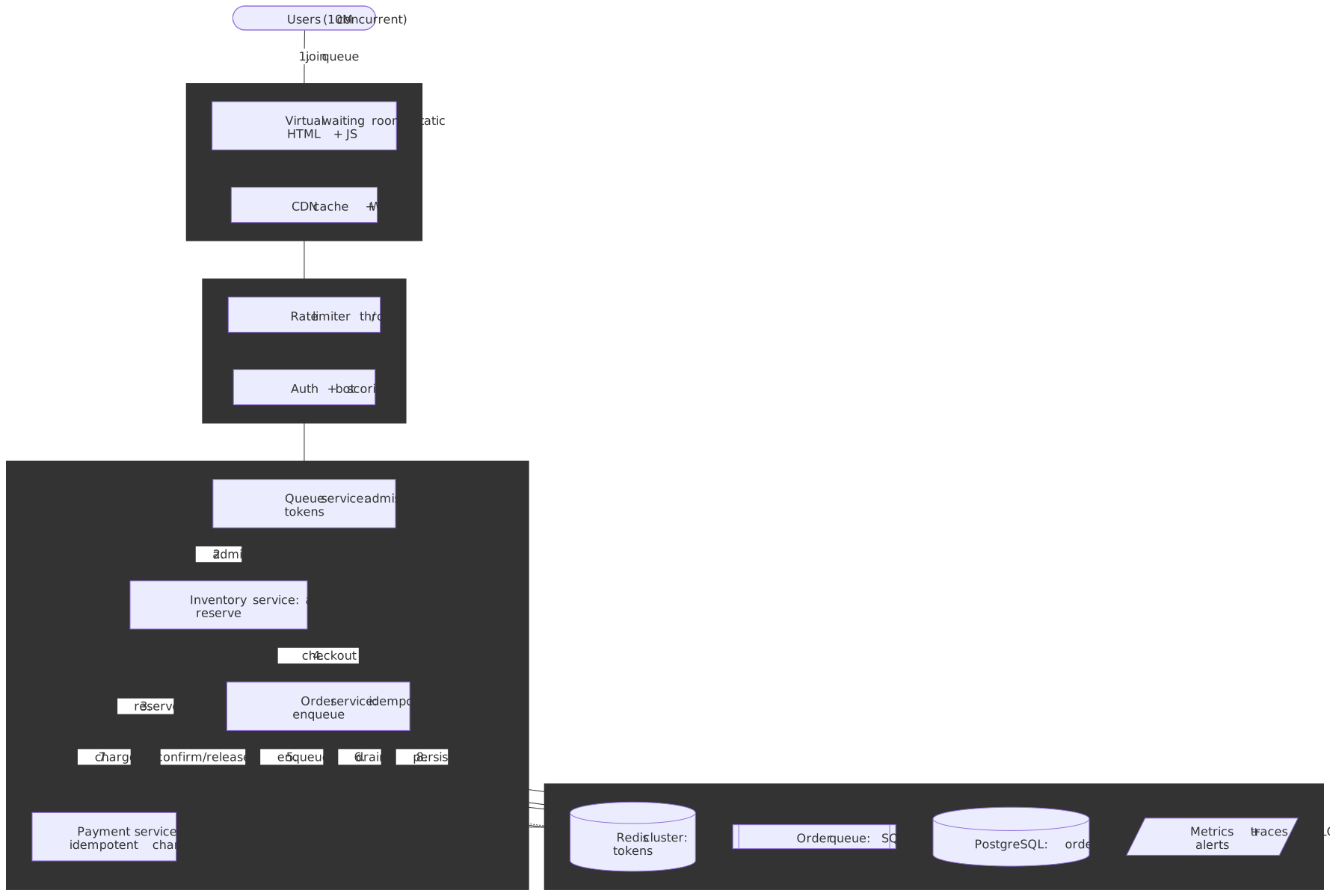
Mental model
Three constraints fight each other in any flash sale and the architecture is the negotiated truce.
- Traffic absorption. Millions of users arriving in seconds cannot hit origin. A CDN-hosted waiting room absorbs the spike at the edge; a queue service meters admission to backend capacity.
- Inventory accuracy. Overselling destroys trust and forces refunds, returns, or worse — legal exposure for ticketing. Atomic Redis Lua scripts give “check-and-decrement” without races. Pre-allocating tokens equal to inventory turns “did we oversell?” into “did we issue more tokens than items?”, which is trivially false by construction.
- Order durability under load. Synchronous payment + write paths cannot scale with the spike. A durable message queue decouples order receipt from order completion: the user gets a fast
202 Accepted; a worker pool drains the queue at the database’s pace, with retries and a dead-letter queue for poison messages.
The mental model is waiting room → token gate → atomic inventory → async order queue. Every section below either implements one of those four boxes or explains how to harden it under load.
| Design decision | Trade-off |
|---|---|
| CDN waiting room | Absorbs traffic cheaply; adds user-facing latency and a polling tax |
| Token-based admission | Prevents overselling by construction; requires accurate pre-allocation |
| Redis atomic counters | Sub-millisecond inventory checks; hot-key risk on a single-product surge |
| Async order processing | Handles 100x spikes; delayed confirmation and harder UX expectations |
Requirements
Functional Requirements
| Feature | Scope | Notes |
|---|---|---|
| Virtual waiting room | Core | Absorbs traffic spike before backend |
| Queue management | Core | FIFO admission with position tracking |
| Inventory reservation | Core | Atomic decrement, no overselling |
| Order placement | Core | Async processing with durability |
| Bot detection | Core | Multi-layer defense |
| Payment processing | Core | Idempotent, timeout-aware |
| Order confirmation | Core | Email/push notification |
| Purchase limits | Extended | 1-2 units per customer |
| VIP early access | Extended | Tiered queue priority |
| Real-time inventory display | Extended | Eventually consistent display |
Non-Functional Requirements
| Requirement | Target | Rationale |
|---|---|---|
| Availability | 99.99% | Revenue and reputational impact during a public on-sale window; the Alibaba flash-sale playbook is the canonical reference here. |
| Waiting room latency | < 100ms | Static asset served by CDN; users compare it to opening a website. |
| Inventory check latency | < 50ms | On the critical path, gates checkout. Sub-ms in Redis, but budget for network and serialisation. |
| Checkout latency | < 5s p99 | User-acceptable; async order processing hides downstream payment + DB time. |
| Queue position accuracy | Real-time | Trust requires visible progress; stale numbers are worse than slow numbers. |
| Inventory accuracy | 100% | Zero tolerance for overselling — refund cost, regulatory risk for ticketing, brand damage. |
| Order durability | Zero loss | Queued orders must survive worker, broker, and AZ failures. |
Scale Estimation
Traffic Profile:
| Metric | Normal | Flash Sale Peak | Multiplier |
|---|---|---|---|
| Concurrent users | 100K | 10M | 100x |
| Page requests/sec | 10K RPS | 1M RPS | 100x |
| Inventory checks/sec | 1K RPS | 500K RPS | 500x |
| Orders/sec | 100 TPS | 10K TPS | 100x |
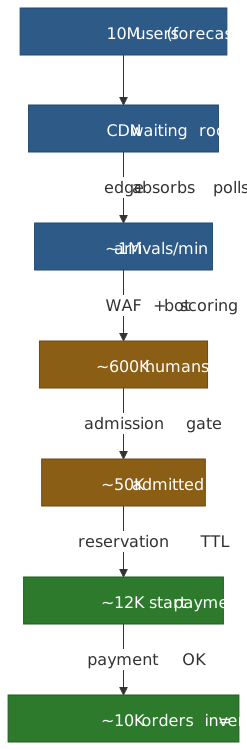
Back-of-envelope (1M users, 10K inventory, 30-min sale window):
Users arriving in first minute: 1,000,000Waiting-room HTML hits (CDN): 1M × 3 refreshes = 3M req/min ≈ 50K RPS at edgeQueue-status polls (CDN-bypass): 1M × 1 poll / 5s = 200K RPS to queue APIAdmission rate (gate-controlled): 10K inventory / 30 min ≈ 6 admits/s typical; burst-shaped to ~83/s during the first 2 minInventory reserves (admitted): same ~6-83 RPS; bursts shaped by gate, not raw trafficOrders attempted: ~12K (a few percent abandon at payment)Orders confirmed: 10K (inventory limit, by construction)Note
The 200K RPS poll figure is the work the queue API must do; the 50K RPS waiting-room hits are absorbed at the edge. The inventory and order tiers see whatever the admission gate lets through, not the raw arrival rate. Sizing the inventory tier off the headline 1M is the most common over-provisioning mistake.
Storage:
Queue state: 1M users × 100 bytes = 100 MB (DynamoDB or Redis)Order records: 10K orders × 5 KB = 50 MB (PostgreSQL)Event logs: 10M events × 200 bytes = 2 GB / saleDesign Paths
Path A: Pre-Allocation Model (Token-Based)
Best when:
- Fixed, known inventory quantity
- Fairness is paramount (ticketing, limited editions)
- High-value items where overselling is catastrophic
Architecture:
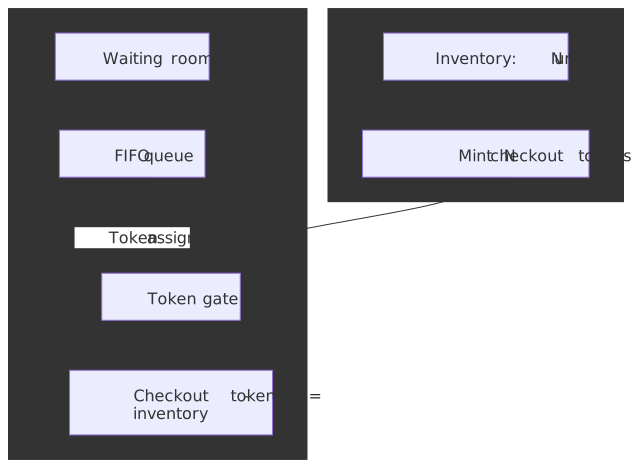
Key characteristics:
- Tokens minted equal to inventory before sale starts.
- Each admitted user receives one token.
- A token guarantees a checkout opportunity, not a purchase — the user may still abandon.
- Tokens expire if unused and return to the pool for the next admittee.
Trade-offs:
- ✅ Zero overselling by construction.
- ✅ Predictable admission rate (admit at backend capacity, not request rate).
- ✅ Fair: pure FIFO, or FIFO with a randomised pre-sale window.
- ❌ Requires an accurate inventory count before the sale opens.
- ❌ Token lifecycle management (expiry, reclaim, double-submission) is non-trivial.
- ❌ Abandoned tokens dent conversion if expiry is too short or the queue is too aggressive.
Note
“Pre-mint one token per unit of inventory” is one specific implementation of Path A and works well for low-stock, high-fairness sales (drops, ticketing). The other common variant — used by SeatGeek and Cloudflare Waiting Room — issues admission tokens decoupled from inventory, sized to backend capacity instead. The actual decrement still happens atomically at checkout. Pick by where you want the failure to land: at admission (“you didn’t get a ticket”) or at checkout (“we sold out while you were typing your card number”).
Real-world example: SeatGeek’s virtual waiting room on AWS uses Lambda + DynamoDB to manage two layers of tokens: a visitor token assigned at entry that captures arrival timestamp for FIFO ordering, and an access token exchanged at the front of the queue that authorises checkout. Tokens expire when the purchase completes or the user’s session ends, returning capacity to the protected zone via a leaky-bucket counter.
Path B: Real-Time Inventory Model (Counter-Based)
Best when:
- Dynamic inventory (multiple warehouses, restocking)
- E-commerce flash sales with variable stock
- Lower-stakes items where occasional overselling is recoverable
Architecture:
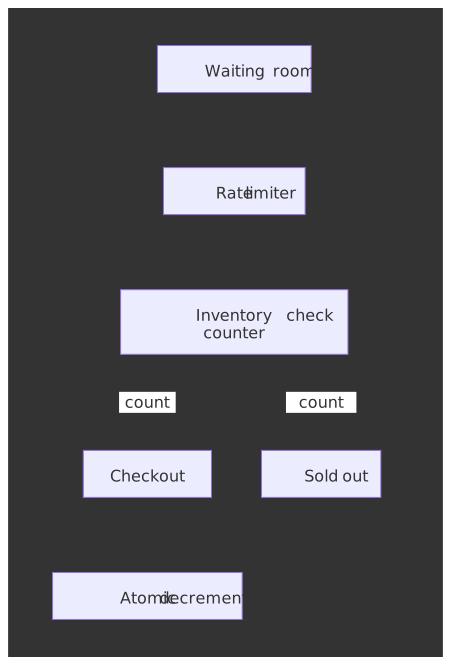
Key characteristics:
- No pre-allocation — inventory is checked in real time on the checkout path.
- Atomic decrement happens at checkout, not at admission.
- Rate limiting protects backend capacity; it doesn’t guarantee the user a purchase.
- Inventory can be restocked mid-sale (dynamic counters).
Trade-offs:
- ✅ Native support for dynamic inventory and mid-sale restocks.
- ✅ Simpler pre-sale setup — no token mint job, no token registry.
- ✅ Easier integration with multi-warehouse fulfilment systems.
- ❌ Overselling risk if counter writes desync from order persistence.
- ❌ Users admitted without a guarantee — visible “sold out at checkout” UX is harsh.
- ❌ Hot-key risk on a single popular SKU — one shard, one CPU, one tail latency.
Real-world example: Alibaba’s flash-sale playbook on ApsaraDB for Redis (Tair) uses a Lua script over a hash that encodes Total and Booked per SKU; the script performs HMGET to read both and HINCRBY to increment Booked only if Booked + qty <= Total. A master-replica Tair instance is documented to sustain >100K QPS for inventory writes and a read/write-split instance >600K QPS for cached reads. The all-up Tmall platform peaked at 583K orders per second on Singles Day 2020 — that is a fleet-wide order TPS figure, not a single Redis instance, and it is reached by sharding hot SKUs and front-loading admission control.
Path Comparison
| Factor | Path A (Token) | Path B (Counter) |
|---|---|---|
| Overselling risk | Zero | Low (with proper atomicity) |
| Setup complexity | Higher | Lower |
| Dynamic inventory | Difficult | Native |
| User expectation | Guaranteed opportunity | Best effort |
| Fairness | Explicit (token order) | Implicit (first to checkout) |
| Best for | Ticketing, limited releases | E-commerce, restockable goods |
This Article’s Focus
This article implements Path A (Token-Based) for the core flow because:
- Flash sales typically have fixed, high-value inventory
- Fairness is a differentiator (users accept waiting if fair)
- Zero overselling is non-negotiable for most use cases
Path B implementation details are covered in the Variations section.
High-Level Design
Component Overview
| Component | Responsibility | Technology |
|---|---|---|
| Virtual Waiting Room | Absorb traffic spike, display queue position | Static HTML on CDN |
| Queue Service | Manage admission, assign tokens | Lambda + DynamoDB |
| Inventory Service | Atomic inventory operations | Redis Cluster |
| Order Service | Process orders asynchronously | ECS + SQS |
| Payment Service | Handle payments idempotently | Stripe/Adyen integration |
| Notification Service | Send confirmations | SES + SNS |
| Bot Detection | Filter non-human traffic | WAF + Custom rules |
Request Flow
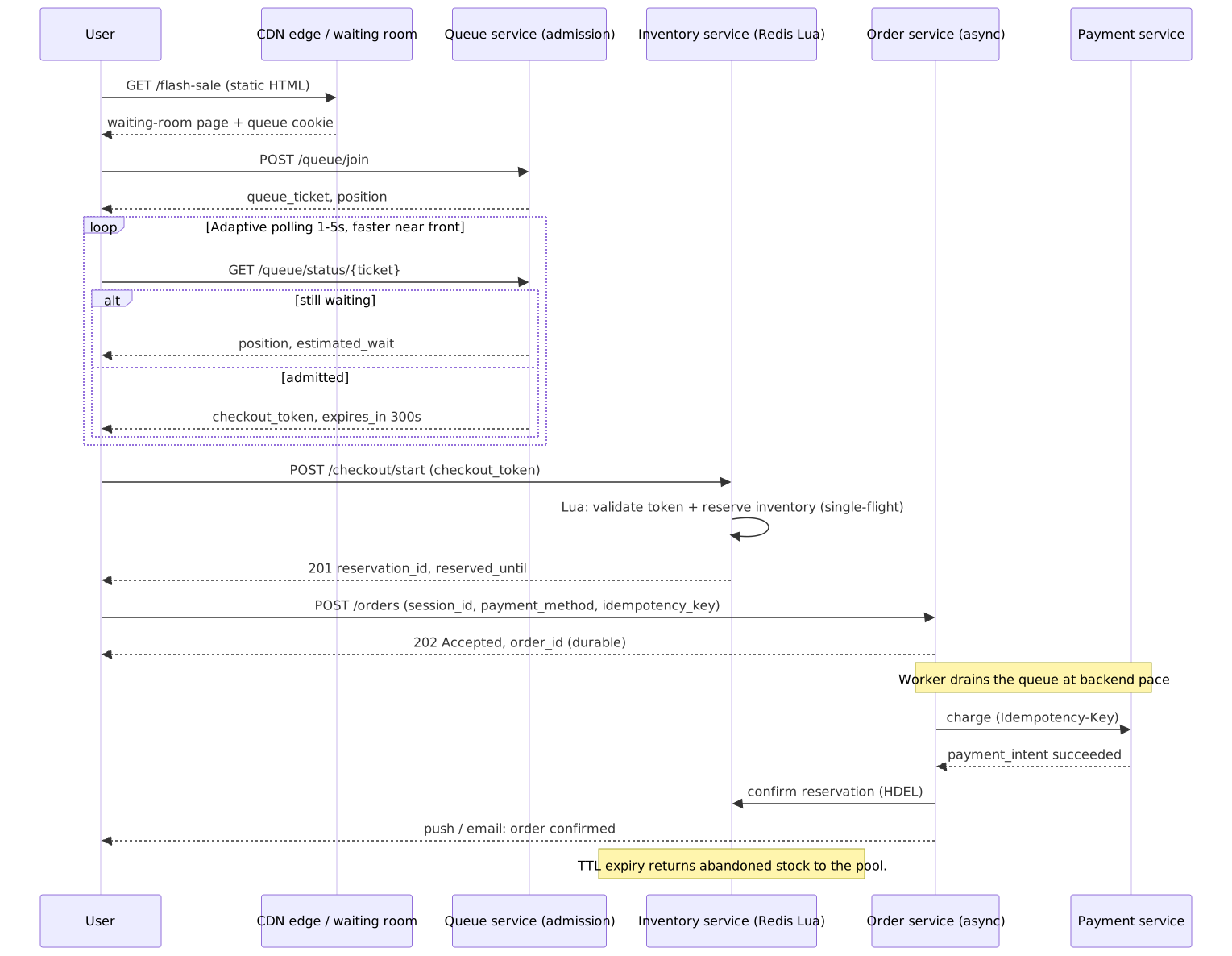
API Design
Queue Service APIs
Join Queue
POST /api/v1/queue/joinAuthorization: Bearer {user_token}X-Device-Fingerprint: {fingerprint}{ "sale_id": "flash-sale-2024-001", "product_ids": ["sku-001", "sku-002"]}Response (202 Accepted):
{ "queue_ticket": "qt_abc123xyz", "position": 15234, "estimated_wait_seconds": 180, "status_url": "/api/v1/queue/status/qt_abc123xyz"}Error responses:
400 Bad Request: Invalid sale_id or product not in flash sale403 Forbidden: Bot detected or user already in queue429 Too Many Requests: Rate limit exceeded
Check Queue Status
GET /api/v1/queue/status/{queue_ticket}Response (200 OK):
{ "queue_ticket": "qt_abc123xyz", "status": "waiting", "position": 8234, "estimated_wait_seconds": 90, "poll_interval_seconds": 5}Status values:
waiting: In queue, not yet admittedadmitted: Token assigned, can proceed to checkoutexpired: Waited too long, removed from queuecompleted: Purchased or abandoned checkout
Token Admission (Internal)
When user reaches front of queue:
{ "queue_ticket": "qt_abc123xyz", "status": "admitted", "checkout_token": "ct_xyz789abc", "checkout_url": "/checkout?token=ct_xyz789abc", "token_expires_at": "2024-03-15T10:05:00Z"}Checkout Service APIs
Start Checkout Session
POST /api/v1/checkout/startAuthorization: Bearer {user_token}{ "checkout_token": "ct_xyz789abc", "product_id": "sku-001", "quantity": 1}Response (201 Created):
{ "session_id": "cs_def456", "reserved_until": "2024-03-15T10:05:00Z", "product": { "id": "sku-001", "name": "Limited Edition Sneaker", "price": 299.0, "currency": "USD" }, "next_step": "payment"}Error responses:
400 Bad Request: Invalid token or product409 Conflict: Token already used410 Gone: Token expired422 Unprocessable: Inventory exhausted (token invalid)
Submit Order
POST /api/v1/ordersAuthorization: Bearer {user_token}{ "session_id": "cs_def456", "shipping_address": { "line1": "123 Main St", "city": "San Francisco", "state": "CA", "postal_code": "94102", "country": "US" }, "payment_method_id": "pm_card_visa"}Response (202 Accepted):
{ "order_id": "ord_789xyz", "status": "processing", "estimated_confirmation": "< 60 seconds", "tracking_url": "/api/v1/orders/ord_789xyz"}Design note: Returns 202 (not 201) because order processing is asynchronous. The order is durably queued but not yet confirmed.
Pagination Strategy
Queue status uses cursor-based polling, not traditional pagination:
{ "position": 1234, "poll_interval_seconds": 5, "next_poll_after": "2024-03-15T10:01:05Z"}Rationale: Queue position changes continuously. Polling interval increases as position improves (less uncertainty near front).
Data Modeling
Queue State (DynamoDB)
Table: FlashSaleQueuePartition Key: sale_idSort Key: queue_ticketAttributes:- user_id: string- position: number (GSI for ordering)- status: enum [waiting, admitted, expired, completed]- joined_at: ISO8601- admitted_at: ISO8601 | null- checkout_token: string | null- token_expires_at: ISO8601 | null- device_fingerprint: string- ip_address: stringGSI: sale_id-position-index for efficient position lookups.
Why DynamoDB: Single-digit millisecond latency at any scale, automatic scaling, TTL for expired entries.
Inventory Counter (Redis)
SET inventory:sku-001 10000EVAL " local count = tonumber(redis.call('GET', KEYS[1]) or 0) if count >= tonumber(ARGV[1]) then return redis.call('DECRBY', KEYS[1], ARGV[1]) else return -1 end" 1 inventory:sku-001 1Why Lua: Redis runs each EVAL script atomically on a single shard — no other commands interleave. Without that, two concurrent clients can both see count = 1, both decrement, and oversell. Naïve WATCH/MULTI/EXEC works but burns retries under load; a Lua script is the canonical pattern. The pattern is sometimes called single-flight: the cluster serialises contending writes for the same key into one in-flight execution at a time, which is exactly what an inventory counter needs.
Important
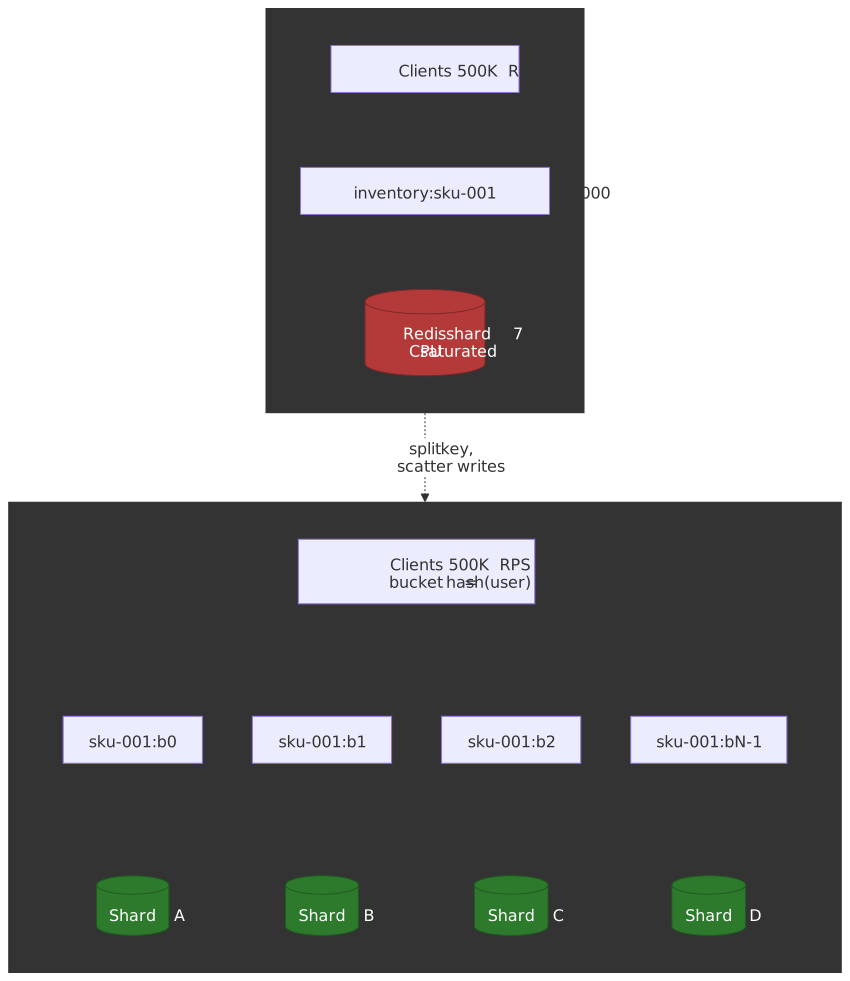
One product key is one Redis shard. A flash on a single SKU is a hot-key problem disguised as a counter problem. Mitigations include client-side bucketing (split inventory:sku-001 into inventory:sku-001:{0..15}, decrement a random bucket, accept slightly less even depletion) and Tair-style read/write split for warm-up traffic. See the ApsaraDB Redis hot-key guide for the production playbook. The same pattern applies on DynamoDB via write sharding the partition key; adaptive capacity will not save you above the per-item ceiling (~1,000 WCU / 3,000 RCU).
Token Registry (Redis)
# Token → user mapping with TTLSETEX token:ct_xyz789abc 300 "user_123"# Used tokens (prevent replay)SADD used_tokens:flash-sale-2024-001 ct_xyz789abcTTL: 5 minutes for checkout tokens. Expired tokens return to the pool.
Order Schema (PostgreSQL)
CREATE TABLE orders ( id UUID PRIMARY KEY DEFAULT gen_random_uuid(), user_id UUID NOT NULL REFERENCES users(id), sale_id VARCHAR(50) NOT NULL, checkout_token VARCHAR(100) NOT NULL UNIQUE, status VARCHAR(20) DEFAULT 'pending', -- Order details product_id VARCHAR(50) NOT NULL, quantity INT NOT NULL DEFAULT 1, unit_price DECIMAL(10,2) NOT NULL, total_amount DECIMAL(10,2) NOT NULL, currency VARCHAR(3) DEFAULT 'USD', -- Shipping shipping_address JSONB NOT NULL, -- Payment payment_intent_id VARCHAR(100), payment_status VARCHAR(20), -- Timestamps created_at TIMESTAMPTZ DEFAULT NOW(), confirmed_at TIMESTAMPTZ, -- Idempotency idempotency_key VARCHAR(100) UNIQUE);CREATE INDEX idx_orders_user ON orders(user_id, created_at DESC);CREATE INDEX idx_orders_sale ON orders(sale_id, status);CREATE INDEX idx_orders_payment ON orders(payment_intent_id);Idempotency key: Prevents duplicate orders if user retries during network issues. Typically {user_id}:{checkout_token}.
Database Selection Matrix
| Data | Store | Rationale |
|---|---|---|
| Queue state | DynamoDB | Single-digit ms latency, auto-scale, TTL |
| Inventory counters | Redis Cluster | Sub-ms atomic operations |
| Tokens | Redis | TTL, fast lookup |
| Orders | PostgreSQL | ACID, complex queries, durability |
| Event logs | Kinesis → S3 | High throughput, analytics |
| User sessions | Redis | Fast auth checks |
Low-Level Design
Virtual Waiting Room
The waiting room is the first line of defense. It must:
- Absorb millions of requests without backend load
- Provide fair queue positioning
- Communicate progress transparently
Architecture:
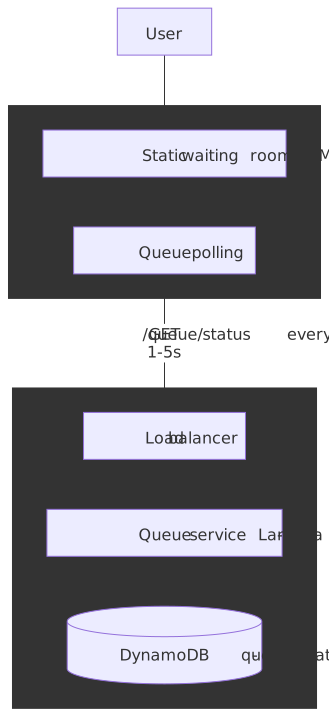
Static HTML design:
<!DOCTYPE html><html> <head> <title>Flash Sale - Please Wait</title> <meta http-equiv="Cache-Control" content="no-cache" /> </head> <body> <div id="waiting-room"> <h1>You're in the queue</h1> <!-- Key UI elements --> <div id="position">Position: <span id="pos-number">--</span></div> <div id="estimate">Estimated wait: <span id="wait-time">--</span></div> <div id="progress-bar"> <div id="progress-fill" style="width: 0%"></div> </div> <!-- Status messages --> <div id="status-message">Please keep this tab open</div> <div id="redirect-notice" style="display:none">Redirecting to checkout...</div> </div> <script src="/queue-client.js"></script> </body></html>Queue polling logic:
// queue-client.tsinterface QueueStatus { status: "waiting" | "admitted" | "expired" position?: number estimated_wait_seconds?: number checkout_url?: string poll_interval_seconds: number}async function pollQueueStatus(ticket: string): Promise<void> { const response = await fetch(`/api/v1/queue/status/${ticket}`) const status: QueueStatus = await response.json() switch (status.status) { case "waiting": updateUI(status.position, status.estimated_wait_seconds) // Exponential backoff near front of queue const interval = status.poll_interval_seconds * 1000 setTimeout(() => pollQueueStatus(ticket), interval) break case "admitted": showRedirectNotice() // Small delay for user to see the message setTimeout(() => { window.location.href = status.checkout_url }, 1500) break case "expired": showExpiredMessage() break }}// Start polling on page loadconst ticket = new URLSearchParams(window.location.search).get("ticket")if (ticket) { pollQueueStatus(ticket)}Design decisions:
| Decision | Rationale |
|---|---|
| Static HTML on CDN | Millions of users hitting origin would saturate it; CDN absorbs at edge |
| Client-side polling | Push (WebSocket) at this scale requires massive connection management |
| Exponential backoff | Users near front poll more frequently; reduces total requests |
| No refresh needed | Single-page polling prevents users from losing position by refreshing |
Queue Service (Token Management)
The queue service manages the FIFO queue and token assignment.
Lambda handler:
// queue-service.tsimport { DynamoDB } from "@aws-sdk/client-dynamodb"import { DynamoDBDocument } from "@aws-sdk/lib-dynamodb"const ddb = DynamoDBDocument.from(new DynamoDB({}))interface QueueEntry { sale_id: string queue_ticket: string user_id: string position: number status: "waiting" | "admitted" | "expired" | "completed" checkout_token?: string}export async function joinQueue( saleId: string, userId: string, deviceFingerprint: string,): Promise<{ ticket: string; position: number }> { // Check if user already in queue const existing = await findUserInQueue(saleId, userId) if (existing) { return { ticket: existing.queue_ticket, position: existing.position } } // Get current queue length (approximate, for position) const position = await getNextPosition(saleId) const ticket = generateTicket() await ddb.put({ TableName: "FlashSaleQueue", Item: { sale_id: saleId, queue_ticket: ticket, user_id: userId, position: position, status: "waiting", joined_at: new Date().toISOString(), device_fingerprint: deviceFingerprint, ttl: Math.floor(Date.now() / 1000) + 3600, // 1 hour TTL }, ConditionExpression: "attribute_not_exists(queue_ticket)", }) return { ticket, position }}export async function admitNextUsers(saleId: string, count: number): Promise<void> { // Invoked by EventBridge at fixed rate (e.g., every second) // Admits 'count' users from front of queue const waiting = await ddb.query({ TableName: "FlashSaleQueue", IndexName: "sale_id-position-index", KeyConditionExpression: "sale_id = :sid", FilterExpression: "#status = :waiting", ExpressionAttributeNames: { "#status": "status" }, ExpressionAttributeValues: { ":sid": saleId, ":waiting": "waiting", }, Limit: count, ScanIndexForward: true, // Ascending by position (FIFO) }) for (const entry of waiting.Items || []) { await admitUser(entry as QueueEntry) }}async function admitUser(entry: QueueEntry): Promise<void> { const token = generateCheckoutToken() const expiresAt = new Date(Date.now() + 5 * 60 * 1000) // 5 min await ddb.update({ TableName: "FlashSaleQueue", Key: { sale_id: entry.sale_id, queue_ticket: entry.queue_ticket }, UpdateExpression: "SET #status = :admitted, checkout_token = :token, token_expires_at = :exp", ExpressionAttributeNames: { "#status": "status" }, ExpressionAttributeValues: { ":admitted": "admitted", ":token": token, ":exp": expiresAt.toISOString(), }, }) // Also store token in Redis for fast lookup during checkout await redis.setex(`token:${token}`, 300, entry.user_id)}Admission rate control:
The admission rate must match backend capacity. EventBridge triggers admitNextUsers every second:
Admission rate = min(backend_capacity, remaining_inventory / expected_checkout_time)Example:- Backend can handle 1000 checkouts/sec- Remaining inventory: 5000- Average checkout time: 60 seconds- Admission rate: min(1000, 5000/60) = min(1000, 83) = 83 users/secDesign decisions:
| Decision | Rationale |
|---|---|
| DynamoDB for queue | Handles millions of entries with single-digit ms latency |
| Position as GSI | Enables efficient “next N users” query |
| EventBridge for admission | Decouples admission rate from user requests |
| Token in Redis + DynamoDB | Redis for fast checkout validation; DynamoDB for durability |
Inventory Service (Atomic Counters)
The inventory service prevents overselling through atomic operations.
Redis Lua script for atomic reservation:
-- reserve_inventory.lua-- KEYS[1] = inventory key (e.g., "inventory:sku-001")-- KEYS[2] = reserved set key (e.g., "reserved:sku-001")-- ARGV[1] = user_id-- ARGV[2] = quantity-- ARGV[3] = reservation_id-- ARGV[4] = ttl_secondslocal inventory_key = KEYS[1]local reserved_key = KEYS[2]local user_id = ARGV[1]local quantity = tonumber(ARGV[2])local reservation_id = ARGV[3]local ttl = tonumber(ARGV[4])-- Check current inventorylocal available = tonumber(redis.call('GET', inventory_key) or 0)if available < quantity then return { err = 'insufficient_inventory', available = available }end-- Atomic decrementlocal new_count = redis.call('DECRBY', inventory_key, quantity)if new_count < 0 then -- Race condition: restore and fail redis.call('INCRBY', inventory_key, quantity) return { err = 'race_condition' }end-- Track reservation for expirationredis.call('HSET', reserved_key, reservation_id, cjson.encode({ user_id = user_id, quantity = quantity, created_at = redis.call('TIME')[1] }))redis.call('EXPIRE', reserved_key, ttl)return { ok = true, remaining = new_count, reservation_id = reservation_id }Inventory service implementation:
// inventory-service.tsimport Redis from "ioredis"import { readFileSync } from "fs"const redis = new Redis.Cluster([ { host: "redis-1.example.com", port: 6379 }, { host: "redis-2.example.com", port: 6379 }, { host: "redis-3.example.com", port: 6379 },])const reserveScript = readFileSync("./reserve_inventory.lua", "utf-8")interface ReservationResult { success: boolean reservation_id?: string remaining?: number error?: string}export async function reserveInventory( productId: string, userId: string, quantity: number, ttlSeconds: number = 300,): Promise<ReservationResult> { const reservationId = `res_${Date.now()}_${userId}` const result = (await redis.eval( reserveScript, 2, // number of keys `inventory:${productId}`, `reserved:${productId}`, userId, quantity.toString(), reservationId, ttlSeconds.toString(), )) as any if (result.err) { return { success: false, error: result.err } } return { success: true, reservation_id: reservationId, remaining: result.remaining, }}export async function releaseReservation(productId: string, reservationId: string): Promise<void> { // Called when checkout times out or user abandons const reserved = await redis.hget(`reserved:${productId}`, reservationId) if (reserved) { const { quantity } = JSON.parse(reserved) await redis.incrby(`inventory:${productId}`, quantity) await redis.hdel(`reserved:${productId}`, reservationId) }}export async function confirmReservation(productId: string, reservationId: string): Promise<void> { // Called after successful payment - just remove from reserved set await redis.hdel(`reserved:${productId}`, reservationId)}Reservation lifecycle:
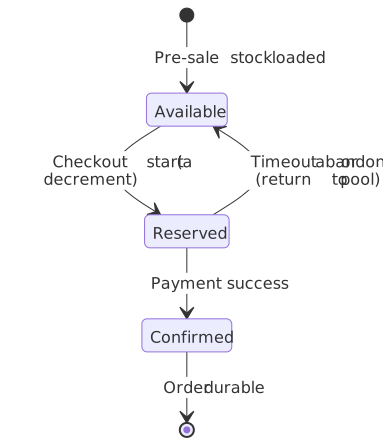
End-to-end reservation flow:
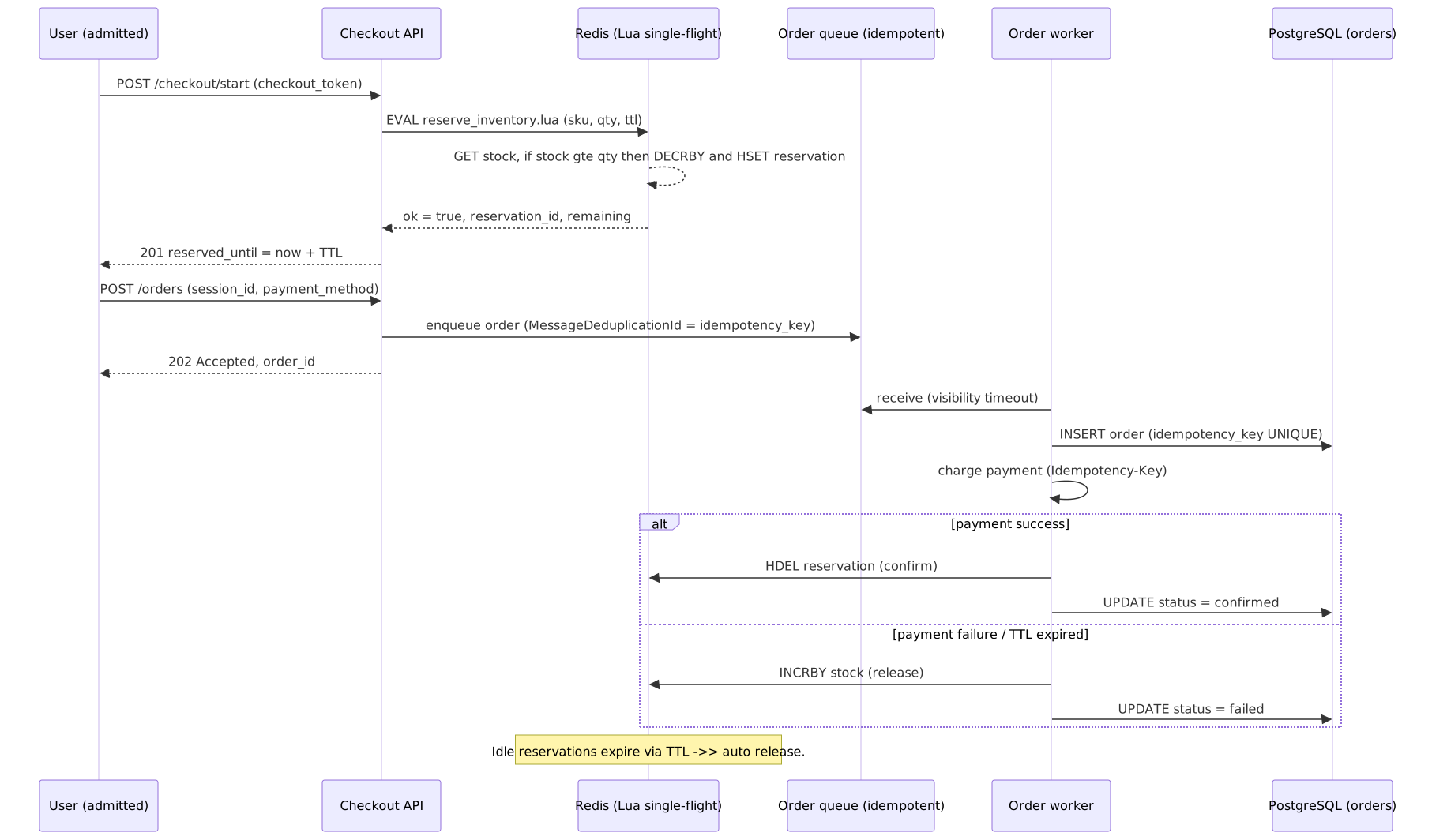
Design decisions:
| Decision | Rationale |
|---|---|
| Lua script | Atomic read-check-decrement prevents race conditions |
| Redis Cluster | Horizontal scaling for high throughput |
| Reservation with TTL | Prevents inventory lock-up from abandoned checkouts |
| Hash for reservations | O(1) lookup/delete by reservation ID |
Order Processing (Async Queue)
Orders are placed on a durable queue for async processing. This decouples order receipt from processing, preventing database overwhelm.
Order submission flow:
// order-service.tsimport { SQSClient, SendMessageCommand } from "@aws-sdk/client-sqs"import { v4 as uuid } from "uuid"const sqs = new SQSClient({})const ORDER_QUEUE_URL = process.env.ORDER_QUEUE_URL!interface OrderRequest { session_id: string user_id: string product_id: string quantity: number shipping_address: Address payment_method_id: string}export async function submitOrder(request: OrderRequest): Promise<{ order_id: string }> { const orderId = uuid() const idempotencyKey = `${request.user_id}:${request.session_id}` // Check for duplicate submission const existing = await db.orders.findOne({ idempotency_key: idempotencyKey }) if (existing) { return { order_id: existing.id } } // Create order record in pending state await db.orders.insert({ id: orderId, user_id: request.user_id, product_id: request.product_id, quantity: request.quantity, status: "pending", idempotency_key: idempotencyKey, created_at: new Date(), }) // Queue for async processing await sqs.send( new SendMessageCommand({ QueueUrl: ORDER_QUEUE_URL, MessageBody: JSON.stringify({ order_id: orderId, ...request, }), MessageDeduplicationId: idempotencyKey, MessageGroupId: request.user_id, // Ensures per-user ordering }), ) return { order_id: orderId }}Order processor (worker):
// order-processor.tsimport { SQSEvent, SQSRecord } from "aws-lambda"import Stripe from "stripe"const stripe = new Stripe(process.env.STRIPE_SECRET_KEY!)interface OrderMessage { order_id: string user_id: string product_id: string quantity: number shipping_address: Address payment_method_id: string session_id: string}export async function handler(event: SQSEvent): Promise<void> { for (const record of event.Records) { await processOrder(record) }}async function processOrder(record: SQSRecord): Promise<void> { const message: OrderMessage = JSON.parse(record.body) try { // 1. Verify reservation still valid const reservation = await getReservation(message.product_id, message.session_id) if (!reservation) { await markOrderFailed(message.order_id, "reservation_expired") return } // 2. Process payment const paymentIntent = await stripe.paymentIntents.create({ amount: calculateTotal(message.product_id, message.quantity), currency: "usd", payment_method: message.payment_method_id, confirm: true, idempotency_key: `payment_${message.order_id}`, }) if (paymentIntent.status !== "succeeded") { await releaseReservation(message.product_id, message.session_id) await markOrderFailed(message.order_id, "payment_failed") return } // 3. Confirm inventory (remove from reserved set) await confirmReservation(message.product_id, message.session_id) // 4. Update order status await db.orders.update(message.order_id, { status: "confirmed", payment_intent_id: paymentIntent.id, confirmed_at: new Date(), }) // 5. Send confirmation await sendOrderConfirmation(message.order_id) } catch (error) { // Let SQS retry with exponential backoff throw error }}async function markOrderFailed(orderId: string, reason: string): Promise<void> { await db.orders.update(orderId, { status: "failed", failure_reason: reason, }) // Notify user await sendOrderFailureNotification(orderId, reason)}Dead letter queue handling:
Orders that fail after max retries go to a Dead Letter Queue (DLQ) for manual review:
// dlq-processor.tsexport async function handleDeadLetter(record: SQSRecord): Promise<void> { const message = JSON.parse(record.body) // Log for investigation console.error("Order failed permanently", { order_id: message.order_id, attempts: record.attributes.ApproximateReceiveCount, error: record.attributes.DeadLetterQueueSourceArn, }) // Alert ops team await pagerduty.createIncident({ title: `Flash sale order failed: ${message.order_id}`, severity: "high", }) // Release inventory back to pool await releaseReservation(message.product_id, message.session_id)}Design decisions:
| Decision | Rationale |
|---|---|
| SQS FIFO + high-throughput | Exactly-once dedup (5-min window) and per-MessageGroupId ordering; high-throughput mode is required above ~3K msg/sec. |
| Idempotency key | Prevents duplicate orders on retry; mirrors the Stripe Idempotency-Key contract (24h replay window of the original response). |
| Payment before confirmation | Never confirm inventory without successful payment. |
| DLQ for failures | Ensures no order is silently lost; the DLQ handler must release inventory, not just log. |
Bot Detection and Fairness
Multi-Layer Bot Defense
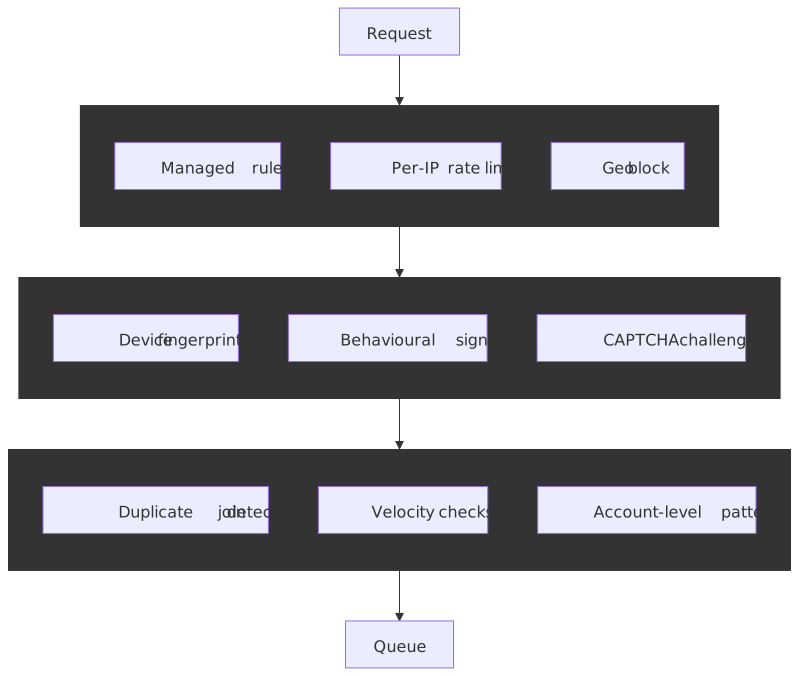
Layer 1: Edge defense (WAF)
# AWS WAF rules for flash saleRules: - Name: RateLimitPerIP Action: Block Statement: RateBasedStatement: Limit: 100 # requests per 5 minutes per IP AggregateKeyType: IP - Name: BlockKnownBots Action: Block Statement: IPSetReferenceStatement: ARN: arn:aws:wafv2:....:ipset/known-bots - Name: GeoRestriction Action: Block Statement: NotStatement: Statement: GeoMatchStatement: CountryCodes: [US, CA, GB, DE] # Allowed countriesLayer 2: Application-level detection
// bot-detection.tsinterface BotSignals { score: number signals: string[]}export function detectBot(request: Request): BotSignals { const signals: string[] = [] let score = 0 // Device fingerprint consistency const fp = request.headers.get("x-device-fingerprint") if (!fp || fp.length < 32) { signals.push("missing_fingerprint") score += 30 } // Behavioral signals const timing = parseTimingHeader(request) if (timing.pageLoadToAction < 500) { // < 500ms is suspicious signals.push("fast_interaction") score += 25 } // Browser consistency const ua = request.headers.get("user-agent") const acceptLang = request.headers.get("accept-language") if (isHeadlessBrowser(ua) || !acceptLang) { signals.push("headless_indicators") score += 40 } // Known residential proxy detection const ip = getClientIP(request) if (await isResidentialProxy(ip)) { signals.push("residential_proxy") score += 20 } return { score, signals }}export function shouldChallenge(signals: BotSignals): boolean { return signals.score >= 50}export function shouldBlock(signals: BotSignals): boolean { return signals.score >= 80}Layer 3: Queue-level protection
// queue-protection.tsexport async function validateQueueJoin( userId: string, deviceFingerprint: string, saleId: string,): Promise<{ allowed: boolean; reason?: string }> { // Check for duplicate user const existingEntry = await findUserInQueue(saleId, userId) if (existingEntry) { return { allowed: false, reason: "already_in_queue" } } // Check for fingerprint reuse (same device, different accounts) const fpCount = await countFingerprintInQueue(saleId, deviceFingerprint) if (fpCount >= 2) { return { allowed: false, reason: "device_limit_exceeded" } } // Velocity check: how many queues has this user joined recently? const recentJoins = await countRecentQueueJoins(userId, 3600) // last hour if (recentJoins >= 5) { return { allowed: false, reason: "velocity_exceeded" } } return { allowed: true }}Fairness Mechanisms
1. FIFO queue with randomized entry window
Users who arrive before sale start are randomized when the sale begins (prevents “refresh at exactly 10:00:00” advantage):
export async function openSaleQueue(saleId: string): Promise<void> { // Get all users who arrived in pre-sale window (e.g., last 15 minutes) const earlyArrivals = await getEarlyArrivals(saleId) // Shuffle positions randomly const shuffled = shuffleArray(earlyArrivals) // Assign positions 1, 2, 3, ... for (let i = 0; i < shuffled.length; i++) { await updatePosition(shuffled[i].queue_ticket, i + 1) } // Users arriving after sale start get position = current_max + 1 (true FIFO)}2. Per-customer purchase limits
export async function validatePurchaseLimit(userId: string, productId: string, quantity: number): Promise<boolean> { const existingOrders = await db.orders.count({ user_id: userId, product_id: productId, status: { $in: ["confirmed", "pending"] }, }) const LIMIT_PER_USER = 2 return existingOrders + quantity <= LIMIT_PER_USER}Frontend Considerations
Waiting Room UX
Critical UX decisions:
| Decision | Implementation | Rationale |
|---|---|---|
| Progress indicator | Position + estimated time + progress bar | Reduces anxiety; users know they’re progressing |
| No refresh needed | SPA with polling | Prevents users from losing position |
| Transparent communication | Show exact position | Trust requires honesty |
| Graceful degradation | Static HTML | Must work even if JS fails |
Optimistic UI for checkout:
// checkout-ui.tsasync function submitOrder(orderData: OrderData): Promise<void> { // Optimistic: show "Processing..." immediately setOrderStatus("processing") showConfirmationPreview(orderData) try { const { order_id } = await api.submitOrder(orderData) // Poll for confirmation (async processing) pollOrderStatus(order_id, (status) => { if (status === "confirmed") { setOrderStatus("confirmed") showSuccessAnimation() } else if (status === "failed") { setOrderStatus("failed") showRetryOption() } }) } catch (error) { // Revert optimistic UI setOrderStatus("error") showErrorMessage(error) }}Real-Time Queue Updates
Polling vs WebSocket decision:
| Factor | Polling | WebSocket |
|---|---|---|
| Scale | Easy (stateless) | Hard (connection management) |
| Latency | 5-10s | Sub-second |
| Infrastructure | Simple | Complex |
| Battery impact | Higher | Lower |
Chosen: Adaptive polling — Poll every 5s when far from front; every 1s when close.
function calculatePollInterval(position: number, totalAhead: number): number { const progressPercent = 1 - position / totalAhead if (progressPercent > 0.9) return 1000 // Top 10%: 1s if (progressPercent > 0.7) return 2000 // Top 30%: 2s if (progressPercent > 0.5) return 3000 // Top 50%: 3s return 5000 // Back 50%: 5s}Client State Management
// flash-sale-state.tsinterface FlashSaleState { // Queue state queueTicket: string | null position: number | null status: "idle" | "queued" | "admitted" | "checkout" | "completed" | "expired" // Checkout state checkoutToken: string | null checkoutExpiresAt: Date | null reservationId: string | null // Order state orderId: string | null orderStatus: "pending" | "processing" | "confirmed" | "failed" | null}// State persisted to localStorage for tab recoveryfunction persistState(state: FlashSaleState): void { localStorage.setItem("flash-sale-state", JSON.stringify(state))}// Restore on page load (handles accidental tab close)function restoreState(): FlashSaleState | null { const saved = localStorage.getItem("flash-sale-state") if (!saved) return null const state = JSON.parse(saved) // Check if checkout token is still valid if (state.checkoutExpiresAt && new Date(state.checkoutExpiresAt) < new Date()) { return null // Expired, start fresh } return state}Infrastructure Design
Cloud-Agnostic Components
| Component | Purpose | Requirements |
|---|---|---|
| CDN | Waiting room, static assets | Edge caching, high throughput |
| Serverless compute | Queue service, APIs | Auto-scale, pay-per-use |
| Key-value store | Inventory counters, tokens | Sub-ms latency, atomic operations |
| Document store | Queue state | Single-digit ms, auto-scale |
| Message queue | Order processing | Durability, exactly-once |
| Relational DB | Orders, users | ACID, complex queries |
AWS Reference Architecture
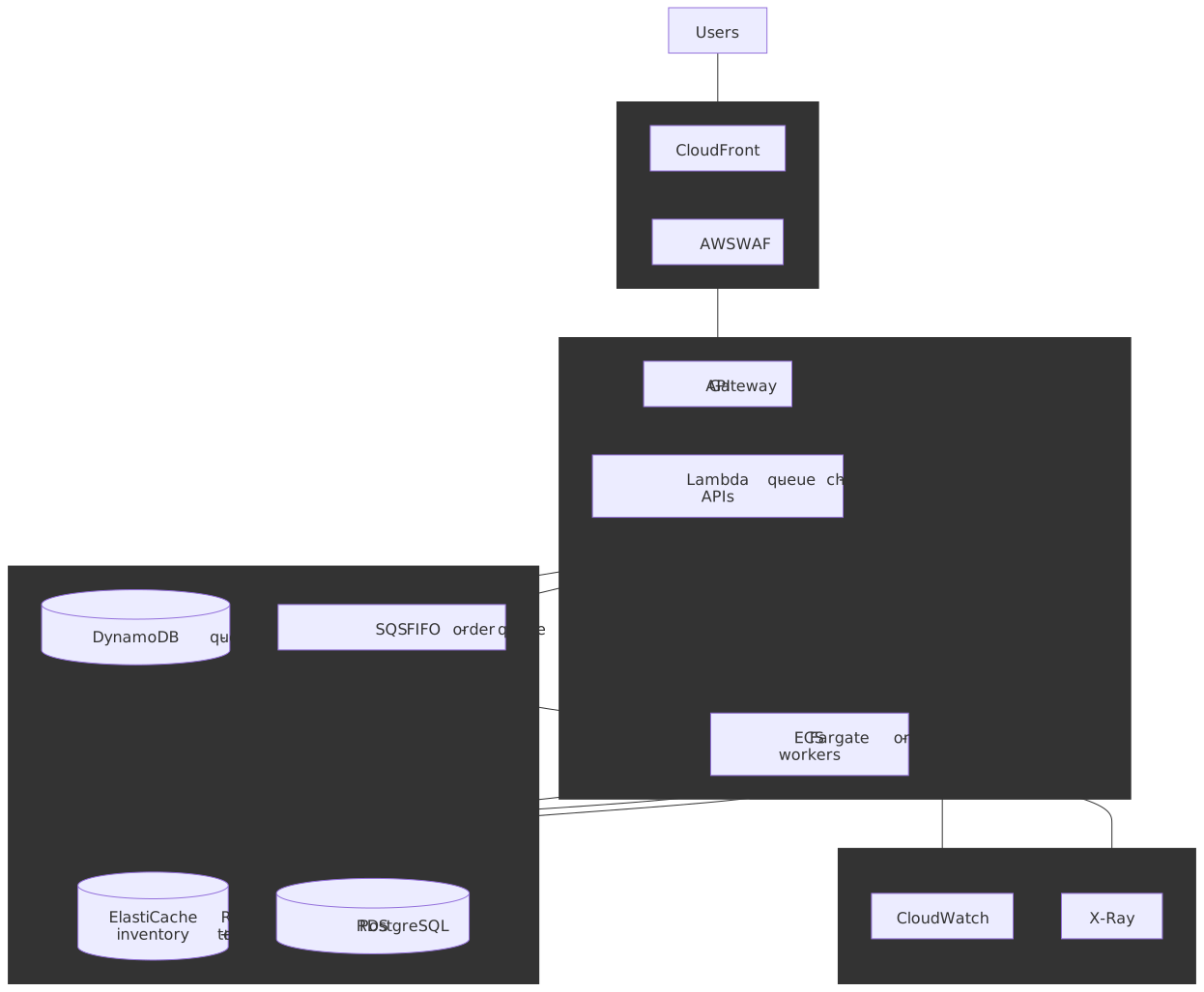
Service configuration:
| Service | Configuration | Rationale |
|---|---|---|
| CloudFront | Origin: S3 (static), Cache: 1 year | Waiting room must survive origin failure |
| API Gateway | Throttling: 10K RPS, Burst: 5K | Protects backend during spike |
| Lambda | Memory: 1024MB, Timeout: 30s, Reserved: 1000 | Predictable latency under load |
| ElastiCache | Redis Cluster, 3 nodes, r6g.large | Sub-ms latency, failover |
| DynamoDB | On-demand, Auto-scaling | Handles unpredictable load |
| SQS FIFO | High-throughput mode, 14-day retention | Order durability + per-user ordering |
| RDS | Multi-AZ, db.r6g.xlarge, Read replicas | ACID + read scaling |
Self-Hosted Alternatives
| Managed Service | Self-Hosted Option | Trade-off |
|---|---|---|
| ElastiCache | Redis Cluster on EC2 | More control, operational burden |
| DynamoDB | Cassandra/ScyllaDB | Cost at scale, complexity |
| SQS FIFO | Kafka | Higher throughput, operational complexity |
| Lambda | Kubernetes + KEDA | Fine-grained control, cold starts |
Note
The first-party AWS Virtual Waiting Room solution was retired in November 2025. New deployments should follow the SeatGeek-style reference architecture (Lambda + DynamoDB + ElastiCache) rather than the retired CloudFormation stack.
Production analogues
The architecture above is a synthesis of several published systems. Use these as concrete anchors when a design choice feels arbitrary.
| System | Architecture shape | What to copy |
|---|---|---|
| SeatGeek | Edge gatekeeper + DynamoDB token tables + leaky-bucket admission counter; visitor token captures arrival timestamp, access token authorises the protected zone. | Two-stage tokens, leaky-bucket admission, DynamoDB Streams → Timestream for live ops dashboards. |
| Shopify | ”Sorting Hat” Lua module in Nginx/OpenResty routes traffic to per-shop pods; checkout throttle is a leaky bucket implemented at the edge; signed cookie exempts admitted users from re-throttling for the rest of the session. | Edge-scriptable throttle, signed-cookie skip-the-queue, pod isolation so one viral shop can’t tank neighbours. |
| Shopify BFCM 2024-25 | Peaked at 284M req/min on the edge and 80M req/min on app servers in BFCM 2024; BFCM 2025 reached 489M req/min on the edge per Shopify’s internal recap. | Plan for ≥3× your headline forecast; chaos-test with Toxiproxy and Game Days before the on-sale. |
| Ticketmaster Smart Queue | Public waiting room opens 15-30 min before sale; queue position is randomised when the sale opens; ~10 min checkout hold once at front; aggressive bot mitigation including Verified Fan pre-registration codes. | Pre-sale randomisation window, hard checkout hold, presale invite codes for the highest-demand events. |
| Alibaba Tmall Singles Day | Tair (Redis-compatible) for atomic inventory deduction with sharded SKUs, cell-based isolation, and traffic queuing for the hottest SKUs. Platform peaked at 583K orders/sec in 2020; Alibaba stopped publishing peak TPS after 2022. | Hot-SKU sharding, traffic queuing per product, cell-based capacity planning. |
| Cloudflare Waiting Room | Workers + Durable Objects at the edge; per-data-centre DOs aggregate to a single global DO every few seconds; admission state lives in an encrypted cookie carrying bucketId + lastCheckInTime. |
Edge-only admission with no origin polling, eventually-consistent global counters, cookie-as-token. |
Failure modes and operational implications
Flash sales fail in predictable shapes. Plan and rehearse for each.
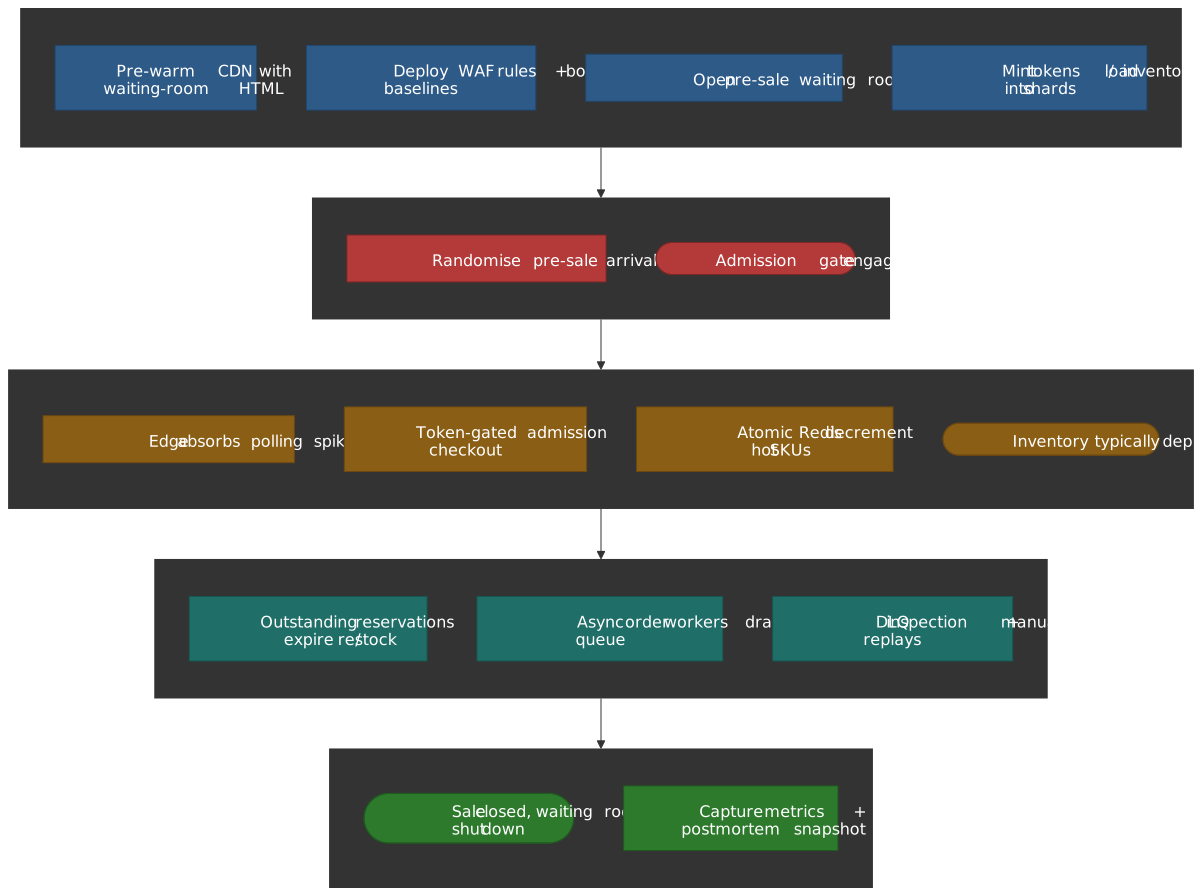
| Failure mode | Symptom | Containment |
|---|---|---|
| Hot key on a single SKU | Redis shard CPU saturates; p99 inventory check explodes | Bucket the SKU into N sub-keys, distribute decrements; pre-cache product detail pages at the edge; fall back to “queueing for stock” UI rather than 5xx. |
| Token gate misconfigured (admit too fast) | Backend overload behind the gate; cascading 5xx | Tie admission to live healthy-worker count, not a static rate. Shed traffic via a circuit breaker that returns “still in queue” rather than failed checkouts. |
| Token gate misconfigured (admit too slow) | Conversion drops; customer support floods with “stuck in queue” | Watch admission rate vs remaining-inventory ratio; alert when admission falls below inventory / target_sale_duration. |
| Reservation TTL too short | Users lose their seat mid-payment; refund and complaint volume spikes | Make reservation TTL > p99 of payment latency observed in dress rehearsal; extend TTL on user activity pings. |
| Reservation TTL too long | Inventory looks sold out while real users abandoned silently | Aggressive client heartbeat to release on tab close; shorter TTL with explicit “extend” call when user enters payment details. |
| SQS DLQ accumulating | Orders silently failing; no user-facing error | Alert on DLQ depth > 0 during a sale; auto-page; the DLQ handler must release inventory and notify the user, not just log. |
| Payment provider degraded | Checkout latency spikes; payment confirmations time out | Circuit-break payment calls; queue the order with a “payment retry” status; communicate honestly in the UI (“your spot is held; we’ll retry payment”). |
| Bot wave overwhelms WAF | Legitimate users see 429 or CAPTCHA storms | Pre-warm WAF rules; rate-limit per device fingerprint not just per IP; have a “raise the difficulty” lever (require 2FA, presale code, or Verified Fan) ready to flip. |
| CDN origin shield miss | Spike at origin for the waiting room HTML | Pre-warm CDN with the exact waiting-room asset; pin a long edge TTL; serve a stale-while-revalidate fallback if origin dies. |
Caution
Pre-rehearse the on-sale with a realistic load test. Both Shopify Game Days and Alibaba’s PTS (Performance Testing Service) are public examples. A flash sale is the worst time to discover that your queue depth metric is wrong.
Observability under spike
The metric set you actually need on the war-room dashboard is small and ratio-based. Counters lie when traffic doubles; ratios survive.
| Signal | What you watch | What you do |
|---|---|---|
admission_rate / target_admission_rate |
Drift below 0.7 for >1 min | Open the gate further, or check downstream worker health (cause is almost never the queue). |
reserved_inventory / total_inventory |
Should monotonically rise; flat = workers stalled | Page the order-worker oncall before the user-facing dashboard catches up. |
redis.hot_key_ops / redis.cluster_ops |
A single key crossing ~30% of cluster ops is hot | Flip to the sharded-key path; raise the WAF challenge difficulty. |
queue.dlq_depth |
Any non-zero during a sale = user money silently failing | Auto-page; DLQ handler must release inventory and notify the user. |
payment.p99 and payment.error_rate |
Compare against the dress-rehearsal baseline, not absolute SLOs | Trip the payment circuit breaker; shift to “your spot is held” UI rather than failing checkouts. |
oversell_count (= confirmed_orders − inventory) |
Must be 0 by construction; alert on >0 immediately | This is the contract. If it ever fires, freeze the sale and reconcile manually. |
cdn.origin_shield_miss_rate for waiting-room HTML |
Should be ~0 once warmed | Re-pin the asset, raise edge TTL, serve stale-while-revalidate. |
Graceful degradation, in priority order:
- Shed the cheapest thing first. Increase poll interval, drop ornamental queue-position estimates, hide product imagery — keep the admission decision honest.
- Trade UX for correctness. Show “your spot is held; we are retrying payment” rather than failing the checkout when the payment provider is degraded.
- Raise the friction lever. Force CAPTCHA or re-auth when bot scores climb; require a presale code or Verified-Fan style gate when the WAF is at capacity. Communicate that you are doing this — silence is what destroys trust, not the friction.
- Never undo a successful inventory reserve to make the UI nicer. Release on TTL or explicit cancel, never on a UI timeout.
Variations
Path B Implementation: Real-Time Counter Model
For e-commerce with dynamic inventory, replace token-based admission with real-time inventory checks:
// real-time-inventory.tsexport async function attemptPurchase( productId: string, userId: string, quantity: number,): Promise<{ success: boolean; orderId?: string }> { // Rate limit first (protect backend) const allowed = await rateLimiter.check(userId, "purchase") if (!allowed) { return { success: false } } // Atomic inventory check + decrement const result = await redis.eval( ` local count = redis.call('GET', KEYS[1]) if tonumber(count) >= tonumber(ARGV[1]) then return redis.call('DECRBY', KEYS[1], ARGV[1]) else return -1 end `, 1, `inventory:${productId}`, quantity, ) if (result < 0) { return { success: false } // Sold out } // Proceed to order (inventory already decremented) const orderId = await createOrder(productId, userId, quantity) return { success: true, orderId }}Key difference: Inventory decremented at purchase attempt, not at queue admission. Higher risk of “sold out after waiting” but supports dynamic restocking.
VIP Early Access
Add priority tiers to queue service:
// vip-queue.tsinterface QueueEntry { // ... existing fields tier: "vip" | "member" | "standard" tierJoinedAt: Date}export async function getNextPosition(saleId: string, tier: string): Promise<number> { // VIPs get positions 1-1000, members 1001-10000, standard 10001+ const tierOffsets = { vip: 0, member: 1000, standard: 10000 } const offset = tierOffsets[tier] const countInTier = await ddb.query({ TableName: "FlashSaleQueue", KeyConditionExpression: "sale_id = :sid", FilterExpression: "tier = :tier", ExpressionAttributeValues: { ":sid": saleId, ":tier": tier }, }) return offset + (countInTier.Count || 0) + 1}Raffle-Based Allocation
For extremely limited inventory (e.g., 100 items, 1M users), replace queue with raffle:
// raffle-mode.tsexport async function enterRaffle(saleId: string, userId: string): Promise<void> { // Entry window: 1 hour before draw await ddb.put({ TableName: "FlashSaleRaffle", Item: { sale_id: saleId, user_id: userId, entry_id: uuid(), entered_at: new Date().toISOString(), }, })}export async function drawWinners(saleId: string, count: number): Promise<string[]> { // Get all entries const entries = await getAllEntries(saleId) // Cryptographically random selection const shuffled = cryptoShuffle(entries) const winners = shuffled.slice(0, count) // Grant checkout tokens to winners for (const winner of winners) { await grantCheckoutToken(winner.user_id, saleId) } return winners.map((w) => w.user_id)}Conclusion
Flash sale systems require coordinated defense at every layer:
-
Traffic absorption: CDN-hosted waiting room prevents backend overwhelm. Static HTML + client-side polling scales infinitely at the edge.
-
Fair admission: Token-based queue management (Path A) guarantees purchase opportunity. FIFO with randomized early arrival prevents “refresh race.”
-
Inventory accuracy: Redis Lua scripts provide atomic check-and-decrement. Zero overselling through construction, not hope.
-
Order durability: Async processing via SQS decouples order receipt from processing. DLQ ensures no order is silently lost.
-
Bot defense: Multi-layer detection (WAF → behavioral → queue-level) raises the bar for attackers without blocking legitimate users.
What this design optimizes for:
- Zero overselling (100% inventory accuracy)
- Fairness (transparent queue position)
- Durability (no lost orders)
- Scalability (1M+ concurrent users)
What it sacrifices:
- Latency (queue wait time)
- Simplicity (multiple coordinated services)
- Dynamic inventory (pre-allocation model)
Known limitations:
- Token expiration requires careful tuning (too short: frustrated users; too long: wasted inventory)
- Sophisticated bots with residential proxies remain challenging
- VIP tiers can feel unfair to standard users
Appendix
Prerequisites
- Distributed systems fundamentals (CAP theorem, consistency models)
- Queue theory basics (FIFO, rate limiting)
- Redis data structures and Lua scripting
- Message queue patterns (at-least-once, exactly-once)
- Payment processing (idempotency, webhooks)
Summary
- Flash sales require a waiting room → token gate → atomic inventory → async order queue architecture
- CDN-hosted waiting room absorbs traffic spikes cheaply and reliably
- Token-based admission (Path A) guarantees purchase opportunity and prevents overselling by construction
- Redis Lua scripts provide atomic inventory operations at 500K+ ops/second
- Async order processing via message queues decouples order receipt from fulfillment
- Multi-layer bot defense (WAF + behavioral + queue-level) raises attack cost without blocking legitimate users
References
- Alibaba Cloud: system stability for large-scale flash sales — Tmall Singles Day architecture and the 583K orders/sec peak.
- Alibaba Cloud: build a flash-sale system on Tair (Redis) —
HMGET+HINCRBYLua pattern, instance-level QPS numbers. - Alibaba Cloud: identify and handle hot keys — bucketing strategies for single-shard contention.
- SeatGeek virtual waiting room on AWS — visitor + access tokens, leaky-bucket admission, DynamoDB Streams analytics.
- Shopify: surviving high-write flash sales with scriptable load balancers — edge-level checkout throttle, signed-cookie skip-the-queue.
- Shopify: how we prepare for BFCM 2025 — capacity planning, Toxiproxy chaos, BFCM 2024 peak metrics.
- Ticketmaster: how the Smart Queue works — randomised entry, checkout hold window, bot mitigation tiers.
- AWS Prime Day 2024 metrics — DynamoDB at 146M req/sec, CloudFront ≥500M req/min.
- Cloudflare: building Waiting Room on Workers and Durable Objects — per-PoP DO aggregation to a global DO, cookie-bound admission, eventually-consistent counters.
- Stripe: designing robust APIs with idempotency —
Idempotency-Keysemantics, response replay, 24h window. - Stripe: scaling APIs with rate limiters — token bucket on Redis; per-user vs per-API quotas.
- AWS: SQS FIFO exactly-once processing —
MessageDeduplicationIdsemantics and the 5-minute dedup window. - AWS: DynamoDB write sharding — partition-key sharding strategies for hot items.
- Redis: programmability — EVAL atomicity — script atomicity guarantees.
- Redis: distributed lock patterns — when a Lua script is not enough.
- AWS Virtual Waiting Room solution (retired Nov 2025) — the legacy first-party reference; do not deploy new stacks of it.
- Martin Kleppmann: Designing Data-Intensive Applications — distributed-systems fundamentals.