Image Processing Service Design: CDN, Transforms, and APIs
This document presents the architectural design for a cloud-agnostic, multi-tenant image processing platform that provides on-the-fly transformations with enterprise-grade security, performance, and cost optimization. The platform supports hierarchical multi-tenancy (Organization → Tenant → Space), public and private image delivery, and deployment across AWS, GCP, Azure, or on-premise infrastructure. Key capabilities include deterministic transformation caching to ensure sub-second delivery, HMAC-SHA256 signed URLs for secure private access, CDN (Content Delivery Network) integration for global edge caching, and a “transform-once-serve-forever” approach that minimizes processing costs while guaranteeing HTTP 200 responses even for first-time transformation requests.
Abstract
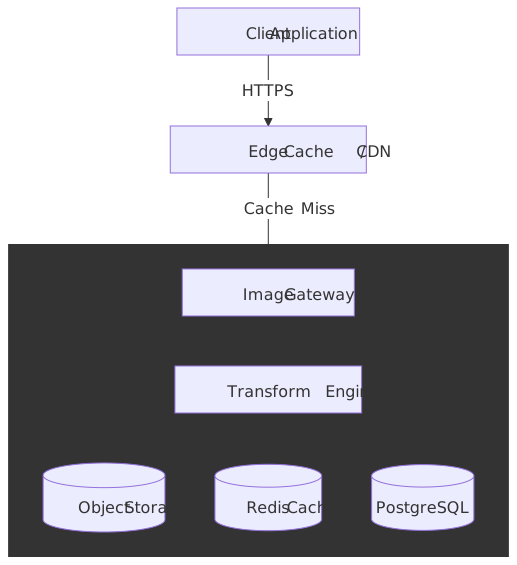
Image processing at scale requires balancing three competing concerns: latency (users expect sub-second delivery), cost (processing and storage grow with traffic), and correctness (transformations must be deterministic and secure). This architecture resolves these tensions through a layered caching strategy with content-addressed storage.
Core mental model:
- Content-addressed storage: Hash(original + operations) → unique derived asset. Same inputs always produce the same output, enabling infinite caching.
- Synchronous-first with async fallback: Transform inline for < 5MB images (< 800ms). Queue larger images but return 202 with polling URL.
- Efficiency locks, not safety locks: Redlock prevents duplicate processing but doesn’t guarantee mutual exclusion. If two transforms race, both succeed—we just store one.
- Hierarchical policies: Organization → Tenant → Space inheritance. Override at any level. Enforce at every layer (API, database, CDN).
Technology selection rationale:
| Component | Choice | Why |
|---|---|---|
| Image processor | Sharp 0.34.5 (libvips 8.17) | ~26× faster than jimp, ~4-5× faster than ImageMagick, ~50 MB memory per worker |
| Distributed lock | Redlock | Sufficient for efficiency (not correctness); simpler than etcd/ZooKeeper |
| Formats | AVIF → WebP → JPEG (with auto-negotiation) | AVIF ~94.9% global support, ~50% smaller than JPEG; WebP ~97% support, 25-34% smaller than JPEG |
| Database | PostgreSQL + JSONB | Row-level security, flexible policy storage, proven at scale |
System Overview
Core Capabilities
-
Multi-Tenancy Hierarchy
- Organization: Top-level tenant boundary
- Tenant: Logical partition within organization (brands, environments)
- Space: Project workspace containing assets
-
Image Access Models
- Public Images: Direct URL access with CDN caching
- Private Images: Cryptographically signed URLs with expiration
-
On-the-Fly Processing
- Real-time transformations (resize, crop, format, quality, effects)
- Named presets for common transformation patterns
- Automatic format optimization (WebP, AVIF)
- Guaranteed 200 response even on first transform request
-
Cloud-Agnostic Design
- Deployment to AWS, GCP, Azure, or on-premise
- Storage abstraction layer for portability
- Kubernetes-based orchestration
-
Performance & Cost Optimization
- Multi-layer caching (CDN → Redis → Database → Storage)
- Transform deduplication with content-addressed storage
- Lazy preset generation
- Storage lifecycle management
Component Naming
Core Services
| Component | Name | Purpose |
|---|---|---|
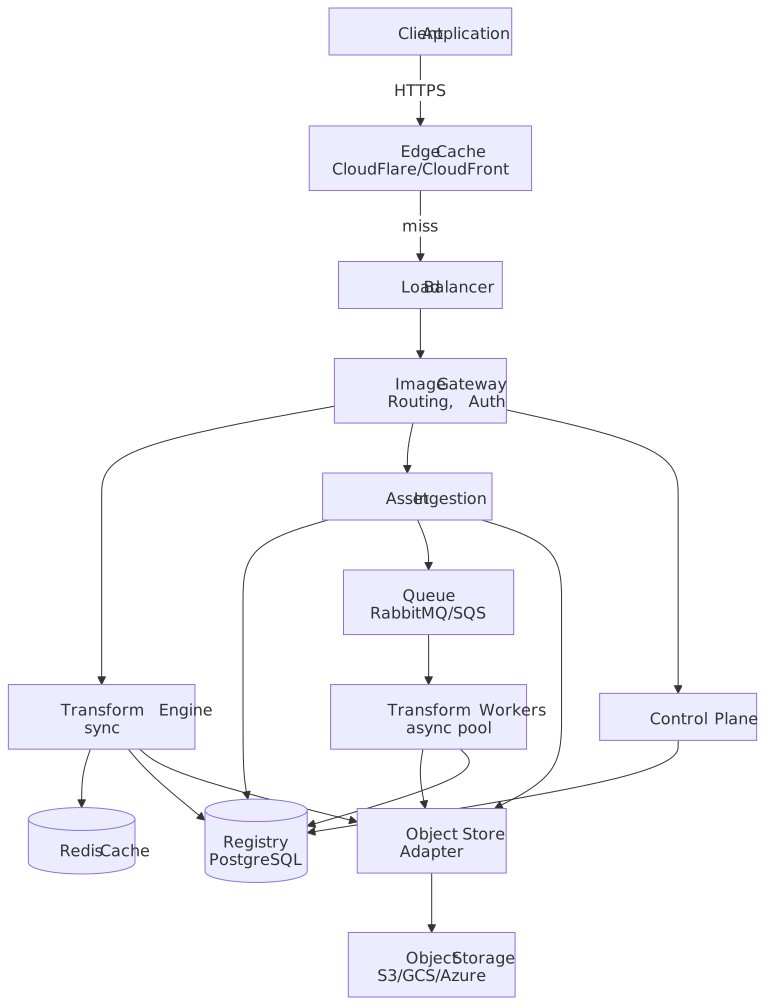
| Entry point | Image Gateway | API gateway, routing, authentication |
| Transform service | Transform Engine | On-demand image processing |
| Upload handler | Asset Ingestion Service | Image upload and validation |
| Admin API | Control Plane API | Tenant management, configuration |
| Background jobs | Transform Workers | Async preset generation |
| Metadata store | Registry Service | Asset and transformation metadata |
| Storage layer | Object Store Adapter | Cloud-agnostic storage interface |
| CDN layer | Edge Cache | Global content delivery |
| URL signing | Signature Service | Private URL cryptographic signing |
Data Entities
| Entity | Name | Description |
|---|---|---|
| Uploaded file | Asset | Original uploaded image |
| Processed variant | Derived Asset | Transformed image |
| Named transform | Preset | Reusable transformation template |
| Transform result | Variant | Cached transformation output |
Architecture Principles
1. Cloud Portability First
- Storage Abstraction: Unified interface for S3, GCS, Azure Blob, MinIO
- Queue Abstraction: Support for SQS, Pub/Sub, Service Bus, RabbitMQ
- Kubernetes Native: Deploy consistently across clouds
- No Vendor Lock-in: Use open standards where possible
2. Performance SLA
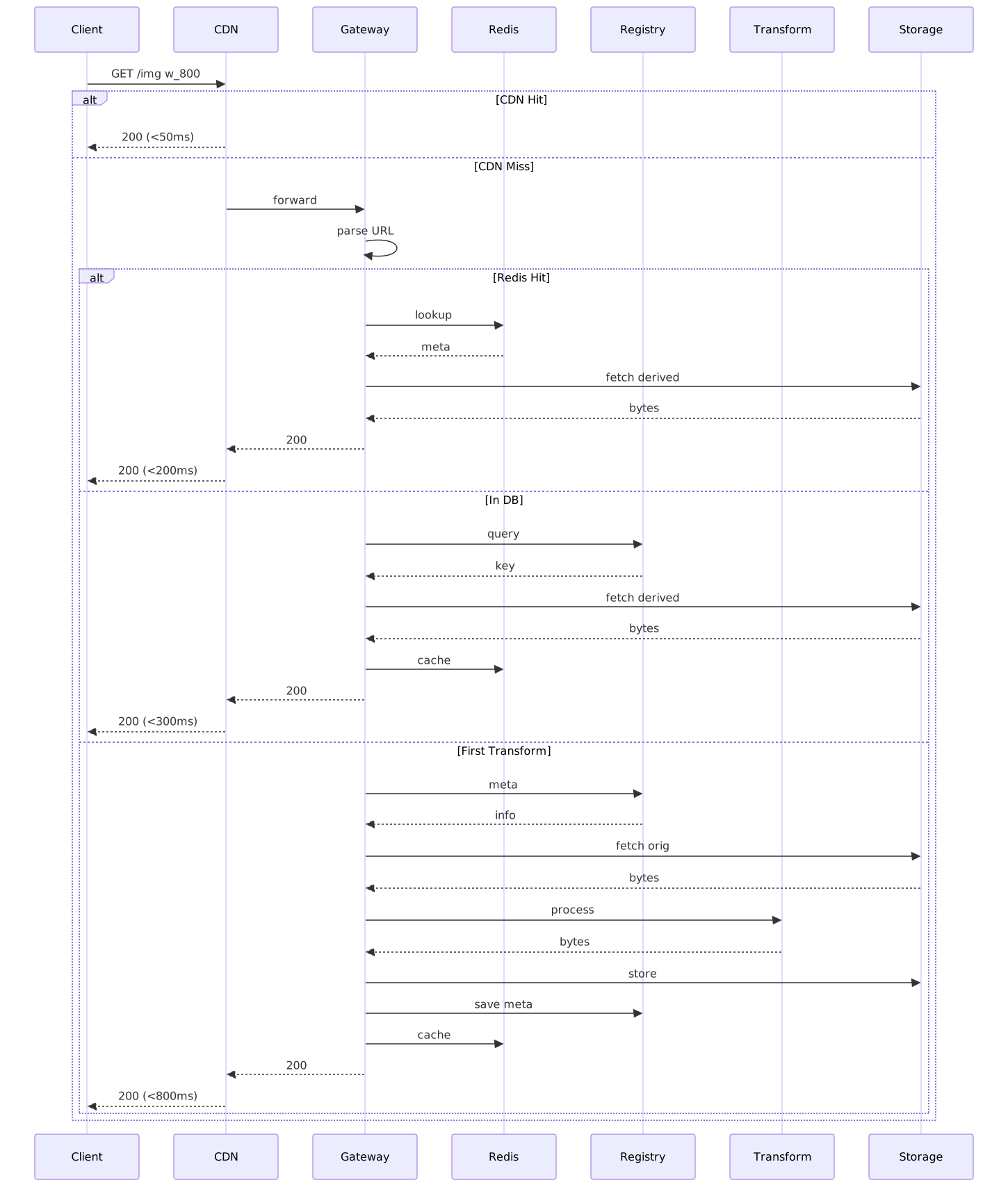
- Edge Hit: < 50ms (CDN cache)
- Origin Hit: < 200ms (application cache)
- First Transform: < 800ms (sync processing for images < 5MB)
- Always Return 200: Never return 202 or redirect
3. Transform Once, Serve Forever
- Content-addressed transformation storage
- Idempotent processing with distributed locking
- Permanent caching with invalidation API
- Deduplication across requests
4. Security by Default
- Signed URLs for private content
- Row-level tenancy isolation
- Encryption at rest and in transit
- Comprehensive audit logging
5. Cost Optimization
- Multi-layer caching to reduce processing
- Storage lifecycle automation
- Format optimization (WebP/AVIF)
- Rate limiting and resource quotas
Technology Stack
Core Technologies
Image Processing Library
| Technology | Pros | Cons | Recommendation |
|---|---|---|---|
| Sharp (libvips) | 26x faster than jimp, low memory (~50MB), modern formats | Linux-focused build | ✅ Recommended |
| ImageMagick | Feature-rich, mature | 4-5x slower than Sharp | Use for complex operations |
| Jimp | Pure JavaScript, portable | Very slow, limited formats | Development only |
Choice: Sharp 0.34.5 (released November 2025; bundles libvips 8.17.3) for primary processing.
Why Sharp over alternatives (numbers from Sharp’s published benchmark, 2725×2225 → 720×588 JPEG, libvips caching disabled):
- Throughput: 64.42 ops/sec on AMD64, 49.20 ops/sec on ARM64 — about 26× jimp and several times faster than ImageMagick on the same hardware. Production throughput is typically higher because libvips caching is enabled by default.
- Memory efficiency: Streaming + memory-mapped I/O. Sharp’s install docs recommend setting
MALLOC_ARENA_MAX="2"on Linux/glibc to keep RSS bounded under heavy concurrency. - Modern format support: JPEG (mozjpeg), PNG, WebP, AVIF, GIF, TIFF, and HEIC out of the box.
Note
libvips 8.18 (December 2025) added UltraHDR output (via Google’s libultrahdr), Camera RAW input via libraw, an Oklab colorspace, and BigTIFF (>4 GB) output. Those features ship through Sharp starting with the 0.35.x line (Sharp 0.35.0-rc.0 was published 2 January 2026). If you need them today, pin to a 0.35 prerelease and validate before promoting.
npm install sharpCaching Layer
| Technology | Use Case | Pros | Cons | Recommendation |
|---|---|---|---|---|
| Redis | Application cache, locks | Fast, pub/sub, clustering | Memory cost | ✅ Primary cache |
| Memcached | Simple KV cache | Faster for simple gets | No persistence, limited data types | Skip |
| Hazelcast | Distributed cache | Java ecosystem, compute | Complexity | Skip for Node.js |
Choice: Redis (6+ with Redis Cluster for HA)
npm install ioredisStorage Clients
| Provider | Library | Notes |
|---|---|---|
| AWS S3 | @aws-sdk/client-s3 |
Official v3 SDK |
| Google Cloud Storage | @google-cloud/storage |
Official SDK |
| Azure Blob | @azure/storage-blob |
Official SDK |
| MinIO (on-prem) | minio or S3 SDK |
S3-compatible |
npm install @aws-sdk/client-s3 @google-cloud/storage @azure/storage-blob minioMessage Queue
| Provider | Library | Use Case |
|---|---|---|
| AWS SQS | @aws-sdk/client-sqs |
AWS deployments |
| GCP Pub/Sub | @google-cloud/pubsub |
GCP deployments |
| Azure Service Bus | @azure/service-bus |
Azure deployments |
| RabbitMQ | amqplib |
On-premise, multi-cloud |
Choice: Provider-specific for cloud, RabbitMQ for on-premise
npm install amqplibWeb Framework
| Framework | Pros | Cons | Recommendation |
|---|---|---|---|
| Fastify | Fast, low overhead, TypeScript support | Less mature ecosystem | ✅ Recommended |
| Express | Mature, large ecosystem | Slower, callback-based | Acceptable |
| Koa | Modern, async/await | Smaller ecosystem | Acceptable |
Choice: Fastify for performance
npm install fastify @fastify/multipart @fastify/corsDatabase
| Technology | Pros | Cons | Recommendation |
|---|---|---|---|
| PostgreSQL | JSONB, full-text search, reliability | Complex clustering | ✅ Recommended |
| MySQL | Mature, simple | Limited JSON support | Acceptable |
| MongoDB | Flexible schema | Tenancy complexity | Not recommended |
Choice: PostgreSQL 15+ with JSONB for policies
npm install pgURL Signing
| Library | Algorithm | Recommendation |
|---|---|---|
| Node crypto (built-in) | HMAC-SHA256 | ✅ Recommended |
jsonwebtoken |
JWT (HMAC/RSA) | Use for JWT tokens |
tweetnacl |
Ed25519 | Use for EdDSA |
Choice: Built-in crypto module for HMAC-SHA256 signatures
import crypto from "crypto"Distributed Locking
| Technology | Pros | Cons | Recommendation |
|---|---|---|---|
| Redlock (Redis) | Simple, Redis-based | No fencing tokens, clock skew risk | ✅ For efficiency only |
| etcd | Linearizable, fencing tokens | Separate service, higher latency | Safety-critical use |
| ZooKeeper | Strong consistency, mature | Complex operations, JVM dependency | Safety-critical use |
| Database locks | Simple, transactional | Contention, less scalable | Development only |
Choice: Redlock with Redis for transform deduplication (efficiency), not for safety-critical mutual exclusion.
Why Redlock is sufficient here:
The image service uses locks to prevent duplicate work, not to prevent data corruption. If two workers race past the lock:
- Both fetch the original image
- Both apply the same transformation (deterministic)
- Both attempt to store the result
- One wins (upsert semantics), the other’s write is a no-op
This is inefficient (wasted compute) but not incorrect. The content-addressed storage ensures idempotency.
Why Redlock is insufficient for safety-critical scenarios (per Martin Kleppmann’s analysis):
- No fencing tokens: Cannot generate monotonically increasing tokens to detect stale lock holders after process pauses/GC stops
- Timing assumptions: Depends on bounded network delays and clock accuracy that frequently break in practice
- Clock vulnerabilities: Uses
gettimeofday()(not monotonic); NTP adjustments can cause time jumps
Redis’s current recommendation (from official docs): Use N=5 Redis masters with majority voting, implement fencing tokens separately if correctness matters, monitor clock drift.
npm install redlockHigh-Level Architecture
System Diagram
Request Flow: Public Image
Request Flow: Private Image
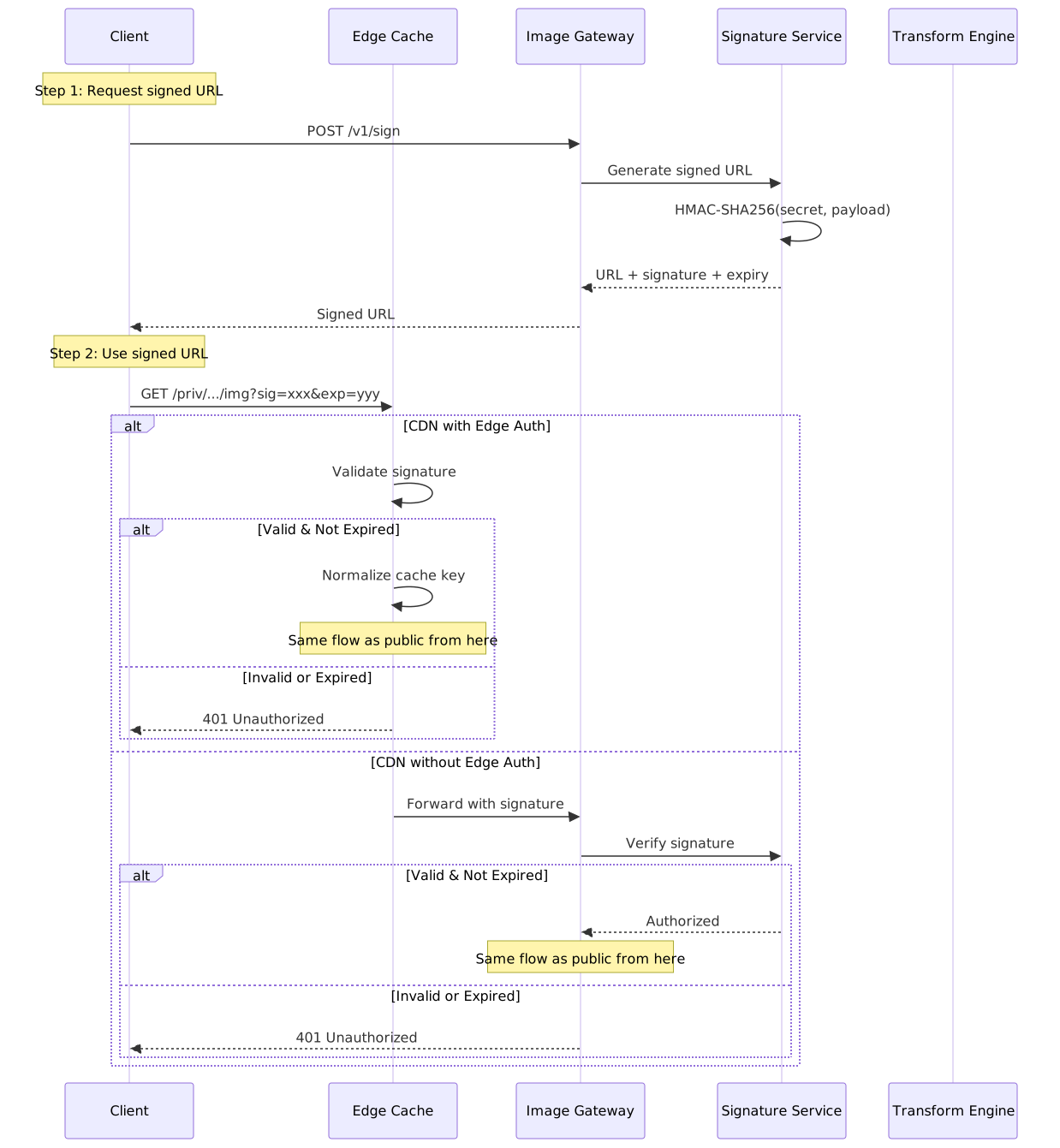
Edge Authentication Patterns
Modern CDNs support signature validation at the edge, eliminating origin round-trips for private content. This section covers three deployment patterns with different security/complexity tradeoffs.
Pattern 1: Origin-based validation (simplest)
All requests hit the origin, which validates signatures. The CDN caches responses keyed by the full URL including signature parameters.
- Pros: Simple deployment, no edge configuration
- Cons: Every unique signed URL generates a cache miss, origin must handle all validation
- When to use: Low traffic, simple deployments, or when CDN doesn’t support edge compute
Pattern 2: Edge signature validation with normalized cache keys
The edge validates the signature, then strips signature parameters before checking the cache. This allows multiple signed URLs for the same content to share a single cache entry.
// Cloudflare Worker for edge signature validation.// Workers run on V8 isolates rather than per-request containers — Cloudflare// reports ~5 ms cold-start and per-isolate memory in the low single-digit MB// (vs. ~35 MB for a typical Node.js Lambda). See:// https://blog.cloudflare.com/cloud-computing-without-containers/export default { async fetch(request, env) { const url = new URL(request.url) // Extract and validate signature const sig = url.searchParams.get("sig") const exp = url.searchParams.get("exp") const kid = url.searchParams.get("kid") if (!sig || !exp || !kid) { return new Response("Missing signature", { status: 401 }) } // Check expiration if (Date.now() / 1000 > parseInt(exp)) { return new Response("Signature expired", { status: 401 }) } // Validate HMAC (key fetched from Workers KV or secrets) const key = await env.SIGNING_KEYS.get(kid) if (!key) { return new Response("Invalid key", { status: 401 }) } // Reconstruct canonical string and verify const canonical = createCanonicalString(url.pathname, exp, url.hostname) const expected = await computeHmac(key, canonical) if (!timingSafeEqual(sig, expected)) { return new Response("Invalid signature", { status: 401 }) } // Strip signature params for cache key normalization url.searchParams.delete("sig") url.searchParams.delete("exp") url.searchParams.delete("kid") // Fetch from origin/cache with normalized URL return fetch(url.toString(), { cf: { cacheKey: url.toString() }, // Normalized cache key }) },}- Pros: High cache efficiency, reduced origin load, sub-5ms auth latency
- Cons: Requires edge compute (CloudFlare Workers, CloudFront Functions, Fastly Compute)
- When to use: High-traffic private content, latency-sensitive applications
Pattern 3: JWT tokens with edge validation
Use JWT (JSON Web Token) instead of HMAC signatures. The edge can decode and validate JWTs without origin contact, and the token can carry claims (user ID, tenant ID, allowed operations).
- Pros: Self-contained tokens with embedded claims, standard format
- Cons: Larger URLs, no revocation without short expiry or edge-stored blocklist
- When to use: When tokens need to carry user context, or when integrating with existing JWT infrastructure
CDN-specific implementation notes:
| CDN | Edge Auth Capability | Cache Key Normalization |
|---|---|---|
| CloudFlare | Workers (full JS), Rules (limited) | cf.cacheKey in Workers |
| CloudFront | Functions (limited JS), Lambda@Edge (full Node.js) | cache-policy with query keys |
| Fastly | Compute@Edge (Rust/JS/Go), VCL | req.hash manipulation in VCL |
| Akamai | EdgeWorkers (JS), Property Manager | Cache ID modification |
Data Models
Database Schema
-- Organizations (Top-level tenants)CREATE TABLE organizations ( id UUID PRIMARY KEY DEFAULT gen_random_uuid(), slug VARCHAR(100) UNIQUE NOT NULL, name VARCHAR(255) NOT NULL, status VARCHAR(20) DEFAULT 'active', -- Metadata created_at TIMESTAMPTZ DEFAULT NOW(), updated_at TIMESTAMPTZ DEFAULT NOW(), deleted_at TIMESTAMPTZ NULL);-- Tenants (Optional subdivision within org)CREATE TABLE tenants ( id UUID PRIMARY KEY DEFAULT gen_random_uuid(), organization_id UUID NOT NULL REFERENCES organizations(id) ON DELETE CASCADE, slug VARCHAR(100) NOT NULL, name VARCHAR(255) NOT NULL, status VARCHAR(20) DEFAULT 'active', -- Metadata created_at TIMESTAMPTZ DEFAULT NOW(), updated_at TIMESTAMPTZ DEFAULT NOW(), deleted_at TIMESTAMPTZ NULL, UNIQUE(organization_id, slug));-- Spaces (Projects within tenant)CREATE TABLE spaces ( id UUID PRIMARY KEY DEFAULT gen_random_uuid(), organization_id UUID NOT NULL REFERENCES organizations(id) ON DELETE CASCADE, tenant_id UUID NOT NULL REFERENCES tenants(id) ON DELETE CASCADE, slug VARCHAR(100) NOT NULL, name VARCHAR(255) NOT NULL, -- Default policies (inherit from tenant/org if NULL) default_access VARCHAR(20) DEFAULT 'private', -- 'public' or 'private' -- Metadata created_at TIMESTAMPTZ DEFAULT NOW(), updated_at TIMESTAMPTZ DEFAULT NOW(), deleted_at TIMESTAMPTZ NULL, UNIQUE(tenant_id, slug), CONSTRAINT valid_access CHECK (default_access IN ('public', 'private')));-- Policies (Hierarchical configuration)CREATE TABLE policies ( id UUID PRIMARY KEY DEFAULT gen_random_uuid(), -- Scope (org, tenant, or space) scope_type VARCHAR(20) NOT NULL, -- 'organization', 'tenant', 'space' scope_id UUID NOT NULL, -- Policy data key VARCHAR(100) NOT NULL, value JSONB NOT NULL, -- Metadata updated_at TIMESTAMPTZ DEFAULT NOW(), UNIQUE(scope_type, scope_id, key), CONSTRAINT valid_scope_type CHECK (scope_type IN ('organization', 'tenant', 'space')));-- API Keys for authenticationCREATE TABLE api_keys ( id UUID PRIMARY KEY DEFAULT gen_random_uuid(), organization_id UUID NOT NULL REFERENCES organizations(id) ON DELETE CASCADE, tenant_id UUID REFERENCES tenants(id) ON DELETE CASCADE, -- Key identity key_id VARCHAR(50) UNIQUE NOT NULL, -- kid for rotation name VARCHAR(255) NOT NULL, secret_hash VARCHAR(255) NOT NULL, -- bcrypt/argon2 -- Permissions scopes TEXT[] DEFAULT ARRAY['image:read']::TEXT[], -- Status status VARCHAR(20) DEFAULT 'active', expires_at TIMESTAMPTZ NULL, last_used_at TIMESTAMPTZ NULL, -- Metadata created_at TIMESTAMPTZ DEFAULT NOW(), rotated_at TIMESTAMPTZ NULL);-- Assets (Original uploaded images)CREATE TABLE assets ( id UUID PRIMARY KEY DEFAULT gen_random_uuid(), organization_id UUID NOT NULL REFERENCES organizations(id) ON DELETE CASCADE, tenant_id UUID NOT NULL REFERENCES tenants(id) ON DELETE CASCADE, space_id UUID NOT NULL REFERENCES spaces(id) ON DELETE CASCADE, -- Versioning version INTEGER NOT NULL DEFAULT 1, -- File info filename VARCHAR(500) NOT NULL, original_filename VARCHAR(500) NOT NULL, mime_type VARCHAR(100) NOT NULL, -- Storage storage_provider VARCHAR(50) NOT NULL, -- 'aws', 'gcp', 'azure', 'minio' storage_key VARCHAR(1000) NOT NULL UNIQUE, -- Content size_bytes BIGINT NOT NULL, content_hash VARCHAR(64) NOT NULL, -- SHA-256 for deduplication -- Image metadata width INTEGER, height INTEGER, format VARCHAR(10), color_space VARCHAR(20), has_alpha BOOLEAN, -- Organization tags TEXT[] DEFAULT ARRAY[]::TEXT[], folder VARCHAR(1000) DEFAULT '/', -- Access control access_policy VARCHAR(20) NOT NULL DEFAULT 'private', -- EXIF and metadata exif JSONB, -- Upload info uploaded_by UUID, -- Reference to user uploaded_at TIMESTAMPTZ DEFAULT NOW(), -- Metadata created_at TIMESTAMPTZ DEFAULT NOW(), updated_at TIMESTAMPTZ DEFAULT NOW(), deleted_at TIMESTAMPTZ NULL, CONSTRAINT valid_access_policy CHECK (access_policy IN ('public', 'private')));-- Transformation Presets (Named transformation templates)CREATE TABLE presets ( id UUID PRIMARY KEY DEFAULT gen_random_uuid(), organization_id UUID NOT NULL REFERENCES organizations(id) ON DELETE CASCADE, tenant_id UUID REFERENCES tenants(id) ON DELETE CASCADE, space_id UUID REFERENCES spaces(id) ON DELETE CASCADE, -- Preset identity name VARCHAR(100) NOT NULL, slug VARCHAR(100) NOT NULL, description TEXT, -- Transformation definition operations JSONB NOT NULL, /* Example: { "resize": {"width": 800, "height": 600, "fit": "cover"}, "format": "webp", "quality": 85, "sharpen": 1 } */ -- Auto-generation rules auto_generate BOOLEAN DEFAULT false, match_tags TEXT[] DEFAULT NULL, match_folders TEXT[] DEFAULT NULL, -- Metadata created_at TIMESTAMPTZ DEFAULT NOW(), updated_at TIMESTAMPTZ DEFAULT NOW(), UNIQUE(organization_id, tenant_id, space_id, slug));-- Derived Assets (Transformed images)CREATE TABLE derived_assets ( id UUID PRIMARY KEY DEFAULT gen_random_uuid(), asset_id UUID NOT NULL REFERENCES assets(id) ON DELETE CASCADE, -- Transformation identity operations_canonical VARCHAR(500) NOT NULL, -- Canonical string representation operations_hash VARCHAR(64) NOT NULL, -- SHA-256 of (canonical_ops + asset.content_hash) -- Output output_format VARCHAR(10) NOT NULL, -- Storage storage_provider VARCHAR(50) NOT NULL, storage_key VARCHAR(1000) NOT NULL UNIQUE, -- Content size_bytes BIGINT NOT NULL, content_hash VARCHAR(64) NOT NULL, -- Image metadata width INTEGER, height INTEGER, -- Performance tracking processing_time_ms INTEGER, access_count BIGINT DEFAULT 0, last_accessed_at TIMESTAMPTZ, -- Cache tier for lifecycle cache_tier VARCHAR(20) DEFAULT 'hot', -- 'hot', 'warm', 'cold' -- Metadata created_at TIMESTAMPTZ DEFAULT NOW(), updated_at TIMESTAMPTZ DEFAULT NOW(), UNIQUE(asset_id, operations_hash));-- Transform Cache (Fast lookup for existing transforms)CREATE TABLE transform_cache ( asset_id UUID NOT NULL REFERENCES assets(id) ON DELETE CASCADE, operations_hash VARCHAR(64) NOT NULL, derived_asset_id UUID NOT NULL REFERENCES derived_assets(id) ON DELETE CASCADE, -- Metadata created_at TIMESTAMPTZ DEFAULT NOW(), PRIMARY KEY(asset_id, operations_hash));-- Usage tracking (for cost and analytics)CREATE TABLE usage_metrics ( id BIGSERIAL PRIMARY KEY, date DATE NOT NULL, organization_id UUID NOT NULL, tenant_id UUID NOT NULL, space_id UUID NOT NULL, -- Metrics request_count BIGINT DEFAULT 0, bandwidth_bytes BIGINT DEFAULT 0, storage_bytes BIGINT DEFAULT 0, transform_count BIGINT DEFAULT 0, transform_cpu_ms BIGINT DEFAULT 0, UNIQUE(date, organization_id, tenant_id, space_id));-- Audit logsCREATE TABLE audit_logs ( id BIGSERIAL PRIMARY KEY, organization_id UUID NOT NULL, tenant_id UUID, -- Actor actor_type VARCHAR(20) NOT NULL, -- 'user', 'api_key', 'system' actor_id UUID NOT NULL, -- Action action VARCHAR(100) NOT NULL, -- 'asset.upload', 'asset.delete', etc. resource_type VARCHAR(50) NOT NULL, resource_id UUID, -- Context metadata JSONB, ip_address INET, user_agent TEXT, -- Timestamp created_at TIMESTAMPTZ DEFAULT NOW());-- Indexes for performanceCREATE INDEX idx_tenants_org ON tenants(organization_id);CREATE INDEX idx_spaces_tenant ON spaces(tenant_id);CREATE INDEX idx_spaces_org ON spaces(organization_id);CREATE INDEX idx_policies_scope ON policies(scope_type, scope_id);CREATE INDEX idx_assets_space ON assets(space_id) WHERE deleted_at IS NULL;CREATE INDEX idx_assets_org ON assets(organization_id) WHERE deleted_at IS NULL;CREATE INDEX idx_assets_hash ON assets(content_hash);CREATE INDEX idx_assets_tags ON assets USING GIN(tags);CREATE INDEX idx_assets_folder ON assets(folder);CREATE INDEX idx_derived_asset ON derived_assets(asset_id);CREATE INDEX idx_derived_hash ON derived_assets(operations_hash);CREATE INDEX idx_derived_tier ON derived_assets(cache_tier);CREATE INDEX idx_derived_access ON derived_assets(last_accessed_at);CREATE INDEX idx_usage_date_org ON usage_metrics(date, organization_id);CREATE INDEX idx_audit_org_time ON audit_logs(organization_id, created_at);URL Design
URL Structure Philosophy
URLs should be:
- Self-describing: Clearly indicate access mode (public vs private)
- Cacheable: CDN-friendly with stable cache keys
- Deterministic: Same transformation = same URL
- Human-readable: Easy to understand and debug
URL Patterns
Public Images
Format:https://{cdn-domain}/v1/pub/{org}/{tenant}/{space}/img/{asset-id}/v{version}/{operations}.{ext}Examples:- Original: https://img.example.com/v1/pub/acme/website/marketing/img/01JBXYZ.../v1/original.jpg- Resized: https://img.example.com/v1/pub/acme/website/marketing/img/01JBXYZ.../v1/w_800-h_600-f_cover.webp- With preset: https://img.example.com/v1/pub/acme/website/marketing/img/01JBXYZ.../v1/preset_thumbnail.webp- Format auto-negotiation: https://img.example.com/v1/pub/acme/website/marketing/img/01JBXYZ.../v1/w_1200-f_auto-q_auto.jpgPrivate Images (Base URL)
Format:https://{cdn-domain}/v1/priv/{org}/{tenant}/{space}/img/{asset-id}/v{version}/{operations}.{ext}Example:https://img.example.com/v1/priv/acme/internal/confidential/img/01JBXYZ.../v1/w_800-h_600.jpgPrivate Images (Signed URL)
Format:{base-url}?sig={signature}&exp={unix-timestamp}&kid={key-id}Example:https://img.example.com/v1/priv/acme/internal/confidential/img/01JBXYZ.../v1/w_800-h_600.jpg?sig=dGVzdHNpZ25hdHVyZQ&exp=1731427200&kid=key_123Components:- sig: Base64URL-encoded HMAC-SHA256 signature- exp: Unix timestamp (seconds) when URL expires- kid: Key ID for signature rotation supportTransformation Parameters
Operations are encoded as hyphen-separated key-value pairs:
Parameter Format: {key}_{value}Supported Parameters:- w_{pixels} : Width (e.g., w_800)- h_{pixels} : Height (e.g., h_600)- f_{mode} : Fit mode - cover, contain, fill, inside, outside, pad- q_{quality} : Quality 1-100 or 'auto' (e.g., q_85)- fmt_{format} : Format - jpg, png, webp, avif, gif, 'auto'- r_{degrees} : Rotation - 90, 180, 270- g_{gravity} : Crop gravity - center, north, south, east, west, etc.- b_{color} : Background color for pad (e.g., b_ffffff)- blur_{radius} : Blur radius 0.3-1000 (e.g., blur_5)- sharpen_{amount} : Sharpen amount 0-10 (e.g., sharpen_2)- bw : Convert to black & white (grayscale)- flip : Flip horizontal- flop : Flip vertical- preset_{name} : Apply named presetExamples:- w_800-h_600-f_cover-q_85- w_400-h_400-f_contain-fmt_webp- preset_thumbnail- w_1200-sharpen_2-fmt_webp-q_90- w_800-h_600-f_pad-b_ffffffOperation Canonicalization
To ensure cache hit consistency, operations must be canonicalized:
/** * Canonicalizes transformation operations to ensure consistent cache keys */function canonicalizeOperations(opsString) { const ops = parseOperations(opsString) // Apply defaults if (!ops.quality && ops.format !== "png") ops.quality = 85 if (!ops.fit && (ops.width || ops.height)) ops.fit = "cover" // Normalize values if (ops.quality) ops.quality = Math.max(1, Math.min(100, ops.quality)) if (ops.width) ops.width = Math.floor(ops.width) if (ops.height) ops.height = Math.floor(ops.height) // Canonical order: fmt, w, h, f, g, b, q, r, sharpen, blur, bw, flip, flop const order = ["fmt", "w", "h", "f", "g", "b", "q", "r", "sharpen", "blur", "bw", "flip", "flop"] return order .filter((key) => ops[key] !== undefined) .map((key) => `${key}_${ops[key]}`) .join("-")}Core Request Flows
Upload Flow with Auto-Presets
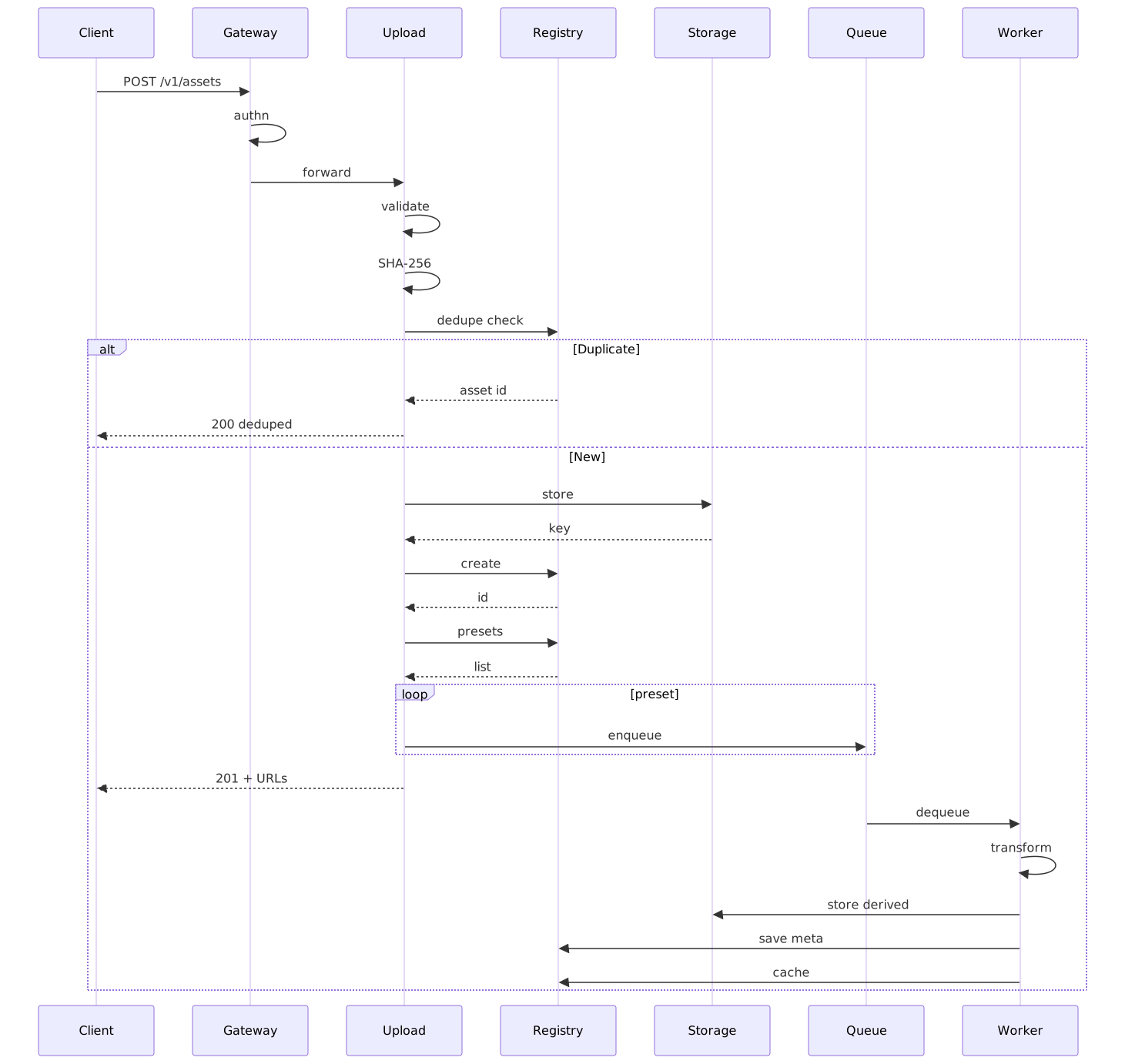
Synchronous Transform Flow (Guaranteed 200)
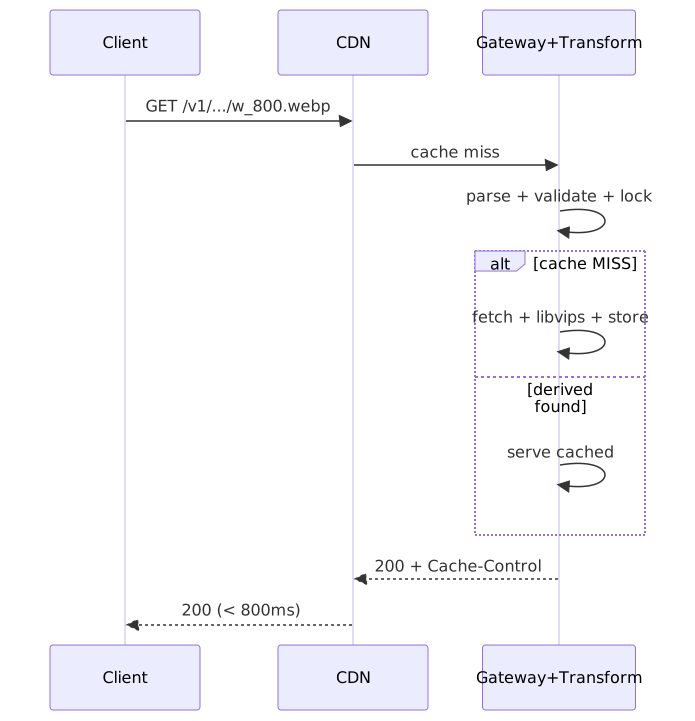
Image Processing Pipeline
Processing Implementation
import sharp from "sharp"import crypto from "crypto"/** * Transform Engine - Core image processing service */class TransformEngine { constructor(storage, registry, cache, lockManager) { this.storage = storage this.registry = registry this.cache = cache this.lockManager = lockManager } /** * Process image transformation with deduplication */ async transform(assetId, operations, acceptHeader) { // 1. Canonicalize operations const canonicalOps = this.canonicalizeOps(operations) const outputFormat = this.determineFormat(operations.format, acceptHeader) // 2. Generate transformation hash (content-addressed) const asset = await this.registry.getAsset(assetId) const opsHash = this.generateOpsHash(canonicalOps, asset.contentHash, outputFormat) // 3. Check multi-layer cache const cacheKey = `transform:${assetId}:${opsHash}` // Layer 1: Redis cache const cached = await this.cache.get(cacheKey) if (cached) { return { buffer: Buffer.from(cached.buffer, "base64"), contentType: cached.contentType, fromCache: "redis", } } // Layer 2: Database + Storage const derived = await this.registry.getDerivedAsset(assetId, opsHash) if (derived) { const buffer = await this.storage.get(derived.storageKey) // Populate Redis cache await this.cache.set( cacheKey, { buffer: buffer.toString("base64"), contentType: `image/${derived.outputFormat}`, }, 3600, ) // 1 hour TTL // Update access metrics await this.registry.incrementAccessCount(derived.id) return { buffer, contentType: `image/${derived.outputFormat}`, fromCache: "storage", } } // Layer 3: Process new transformation (with distributed locking) const lockKey = `lock:transform:${assetId}:${opsHash}` const lock = await this.lockManager.acquire(lockKey, 60000) // 60s TTL try { // Double-check after acquiring lock const doubleCheck = await this.registry.getDerivedAsset(assetId, opsHash) if (doubleCheck) { const buffer = await this.storage.get(doubleCheck.storageKey) return { buffer, contentType: `image/${doubleCheck.outputFormat}`, fromCache: "concurrent", } } // Process transformation const startTime = Date.now() // Fetch original const originalBuffer = await this.storage.get(asset.storageKey) // Apply transformations const processedBuffer = await this.applyTransformations(originalBuffer, canonicalOps, outputFormat) const processingTime = Date.now() - startTime // Get metadata of processed image const metadata = await sharp(processedBuffer).metadata() // Generate storage key const storageKey = `derived/${asset.organizationId}/${asset.tenantId}/${asset.spaceId}/${assetId}/v${asset.version}/${opsHash}.${outputFormat}` // Store processed image await this.storage.put(storageKey, processedBuffer, `image/${outputFormat}`) // Compute content hash const contentHash = crypto.createHash("sha256").update(processedBuffer).digest("hex") // Save to database const derivedAsset = await this.registry.createDerivedAsset({ assetId, operationsCanonical: canonicalOps, operationsHash: opsHash, outputFormat, storageProvider: this.storage.provider, storageKey, sizeBytes: processedBuffer.length, contentHash, width: metadata.width, height: metadata.height, processingTimeMs: processingTime, }) // Update transform cache index await this.registry.cacheTransform(assetId, opsHash, derivedAsset.id) // Populate Redis cache await this.cache.set( cacheKey, { buffer: processedBuffer.toString("base64"), contentType: `image/${outputFormat}`, }, 3600, ) return { buffer: processedBuffer, contentType: `image/${outputFormat}`, fromCache: "none", processingTime, } } finally { await lock.release() } } /** * Apply transformations using Sharp */ async applyTransformations(inputBuffer, operations, outputFormat) { let pipeline = sharp(inputBuffer) // Rotation if (operations.rotation) { pipeline = pipeline.rotate(operations.rotation) } // Flip/Flop if (operations.flip) { pipeline = pipeline.flip() } if (operations.flop) { pipeline = pipeline.flop() } // Resize if (operations.width || operations.height) { const resizeOptions = { width: operations.width, height: operations.height, fit: operations.fit || "cover", position: operations.gravity || "centre", withoutEnlargement: true, } // Background for 'pad' fit if (operations.fit === "pad" && operations.background) { resizeOptions.background = this.parseColor(operations.background) } pipeline = pipeline.resize(resizeOptions) } // Effects if (operations.blur) { pipeline = pipeline.blur(operations.blur) } if (operations.sharpen) { pipeline = pipeline.sharpen(operations.sharpen) } if (operations.grayscale) { pipeline = pipeline.grayscale() } // Format conversion and quality const quality = operations.quality === "auto" ? this.getAutoQuality(outputFormat) : operations.quality || 85 switch (outputFormat) { case "jpg": case "jpeg": pipeline = pipeline.jpeg({ quality, mozjpeg: true, // Better compression }) break case "png": pipeline = pipeline.png({ quality, compressionLevel: 9, adaptiveFiltering: true, }) break case "webp": pipeline = pipeline.webp({ quality, effort: 6, // Compression effort (0-6) }) break case "avif": pipeline = pipeline.avif({ quality, effort: 6, }) break case "gif": pipeline = pipeline.gif() break } return await pipeline.toBuffer() } /** * Determine output format based on operations and Accept header * * Format selection priority (as of 2026-Q2): * - AVIF: ~94.9% caniuse global support, ~50% smaller than JPEG, ~20-25% smaller than WebP * - WebP: ~97% caniuse global support, 25-34% smaller than JPEG (Google's WebP study) * - JPEG: Universal fallback * * Note: JPEG XL decoder shipped in Chrome 145 (Feb 2026) but is gated behind * the `enable-jxl-image-format` flag, so it is not yet a viable production target. * Re-evaluate once it is enabled by default and caniuse coverage exceeds ~80%. */ determineFormat(requestedFormat, acceptHeader) { if (requestedFormat && requestedFormat !== "auto") { return requestedFormat } // Format negotiation based on Accept header const accept = (acceptHeader || "").toLowerCase() if (accept.includes("image/avif")) { return "avif" // Best compression: ~50% smaller than JPEG } if (accept.includes("image/webp")) { return "webp" // Good compression: 25-34% smaller than JPEG, slightly wider support } return "jpg" // Fallback } /** * Get automatic quality based on format * * Quality values are calibrated to produce visually similar output across formats. * AVIF and WebP compress more efficiently, so they need lower quality values * to achieve similar file sizes with equivalent visual quality. * * Real-world example (2000×2000 product photo): * - JPEG q=80: ~540 KB * - WebP q=85: ~350 KB (35% smaller) * - AVIF q=75 (CQ 28): ~210 KB (61% smaller) */ getAutoQuality(format) { const qualityMap = { avif: 75, // AVIF compresses very well; q=75 ≈ JPEG q=85 visually webp: 80, // WebP compresses well; q=80 ≈ JPEG q=85 visually jpg: 85, // JPEG baseline quality jpeg: 85, png: 90, // PNG quality affects compression, not visual fidelity (lossless) } return qualityMap[format] || 85 } /** * Generate deterministic hash for transformation */ generateOpsHash(canonicalOps, assetContentHash, outputFormat) { const payload = `${canonicalOps};${assetContentHash};fmt=${outputFormat}` return crypto.createHash("sha256").update(payload).digest("hex") } /** * Parse color hex string to RGB object */ parseColor(hex) { hex = hex.replace("#", "") return { r: parseInt(hex.substr(0, 2), 16), g: parseInt(hex.substr(2, 2), 16), b: parseInt(hex.substr(4, 2), 16), } } /** * Canonicalize operations */ canonicalizeOps(ops) { // Implementation details... // Return canonical string like "w_800-h_600-f_cover-q_85-fmt_webp" }}export default TransformEngineFormat Selection: AVIF Encoding Cost vs. WebP
AVIF’s compression win comes at a real CPU cost. Independent benchmarks place AVIF encoding at ~5-10× JPEG and several times slower than WebP at default settings, with some measurements at 1920×1080 reporting JPEG ≈ 45 ms, WebP ≈ 127 ms, AVIF ≈ 892 ms1. The web.dev team reports that libaom optimizations have cut AVIF encoder CPU by ~6.5× since first deployment, but it remains the most expensive of the three2.
Operational implication for an on-the-fly transform service:
- Synchronous path → WebP first. WebP gives 25-34% of the JPEG → AVIF win for a fraction of the CPU. Honor the
Acceptheader but bias toward WebP inside the < 800 ms budget. - AVIF behind a queue. Serve AVIF either as a pre-baked preset (generated asynchronously after upload) or as a background “upgrade” — render WebP synchronously, then asynchronously generate AVIF and let the next request hit it. With Sharp use
effort: 4(not the default 6) for live AVIF; the size delta is small but the CPU delta is meaningful. - Cache hit dominates the math. Once a derived asset is cached, encoder cost is amortized to zero. The decision is really about the cost of the first miss.
Content-Aware Cropping
Hard center-crop loses the subject whenever the subject is not in the center — product photos with off-center hero items, group shots, billboards, screenshots. Two approaches dominate, with very different complexity:
| Approach | What it picks | Where it lives | Cost model |
|---|---|---|---|
Entropy / attention (libvips attention/entropy, smartcrop.js) |
Region with highest variance / edge density | In the transform path, on the downscaled image | Cheap (a few ms on a 256 px thumbnail) |
| Saliency model (DeepGaze, custom CNN) | Region a human eye is most likely to fixate | Offline at upload time; persisted as a focal point | Expensive once (tens to hundreds of ms on CPU); free at request time |
| Manual focal point | Editor-supplied point | Stored on the asset | Free |
The classic engineering write-up is X (formerly Twitter) Speedy Neural Networks for Smart Auto-Cropping of Images, which describes a DeepGaze-II-derived saliency network compressed via knowledge distillation and Fisher pruning to run in real time. That post is also a cautionary tale: in 2021, X retired automated saliency cropping after an internal study found demographic bias in the cropping decisions. The lesson generalizes: ship saliency cropping with an explicit override (manual focal point or full-aspect fallback) and audit the crop distribution per protected attribute before relying on it.
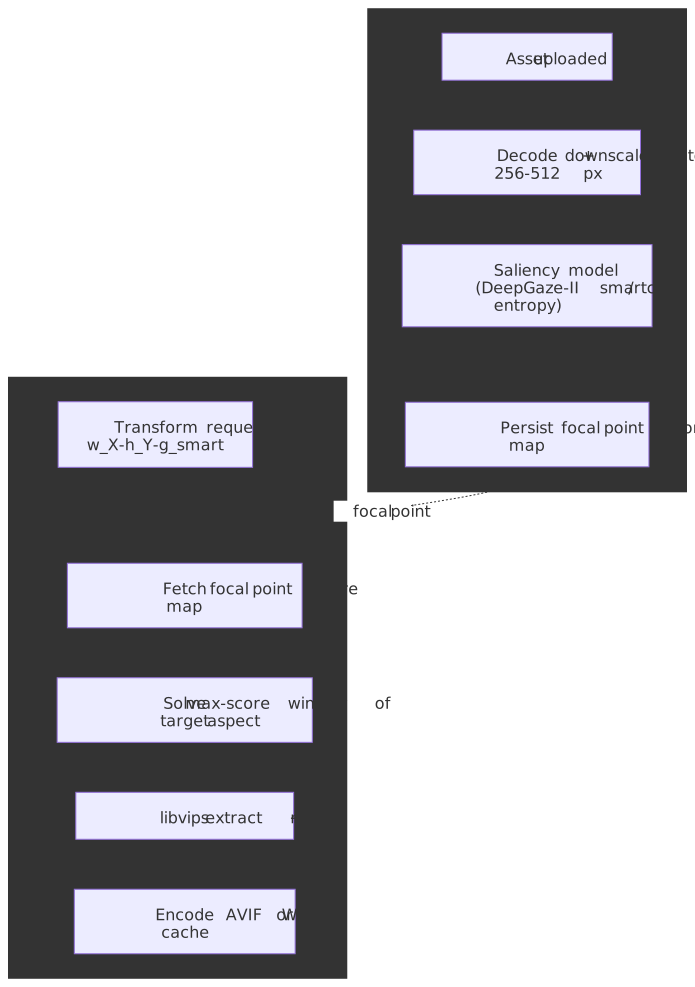
In practice for a Sharp-based service:
- Start with
sharp.resize({ position: sharp.strategy.attention })— libvips’ built-in attention strategy is free, deterministic, and good enough for most product imagery. - Promote to a persisted focal point when you need stable crops across multiple aspect ratios (so the same subject anchors square, 16:9, and 4:5 crops). Compute it once on upload, store as
(x_norm, y_norm)on the asset row, treat it as part of the canonical operations string for cache-key purposes. - Reach for a trained saliency model only when entropy/attention measurably hurts a specific content type. The X experience is the bar: if you ship it, ship the audit alongside.
Metadata, Orientation, and Animated Images
Three categories of input quirks routinely break naive pipelines:
EXIF orientation. Phone cameras store rotation in the EXIF Orientation tag instead of rotating pixels. Sharp does not auto-orient by default — you must call .rotate() (no args) or .autoOrient() to apply the orientation tag and then strip it. Skipping this is the #1 source of “my image is sideways” tickets. Sharp also strips all EXIF metadata by default; this is a privacy feature (geotags, camera serial numbers), and you only re-attach via .keepExif() if downstream consumers truly need it. Persist a sanitized subset (orientation, capture date, camera, GPS-stripped) in the assets.exif JSONB column so you do not have to re-decode the original to answer metadata queries.
Animated images. Animated GIF, WebP, and AVIF have multiple frames; resize/encode operations that ignore frames silently flatten to the first frame. Sharp exposes this via sharp(buf, { animated: true, pages: -1 }) plus .gif({ loop: 0 }) / .webp({ loop: 0 }). For an on-the-fly service, decide per format whether to:
- Preserve animation — slower and bigger, but expected for memes/UI animations.
- Take a poster frame — fast, defaults to frame 0; useful for thumbnails and previews.
- Refuse animation — explicit 415 with a clear error; reasonable for e-commerce hero imagery.
Encode the choice as a transformation parameter (e.g., anim_keep / anim_first / anim_strip) so it participates in the cache key. Bound the maximum frame count and total decoded pixel area, otherwise a 200 KB animated AVIF can decompose into hundreds of megabytes of decoded frames.
Color space. Strip embedded ICC profiles only after you have applied them — sharp(buf).withMetadata({ icc: 'srgb' }) converts in the working color space, then tags sRGB on output. Skipping this turns Adobe-RGB DSLR shots dull on the web.
Distributed Locking
import Redlock from "redlock"import Redis from "ioredis"/** * Distributed lock manager using Redlock algorithm * * IMPORTANT: This lock manager is designed for EFFICIENCY optimization, not * CORRECTNESS guarantees. Redlock cannot provide fencing tokens, so: * * - SAFE: Preventing duplicate transforms (if lock fails, we waste compute but don't corrupt data) * - UNSAFE: Protecting financial transactions, inventory updates, or any operation where * concurrent execution could cause data inconsistency * * For safety-critical mutual exclusion, use etcd (Raft consensus) or ZooKeeper (ZAB protocol). * See: https://martin.kleppmann.com/2016/02/08/how-to-do-distributed-locking.html */class LockManager { constructor(redisClients) { // Initialize Redlock with multiple Redis instances (N=5 recommended for production) this.redlock = new Redlock(redisClients, { driftFactor: 0.01, retryCount: 10, retryDelay: 200, retryJitter: 200, automaticExtensionThreshold: 500, }) } /** * Acquire distributed lock */ async acquire(key, ttl = 30000) { try { const lock = await this.redlock.acquire([`lock:${key}`], ttl) return lock } catch (error) { throw new Error(`Failed to acquire lock for ${key}: ${error.message}`) } } /** * Try to acquire lock without waiting */ async tryAcquire(key, ttl = 30000) { try { return await this.redlock.acquire([`lock:${key}`], ttl) } catch (error) { return null // Lock not acquired } }}// Usageconst redis1 = new Redis({ host: "redis-1" })const redis2 = new Redis({ host: "redis-2" })const redis3 = new Redis({ host: "redis-3" })const lockManager = new LockManager([redis1, redis2, redis3])export default LockManagerSecurity & Access Control
Signing Flow
URL signing is the keystone of the private-content path: it lets the CDN cache content publicly while keeping authorization on the request, not on the byte stream. The canonical-string + HMAC pattern below is what Cloudflare Images, AWS CloudFront, and Imgix all converge on (Cloudflare Images, for example, signs the path + query string with SHA-256 HMAC and an exp query parameter).
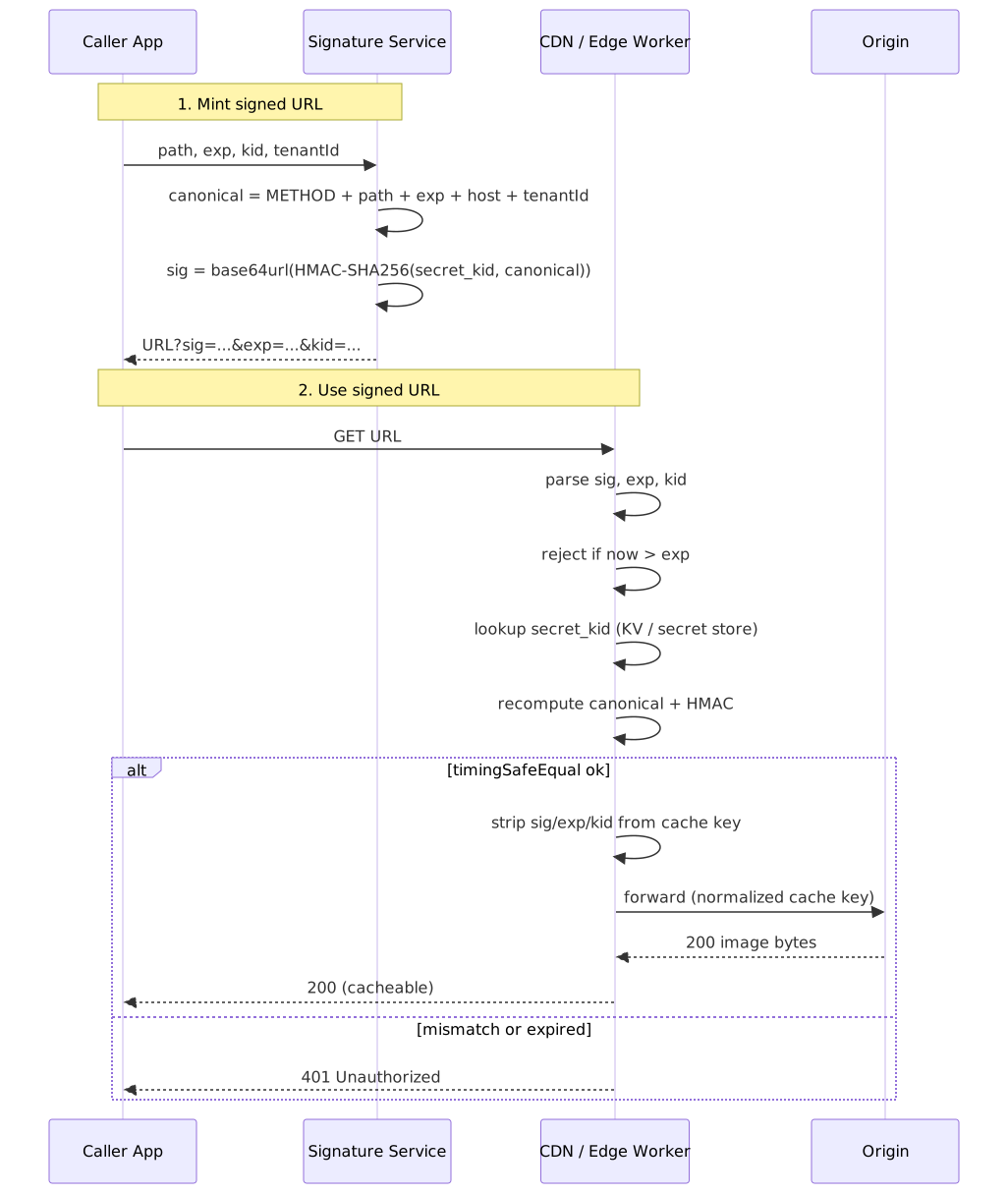
Three properties matter:
- Canonical string includes everything the recipient must trust. Method, path, expiry, host, and tenant ID — anything the verifier must enforce belongs in the bytes that get HMAC’d. Anything not in the canonical string can be tampered with.
- Signature parameters must be stripped before the cache key is computed, otherwise every signed URL becomes its own cache entry. This is the single most common reason private-content cache hit rates collapse.
kid(key ID) enables rotation without breaking outstanding URLs. Issue under the new key, leave the old key valid for the longest signed TTL you allow, then retire it.
Signed URL Implementation
import crypto from "crypto"/** * Signature Service - Generate and verify signed URLs */class SignatureService { constructor(registry) { this.registry = registry } /** * Generate signed URL for private images */ async generateSignedUrl(baseUrl, orgId, tenantId, ttl = null) { // Get signing key for tenant/org const apiKey = await this.registry.getSigningKey(orgId, tenantId) // Get effective policy for TTL const policy = await this.registry.getEffectivePolicy(orgId, tenantId) const defaultTtl = policy.signed_url_ttl_default_seconds || 3600 const maxTtl = policy.signed_url_ttl_max_seconds || 86400 // Calculate expiry const requestedTtl = ttl || defaultTtl const effectiveTtl = Math.min(requestedTtl, maxTtl) const expiresAt = Math.floor(Date.now() / 1000) + effectiveTtl // Create canonical string for signing const url = new URL(baseUrl) const canonicalString = this.createCanonicalString(url.pathname, expiresAt, url.hostname, tenantId) // Generate HMAC-SHA256 signature const signature = crypto.createHmac("sha256", apiKey.secret).update(canonicalString).digest("base64url") // URL-safe base64 // Append signature, expiry, and key ID to URL url.searchParams.set("sig", signature) url.searchParams.set("exp", expiresAt.toString()) url.searchParams.set("kid", apiKey.keyId) return { url: url.toString(), expiresAt: new Date(expiresAt * 1000), expiresIn: effectiveTtl, } } /** * Verify signed URL */ async verifySignedUrl(signedUrl, orgId, tenantId) { const url = new URL(signedUrl) // Extract signature components const signature = url.searchParams.get("sig") const expiresAt = parseInt(url.searchParams.get("exp")) const keyId = url.searchParams.get("kid") if (!signature || !expiresAt || !keyId) { return { valid: false, error: "Missing signature components", } } // Check expiration const now = Math.floor(Date.now() / 1000) if (now > expiresAt) { return { valid: false, expired: true, error: "Signature expired", } } // Get signing key const apiKey = await this.registry.getApiKeyById(keyId) if (!apiKey || apiKey.status !== "active") { return { valid: false, error: "Invalid key ID", } } // Verify tenant/org ownership if (apiKey.organizationId !== orgId || apiKey.tenantId !== tenantId) { return { valid: false, error: "Key does not match tenant", } } // Reconstruct canonical string url.searchParams.delete("sig") url.searchParams.delete("exp") url.searchParams.delete("kid") const canonicalString = this.createCanonicalString(url.pathname, expiresAt, url.hostname, tenantId) // Compute expected signature const expectedSignature = crypto.createHmac("sha256", apiKey.secret).update(canonicalString).digest("base64url") // Constant-time comparison to prevent timing attacks const valid = crypto.timingSafeEqual(Buffer.from(signature), Buffer.from(expectedSignature)) return { valid, error: valid ? null : "Invalid signature", } } /** * Create canonical string for signing */ createCanonicalString(pathname, expiresAt, hostname, tenantId) { return ["GET", pathname, expiresAt, hostname, tenantId].join("\n") } /** * Rotate signing keys */ async rotateSigningKey(orgId, tenantId) { // Generate new secret const newSecret = crypto.randomBytes(32).toString("hex") const newKeyId = `key_${Date.now()}_${crypto.randomBytes(8).toString("hex")}` // Create new key const newKey = await this.registry.createApiKey({ organizationId: orgId, tenantId, keyId: newKeyId, name: `Signing Key (rotated ${new Date().toISOString()})`, secret: newSecret, scopes: ["signing"], }) // Mark old keys for deprecation (keep valid for grace period) await this.registry.deprecateOldSigningKeys(orgId, tenantId, newKey.id) return newKey }}export default SignatureServiceAuthentication Middleware
import crypto from "crypto"/** * Authentication middleware for Fastify */class AuthMiddleware { constructor(registry) { this.registry = registry } /** * API Key authentication */ async authenticateApiKey(request, reply) { const apiKey = request.headers["x-api-key"] if (!apiKey) { return reply.code(401).send({ error: "Unauthorized", message: "API key required", }) } // Hash the API key const keyHash = crypto.createHash("sha256").update(apiKey).digest("hex") // Look up in database const keyRecord = await this.registry.getApiKeyByHash(keyHash) if (!keyRecord) { return reply.code(401).send({ error: "Unauthorized", message: "Invalid API key", }) } // Check status and expiration if (keyRecord.status !== "active") { return reply.code(401).send({ error: "Unauthorized", message: "API key is inactive", }) } if (keyRecord.expiresAt && new Date(keyRecord.expiresAt) < new Date()) { return reply.code(401).send({ error: "Unauthorized", message: "API key has expired", }) } // Update last used timestamp (async, don't wait) this.registry.updateApiKeyLastUsed(keyRecord.id).catch(console.error) // Attach to request context request.auth = { organizationId: keyRecord.organizationId, tenantId: keyRecord.tenantId, scopes: keyRecord.scopes, keyId: keyRecord.id, } } /** * Scope-based authorization */ requireScope(scope) { return async (request, reply) => { if (!request.auth) { return reply.code(401).send({ error: "Unauthorized", message: "Authentication required", }) } if (!request.auth.scopes.includes(scope)) { return reply.code(403).send({ error: "Forbidden", message: `Required scope: ${scope}`, }) } } } /** * Tenant boundary check */ async checkTenantAccess(request, reply, orgId, tenantId, spaceId) { if (!request.auth) { return reply.code(401).send({ error: "Unauthorized", }) } // Check organization match if (request.auth.organizationId !== orgId) { return reply.code(403).send({ error: "Forbidden", message: "Access denied to this organization", }) } // Check tenant match (if key is tenant-scoped) if (request.auth.tenantId && request.auth.tenantId !== tenantId) { return reply.code(403).send({ error: "Forbidden", message: "Access denied to this tenant", }) } return true }}export default AuthMiddlewareRate Limiting
import Redis from "ioredis"/** * Rate limiter using sliding window algorithm */class RateLimiter { constructor(redis) { this.redis = redis } /** * Check and enforce rate limit */ async checkLimit(identifier, limit, windowSeconds) { const key = `ratelimit:${identifier}` const now = Date.now() const windowStart = now - windowSeconds * 1000 // Use Redis pipeline for atomicity const pipeline = this.redis.pipeline() // Remove old entries outside the window pipeline.zremrangebyscore(key, "-inf", windowStart) // Count requests in current window pipeline.zcard(key) // Add current request const requestId = `${now}:${Math.random()}` pipeline.zadd(key, now, requestId) // Set expiry on key pipeline.expire(key, windowSeconds) const results = await pipeline.exec() const count = results[1][1] // Result of ZCARD const allowed = count < limit const remaining = Math.max(0, limit - count - 1) // Calculate reset time const oldestEntry = await this.redis.zrange(key, 0, 0, "WITHSCORES") const resetAt = oldestEntry.length > 0 ? new Date(parseInt(oldestEntry[1]) + windowSeconds * 1000) : new Date(now + windowSeconds * 1000) return { allowed, limit, remaining, resetAt, } } /** * Rate limiting middleware for Fastify */ middleware(getLimitConfig) { return async (request, reply) => { // Get limit configuration based on request context const { identifier, limit, window } = getLimitConfig(request) const result = await this.checkLimit(identifier, limit, window) // Set rate limit headers reply.header("X-RateLimit-Limit", result.limit) reply.header("X-RateLimit-Remaining", result.remaining) reply.header("X-RateLimit-Reset", result.resetAt.toISOString()) if (!result.allowed) { return reply.code(429).send({ error: "Too Many Requests", message: `Rate limit exceeded. Try again after ${result.resetAt.toISOString()}`, retryAfter: Math.ceil((result.resetAt.getTime() - Date.now()) / 1000), }) } } }}// Usage exampleconst redis = new Redis()const rateLimiter = new RateLimiter(redis)// Apply to routeapp.get( "/v1/pub/*", { preHandler: rateLimiter.middleware((request) => ({ identifier: `org:${request.params.org}`, limit: 1000, // requests window: 60, // seconds })), }, handler,)export default RateLimiterDeployment Architecture
Kubernetes Deployment
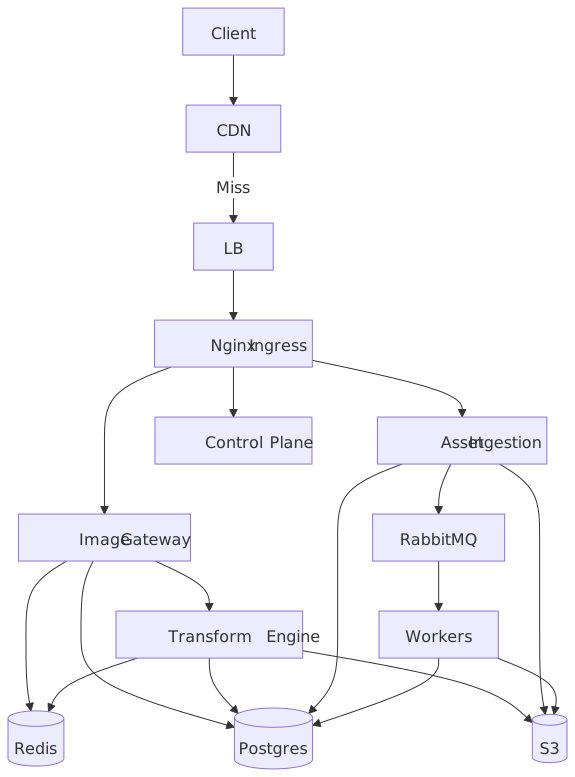
Storage Abstraction Layer
/** * Abstract storage interface */class StorageAdapter { async put(key, buffer, contentType, metadata = {}) { throw new Error("Not implemented") } async get(key) { throw new Error("Not implemented") } async delete(key) { throw new Error("Not implemented") } async exists(key) { throw new Error("Not implemented") } async getSignedUrl(key, ttl) { throw new Error("Not implemented") } get provider() { throw new Error("Not implemented") }}// AWS S3 Implementation (imports collapsed)// import { S3Client, PutObjectCommand, GetObjectCommand, ... } from "@aws-sdk/client-s3"// import { getSignedUrl } from "@aws-sdk/s3-request-presigner"class S3StorageAdapter extends StorageAdapter { constructor(config) { super() this.client = new S3Client({ region: config.region, credentials: config.credentials, }) this.bucket = config.bucket } async put(key, buffer, contentType, metadata = {}) { const command = new PutObjectCommand({ Bucket: this.bucket, Key: key, Body: buffer, ContentType: contentType, Metadata: metadata, ServerSideEncryption: "AES256", }) await this.client.send(command) } async get(key) { const command = new GetObjectCommand({ Bucket: this.bucket, Key: key, }) const response = await this.client.send(command) const chunks = [] for await (const chunk of response.Body) { chunks.push(chunk) } return Buffer.concat(chunks) } async delete(key) { const command = new DeleteObjectCommand({ Bucket: this.bucket, Key: key, }) await this.client.send(command) } async exists(key) { try { const command = new HeadObjectCommand({ Bucket: this.bucket, Key: key, }) await this.client.send(command) return true } catch (error) { if (error.name === "NotFound") { return false } throw error } } async getSignedUrl(key, ttl = 3600) { const command = new GetObjectCommand({ Bucket: this.bucket, Key: key, }) return await getSignedUrl(this.client, command, { expiresIn: ttl }) } get provider() { return "aws" }}// Google Cloud Storage Implementation (imports collapsed)// import { Storage } from "@google-cloud/storage"class GCSStorageAdapter extends StorageAdapter { constructor(config) { super() this.storage = new Storage({ projectId: config.projectId, credentials: config.credentials, }) this.bucket = this.storage.bucket(config.bucket) } async put(key, buffer, contentType, metadata = {}) { const file = this.bucket.file(key) await file.save(buffer, { contentType, metadata, resumable: false, }) } async get(key) { const file = this.bucket.file(key) const [contents] = await file.download() return contents } async delete(key) { const file = this.bucket.file(key) await file.delete() } async exists(key) { const file = this.bucket.file(key) const [exists] = await file.exists() return exists } async getSignedUrl(key, ttl = 3600) { const file = this.bucket.file(key) const [url] = await file.getSignedUrl({ action: "read", expires: Date.now() + ttl * 1000, }) return url } get provider() { return "gcp" }}// Azure Blob Storage Implementation (imports collapsed)// import { BlobServiceClient } from "@azure/storage-blob"class AzureBlobStorageAdapter extends StorageAdapter { constructor(config) { super() this.blobServiceClient = BlobServiceClient.fromConnectionString(config.connectionString) this.containerClient = this.blobServiceClient.getContainerClient(config.containerName) } async put(key, buffer, contentType, metadata = {}) { const blockBlobClient = this.containerClient.getBlockBlobClient(key) await blockBlobClient.upload(buffer, buffer.length, { blobHTTPHeaders: { blobContentType: contentType }, metadata, }) } async get(key) { const blobClient = this.containerClient.getBlobClient(key) const downloadResponse = await blobClient.download() return await this.streamToBuffer(downloadResponse.readableStreamBody) } async delete(key) { const blobClient = this.containerClient.getBlobClient(key) await blobClient.delete() } async exists(key) { const blobClient = this.containerClient.getBlobClient(key) return await blobClient.exists() } async getSignedUrl(key, ttl = 3600) { const blobClient = this.containerClient.getBlobClient(key) const expiresOn = new Date(Date.now() + ttl * 1000) return await blobClient.generateSasUrl({ permissions: "r", expiresOn, }) } async streamToBuffer(readableStream) { return new Promise((resolve, reject) => { const chunks = [] readableStream.on("data", (chunk) => chunks.push(chunk)) readableStream.on("end", () => resolve(Buffer.concat(chunks))) readableStream.on("error", reject) }) } get provider() { return "azure" }}// MinIO Implementation (S3-compatible for on-premise, imports collapsed)// import * as Minio from "minio"class MinIOStorageAdapter extends StorageAdapter { constructor(config) { super() this.client = new Minio.Client({ endPoint: config.endPoint, port: config.port || 9000, useSSL: config.useSSL !== false, accessKey: config.accessKey, secretKey: config.secretKey, }) this.bucket = config.bucket } async put(key, buffer, contentType, metadata = {}) { await this.client.putObject(this.bucket, key, buffer, buffer.length, { "Content-Type": contentType, ...metadata, }) } async get(key) { const stream = await this.client.getObject(this.bucket, key) return new Promise((resolve, reject) => { const chunks = [] stream.on("data", (chunk) => chunks.push(chunk)) stream.on("end", () => resolve(Buffer.concat(chunks))) stream.on("error", reject) }) } async delete(key) { await this.client.removeObject(this.bucket, key) } async exists(key) { try { await this.client.statObject(this.bucket, key) return true } catch (error) { if (error.code === "NotFound") { return false } throw error } } async getSignedUrl(key, ttl = 3600) { return await this.client.presignedGetObject(this.bucket, key, ttl) } get provider() { return "minio" }}/** * Storage Factory */class StorageFactory { static create(config) { switch (config.provider) { case "aws": case "s3": return new S3StorageAdapter(config) case "gcp": case "gcs": return new GCSStorageAdapter(config) case "azure": return new AzureBlobStorageAdapter(config) case "minio": case "onprem": return new MinIOStorageAdapter(config) default: throw new Error(`Unsupported storage provider: ${config.provider}`) } }}export { StorageAdapter, StorageFactory }Deployment Configuration
# docker-compose.yml for local developmentversion: "3.8"services: # API Gateway gateway: build: ./services/gateway ports: - "3000:3000" environment: NODE_ENV: development DATABASE_URL: postgresql://postgres:password@postgres:5432/imageservice REDIS_URL: redis://redis:6379 STORAGE_PROVIDER: minio MINIO_ENDPOINT: minio MINIO_ACCESS_KEY: minioadmin MINIO_SECRET_KEY: minioadmin depends_on: - postgres - redis - minio # Transform Engine transform: build: ./services/transform deploy: replicas: 3 environment: DATABASE_URL: postgresql://postgres:password@postgres:5432/imageservice REDIS_URL: redis://redis:6379 STORAGE_PROVIDER: minio MINIO_ENDPOINT: minio MINIO_ACCESS_KEY: minioadmin MINIO_SECRET_KEY: minioadmin depends_on: - postgres - redis - minio # Transform Workers worker: build: ./services/worker deploy: replicas: 3 environment: DATABASE_URL: postgresql://postgres:password@postgres:5432/imageservice RABBITMQ_URL: amqp://rabbitmq:5672 STORAGE_PROVIDER: minio MINIO_ENDPOINT: minio MINIO_ACCESS_KEY: minioadmin MINIO_SECRET_KEY: minioadmin depends_on: - postgres - rabbitmq - minio # PostgreSQL postgres: image: postgres:15-alpine environment: POSTGRES_DB: imageservice POSTGRES_USER: postgres POSTGRES_PASSWORD: password volumes: - postgres-data:/var/lib/postgresql/data ports: - "5432:5432" # Redis redis: image: redis:7-alpine command: redis-server --appendonly yes volumes: - redis-data:/data ports: - "6379:6379" # RabbitMQ rabbitmq: image: rabbitmq:3-management-alpine environment: RABBITMQ_DEFAULT_USER: admin RABBITMQ_DEFAULT_PASS: password ports: - "5672:5672" - "15672:15672" volumes: - rabbitmq-data:/var/lib/rabbitmq # MinIO (S3-compatible storage) minio: image: minio/minio:latest command: server /data --console-address ":9001" environment: MINIO_ROOT_USER: minioadmin MINIO_ROOT_PASSWORD: minioadmin ports: - "9000:9000" - "9001:9001" volumes: - minio-data:/datavolumes: postgres-data: redis-data: rabbitmq-data: minio-data:Cost Optimization
Multi-Layer Caching Strategy
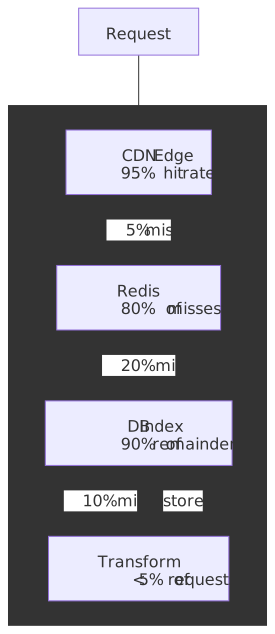
The cost story is the same as the latency story — see the cache funnel up top. Each layer eliminates a fraction of the work the next layer would have to do, and only the residual (typically < 5%) ever pays for compute. The cost projection later in this section turns those residuals into dollars.
Storage Lifecycle Management
/** * Storage lifecycle manager */class LifecycleManager { constructor(registry, storage) { this.registry = registry this.storage = storage } /** * Move derived assets to cold tier based on access patterns */ async moveToColdTier() { const coldThresholdDays = 30 const warmThresholdDays = 7 // Find candidates for tiering const candidates = await this.registry.query(` SELECT id, storage_key, cache_tier, last_accessed_at, size_bytes FROM derived_assets WHERE cache_tier = 'hot' AND last_accessed_at < NOW() - INTERVAL '${coldThresholdDays} days' AND deleted_at IS NULL ORDER BY last_accessed_at ASC LIMIT 1000 `) for (const asset of candidates.rows) { try { // Move to cold storage tier (Glacier Instant Retrieval, Coldline, etc.) await this.storage.moveToTier(asset.storageKey, "cold") // Update database await this.registry.updateCacheTier(asset.id, "cold") console.log(`Moved asset ${asset.id} to cold tier`) } catch (error) { console.error(`Failed to move asset ${asset.id}:`, error) } } // Similar logic for warm tier const warmCandidates = await this.registry.query(` SELECT id, storage_key, cache_tier FROM derived_assets WHERE cache_tier = 'hot' AND last_accessed_at < NOW() - INTERVAL '${warmThresholdDays} days' AND last_accessed_at >= NOW() - INTERVAL '${coldThresholdDays} days' LIMIT 1000 `) for (const asset of warmCandidates.rows) { await this.storage.moveToTier(asset.storageKey, "warm") await this.registry.updateCacheTier(asset.id, "warm") } } /** * Delete unused derived assets */ async pruneUnused() { const pruneThresholdDays = 90 const unused = await this.registry.query(` SELECT id, storage_key FROM derived_assets WHERE access_count = 0 AND created_at < NOW() - INTERVAL '${pruneThresholdDays} days' LIMIT 1000 `) for (const asset of unused.rows) { try { await this.storage.delete(asset.storageKey) await this.registry.deleteDerivedAsset(asset.id) console.log(`Pruned unused asset ${asset.id}`) } catch (error) { console.error(`Failed to prune asset ${asset.id}:`, error) } } }}Cost Projection
For a service serving 10 million requests/month:
| Component | Without Optimization | With Optimization | Savings |
|---|---|---|---|
| Processing | 1M transforms × $0.001 | 50K transforms × $0.001 | 95% |
| Storage | 100TB × $0.023 | 100TB × $0.013 (tiered) | 43% |
| Bandwidth | 100TB × $0.09 (origin) | 100TB × $0.02 (CDN) | 78% |
| CDN | — | 100TB × $0.02 | — |
| Total | $12,300/month | $5,400/month | 56% |
Key optimizations:
- 95% CDN hit rate reduces origin bandwidth
- Transform deduplication prevents reprocessing
- Storage tiering moves cold data to cheaper tiers
- Smart caching minimizes processing costs
Monitoring & Operations
Metrics Collection
import prometheus from "prom-client"/** * Metrics registry */class MetricsRegistry { constructor() { this.register = new prometheus.Registry() // Default metrics (CPU, memory, etc.) prometheus.collectDefaultMetrics({ register: this.register }) // HTTP metrics this.httpRequestDuration = new prometheus.Histogram({ name: "http_request_duration_seconds", help: "HTTP request duration in seconds", labelNames: ["method", "route", "status"], buckets: [0.01, 0.05, 0.1, 0.5, 1, 2, 5, 10], }) this.httpRequestTotal = new prometheus.Counter({ name: "http_requests_total", help: "Total HTTP requests", labelNames: ["method", "route", "status"], }) // Transform metrics this.transformDuration = new prometheus.Histogram({ name: "transform_duration_seconds", help: "Image transformation duration in seconds", labelNames: ["org", "format", "cached"], buckets: [0.1, 0.2, 0.5, 1, 2, 5, 10], }) this.transformTotal = new prometheus.Counter({ name: "transforms_total", help: "Total image transformations", labelNames: ["org", "format", "cached"], }) this.transformErrors = new prometheus.Counter({ name: "transform_errors_total", help: "Total transformation errors", labelNames: ["org", "error_type"], }) // Cache metrics this.cacheHits = new prometheus.Counter({ name: "cache_hits_total", help: "Total cache hits", labelNames: ["layer"], // cdn, redis, database }) this.cacheMisses = new prometheus.Counter({ name: "cache_misses_total", help: "Total cache misses", labelNames: ["layer"], }) // Storage metrics this.storageOperations = new prometheus.Counter({ name: "storage_operations_total", help: "Total storage operations", labelNames: ["provider", "operation"], // put, get, delete }) this.storageBytesTransferred = new prometheus.Counter({ name: "storage_bytes_transferred_total", help: "Total bytes transferred to/from storage", labelNames: ["provider", "direction"], // upload, download }) // Business metrics this.assetsUploaded = new prometheus.Counter({ name: "assets_uploaded_total", help: "Total assets uploaded", labelNames: ["org", "format"], }) this.bandwidthServed = new prometheus.Counter({ name: "bandwidth_served_bytes_total", help: "Total bandwidth served", labelNames: ["org", "space"], }) // Register all metrics this.register.registerMetric(this.httpRequestDuration) this.register.registerMetric(this.httpRequestTotal) this.register.registerMetric(this.transformDuration) this.register.registerMetric(this.transformTotal) this.register.registerMetric(this.transformErrors) this.register.registerMetric(this.cacheHits) this.register.registerMetric(this.cacheMisses) this.register.registerMetric(this.storageOperations) this.register.registerMetric(this.storageBytesTransferred) this.register.registerMetric(this.assetsUploaded) this.register.registerMetric(this.bandwidthServed) } /** * Get metrics in Prometheus format */ async getMetrics() { return await this.register.metrics() }}// Singleton instanceconst metricsRegistry = new MetricsRegistry()export default metricsRegistryAlerting Configuration
groups: - name: image_service_alerts interval: 30s rules: # High error rate - alert: HighErrorRate expr: | ( sum(rate(http_requests_total{status=~"5.."}[5m])) by (service) / sum(rate(http_requests_total[5m])) by (service) ) > 0.05 for: 5m labels: severity: critical annotations: summary: "High error rate on {{ $labels.service }}" description: "Error rate is {{ $value | humanizePercentage }}" # Low cache hit rate - alert: LowCacheHitRate expr: | ( sum(rate(cache_hits_total{layer="redis"}[10m])) / (sum(rate(cache_hits_total{layer="redis"}[10m])) + sum(rate(cache_misses_total{layer="redis"}[10m]))) ) < 0.70 for: 15m labels: severity: warning annotations: summary: "Low cache hit rate" description: "Cache hit rate is {{ $value | humanizePercentage }}, expected > 70%" # Slow transformations - alert: SlowTransformations expr: | histogram_quantile(0.95, sum(rate(transform_duration_seconds_bucket[5m])) by (le) ) > 2 for: 10m labels: severity: warning annotations: summary: "Slow image transformations" description: "P95 transform time is {{ $value }}s, expected < 2s" # Queue backup - alert: QueueBacklog expr: rabbitmq_queue_messages{queue="transforms"} > 1000 for: 10m labels: severity: warning annotations: summary: "Transform queue has backlog" description: "Queue depth is {{ $value }}, workers may be overwhelmed" # Storage quota warning - alert: StorageQuotaWarning expr: | ( sum(storage_bytes_used) by (organization_id) / sum(storage_bytes_quota) by (organization_id) ) > 0.80 for: 1h labels: severity: warning annotations: summary: "Organization {{ $labels.organization_id }} approaching storage quota" description: "Usage is {{ $value | humanizePercentage }} of quota"Health Checks
/** * Health check service */class HealthCheckService { constructor(dependencies) { this.db = dependencies.db this.redis = dependencies.redis this.storage = dependencies.storage this.queue = dependencies.queue } /** * Liveness probe - is the service running? */ async liveness() { return { status: "ok", timestamp: new Date().toISOString(), uptime: process.uptime(), } } /** * Readiness probe - is the service ready to accept traffic? */ async readiness() { const checks = { database: false, redis: false, storage: false, queue: false, } // Check database try { await this.db.query("SELECT 1") checks.database = true } catch (error) { console.error("Database health check failed:", error) } // Check Redis try { await this.redis.ping() checks.redis = true } catch (error) { console.error("Redis health check failed:", error) } // Check storage try { const testKey = ".health-check" const testData = Buffer.from("health") await this.storage.put(testKey, testData, "text/plain") await this.storage.get(testKey) await this.storage.delete(testKey) checks.storage = true } catch (error) { console.error("Storage health check failed:", error) } // Check queue try { // Implement queue-specific health check checks.queue = true } catch (error) { console.error("Queue health check failed:", error) } const allHealthy = Object.values(checks).every((v) => v === true) return { status: allHealthy ? "ready" : "not ready", checks, timestamp: new Date().toISOString(), } }}export default HealthCheckServiceFailure Modes and Edge Cases
This section documents failure scenarios, their detection, and recovery strategies. Understanding these modes is critical for production operations.
Transform Timeout (> 800ms SLA breach)
Cause: Large images (> 5MB), complex operations (multiple resize + effects), cold storage retrieval, or resource contention.
Detection: transform_duration_seconds histogram exceeds p95 threshold.
Mitigation strategies:
- Size-based routing: Queue images > 5MB to async workers, return 202 with polling URL
- Operation limits: Cap maximum output dimensions (e.g., 4096×4096), reject excessive blur/sharpen values
- Timeout with fallback: Return lower-quality transform or original if timeout approaches
- Pre-warm cold storage: Move frequently accessed cold-tier assets back to hot tier proactively
async function transformWithTimeout(assetId, operations, timeoutMs = 750) { const controller = new AbortController() const timeout = setTimeout(() => controller.abort(), timeoutMs) try { return await transform(assetId, operations, { signal: controller.signal }) } catch (error) { if (error.name === "AbortError") { // Return degraded response or queue for async processing metrics.transformTimeouts.inc({ org: assetId.split("/")[0] }) // Option 1: Return original (fastest fallback) return { fallback: "original", reason: "timeout" } // Option 2: Queue and return 202 // await queue.publish('transforms', { assetId, operations }) // return { status: 202, pollUrl: `/v1/transforms/${jobId}` } } throw error } finally { clearTimeout(timeout) }}Storage Tier Restoration Latency
Cold storage retrieval can range from milliseconds (S3 Glacier Instant Retrieval / GCS Nearline) to minutes (Flexible Retrieval expedited tier) to hours (Bulk / Deep Archive). Anything beyond Instant Retrieval breaks the synchronous transform guarantee — the request must either degrade to the original or queue and return 202.
Mitigation:
- Tier tracking in database:
derived_assets.cache_tiercolumn indicates current storage tier - Proactive restoration: Cron job restores cold assets with recent
last_accessed_atupdates - Graceful degradation: For cold original assets, return 202 and trigger async restoration
-- Find cold assets accessed recently that should be restoredSELECT id, storage_key, cache_tierFROM derived_assetsWHERE cache_tier = 'cold' AND last_accessed_at > NOW() - INTERVAL '24 hours'ORDER BY access_count DESCLIMIT 100;CDN Cache Invalidation Failures
Scenario: Asset updated, but stale version persists in CDN edge caches.
Root causes:
- Invalidation API rate limits exceeded
- Propagation delays (CDNs quote 0-60 seconds, but outliers exist)
- Wildcard invalidation missed specific paths
Mitigation:
- Version in URL: Include asset version (
/v{version}/) so updates get new cache keys automatically - Soft purge with fallback: Use CDN’s stale-while-revalidate to serve stale during revalidation
- Invalidation monitoring: Track invalidation success rates and propagation times
- Dual-write period: For critical updates, serve from origin for 60 seconds before relying on CDN
Lock Contention Under Load
Scenario: Multiple workers compete for the same transform lock, causing lock acquisition timeouts.
Detection: redlock_acquisition_failures metric spikes, lock_wait_time increases.
Mitigation:
- Lock-free fast path: Check if transform exists before acquiring lock (optimistic check)
- Retry with jitter: Exponential backoff with randomized jitter to prevent thundering herd
- Lock timeout tuning: Set lock TTL to 2x expected transform time, not a fixed value
- Shard by hash prefix: Distribute lock contention across multiple Redis masters
Malformed Input, Decompression Bombs, and Image-Library CVEs
Scenarios: Truncated upload, deliberate decompression bomb (a 50 KB PNG that decodes to 50 GB of pixels), exploit aimed at the decoder (the ImageTragick family of CVEs is the canonical example for ImageMagick), or simply a file that looks like a JPEG but is something else.
Detection: Sharp throws VipsError on invalid input; content hash doesn’t match expected; decoded pixel area exceeds a sane bound.
Mitigation — defense in depth, in this order:
- Magic-byte verification before passing to the decoder. Check the first 8-16 bytes against the expected format signature (e.g.,
FF D8 FFfor JPEG,89 50 4E 47for PNG,52 49 46 46 ?? ?? ?? ?? 57 45 42 50for WebP). Reject mismatches at the gateway, not inside libvips. - Pixel-area cap, not just dimension cap. Limit
width × height × framesto something like 100 megapixels per request. This catches both extreme aspect ratios and animated bombs that pass per-axis checks. - Disable untrusted loaders. libvips honors
VIPS_BLOCK_UNTRUSTED=1, which disables loaders flagged as risky for untrusted input (CSV, matrix, OpenSlide, …). The libvips developer checklist is the authoritative reference. Sharp inherits this; set the env var on the worker pods. - Hash verification on upload. Compute SHA-256 during upload, verify before marking complete; refuse partial uploads instead of leaving “ghost” assets.
- Sandbox the decoder. Run transform workers in a separate pod from the gateway, drop Linux capabilities (
securityContext: { capabilities: { drop: ["ALL"] } }), set a tightseccompprofile, and cap memory + CPU. A compromised decoder should not be able to reach the registry or the storage credentials directly. - Prefer libvips over ImageMagick on untrusted input. libvips’ security discussion lays out the historical CVE differential clearly; ImageMagick’s
policy.xmlcan be hardened, but the attack surface is structurally larger. - Graceful error messages. Map
VipsErrorand decoder errors to user-friendly responses. Do not echo the raw libvips error string back to the client — it can leak file paths or library versions useful to an attacker.
import sharp from "sharp"async function validateImage(buffer) { try { const metadata = await sharp(buffer).metadata() // Check for reasonable dimensions if (metadata.width > 50000 || metadata.height > 50000) { return { valid: false, error: "Image dimensions exceed maximum (50000×50000)" } } // Check for minimum size (likely corrupt if too small) if (buffer.length < 100) { return { valid: false, error: "Image file too small, possibly corrupt" } } return { valid: true, metadata } } catch (error) { return { valid: false, error: `Invalid image: ${error.message}` } }}Rate Limit Exhaustion
Scenario: Burst traffic exhausts rate limits, legitimate requests rejected.
Mitigation:
- Tiered limits: Higher limits for authenticated requests vs. anonymous
- Burst allowance: Sliding window with small burst buffer (e.g., 110% of limit for 10 seconds)
- Priority queuing: VIP tenants get separate, higher limits
- Graceful 429 responses: Include
Retry-Afterheader with exact reset time
Conclusion
This architecture provides a production-ready foundation for building a cloud-agnostic image processing platform. The key insight is that image transformation is an ideal candidate for aggressive caching: transformations are pure functions (same inputs → same outputs), making content-addressed storage highly effective.
Critical tradeoffs made in this design:
-
Synchronous-first over queue-first: We accept higher p99 latency for small images in exchange for simpler client integration (no polling). For large images, we fall back to async.
-
Efficiency locks over safety locks: Redlock prevents duplicate work but doesn’t guarantee mutual exclusion. This is acceptable because content-addressed storage ensures idempotency—duplicate transforms are wasteful, not dangerous.
-
Edge authentication over origin-only: Moving signature validation to the edge adds complexity but dramatically improves private content latency and reduces origin load.
-
Storage tiering over uniform hot storage: Cold storage introduces retrieval latency but reduces costs by 40-60% for infrequently accessed content.
What this architecture does not cover:
- Video transcoding (different latency characteristics, requires different chunking strategies)
- Real-time image editing (collaborative features, operational transforms)
- GPU-accelerated transformations beyond saliency cropping (background removal, upscaling, generative inpainting — require dedicated GPU pools and a different cost model)
- Geographic data residency requirements (beyond standard CDN region configuration)
Appendix
Prerequisites
- Familiarity with distributed systems concepts (caching, consistency, partitioning)
- Understanding of HTTP caching semantics (Cache-Control, ETags, CDN behavior)
- Basic knowledge of image formats and compression (JPEG, WebP, AVIF characteristics)
- Experience with at least one cloud provider’s storage and CDN offerings
Terminology
| Term | Definition |
|---|---|
| Asset | An original uploaded image, stored with its content hash |
| Derived Asset | A transformed version of an asset, identified by the hash of (original + operations) |
| Content-Addressed | Storage keyed by content hash rather than arbitrary ID; same content → same key |
| Fencing Token | Monotonically increasing token used to detect stale lock holders |
| Operations Hash | SHA-256 of (canonical operation string + original content hash + output format) |
| Signed URL | URL with cryptographic signature proving authorization; includes expiration timestamp |
| Storage Tier | Access latency class: hot (ms), warm (seconds), cold (minutes to hours) |
| Transform Canonicalization | Normalizing operation parameters to ensure equivalent transforms produce identical cache keys |
Summary
- Multi-layer caching (CDN → Redis → Database → Storage) keeps the transform path on < 5% of requests in the reference scenario
- Content-addressed storage with deterministic hashing ensures transform idempotency
- Sharp 0.34 / libvips 8.17 provides ~26× throughput over jimp at ~50 MB per worker (libvips 8.18 features such as UltraHDR ride along in Sharp 0.35+)
- AVIF (~94.9% global support, ~50% smaller than JPEG) is the preferred lossy target but ~5-10× the JPEG encode cost — bake asynchronously or behind a queue; WebP (~97% support, 25-34% smaller than JPEG) is the synchronous default
- Redlock is appropriate for efficiency optimization but not safety-critical mutual exclusion
- Edge authentication with normalized cache keys maximizes CDN hit rates for private content
- Hierarchical policies (Organization → Tenant → Space) enable flexible multi-tenant isolation
References
Specifications and Official Documentation
- RFC 2104 - HMAC - HMAC-SHA256 specification for signed URLs
- AV1 Image File Format (AVIF) - AOM AVIF specification
- WebP Container Specification - Google WebP format spec
- HTTP Caching (RFC 9111) - HTTP caching semantics
Core Library Documentation
- Sharp Documentation - High-performance Node.js image processing
- Sharp Performance Benchmarks - 64.42 ops/sec AMD64 JPEG, ~26× faster than jimp
- Sharp Changelog v0.34.5 - 6 November 2025 release notes (libvips 8.17.3)
- Sharp releases - 0.35.0-rc.0 (2 January 2026) tracks libvips 8.18
- libvips 8.18 release notes - UltraHDR, Camera RAW, Oklab, BigTIFF
- Redis Distributed Locks - Official Redlock documentation
Design Rationale and Analysis
- How to do Distributed Locking - Martin Kleppmann’s Redlock analysis (fencing tokens, timing assumptions)
- Is Redlock Safe? - Salvatore Sanfilippo’s (antirez) response
Browser Support and Format Comparison
- Can I Use: AVIF - 94.9% global support (March 2026 StatCounter snapshot)
- Can I Use: WebP - 96.96% global support (February 2026 StatCounter snapshot)
- JPEG XL decoding (image/jxl) in Blink - decoder merged 13 January 2026, shipped in Chrome 145 (10 February 2026) behind
enable-jxl-image-format
Cloud Provider SDKs
- AWS SDK for JavaScript v3 - S3 client
- Google Cloud Storage Node.js - GCS client
- Azure Blob Storage SDK - Azure Storage client
Edge Computing
- CloudFlare Workers Documentation - Edge compute platform
- CloudFront Functions - AWS edge compute
- Fastly Compute@Edge - Fastly edge platform
Frameworks and Tools
- Fastify - Low-overhead Node.js web framework
- PostgreSQL JSONB - JSON support documentation
- Prometheus - Monitoring and alerting toolkit
Footnotes
-
Benchmark data from ImageRobo’s 2025 image-format comparison and openaviffile’s encoder comparison — both show AVIF encoding latency dominating WebP/JPEG by roughly an order of magnitude at default
effortsettings. ↩ -
Deploying AVIF for more responsive websites — web.dev — Google reports a 6.5× reduction in
libaomencoder CPU since AVIF launch. ↩