Design an Issue Tracker (Jira/Linear)
A comprehensive system design for an issue tracking and project management tool covering API design for dynamic workflows, efficient kanban board pagination, drag-and-drop ordering without full row updates, concurrent edit handling, and real-time synchronization. This design addresses the challenges of project-specific column configurations while maintaining consistent user-defined ordering across views.
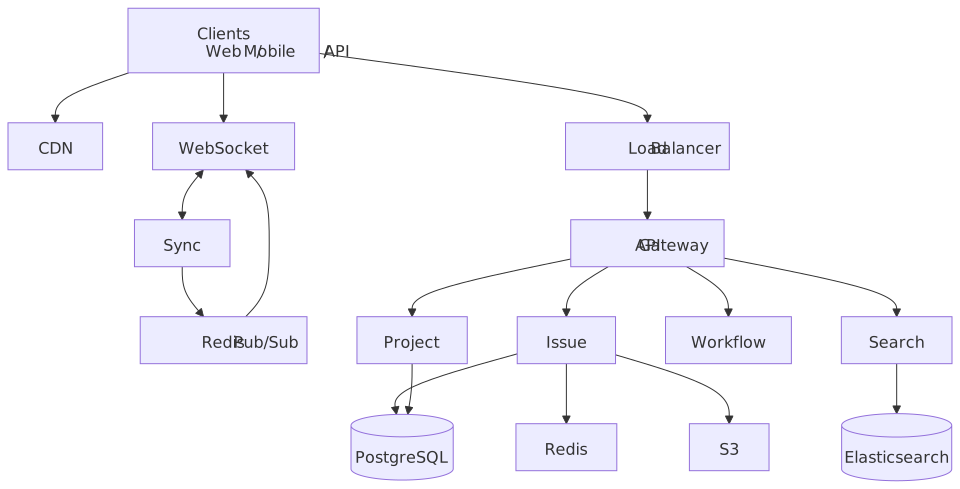
Abstract
Issue tracking systems solve three interconnected problems: flexible workflows (each project defines its own statuses and transitions), efficient ordering (issues maintain user-defined positions without expensive reindexing), and concurrent editing (multiple users can update the same issue simultaneously).
Core architectural decisions:
| Decision | Choice | Rationale |
|---|---|---|
| Ordering algorithm | Fractional indexing (LexoRank) | O(1) insertions without row updates |
| API style | GraphQL with REST fallback | Flexible field selection for varied board views |
| Pagination | Per-column cursor-based | Ensures all columns load incrementally |
| Concurrency | Optimistic locking with version field | Low conflict rate in practice |
| Real-time sync | WebSocket transaction stream + last-write-wins | Sub-200ms propagation, simple conflict model |
| Rich-text fields | CRDT (Yjs / Automerge) only on description / comments | Conflict-free concurrent editing where it actually matters |
| Workflow storage | Polymorphic per-project | Projects own their status definitions |
| Authorization | RBAC at project + ABAC overlay for issue visibility | Mirrors Jira’s project-role + issue-security split |
| Search | Postgres FTS for small tenants, OpenSearch at scale | Same query API; switch backend per tenant size |
| Attachments | S3-class object store + presigned multipart | Keep large blobs out of Postgres |
| Notifications | Event bus + per-channel queues + per-user digest | Independent retry / backpressure per channel |
Key trade-offs accepted:
- Denormalized board state in Redis for fast reads, with async consistency
- LexoRank strings grow unbounded, requiring periodic rebalancing
- Last-write-wins may lose concurrent edits (acceptable for most fields)
What this design optimizes:
- Drag-and-drop reordering updates exactly one row
- Board loads show issues across all columns immediately
- Workflow changes don’t require schema migrations
Requirements
Functional Requirements
| Requirement | Priority | Notes |
|---|---|---|
| Create/edit/delete issues | Core | Title, description, assignee, type, priority |
| Project-specific workflows | Core | Custom statuses and transitions per project |
| Kanban board view | Core | Drag-drop between columns and within columns |
| Issue ordering within columns | Core | Persist user-defined order |
| Real-time updates | Core | See changes from other users immediately |
| Search and filter | Core | Full-text search, JQL-style queries |
| Comments and activity | Extended | Threaded comments, activity timeline |
| Attachments | Extended | File upload and preview |
| Sprints/iterations | Extended | Time-boxed groupings |
| Custom fields | Extended | Project-specific metadata |
Non-Functional Requirements
| Requirement | Target | Rationale |
|---|---|---|
| Availability | 99.9% (3 nines) | User-facing, productivity critical |
| Board load time | p99 < 500ms | Must feel instant |
| Issue update latency | p99 < 200ms | Drag-drop must be responsive |
| Real-time propagation | p99 < 300ms | Collaborative editing feel |
| Search latency | p99 < 100ms | Autocomplete responsiveness |
| Concurrent users per board | 100 | Team collaboration scenario |
Scale Estimation
Users:
- Total users: 10M (Jira-scale)
- Daily Active Users (DAU): 2M (20%)
- Peak concurrent users: 500K
Projects and Issues:
- Projects: 1M
- Issues per project (active): 1,000 avg, 100,000 max
- Total issues: 1B
- Issues per board view: 200-500 typical
Traffic:
- Board loads: 2M DAU × 10 loads/day = 20M/day = ~230 RPS
- Issue updates: 2M DAU × 20 updates/day = 40M/day = ~460 RPS
- Peak multiplier: 3x → 700 RPS board loads, 1,400 RPS updates
Storage:
- Issue size: 5KB avg (metadata + description)
- Total issue storage: 1B × 5KB = 5TB
- Attachments: 50TB (separate object storage)
- Activity log: 20TB (append-only)
Design Paths
Path A: Server-Authoritative with REST API
Best when:
- Team familiar with REST patterns
- Simpler infrastructure requirements
- Offline support not critical
- Moderate real-time requirements
Architecture:
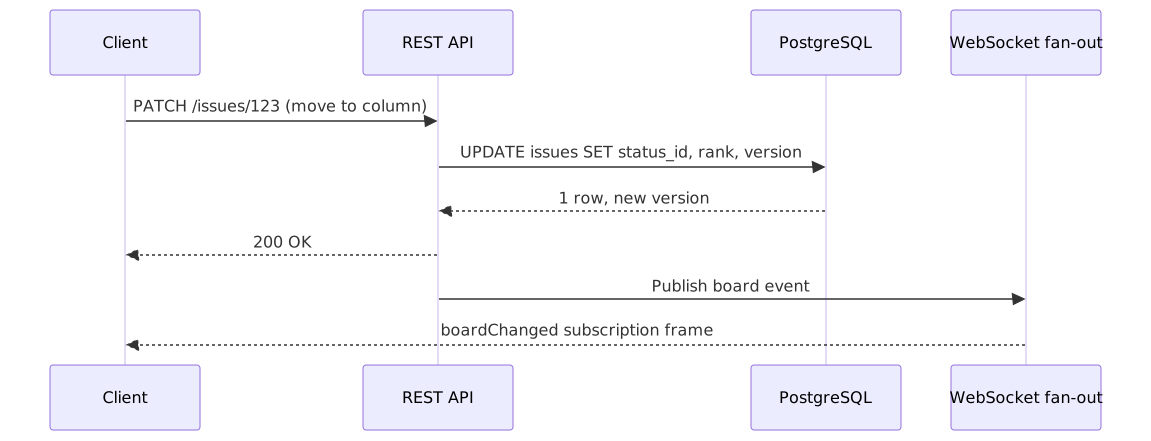
Trade-offs:
- ✅ Simple mental model
- ✅ Standard tooling and caching
- ✅ Easy to debug
- ❌ Over-fetching/under-fetching without careful design
- ❌ Multiple round trips for complex operations
- ❌ Real-time requires separate WebSocket layer
Real-world example: Jira Cloud exposes a REST API for issue and board operations and uses LexoRank for ordering (Jira Software Cloud REST API, Atlassian KB: LexoRank).
Path B: Local-First with Sync Engine
Best when:
- Offline support is critical
- Sub-100ms UI responsiveness required
- Team can invest in sync infrastructure
- Users on unreliable networks
Architecture:
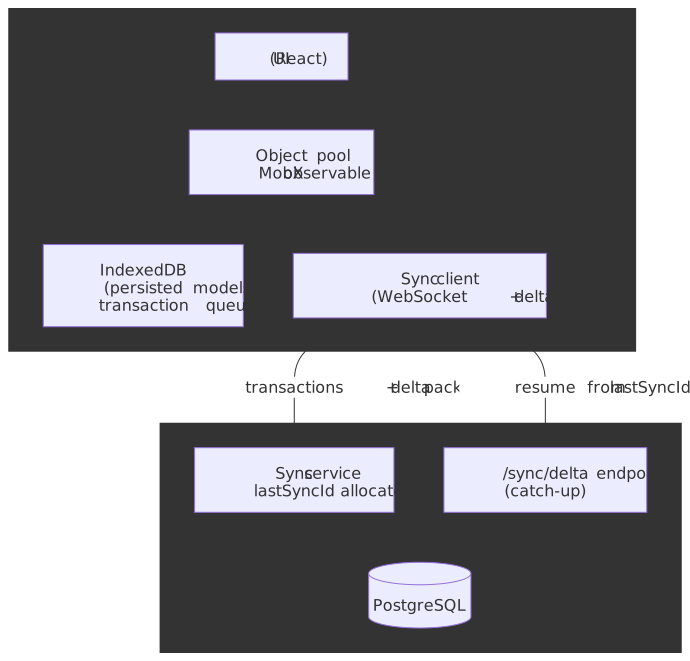
Trade-offs:
- ✅ Instant UI response (local-first)
- ✅ Full offline support
- ✅ Minimal network traffic (deltas only)
- ❌ Complex sync logic
- ❌ Conflict resolution complexity
- ❌ Larger client-side footprint
Real-world example: Linear bootstraps a workspace into IndexedDB and a MobX-managed in-memory object graph, then keeps it in sync over a WebSocket transaction stream — letting the UI read and write locally with no network in the hot path (Scaling the Linear Sync Engine). Each server-acknowledged write bumps a workspace-wide lastSyncId; clients use it as a cursor to ask for missed deltas after a reconnect. The sync model is last-write-wins for scalar fields, with CRDTs reserved for rich-text issue descriptions (reverse-linear-sync-engine).
Path C: GraphQL with Optimistic Updates
Best when:
- Varied client needs (web, mobile, integrations)
- Complex data relationships
- Need flexibility without over-fetching
- Subscriptions for real-time
Architecture:
mutation MoveIssue($input: MoveIssueInput!) { moveIssue(input: $input) { issue { id status { id name } rank updatedAt } }}subscription OnBoardUpdate($boardId: ID!) { boardUpdated(boardId: $boardId) { issue { id status { id } rank } action }}Trade-offs:
- ✅ Flexible queries for different views
- ✅ Built-in subscriptions for real-time
- ✅ Single endpoint simplifies client
- ❌ Caching more complex
- ❌ Rate limiting harder
- ❌ Learning curve for teams
Real-world example: Linear’s public API is GraphQL-only and is the same API its web and desktop clients use (Linear GraphQL API). GitHub also exposes its issue and project surface via GraphQL (GitHub GraphQL API).
Path Comparison
| Factor | REST | Local-First | GraphQL |
|---|---|---|---|
| Implementation complexity | Low | High | Medium |
| UI responsiveness | Medium | Excellent | Good |
| Offline support | Limited | Native | Limited |
| Client flexibility | Low | Low | High |
| Real-time complexity | Separate | Built-in | Built-in |
| Caching | Simple | Complex | Medium |
This Article’s Focus
This article focuses on Path C (GraphQL with REST fallback) because:
- Flexible field selection suits varied board configurations
- Subscriptions provide native real-time support
- REST endpoints can coexist for webhooks and simple integrations
- It matches what modern issue trackers expose externally — Linear’s API is GraphQL-only, and GitHub Issues / Projects ship a GraphQL surface alongside REST
High-Level Design
Component Overview
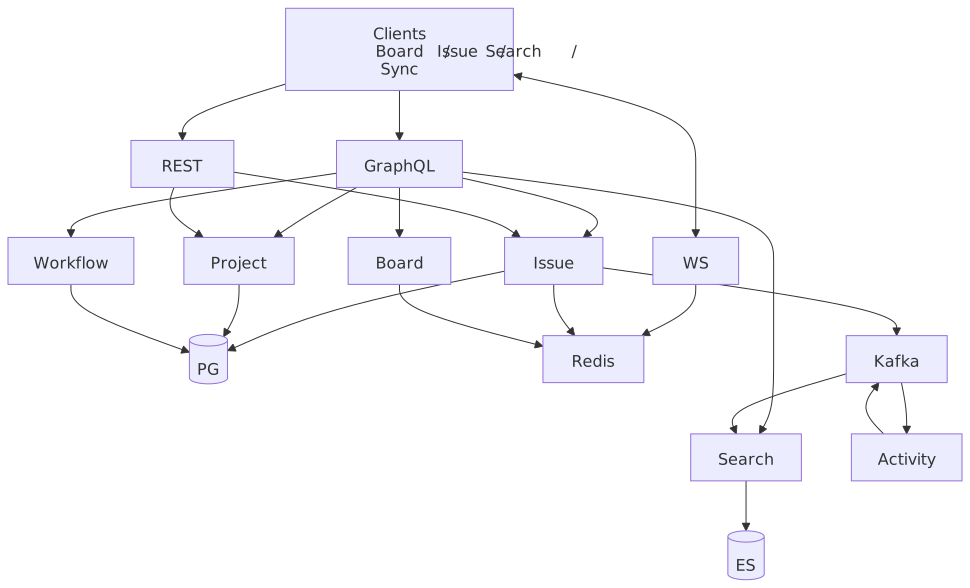
Issue Service
Handles core issue CRUD operations and ordering.
Responsibilities:
- Create, read, update, delete issues
- Rank calculation for ordering
- Status transitions with workflow validation
- Optimistic locking for concurrent updates
Key design decisions:
| Decision | Choice | Rationale |
|---|---|---|
| Primary key | UUID | Distributed ID generation, no coordination |
| Ordering | LexoRank string | O(1) reordering without cascading updates |
| Versioning | Monotonic version field | Optimistic locking for concurrent edits |
Project Service
Manages project configuration including workflows.
Responsibilities:
- Project CRUD
- Workflow definition per project
- Status and transition management
- Board configuration (columns, filters)
Design decision: Each project owns its workflow definition. Statuses are project-scoped, not global. This allows teams to customize without affecting others.
Board Service
Optimizes board view queries by maintaining denormalized state.
Responsibilities:
- Cache board state in Redis
- Compute issue counts per column
- Handle board-level operations (collapse column, set WIP limits)
Why separate service: Board queries require joining issues, statuses, and users. Denormalizing into Redis achieves sub-50ms board loads.
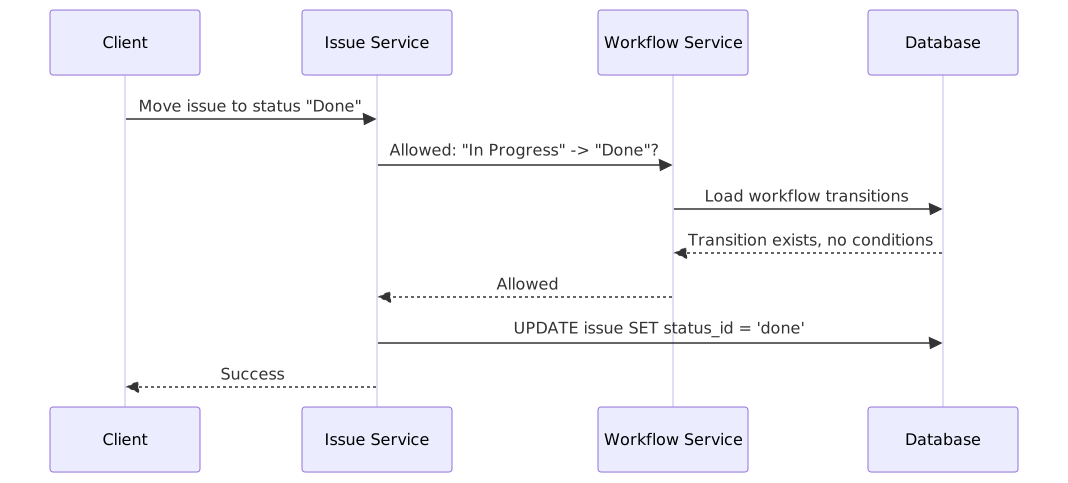
Workflow Service
Enforces workflow rules and transitions.
Responsibilities:
- Validate status transitions
- Execute transition side effects (webhooks, automations)
- Maintain workflow history
Transition validation flow:
API Design
GraphQL Schema (Core Types)
type Issue { id: ID! key: String! # e.g., "PROJ-123" title: String! description: String status: Status! assignee: User reporter: User! priority: Priority! issueType: IssueType! rank: String! # LexoRank for ordering version: Int! # Optimistic locking project: Project! comments(first: Int, after: String): CommentConnection! activity(first: Int, after: String): ActivityConnection! createdAt: DateTime! updatedAt: DateTime!}type Status { id: ID! name: String! category: StatusCategory! # TODO, IN_PROGRESS, DONE color: String! position: Int! # Column order}type Project { id: ID! key: String! name: String! workflow: Workflow! statuses: [Status!]! issueTypes: [IssueType!]!}type Workflow { id: ID! name: String! statuses: [Status!]! transitions: [Transition!]!}type Transition { id: ID! name: String! fromStatus: Status toStatus: Status! conditions: [TransitionCondition!]}enum StatusCategory { TODO IN_PROGRESS DONE}enum Priority { LOWEST LOW MEDIUM HIGH HIGHEST}Board Query with Per-Column Pagination
The key challenge: fetch issues across multiple columns where each column can have different numbers of issues.
Naive approach (problematic):
# BAD: Fetches all issues, client groups by statusquery { issues(projectId: "proj-1", first: 100) { nodes { id status { id } } }}# Problem: If 90 issues are in "To Do", other columns appear emptyPer-column pagination approach:
type BoardColumn { status: Status! issues(first: Int!, after: String): IssueConnection! totalCount: Int!}type Board { id: ID! project: Project! columns: [BoardColumn!]!}query GetBoard($projectId: ID!, $issuesPerColumn: Int!) { board(projectId: $projectId) { columns { status { id name color } totalCount issues(first: $issuesPerColumn) { nodes { id key title assignee { id name avatar } priority rank } pageInfo { hasNextPage endCursor } } } }}Response structure:
{ "data": { "board": { "columns": [ { "status": { "id": "status-1", "name": "To Do", "color": "#grey" }, "totalCount": 45, "issues": { "nodes": [ /* first 20 issues */ ], "pageInfo": { "hasNextPage": true, "endCursor": "cursor-abc" } } }, { "status": { "id": "status-2", "name": "In Progress", "color": "#blue" }, "totalCount": 12, "issues": { "nodes": [ /* first 12 issues - no more pages */ ], "pageInfo": { "hasNextPage": false, "endCursor": "cursor-xyz" } } }, { "status": { "id": "status-3", "name": "Done", "color": "#green" }, "totalCount": 89, "issues": { "nodes": [ /* first 20 issues */ ], "pageInfo": { "hasNextPage": true, "endCursor": "cursor-def" } } } ] } }}Load more for specific column:
query LoadMoreIssues($statusId: ID!, $after: String!) { column(statusId: $statusId) { issues(first: 20, after: $after) { nodes { id key title rank } pageInfo { hasNextPage endCursor } } }}Issue Mutations
Move Issue (status change + reorder):
input MoveIssueInput { issueId: ID! toStatusId: ID! rankAfterId: ID # Issue to position after (null = top) rankBeforeId: ID # Issue to position before (null = bottom) version: Int! # For optimistic locking}type MoveIssuePayload { issue: Issue error: MoveIssueError}type MoveIssueError { code: MoveIssueErrorCode! message: String!}enum MoveIssueErrorCode { ISSUE_NOT_FOUND INVALID_TRANSITION VERSION_CONFLICT PERMISSION_DENIED}mutation MoveIssue($input: MoveIssueInput!) { moveIssue(input: $input) { issue { id status { id name } rank version updatedAt } error { code message } }}Update Issue:
input UpdateIssueInput { issueId: ID! title: String description: String assigneeId: ID priority: Priority version: Int!}mutation UpdateIssue($input: UpdateIssueInput!) { updateIssue(input: $input) { issue { id title description assignee { id name } priority version updatedAt } error { code message } }}Real-time Subscriptions
type BoardEvent { issue: Issue! action: BoardAction! previousStatusId: ID # For status changes previousRank: String # For reorders}enum BoardAction { CREATED UPDATED MOVED DELETED}subscription OnBoardChange($projectId: ID!) { boardChanged(projectId: $projectId) { issue { id key title status { id } rank assignee { id name } version } action previousStatusId }}REST API Fallback
For webhooks and simple integrations:
Move Issue:
PATCH /api/v1/issues/{issueId}/moveContent-Type: application/jsonIf-Match: "version-5"{ "statusId": "status-3", "rankAfterId": "issue-456", "rankBeforeId": null}Response:
HTTP/1.1 200 OKETag: "version-6"{ "id": "issue-123", "key": "PROJ-123", "status": { "id": "status-3", "name": "Done" }, "rank": "0|i002bc", "version": 6, "updatedAt": "2024-02-03T10:00:00Z"}Error Responses:
| Code | Error | When |
|---|---|---|
| 400 | INVALID_TRANSITION |
Workflow doesn’t allow this status change |
| 404 | NOT_FOUND |
Issue or target status doesn’t exist |
| 409 | VERSION_CONFLICT |
Version mismatch (concurrent edit) |
| 412 | PRECONDITION_FAILED |
ETag mismatch |
Data Modeling
Core Schema (PostgreSQL)
-- Projects with embedded workflow referenceCREATE TABLE projects ( id UUID PRIMARY KEY DEFAULT gen_random_uuid(), key VARCHAR(10) UNIQUE NOT NULL, -- e.g., "PROJ" name VARCHAR(255) NOT NULL, description TEXT, owner_id UUID NOT NULL REFERENCES users(id), created_at TIMESTAMPTZ DEFAULT NOW(), updated_at TIMESTAMPTZ DEFAULT NOW());-- Statuses are project-scopedCREATE TABLE statuses ( id UUID PRIMARY KEY DEFAULT gen_random_uuid(), project_id UUID NOT NULL REFERENCES projects(id) ON DELETE CASCADE, name VARCHAR(100) NOT NULL, category VARCHAR(20) NOT NULL, -- 'todo', 'in_progress', 'done' color VARCHAR(7) DEFAULT '#808080', position INT NOT NULL, -- Column order is_initial BOOLEAN DEFAULT FALSE, -- Default for new issues UNIQUE (project_id, name));CREATE INDEX idx_statuses_project ON statuses(project_id, position);-- Workflow transitions define allowed status changesCREATE TABLE workflow_transitions ( id UUID PRIMARY KEY DEFAULT gen_random_uuid(), project_id UUID NOT NULL REFERENCES projects(id) ON DELETE CASCADE, from_status_id UUID REFERENCES statuses(id) ON DELETE CASCADE, -- NULL = any to_status_id UUID NOT NULL REFERENCES statuses(id) ON DELETE CASCADE, name VARCHAR(100) NOT NULL, opsbar_sequence INT DEFAULT 10, -- UI ordering UNIQUE (project_id, from_status_id, to_status_id));-- Issue types (Epic, Story, Task, Bug)CREATE TABLE issue_types ( id UUID PRIMARY KEY DEFAULT gen_random_uuid(), project_id UUID NOT NULL REFERENCES projects(id) ON DELETE CASCADE, name VARCHAR(50) NOT NULL, icon VARCHAR(50), color VARCHAR(7), UNIQUE (project_id, name));-- Issues with LexoRank orderingCREATE TABLE issues ( id UUID PRIMARY KEY DEFAULT gen_random_uuid(), project_id UUID NOT NULL REFERENCES projects(id), issue_type_id UUID NOT NULL REFERENCES issue_types(id), status_id UUID NOT NULL REFERENCES statuses(id), -- Issue key: computed from project key + sequence issue_number INT NOT NULL, title VARCHAR(500) NOT NULL, description TEXT, assignee_id UUID REFERENCES users(id), reporter_id UUID NOT NULL REFERENCES users(id), priority VARCHAR(20) DEFAULT 'medium', -- LexoRank for ordering within status -- Format: "0|hzzzzz" (bucket | alphanumeric) rank VARCHAR(255) NOT NULL, -- Optimistic locking version INT DEFAULT 1, created_at TIMESTAMPTZ DEFAULT NOW(), updated_at TIMESTAMPTZ DEFAULT NOW(), UNIQUE (project_id, issue_number));-- Primary query: issues by status, ordered by rankCREATE INDEX idx_issues_board ON issues(project_id, status_id, rank);-- Secondary: issues by assigneeCREATE INDEX idx_issues_assignee ON issues(assignee_id, updated_at DESC);-- Issue key lookupCREATE INDEX idx_issues_key ON issues(project_id, issue_number);-- CommentsCREATE TABLE comments ( id UUID PRIMARY KEY DEFAULT gen_random_uuid(), issue_id UUID NOT NULL REFERENCES issues(id) ON DELETE CASCADE, author_id UUID NOT NULL REFERENCES users(id), body TEXT NOT NULL, created_at TIMESTAMPTZ DEFAULT NOW(), updated_at TIMESTAMPTZ DEFAULT NOW());CREATE INDEX idx_comments_issue ON comments(issue_id, created_at);-- Activity log (append-only)CREATE TABLE activity_log ( id UUID PRIMARY KEY DEFAULT gen_random_uuid(), issue_id UUID NOT NULL REFERENCES issues(id) ON DELETE CASCADE, user_id UUID NOT NULL REFERENCES users(id), action_type VARCHAR(50) NOT NULL, -- 'status_change', 'assignment', etc. old_value JSONB, new_value JSONB, created_at TIMESTAMPTZ DEFAULT NOW());CREATE INDEX idx_activity_issue ON activity_log(issue_id, created_at DESC);Database Selection Rationale
| Data Type | Store | Rationale |
|---|---|---|
| Issues, Projects | PostgreSQL | ACID, complex queries, JOIN capability |
| Board cache | Redis | Sub-ms reads, TTL for staleness |
| Search index | Elasticsearch | Full-text search, faceted filtering |
| Activity log | PostgreSQL → Kafka | Append-only, stream processing |
| Attachments | S3 | Cost-effective blob storage |
Denormalized Board Cache (Redis)
Why cache: Board queries join issues, statuses, and users. Caching avoids expensive JOINs on every load.
Structure:
# Board metadataHSET board:{project_id}:meta columns_json "[{\"status_id\":\"s1\",\"name\":\"To Do\"}...]" total_issues 156 last_updated 1706886400000# Per-column issue list (sorted set by rank)ZADD board:{project_id}:column:{status_id} {rank_score} {issue_id}# Issue card data (hash - denormalized for fast read)HSET issue:{issue_id}:card key "PROJ-123" title "Implement login" status_id "status-2" assignee_id "user-456" assignee_name "Alice" priority "high" rank "0|i000ab" version 5Cache invalidation strategy:
- Write-through: Update cache immediately after DB write
- TTL: 5 minutes as safety net
- Pub/Sub: Broadcast invalidation to all service instances
Low-Level Design: LexoRank Ordering
Why LexoRank?
Traditional integer-based ordering has a fundamental problem:
Before: [A:1, B:2, C:3, D:4]Insert X between B and C:After: [A:1, B:2, X:3, C:4, D:5] ← Must update C, DWith N items and frequent reorders, this is O(N) updates per operation.
Fractional indexing solution: Use lexicographically sortable strings where you can always find a value between any two existing values, so an insert only writes the moved row’s rank — siblings are untouched. Figma uses the same idea, with arbitrary-precision base-95 fractions stored as strings, for ordering children inside a frame (Figma — Realtime Editing of Ordered Sequences).
Before: [A:"aaa", B:"bbb", C:"ccc"]Insert X between B and C:After: [A:"aaa", B:"bbb", X:"bbc", C:"ccc"] ← Only X updatedLexoRank Format
Jira’s LexoRank uses the format bucket|value, where the bucket is a single digit and the value is a base-36 alphanumeric string (Atlassian KB: LexoRank):
0|hzzzzz│ └─ Alphanumeric value (base-36, "0"–"9" + "a"–"z")└── Bucket (0, 1, or 2)Note
Production Jira ranks also carry a sub-rank after a : separator (for example 0|hzzzzz:), used to disambiguate concurrent inserts. The illustrations below collapse that detail; treat the value segment as the LexoRank “core” you would actually compute against.
Bucket rotation: The three buckets exist to support background rebalancing without taking writes offline. The balancer copies issues from the current bucket to the next one in the round-robin (0 → 1 → 2 → 0); new inserts can keep ranking against the source bucket while in-flight rows fan out to the destination (LexoRankBalanceOperation API).
Rank Calculation Algorithm
// Simplified LexoRank implementationconst LEXORANK_CHARS = "0123456789abcdefghijklmnopqrstuvwxyz"const BASE = LEXORANK_CHARS.length // 36interface LexoRank { bucket: number value: string}function parseLexoRank(rank: string): LexoRank { const [bucket, value] = rank.split("|") return { bucket: parseInt(bucket), value }}function formatLexoRank(rank: LexoRank): string { return `${rank.bucket}|${rank.value}`}function getMidpoint(a: string, b: string): string { // Ensure same length by padding with '0's const maxLen = Math.max(a.length, b.length) const aPadded = a.padEnd(maxLen, "0") const bPadded = b.padEnd(maxLen, "0") // Convert to numbers (treating as base-36) let result = "" let carry = 0 for (let i = maxLen - 1; i >= 0; i--) { const aVal = LEXORANK_CHARS.indexOf(aPadded[i]) const bVal = LEXORANK_CHARS.indexOf(bPadded[i]) const sum = aVal + bVal + carry const mid = Math.floor(sum / 2) carry = sum % 2 result = LEXORANK_CHARS[mid] + result } // If a and b are adjacent, extend with midpoint if (result === aPadded) { result += LEXORANK_CHARS[Math.floor(BASE / 2)] // 'i' } return result.replace(/0+$/, "") // Trim trailing zeros}function calculateNewRank(before: string | null, after: string | null, bucket: number = 0): string { if (!before && !after) { // First item - use middle of range return formatLexoRank({ bucket, value: "i" }) } if (!before) { // Insert at top - find value before 'after' const afterRank = parseLexoRank(after!) const newValue = getMidpoint("0", afterRank.value) return formatLexoRank({ bucket, value: newValue }) } if (!after) { // Insert at bottom - find value after 'before' const beforeRank = parseLexoRank(before) const newValue = getMidpoint(beforeRank.value, "z") return formatLexoRank({ bucket, value: newValue }) } // Insert between two items const beforeRank = parseLexoRank(before) const afterRank = parseLexoRank(after) const newValue = getMidpoint(beforeRank.value, afterRank.value) return formatLexoRank({ bucket, value: newValue })}Rebalancing Strategy
LexoRank strings grow whenever you keep inserting between two adjacent values:
Initial: "i"After 1: "ii"After 2: "iii"...After 50: "iiiiiiiiiiiiiiiiiiiiiiiiiiiiiiiiiiiiiiiiiiiiiiiiii"Jira’s rebalancing thresholds (8.9.0+, per Atlassian KB) (source):
| Max rank length | Action |
|---|---|
| 128–159 characters | Rebalance is scheduled to run within 12 hours. |
| 160–253 characters | Rebalance starts immediately. |
| ≥ 254 characters | Rebalance starts immediately; ranking still works, but any operation whose target rank would itself exceed 254 characters fails until normalisation completes. |
Caution
The pre-8.9 behaviour was different: the immediate trigger fired at 200 characters and ranking was disabled past that. Older “blog wisdom” floating around the internet still cites those numbers — verify against the Atlassian KB before turning them into runbook thresholds.
Rebalancing algorithm:
async function rebalanceColumn(projectId: string, statusId: string): Promise<void> { // 1. Lock column for writes (or use different bucket) const lockKey = `rebalance:${projectId}:${statusId}` await redis.set(lockKey, "1", "EX", 300) // 5 min lock try { // 2. Fetch all issues ordered by current rank const issues = await db.query( ` SELECT id, rank FROM issues WHERE project_id = $1 AND status_id = $2 ORDER BY rank `, [projectId, statusId], ) // 3. Assign evenly-spaced new ranks const newBucket = (parseInt(issues[0]?.rank?.split("|")[0] || "0") + 1) % 3 const step = Math.floor(BASE / (issues.length + 1)) const updates = issues.map((issue, index) => { const position = step * (index + 1) const newValue = position.toString(36).padStart(6, "0") return { id: issue.id, newRank: `${newBucket}|${newValue}`, } }) // 4. Batch update await db.transaction(async (tx) => { for (const { id, newRank } of updates) { await tx.query("UPDATE issues SET rank = $1 WHERE id = $2", [newRank, id]) } }) // 5. Invalidate cache await invalidateBoardCache(projectId) } finally { await redis.del(lockKey) }}Low-Level Design: Concurrent Edit Handling
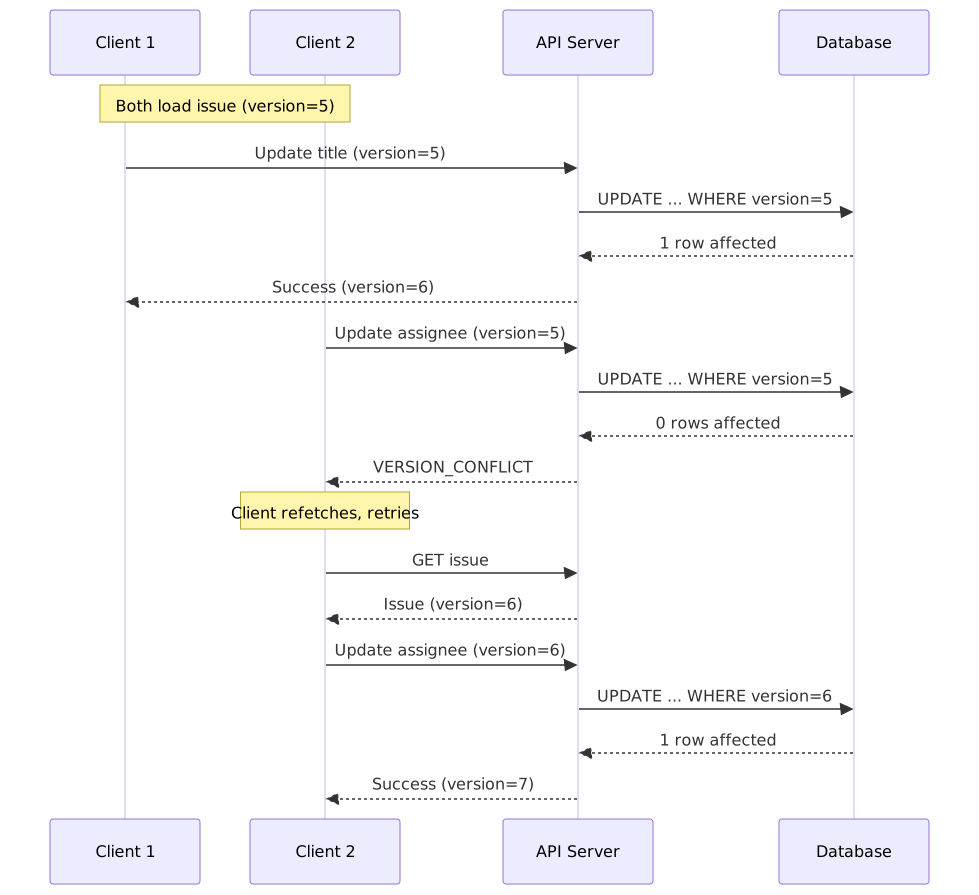
Optimistic Locking Flow
Implementation
interface UpdateIssueInput { issueId: string title?: string description?: string assigneeId?: string version: number}interface UpdateResult { success: boolean issue?: Issue error?: { code: string; message: string }}async function updateIssue(input: UpdateIssueInput): Promise<UpdateResult> { const { issueId, version, ...updates } = input // Build dynamic UPDATE query const setClause = Object.entries(updates) .filter(([_, v]) => v !== undefined) .map(([k, _], i) => `${toSnakeCase(k)} = $${i + 3}`) .join(", ") const values = Object.values(updates).filter((v) => v !== undefined) const result = await db.query( ` UPDATE issues SET ${setClause}, version = version + 1, updated_at = NOW() WHERE id = $1 AND version = $2 RETURNING * `, [issueId, version, ...values], ) if (result.rowCount === 0) { // Check if issue exists const exists = await db.query("SELECT version FROM issues WHERE id = $1", [issueId]) if (exists.rowCount === 0) { return { success: false, error: { code: "NOT_FOUND", message: "Issue not found" }, } } const currentVersion = exists.rows[0].version return { success: false, error: { code: "VERSION_CONFLICT", message: `Version mismatch. Expected ${version}, current is ${currentVersion}`, }, } } // Broadcast change await publishBoardEvent(result.rows[0].project_id, { action: "UPDATED", issue: result.rows[0], }) return { success: true, issue: result.rows[0] }}Conflict Resolution Strategies
| Strategy | Use Case | Trade-off |
|---|---|---|
| Last-Write-Wins | Most fields (title, assignee, priority) | May lose edits, but simple |
| Field-Level Merge | Non-conflicting field updates | More complex, preserves more |
| Manual Resolution | Description (rich text) | Best fidelity, worst UX |
| CRDT | Concurrent rich text editing | Complex, best for collaboration |
Field-level merge example:
// Client 1 updates title (version 5 → 6)// Client 2 updates assignee (version 5 → conflict)// Instead of rejecting, merge if fields don't overlapasync function mergeUpdate(input: UpdateIssueInput, currentIssue: Issue): Promise<UpdateResult> { const { version, ...updates } = input // Find which fields changed since client's version const changedFields = await getChangedFieldsSince(input.issueId, version, currentIssue.version) // Check for conflicts const conflictingFields = Object.keys(updates).filter((f) => changedFields.includes(f)) if (conflictingFields.length > 0) { return { success: false, error: { code: "FIELD_CONFLICT", message: `Conflicting fields: ${conflictingFields.join(", ")}`, }, } } // No conflicts - apply update to latest version return updateIssue({ ...input, version: currentIssue.version, })}Move Operation (Status + Rank)
Moving an issue involves two atomic changes: status and rank.
interface MoveIssueInput { issueId: string toStatusId: string rankAfterId?: string rankBeforeId?: string version: number}async function moveIssue(input: MoveIssueInput): Promise<UpdateResult> { const { issueId, toStatusId, rankAfterId, rankBeforeId, version } = input return db.transaction(async (tx) => { // 1. Lock and fetch current issue const issue = await tx.query("SELECT * FROM issues WHERE id = $1 FOR UPDATE", [issueId]) if (!issue.rows[0]) { return { success: false, error: { code: "NOT_FOUND", message: "Issue not found" } } } if (issue.rows[0].version !== version) { return { success: false, error: { code: "VERSION_CONFLICT", message: "Concurrent modification" }, } } const currentIssue = issue.rows[0] // 2. Validate transition const transitionValid = await validateTransition(tx, currentIssue.project_id, currentIssue.status_id, toStatusId) if (!transitionValid) { return { success: false, error: { code: "INVALID_TRANSITION", message: "Workflow does not allow this transition" }, } } // 3. Calculate new rank let newRank: string if (rankAfterId) { const afterIssue = await tx.query("SELECT rank FROM issues WHERE id = $1", [rankAfterId]) const beforeIssue = rankBeforeId ? await tx.query("SELECT rank FROM issues WHERE id = $1", [rankBeforeId]) : null newRank = calculateNewRank(afterIssue.rows[0]?.rank, beforeIssue?.rows[0]?.rank) } else if (rankBeforeId) { const beforeIssue = await tx.query("SELECT rank FROM issues WHERE id = $1", [rankBeforeId]) newRank = calculateNewRank(null, beforeIssue.rows[0]?.rank) } else { // Default: bottom of column const lastInColumn = await tx.query( ` SELECT rank FROM issues WHERE project_id = $1 AND status_id = $2 ORDER BY rank DESC LIMIT 1 `, [currentIssue.project_id, toStatusId], ) newRank = calculateNewRank(lastInColumn.rows[0]?.rank, null) } // 4. Update issue const result = await tx.query( ` UPDATE issues SET status_id = $1, rank = $2, version = version + 1, updated_at = NOW() WHERE id = $3 RETURNING * `, [toStatusId, newRank, issueId], ) // 5. Log activity await tx.query( ` INSERT INTO activity_log (issue_id, user_id, action_type, old_value, new_value) VALUES ($1, $2, 'status_change', $3, $4) `, [ issueId, getCurrentUserId(), JSON.stringify({ status_id: currentIssue.status_id }), JSON.stringify({ status_id: toStatusId }), ], ) // 6. Broadcast (after commit) setImmediate(() => { publishBoardEvent(currentIssue.project_id, { action: "MOVED", issue: result.rows[0], previousStatusId: currentIssue.status_id, }) }) return { success: true, issue: result.rows[0] } })}Low-Level Design: Workflow and Status Management
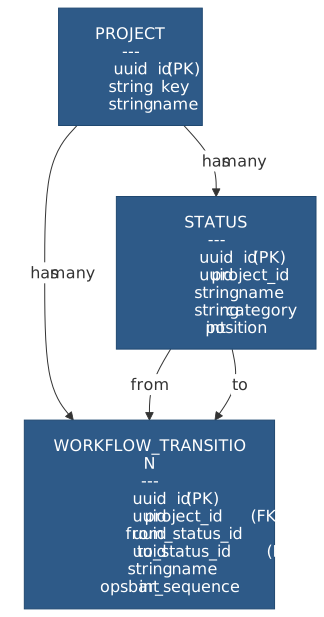
Workflow Data Model
Each project has its own workflow, defined by statuses and transitions.
Fetching Workflow Configuration
query GetProjectWorkflow($projectId: ID!) { project(id: $projectId) { workflow { statuses { id name category color position } transitions { id name fromStatus { id } toStatus { id } } } }}Response structure:
{ "project": { "workflow": { "statuses": [ { "id": "s1", "name": "To Do", "category": "TODO", "color": "#808080", "position": 1 }, { "id": "s2", "name": "In Progress", "category": "IN_PROGRESS", "color": "#0052cc", "position": 2 }, { "id": "s3", "name": "In Review", "category": "IN_PROGRESS", "color": "#8777d9", "position": 3 }, { "id": "s4", "name": "Done", "category": "DONE", "color": "#36b37e", "position": 4 } ], "transitions": [ { "id": "t1", "name": "Start Progress", "fromStatus": { "id": "s1" }, "toStatus": { "id": "s2" } }, { "id": "t2", "name": "Submit for Review", "fromStatus": { "id": "s2" }, "toStatus": { "id": "s3" } }, { "id": "t3", "name": "Approve", "fromStatus": { "id": "s3" }, "toStatus": { "id": "s4" } }, { "id": "t4", "name": "Reject", "fromStatus": { "id": "s3" }, "toStatus": { "id": "s2" } }, { "id": "t5", "name": "Reopen", "fromStatus": { "id": "s4" }, "toStatus": { "id": "s1" } } ] } }}Workflow Mutation API
# Add a new statusmutation AddStatus($input: AddStatusInput!) { addStatus(input: $input) { status { id name category position } }}# Add a transitionmutation AddTransition($input: AddTransitionInput!) { addTransition(input: $input) { transition { id name fromStatus { id } toStatus { id } } }}# Reorder statuses (columns)mutation ReorderStatuses($input: ReorderStatusesInput!) { reorderStatuses(input: $input) { statuses { id position } }}Client-Side Workflow Validation
To provide instant feedback, clients cache workflow rules:
interface WorkflowCache { statuses: Map<string, Status> transitions: Map<string, Set<string>> // fromStatusId → Set<toStatusId>}class WorkflowValidator { private cache: WorkflowCache constructor(workflow: Workflow) { this.cache = { statuses: new Map(workflow.statuses.map((s) => [s.id, s])), transitions: new Map(), } // Build transition map for (const t of workflow.transitions) { const fromId = t.fromStatus?.id || "*" // null = any status if (!this.cache.transitions.has(fromId)) { this.cache.transitions.set(fromId, new Set()) } this.cache.transitions.get(fromId)!.add(t.toStatus.id) } } canTransition(fromStatusId: string, toStatusId: string): boolean { // Check specific transition if (this.cache.transitions.get(fromStatusId)?.has(toStatusId)) { return true } // Check wildcard (from any status) if (this.cache.transitions.get("*")?.has(toStatusId)) { return true } return false } getAvailableTransitions(fromStatusId: string): Status[] { const specific = this.cache.transitions.get(fromStatusId) || new Set() const wildcard = this.cache.transitions.get("*") || new Set() const available = new Set([...specific, ...wildcard]) return Array.from(available) .map((id) => this.cache.statuses.get(id)!) .filter(Boolean) }}Low-Level Design: Sync Engine and Offline Reconciliation
Path C above describes the GraphQL story; this section captures what changes when the same product needs Linear-grade local-first behaviour and offline edits. The mechanism is independent of the wire protocol — it works equally well over GraphQL subscriptions or a raw WebSocket transaction stream.
Data plane
Every workspace has a single monotonically increasing lastSyncId. The server bumps it on each persisted mutation and stamps the resulting delta packet with the new value before fanning it out to subscribers. Clients persist lastSyncId alongside the local model store so they can resume where they left off (Scaling the Linear Sync Engine, reverse-linear-sync-engine).
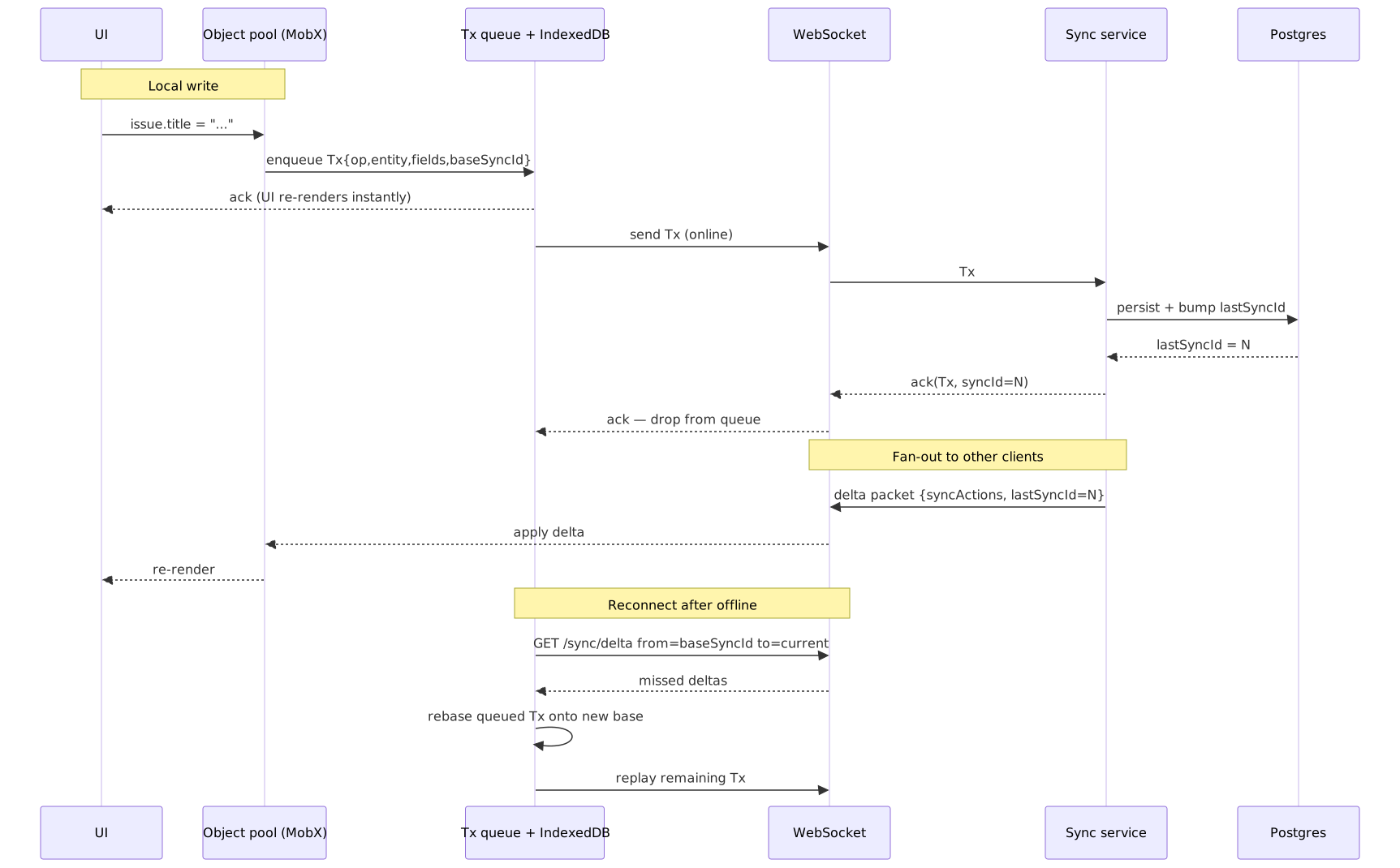
Three bootstrap modes hydrate the local store on app start (reverse-linear-sync-engine):
| Bootstrap | When | Payload |
|---|---|---|
| Full | First load on a device | Full set of hot models (Issue, Project, User, Cycle) |
| Partial | Returning user with cached state but missed range | lastSyncId cursor + deferred models (Comment, History) |
| Local | Subsequent in-session loads | Hydrate from IndexedDB only; no network until first write |
Mutation lifecycle
A local edit follows a fixed lifecycle:
- UI calls a mutator on the in-memory model. The change is applied to the MobX object pool optimistically — the UI re-renders with no network in the hot path.
- A
Transactionrecord{op, entity, fields, baseSyncId, clientId}is appended to the local queue and persisted to IndexedDB. - The sync client streams pending transactions over the WebSocket. When the server acks
{txId, lastSyncId=N}, the client drops the transaction from the queue. - The server fans the resulting delta packet out to every other connected client; remote clients apply the
SyncActionset to their pool and bump theirlastSyncId.
If the device is offline, steps 3–4 are deferred. Transactions stay in IndexedDB until the WebSocket reconnects.
Reconnect and rebase
On reconnect, the client cannot just replay the queue against the live server — the workspace may have advanced. The Linear-style protocol is:
1. open WebSocket, send {lastSyncId: baseSyncId}2. server streams missed delta packets up to current lastSyncId3. client applies them to the pool — server state is now caught up4. for each queued Tx: rebase fields against the new base, re-apply5. flush queued Tx; server acks normallyRebasing is field-level last-write-wins: if the server already moved assignee while the client was offline, the client’s pending assignee write replaces it on reconnect. For free-form text (issue description, comment body) the rebase step instead hands off to a CRDT (Yjs / Automerge), which merges concurrent inserts without losing characters1.
Idempotency and exactly-once delivery
The transaction queue is the only retry source, so every mutation needs an idempotency key:
- Each
Transactioncarries{clientId, clientTxSeq}. The server stores the last appliedclientTxSeqperclientIdand rejects re-deliveries silently with the originallastSyncId. - Each delta packet carries its
lastSyncId. Clients drop packets whoselastSyncId <= localLastSyncId— natural deduplication on reconnect storms. - HTTP fallbacks (file uploads, third-party integrations) use an
Idempotency-Keyheader per the Stripe pattern2.
Why not vector / hybrid logical clocks?
Vector clocks correctly capture concurrency but cost O(N) per write where N is the number of replicas — not viable for a workspace with 100k clients. Hybrid Logical Clocks (HLC) bound that cost but still require multiple participants to agree on causality at write time3. A single server-assigned lastSyncId is the cheapest correct choice for issue trackers, where conflicts between two humans editing the same field within milliseconds are rare in practice.
Important
The sync engine is the single point that writes are serialised through. Sharding it (per workspace, never per entity) is fine; splitting it across entities inside a workspace breaks the global ordering guarantee that makes LWW safe.
Low-Level Design: Permissions and Issue-Level Security
Issue trackers consistently land on a hybrid model: RBAC for project-scoped operations, ABAC-style overlays for per-issue visibility. Jira’s three layers are the canonical reference4:
| Layer | Granted to | Examples |
|---|---|---|
| Global | Users / groups | SYS_ADMIN, BROWSE_USERS |
| Project | Project roles via permission scheme | BROWSE_PROJECTS, CREATE_ISSUES, EDIT_ISSUES |
| Issue-level | Roles / groups / users via security | Restrict an HR-tagged issue to the HR security level |
Role assignments are project-scoped: a user may be a Developer in one project and an Observer in another. This avoids the role explosion that pure global RBAC produces and matches how teams reason about access (“who is in this project, and what can each role do here?”)5.
Resolution flow
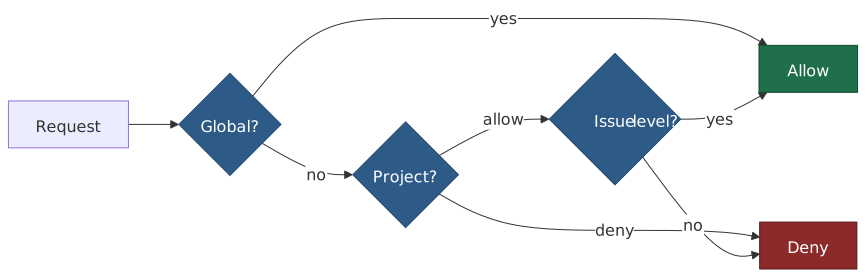
Resolution is short-circuit: if a global permission grants the action, no project / issue check runs. Otherwise the project’s permission scheme is consulted via the user’s project roles, and finally the issue’s security level (if any) gates visibility.
Two often-missed properties:
- Inheritance. Sub-tasks inherit the parent’s security level and cannot override it4. This is what stops a contractor from being able to see a sub-task whose parent is hidden.
- No field-level permissions in Jira. Once an issue is visible, every field on it is visible. Field-level redaction requires either a custom screen or an external authorisation layer4.
Schema
CREATE TABLE project_roles ( id UUID PRIMARY KEY DEFAULT gen_random_uuid(), project_id UUID NOT NULL REFERENCES projects(id) ON DELETE CASCADE, name VARCHAR(50) NOT NULL, UNIQUE (project_id, name));CREATE TABLE project_role_members ( id UUID PRIMARY KEY DEFAULT gen_random_uuid(), role_id UUID NOT NULL REFERENCES project_roles(id) ON DELETE CASCADE, user_id UUID REFERENCES users(id), group_id UUID REFERENCES groups(id), -- Exactly one of user_id / group_id must be set CHECK ((user_id IS NULL) <> (group_id IS NULL)));-- Partial unique indexes guarantee no duplicate user / group per roleCREATE UNIQUE INDEX idx_role_members_user ON project_role_members (role_id, user_id) WHERE user_id IS NOT NULL;CREATE UNIQUE INDEX idx_role_members_group ON project_role_members (role_id, group_id) WHERE group_id IS NOT NULL;CREATE TABLE permission_scheme_grants ( id UUID PRIMARY KEY DEFAULT gen_random_uuid(), project_id UUID NOT NULL REFERENCES projects(id) ON DELETE CASCADE, permission VARCHAR(64) NOT NULL, -- 'EDIT_ISSUES', 'TRANSITION_ISSUES', ... role_id UUID REFERENCES project_roles(id) ON DELETE CASCADE, group_id UUID REFERENCES groups(id), user_id UUID REFERENCES users(id));CREATE INDEX idx_pscheme_lookup ON permission_scheme_grants(project_id, permission);CREATE TABLE issue_security_levels ( id UUID PRIMARY KEY DEFAULT gen_random_uuid(), project_id UUID NOT NULL REFERENCES projects(id) ON DELETE CASCADE, name VARCHAR(64) NOT NULL, UNIQUE (project_id, name));CREATE TABLE issue_security_level_members ( id UUID PRIMARY KEY DEFAULT gen_random_uuid(), level_id UUID NOT NULL REFERENCES issue_security_levels(id) ON DELETE CASCADE, role_id UUID REFERENCES project_roles(id) ON DELETE CASCADE, group_id UUID REFERENCES groups(id), user_id UUID REFERENCES users(id), -- Exactly one of role_id / group_id / user_id must be set CHECK ( (role_id IS NOT NULL)::int + (group_id IS NOT NULL)::int + (user_id IS NOT NULL)::int = 1 ));CREATE INDEX idx_isl_members_level ON issue_security_level_members(level_id);ALTER TABLE issues ADD COLUMN security_level_id UUID REFERENCES issue_security_levels(id);Caching authorisation
Per-request resolution against four joins is too slow on hot paths (board load, search). Two safe caches:
- Effective-permission cache.
(user_id, project_id) → bitset of granted permissions, invalidated on role / scheme change. Lives in Redis with a 5-minute TTL plus pub/sub-driven busting. - Visible-issue filter. For search and listing, materialise per-user
(user_id, project_id) → security_level_ids[]and inject the filter into the search query so the engine never returns rows the caller cannot read.
Never cache a deny decision longer than an allow decision — the failure mode is “user briefly sees too much”, which is precisely what authorisation must prevent.
Low-Level Design: Search Subsystem
Issue search has a distinctive shape: many filters (assignee = me AND status in (...) AND label = ...), modest text payloads (titles + descriptions + comments), and a strong demand for typo tolerance and “as-you-type” feedback. The choice of engine matters more than for a typical full-text workload.
Engine selection
| Engine | Architecture | Best for | Watch-outs |
|---|---|---|---|
| Postgres FTS | tsvector + GIN, in-database |
Single-tenant or small multi-tenant; sovereignty | tsvector ≤ 1 MB; lexeme positions ≤ 16 384; no native typo6 |
| Meilisearch | Single-node Rust | Fast as-you-type, small datasets | Memory-resident index; HA story is weak |
| Typesense | Distributed C++, Raft | Sweet spot for SaaS scale + simple API | Smaller community; fewer aggregation primitives |
| OpenSearch / ES | Distributed Java + Lucene | Multi-tenant SaaS, faceted analytics | Operational cost; index sizing and JVM tuning |
A pragmatic split many teams adopt: ship Postgres FTS for the first 10⁴ issues per tenant, and promote to OpenSearch / Typesense once a tenant crosses an indexable-bytes threshold. Keep the query API engine-agnostic so the swap is a routing change.
Ingestion pipeline
Issue documents are denormalised projections (issue + status + assignee + comments concatenated for body). They must be eventually consistent with Postgres but can lag the primary store by seconds.
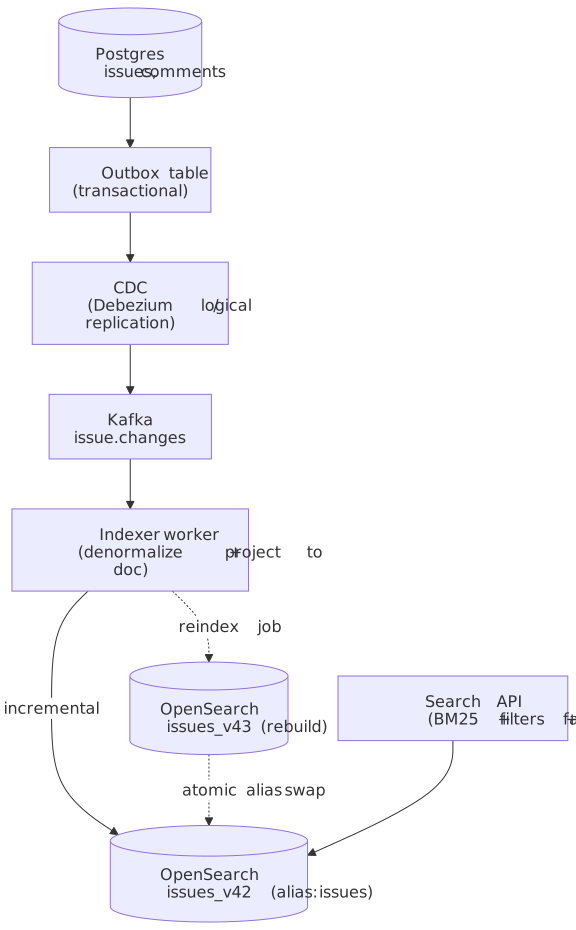
Three patterns sit behind that diagram:
- Outbox + CDC — every write to
issuesalso inserts into anoutboxtable in the same transaction; Debezium (or Postgres logical replication) tails the outbox and publishes to Kafka. Avoids dual-writes drifting on partial failure7. - Indexer is idempotent — every doc carries the source
version; the indexer drops any update whoseversionis older than what the index already holds. - Alias-swap reindex — full rebuilds write to
issues_v(N+1)and atomically point theissuesalias at it once caught up. No downtime, no half-indexed reads.
Query path
A typical board-search query combines text + filters + facets:
{ "size": 50, "query": { "bool": { "must": [{ "multi_match": { "query": "login bug", "fields": ["title^3", "body"] } }], "filter": [ { "term": { "project_id": "p-1" } }, { "terms": { "security_level_id": ["lvl-public", "lvl-eng"] } }, { "term": { "status_category": "in_progress" } } ] } }, "aggs": { "by_assignee": { "terms": { "field": "assignee_id", "size": 10 } } }}The security_level_id filter is injected by the API layer from the per-user visibility cache (above). Never trust a client-supplied security filter — clients only get to choose project, status, assignee, etc.
Low-Level Design: Notifications
Notifications are the system’s most unbounded fan-out path: a single @team mention on a 200-person project can produce 200 deliveries across four channels each. The design priorities are channel isolation, idempotency, and backpressure.
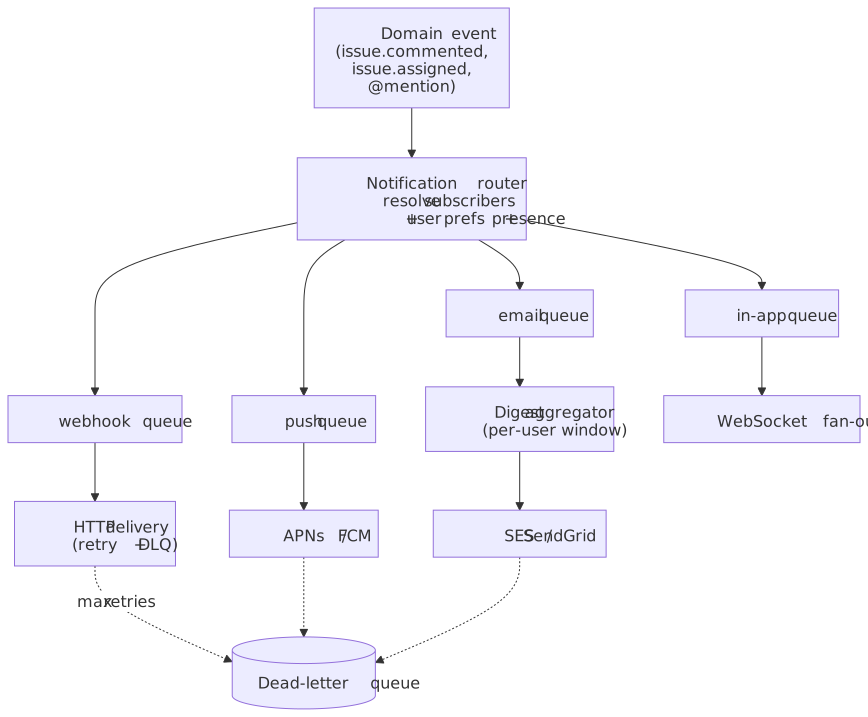
Pipeline
- Domain event is published to a Kafka topic (
issue.commented,issue.assigned,mention.created). - Router resolves subscribers by union of: assignee, reporter, watchers, mentioned users, project subscribers. It then filters by per-user channel preferences and current presence (no mobile push if the user is online on web — Slack’s well-documented heuristic8).
- Per-channel queues (
in-app,push,email,webhook) decouple delivery so a failing email provider does not block in-app delivery. - Delivery workers call APNs / FCM / SES / outbound webhooks with retry + DLQ. Each worker carries an idempotency key derived from
(event_id, user_id, channel)so retries cannot double-deliver. - Digest aggregator holds email events in a per-user window (e.g. 5 minutes for mentions, 24 hours for low-priority changes) and emits one combined message; this is what stops a busy issue from spamming a watcher inbox.
Watcher / subscription model
CREATE TABLE notification_subscriptions ( id UUID PRIMARY KEY DEFAULT gen_random_uuid(), user_id UUID NOT NULL REFERENCES users(id) ON DELETE CASCADE, target_type VARCHAR(20) NOT NULL, -- 'issue', 'project', 'epic' target_id UUID NOT NULL, reason VARCHAR(20) NOT NULL, -- 'assignee', 'mention', 'watch', 'subscribed_to_project' UNIQUE (user_id, target_type, target_id, reason));CREATE INDEX idx_notif_sub_target ON notification_subscriptions(target_type, target_id);CREATE TABLE notification_preferences ( user_id UUID PRIMARY KEY REFERENCES users(id) ON DELETE CASCADE, channels JSONB NOT NULL DEFAULT '{"in_app":true,"push":true,"email":"digest"}'::jsonb);The reason column is what the UI surfaces (“You were assigned”, “You were mentioned”); it is also what allows a user to unsubscribe selectively rather than from the whole project.
Audit log vs notification log
These are two systems, not one:
- Activity / audit log (
activity_logtable, append-only) is the system of record for what changed, who changed it, when. It feeds the issue history view and compliance exports. Never delete from it — soft-deletes only. - Notification log records what was delivered to whom, on which channel, with which result. It is what the inbox reads from and what powers idempotency. It can be aged out (90-day TTL is typical).
Low-Level Design: Attachments
Attachments are the only part of the system with multi-MB payloads on the hot path. The design rule is “blobs in object storage, references in Postgres”. Jira Cloud, GitHub, Linear, and Asana all converge on the same three primitives: presigned uploads, antivirus scanning, and per-tenant quotas9.
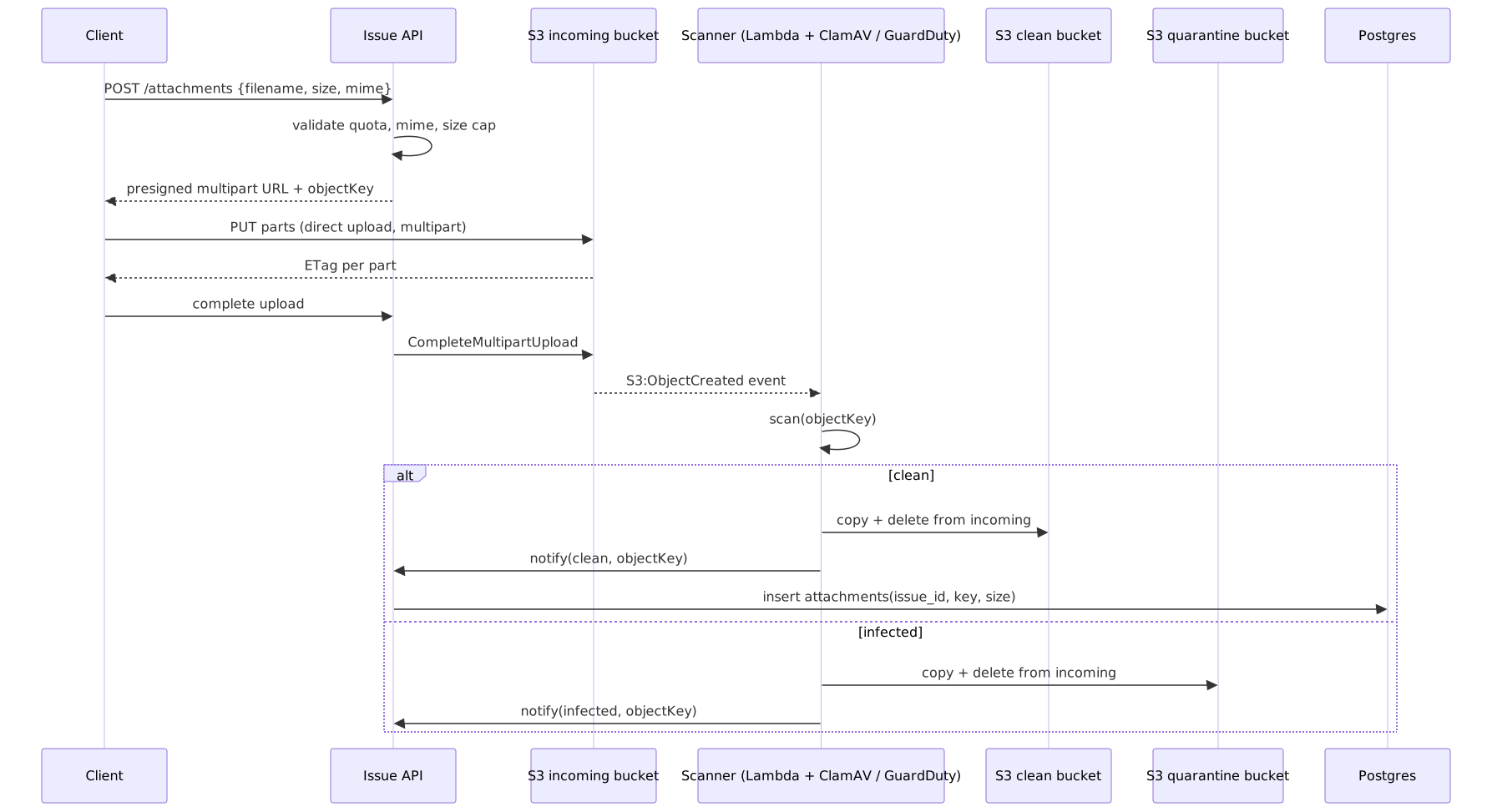
Upload contract
- Presigned multipart upload. API issues a presigned
CreateMultipartUploadURL plus per-part PUT URLs scoped to a single object key in the incoming bucket. The server never proxies the bytes; this keeps API instances small and avoids egress cost spikes. - Quota gate before signing. Tenant size + per-issue size + per-file size caps are enforced at sign time. A signed URL is the authorisation; once issued, S3 will accept the upload, so the gate must fire here.
- Mime / extension allow-list is also enforced at sign time. Block executable extensions by default; let admins opt in.
Scan and promote
S3 ObjectCreated events fan out to an antivirus stage:
| Option | Notes |
|---|---|
| Lambda + ClamAV layer | Cheap up to ~250 MB; cold-start friendly; Lambda’s /tmp is the bottleneck for huge files |
| ECS / EKS scanner pool | Required for multi-GB files (CI artefacts, screen recordings); scales horizontally |
| AWS GuardDuty Malware Protection for S3 | Managed alternative; charged per GB scanned; useful when you don’t want to operate ClamAV10 |
Clean objects are copied to the clean bucket and an attachments row is committed with the object key and content hash; infected objects are moved to a quarantine bucket and the attachment is marked infected. Only clean attachments are exposed via the download URL.
Download and serving
- Downloads are also presigned, scoped per-request to a short TTL (5 minutes), and gated by the same permission resolver as the parent issue.
- Image / PDF previews are pre-generated by an async worker writing thumbnails to a sibling key (
<key>/preview-256.webp); this keeps the issue card fast and avoids fetching multi-MB originals for the avatar grid. - Cache attachments behind a CDN with
Cache-Control: private, max-age=...and use signed URLs as the cache key — public CDN caching of private content is the classic SaaS data-leak.
Frontend Considerations
Board State Management
Normalized data structure:
interface BoardState { // Entities by ID issues: Record<string, Issue> statuses: Record<string, Status> users: Record<string, User> // Ordering columnOrder: string[] // Status IDs in display order issueOrder: Record<string, string[]> // statusId → issueIds in rank order // Pagination columnCursors: Record<string, string | null> columnHasMore: Record<string, boolean> // UI state draggingIssueId: string | null dropTargetColumn: string | null dropTargetIndex: number | null}Why normalized:
- Moving an issue updates two arrays, not nested objects
- React reference equality works for memoization
- Easier to apply real-time updates
Optimistic Updates for Drag-and-Drop
function useMoveIssue() { const [boardState, setBoardState] = useState<BoardState>(initialState) const pendingMoves = useRef<Map<string, { previousState: BoardState }>>(new Map()) const moveIssue = async (issueId: string, toStatusId: string, toIndex: number) => { const issue = boardState.issues[issueId] const fromStatusId = issue.statusId // 1. Save previous state for rollback const previousState = structuredClone(boardState) pendingMoves.current.set(issueId, { previousState }) // 2. Optimistic update setBoardState((state) => { const newState = { ...state } // Remove from old column newState.issueOrder = { ...state.issueOrder, [fromStatusId]: state.issueOrder[fromStatusId].filter((id) => id !== issueId), } // Add to new column at index const newColumnOrder = [...(state.issueOrder[toStatusId] || [])] newColumnOrder.splice(toIndex, 0, issueId) newState.issueOrder[toStatusId] = newColumnOrder // Update issue status newState.issues = { ...state.issues, [issueId]: { ...issue, statusId: toStatusId }, } return newState }) // 3. Server request const rankAfterId = toIndex > 0 ? boardState.issueOrder[toStatusId]?.[toIndex - 1] : null const rankBeforeId = boardState.issueOrder[toStatusId]?.[toIndex] || null try { const result = await api.moveIssue({ issueId, toStatusId, rankAfterId, rankBeforeId, version: issue.version, }) if (!result.success) { throw new Error(result.error?.message || "Move failed") } // 4. Update with server-assigned rank and version setBoardState((state) => ({ ...state, issues: { ...state.issues, [issueId]: { ...state.issues[issueId], ...result.issue }, }, })) pendingMoves.current.delete(issueId) } catch (error) { // 5. Rollback on failure const pending = pendingMoves.current.get(issueId) if (pending) { setBoardState(pending.previousState) pendingMoves.current.delete(issueId) } toast.error("Failed to move issue. Please try again.") } } return { boardState, moveIssue }}Real-time Update Handling
function useBoardSubscription(projectId: string) { const [boardState, setBoardState] = useState<BoardState>(initialState) useEffect(() => { const subscription = graphqlClient .subscribe({ query: BOARD_CHANGED_SUBSCRIPTION, variables: { projectId }, }) .subscribe({ next: ({ data }) => { const event = data.boardChanged setBoardState((state) => { // Skip if this is our own optimistic update if (pendingMoves.current.has(event.issue.id)) { return state } switch (event.action) { case "MOVED": return handleRemoteMove(state, event) case "UPDATED": return handleRemoteUpdate(state, event) case "CREATED": return handleRemoteCreate(state, event) case "DELETED": return handleRemoteDelete(state, event) default: return state } }) }, }) return () => subscription.unsubscribe() }, [projectId]) return boardState}function handleRemoteMove(state: BoardState, event: BoardEvent): BoardState { const { issue, previousStatusId } = event const newState = { ...state } // Remove from previous column if (previousStatusId && state.issueOrder[previousStatusId]) { newState.issueOrder = { ...state.issueOrder, [previousStatusId]: state.issueOrder[previousStatusId].filter((id) => id !== issue.id), } } // Add to new column in correct position based on rank const currentColumnOrder = state.issueOrder[issue.statusId] || [] const insertIndex = findInsertIndex(currentColumnOrder, issue.rank, state.issues) const newColumnOrder = [...currentColumnOrder] newColumnOrder.splice(insertIndex, 0, issue.id) newState.issueOrder[issue.statusId] = newColumnOrder // Update issue data newState.issues = { ...state.issues, [issue.id]: issue, } return newState}Column Virtualization
For boards with many issues per column, virtualize the issue list:
import { useVirtualizer } from '@tanstack/react-virtual';function VirtualizedColumn({ statusId, issueIds}: { statusId: string; issueIds: string[]}) { const parentRef = useRef<HTMLDivElement>(null); const virtualizer = useVirtualizer({ count: issueIds.length, getScrollElement: () => parentRef.current, estimateSize: () => 80, // Estimated card height overscan: 5 // Render 5 extra items for smooth scrolling }); return ( <div ref={parentRef} className="column-scroll-container"> <div style={{ height: `${virtualizer.getTotalSize()}px`, position: 'relative' }} > {virtualizer.getVirtualItems().map((virtualItem) => ( <div key={virtualItem.key} style={{ position: 'absolute', top: 0, left: 0, width: '100%', transform: `translateY(${virtualItem.start}px)` }} > <IssueCard issueId={issueIds[virtualItem.index]} /> </div> ))} </div> </div> );}Infrastructure
Cloud-Agnostic Components
| Component | Purpose | Options |
|---|---|---|
| API Gateway | Request routing, auth | Kong, Nginx, Traefik |
| GraphQL Server | Query execution | Apollo Server, Mercurius |
| Message Queue | Event streaming | Kafka, RabbitMQ, NATS |
| Cache | Board state, sessions | Redis, Memcached, KeyDB |
| Search | Full-text search | Elasticsearch, Meilisearch, Typesense |
| Object Storage | Attachments | MinIO, Ceph, S3-compatible |
| Database | Primary store | PostgreSQL, CockroachDB |
AWS Reference Architecture
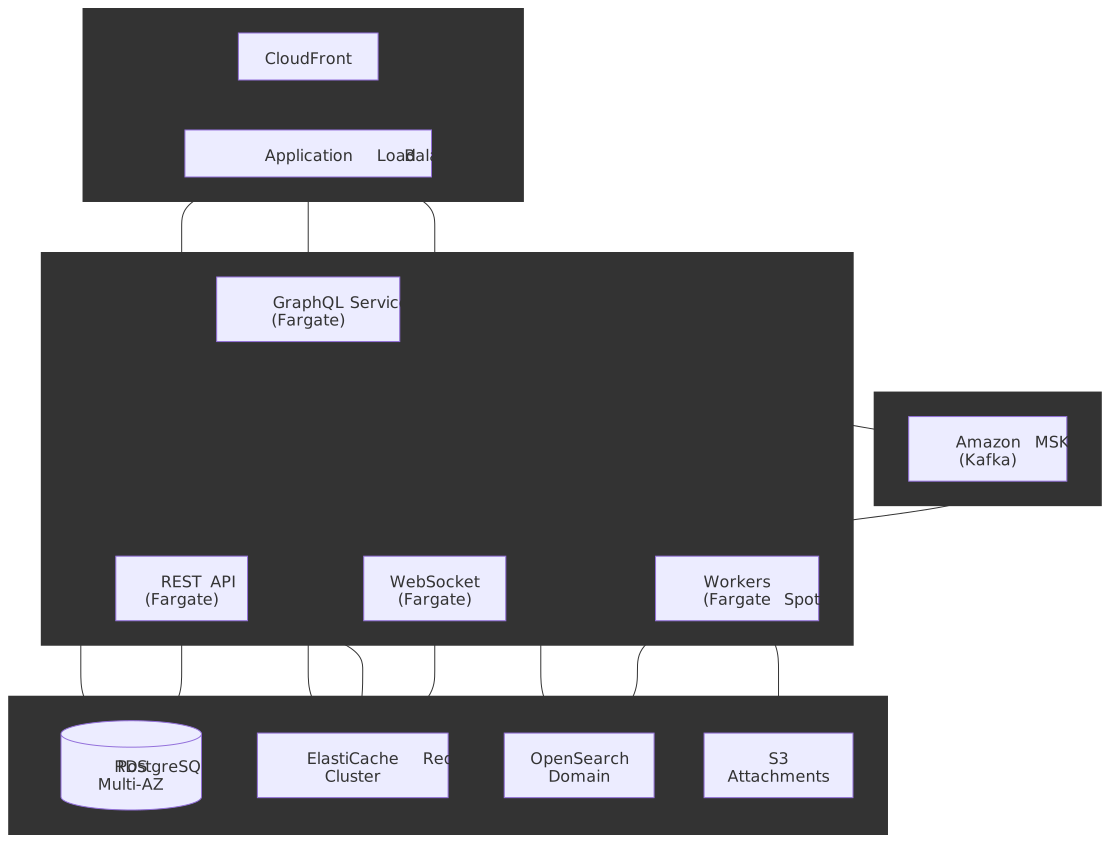
Service configurations:
| Service | Configuration | Rationale |
|---|---|---|
| GraphQL (Fargate) | 2 vCPU, 4GB RAM | Stateless, scale on request rate |
| WebSocket (Fargate) | 2 vCPU, 4GB RAM | Connection-bound, ~10K per instance |
| Workers (Spot) | 1 vCPU, 2GB RAM | Cost optimization for async |
| RDS PostgreSQL | db.r6g.xlarge Multi-AZ | Primary store, read replicas for scale |
| ElastiCache | r6g.large cluster | Board cache, pub/sub |
| OpenSearch | m6g.large.search × 3 | Search index, 3 nodes for HA |
Scaling Considerations
Read-heavy workload:
- Read replicas for PostgreSQL
- Redis caching for board state
- CDN for static assets
WebSocket connections:
- Sticky sessions to WebSocket servers
- Redis pub/sub for cross-instance broadcast
- ~10K connections per 4GB instance
Search indexing:
- Async indexing via Kafka
- Dedicated OpenSearch domain
- Index aliases for zero-downtime reindexing
Conclusion
This design provides a flexible issue tracking system with:
- O(1) reordering via LexoRank eliminates cascading updates.
- Per-column cursor pagination ensures all columns load incrementally.
- Optimistic locking handles concurrent edits with minimal conflict.
- Project-scoped workflows allow team customisation without global impact.
- Real-time sync via a server-assigned
lastSyncIdplus delta packets gives sub-300 ms propagation and a clean offline-reconnect story. - Hybrid RBAC + issue-level security mirrors how teams reason about access; permission resolution is short-circuit and cached per request.
- Outbox + CDC search ingestion keeps OpenSearch eventually consistent without dual-write drift.
- Per-channel notification fan-out with per-user digest avoids cross-channel head-of-line blocking.
- Presigned multipart uploads and an async antivirus stage keep large blobs out of the API and out of Postgres.
Key architectural decisions:
- LexoRank for ordering trades storage (growing strings) for write efficiency.
- Per-column pagination over global pagination ensures balanced board views.
- Last-write-wins is acceptable for most fields; CRDTs reserved for rich text.
- Denormalised Redis cache trades consistency for read performance.
- Server-assigned monotonic
lastSyncIdis preferred over vector / hybrid logical clocks for issue-tracker workloads where conflicts are rare.
Known limitations:
- LexoRank requires periodic rebalancing (background job).
- Last-write-wins may lose concurrent edits on the same scalar field.
- Large boards (>1000 issues) need virtualisation.
- Postgres FTS caps out around the
tsvectorsize limit; promote to OpenSearch / Typesense per tenant.
Future enhancements:
- Field-level CRDTs for conflict-free concurrent editing on scalar fields where it is worth the cost.
- GraphQL federation for microservices decomposition.
- Per-tenant search engine routing (Postgres FTS for small tenants, OpenSearch for large).
Appendix
Prerequisites
- Distributed systems fundamentals (eventual consistency, optimistic locking)
- GraphQL basics (queries, mutations, subscriptions)
- React state management patterns
- SQL and database design
Terminology
| Term | Definition |
|---|---|
| LexoRank | Lexicographically sortable string for ordering without cascading updates |
| Optimistic locking | Concurrency control using version numbers to detect conflicts |
| Workflow | Set of statuses and allowed transitions between them |
| Fractional indexing | Using real numbers (or strings) for ordering with O(1) insertions |
| Cursor-based pagination | Using opaque cursors instead of offsets for stable pagination |
| Last-write-wins (LWW) | Conflict resolution where the latest timestamp wins |
Summary
- LexoRank ordering enables O(1) drag-and-drop without updating other rows
- Per-column pagination with cursor-based approach ensures balanced board loading
- Optimistic locking with version field detects concurrent modifications
- Project-scoped workflows allow custom statuses without schema changes
- GraphQL subscriptions provide real-time updates with sub-300ms propagation
- Denormalized Redis cache trades consistency for fast board reads
References
Issue Tracker APIs:
- Jira Software Cloud REST API — board and agile endpoints
- Jira Cloud Platform REST API — issue and workflow endpoints
- Linear Developers — GraphQL API — GraphQL schema and usage
- GitHub GraphQL API — issues and projects via GraphQL
- Asana API reference — task and section ordering
Ordering Algorithms:
- Figma — Realtime Editing of Ordered Sequences — fractional indexing at scale
- Atlassian KB — Troubleshooting LexoRank System Issues — bucket model, rebalance thresholds, integrity checks
- Atlassian Greenhopper —
LexoRankBalanceOperationAPI — bucket round-robin reference rocicorp/fractional-indexing— reference implementation
Sync and Real-time:
- Scaling the Linear Sync Engine — local-first architecture (first-party)
- Reverse-engineering Linear’s sync engine — endorsed by Linear’s CTO; LWW + selective CRDT detail
- Conflict-free Replicated Data Types — CRDT resources
Permissions and AuthZ:
- JIRA Permissions General Overview — global / project / issue-level layers
- Configuring issue-level security (Jira) — security schemes and inheritance rules
- Oso — RBAC vs ABAC vs PBAC — access-control model trade-offs
Search:
- PostgreSQL — Text Search Limitations —
tsvectorand lexeme-position caps - Debezium — Outbox Event Router — outbox + CDC pattern
- Typesense vs Algolia vs Elasticsearch vs Meilisearch — engine comparison
Notifications and Attachments:
- How Slack builds smart notification systems (Courier) — presence-aware routing
- Configure file attachments (Jira Cloud) — per-tenant size and quota model
- GuardDuty Malware Protection for S3 — managed AV-on-upload
System Design:
- Optimistic Concurrency Control — concurrency patterns
- Relay Cursor Connections specification — cursor-based pagination contract
- Stripe — Idempotent requests —
Idempotency-Keysemantics - Kulkarni et al., Logical Physical Clocks and Consistent Snapshots — HLC reference
Footnotes
-
Conflict-free Replicated Data Types — overview of CRDT families used for collaborative text. ↩
-
Stripe — Idempotent requests — canonical
Idempotency-Keyheader semantics. ↩ -
Kulkarni et al., Logical Physical Clocks and Consistent Snapshots in Globally Distributed Databases (HLC). ↩
-
JIRA Permissions General Overview and Configuring issue-level security. ↩ ↩2 ↩3
-
Oso, RBAC vs ABAC vs PBAC. ↩
-
PostgreSQL docs, Text Search — Limitations. ↩
-
Debezium, Outbox Event Router. ↩
-
Slack via Courier, How Slack builds smart notification systems. ↩
-
Atlassian, Configure file attachments. ↩