Design an Email System
A comprehensive system design for building a scalable email service like Gmail or Outlook. This design addresses reliable delivery, spam filtering, conversation threading, and search at scale—handling billions of messages daily with sub-second search latency and 99.99% delivery reliability.

Abstract
Email systems solve four interconnected challenges: reliable delivery (messages must never be lost), authentication (prevent spoofing and phishing), spam filtering (99%+ spam blocked with minimal false positives), and fast retrieval (sub-second search across years of messages).
Core architectural decisions:
| Decision | Choice | Rationale |
|---|---|---|
| Inbound protocol | SMTP (RFC 5321) | Universal standard, store-and-forward resilience |
| Client access | IMAP (RFC 3501) + REST API | IMAP for desktop clients, REST for web/mobile |
| Authentication | SPF + DKIM + DMARC | Defense in depth: server auth, content auth, policy |
| Spam filtering | ML (Naive Bayes) + rules | 99.9%+ detection with low false positives |
| Message storage | Wide-column DB (Cassandra) | Time-series access pattern, horizontal scaling |
| Search | Inverted index (Elasticsearch) | Full-text search with field-specific filtering |
| Threading | RFC 5322 headers + heuristics | References header for chain, subject fallback |
Key trade-offs accepted:
- Store-and-forward adds latency (seconds to minutes) but ensures delivery reliability
- Per-message spam analysis increases CPU cost but reduces false positives vs. IP-only blocking
- Denormalized message storage increases write cost but enables fast mailbox queries
- Eventual consistency for search index (seconds delay) in exchange for write throughput
What this design optimizes:
- 99.99% delivery success rate with automatic retries
- Sub-100ms mailbox listing, sub-500ms full-text search
- Blocks 99.9% of spam while keeping false positive rate below 0.01%
- Horizontal scaling to billions of messages per day
Requirements
Functional Requirements
| Requirement | Priority | Notes |
|---|---|---|
| Send emails (SMTP submission) | Core | Authenticated sending via port 587 |
| Receive emails (SMTP inbound) | Core | Accept mail for hosted domains |
| Web/mobile mailbox access | Core | REST API for modern clients |
| IMAP access | Core | Desktop client compatibility |
| Spam filtering | Core | Block spam, phishing, malware |
| Email authentication | Core | SPF, DKIM, DMARC validation |
| Full-text search | Core | Search body, subject, participants |
| Conversation threading | Core | Group related messages |
| Labels/folders | Core | User organization |
| Attachments | Core | Store and retrieve file attachments |
| Contact autocomplete | Extended | Suggest recipients while composing |
| Scheduled send | Extended | Send at specified future time |
| Undo send | Extended | Brief cancellation window |
Non-Functional Requirements
| Requirement | Target | Rationale |
|---|---|---|
| Availability | 99.99% (4 nines) | Email is critical communication; 52 min/year downtime max |
| Delivery latency | p99 < 30 seconds | User expectation for “instant” delivery |
| Search latency | p99 < 500ms | Real-time search experience |
| Mailbox list latency | p99 < 100ms | Responsive UI on folder open |
| Spam detection rate | > 99.9% | Unusable inbox without effective filtering |
| False positive rate | < 0.01% | Legitimate mail must not be blocked |
| Message durability | 99.9999% | No email should ever be lost |
| Retention | 15+ years | Long-term archival for compliance |
Scale Estimation
Users:
- Monthly Active Users (MAU): 500M
- Daily Active Users (DAU): 200M (40% of MAU)
- Mailboxes: 500M (1 per user)
Traffic (inbound + outbound):
- Messages per user per day: 40 received, 10 sent
- Daily inbound: 500M × 40 = 20B messages/day
- Daily outbound: 200M × 10 = 2B messages/day
- Peak messages per second: 20B / 86400 × 3 (peak multiplier) = ~700K msgs/sec inbound
Storage:
- Average message size: 75KB (body + headers, excluding attachments)
- Average attachment size: 500KB (only 20% of messages have attachments)
- Daily message storage: 20B × 75KB = 1.5PB/day
- Daily attachment storage: 20B × 0.2 × 500KB = 2PB/day
- 15-year retention: ~20EB (with compression, ~5EB)
Search index:
- Index size: ~20% of message storage (text extraction)
- Daily index growth: ~300TB
Design Paths
Path A: Monolithic MTA (Traditional)
Best when:
- Smaller scale (< 1M mailboxes)
- On-premises deployment
- Simpler operations preferred
- Standard email features sufficient
Architecture:

Key characteristics:
- Single MTA handles sending, receiving, storage
- File-based storage (Maildir or mbox format)
- Local spam filtering with SpamAssassin
- IMAP server (Dovecot) for client access
Trade-offs:
- ✅ Simple deployment and operations
- ✅ Mature, well-understood stack
- ✅ Low infrastructure cost
- ❌ Vertical scaling limits (~100K mailboxes per server)
- ❌ No built-in redundancy
- ❌ Limited search capabilities
- ❌ Manual spam rule updates
Real-world example: Traditional enterprise mail servers, small hosting providers, self-hosted mail (Mail-in-a-Box, Mailcow).
Path B: Microservices with Shared Storage (Cloud-Native)
Best when:
- Large scale (10M+ mailboxes)
- Cloud deployment
- Need for advanced features (smart compose, nudges)
- Global distribution required
Architecture:

Key characteristics:
- Separate services for ingestion, storage, search, sending
- Distributed database for messages (Cassandra, Bigtable)
- Dedicated search cluster (Elasticsearch)
- Object storage for attachments
- ML-based spam filtering
Trade-offs:
- ✅ Horizontal scaling to billions of mailboxes
- ✅ Independent service scaling
- ✅ Advanced ML features possible
- ✅ Multi-region deployment
- ❌ Complex operations
- ❌ Higher infrastructure cost
- ❌ Eventual consistency challenges
Real-world example: Gmail (Bigtable + custom indexing), Outlook.com (Exchange Online + Azure), Fastmail (custom Cyrus-derived stack).
Path C: Hybrid with ESP Integration
Best when:
- Need transactional + marketing email
- Deliverability is critical concern
- Limited email infrastructure expertise
- Variable sending volumes
Architecture:

Key characteristics:
- Outbound via ESP (managed deliverability)
- Inbound via webhooks or forwarding
- ESP handles reputation, authentication, compliance
- Application focuses on business logic
Trade-offs:
- ✅ Managed deliverability and reputation
- ✅ Built-in analytics and tracking
- ✅ No MTA operations burden
- ✅ Elastic scaling
- ❌ Per-message cost at scale
- ❌ Less control over delivery timing
- ❌ Vendor lock-in concerns
- ❌ Limited for receiving mail
Real-world example: SaaS applications using SendGrid/Mailgun for transactional email, marketing platforms using dedicated ESPs.
Path Comparison
| Factor | Monolithic | Microservices | Hybrid/ESP |
|---|---|---|---|
| Scale | < 1M mailboxes | Billions | Variable |
| Complexity | Low | High | Medium |
| Cost at scale | Lower | Higher | Highest |
| Deliverability control | Full | Full | Delegated |
| Feature velocity | Slow | Fast | Medium |
| Ops burden | Medium | High | Low |
| Examples | Enterprise Exchange | Gmail, Outlook.com | SaaS apps |
This Article’s Focus
This article focuses on Path B (Microservices) because:
- Represents architecture of major email providers (Gmail, Outlook)
- Demonstrates scale challenges unique to email (spam, threading, search)
- Covers both sending and receiving infrastructure
- Addresses deliverability, authentication, and compliance concerns
High-Level Design
Inbound Mail Flow
When an external server sends mail to your domain:
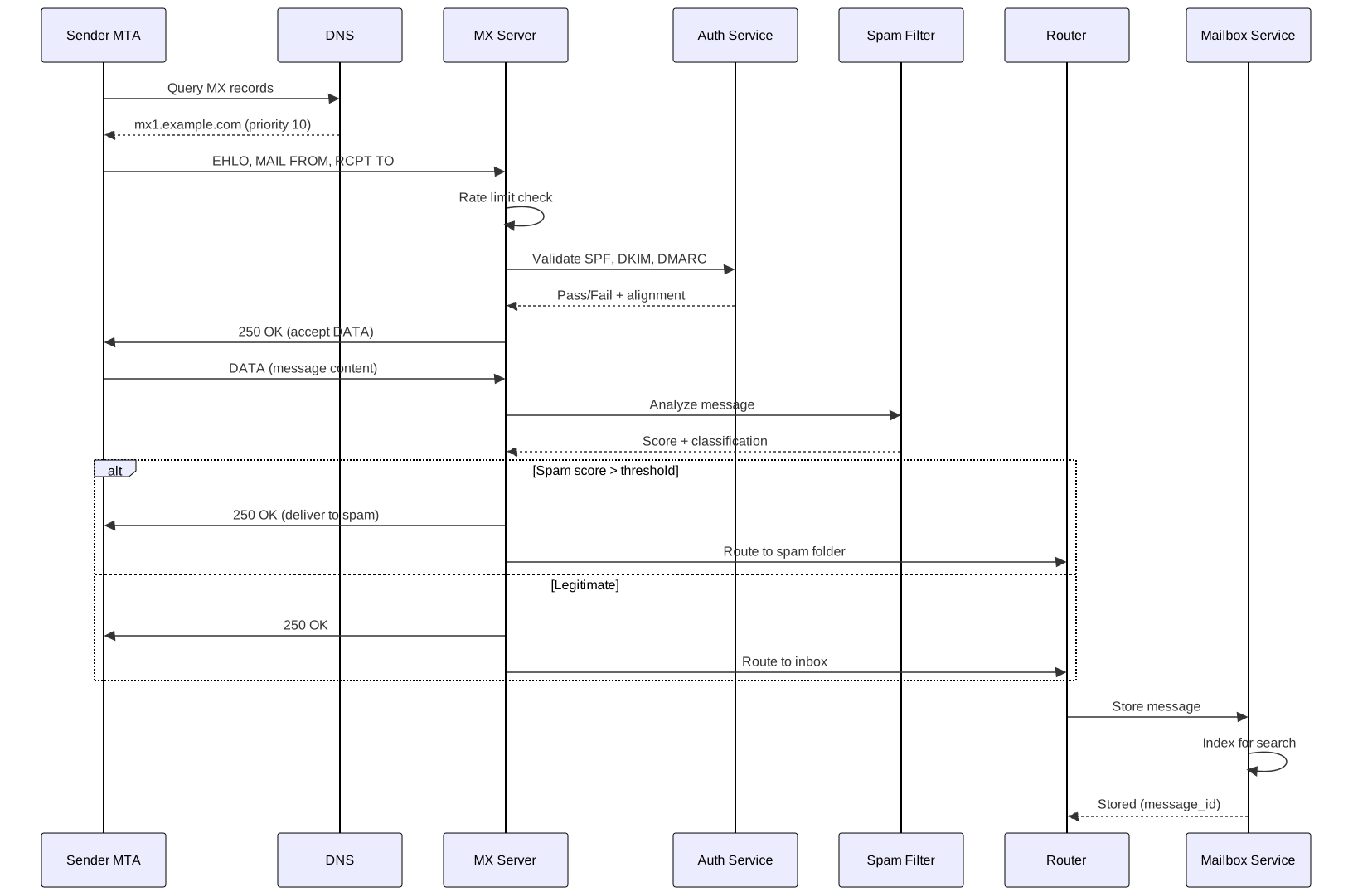
MX Server responsibilities:
- Connection handling: Accept SMTP connections, enforce rate limits
- Recipient validation: Verify mailbox exists before accepting
- Authentication checks: SPF, DKIM, DMARC validation
- Spam scoring: Pass to spam filter, act on classification
- Message queuing: Hand off to storage layer
Why accept-then-filter (not reject during SMTP)?
Rejecting spam during the SMTP transaction (5xx response) causes the sender’s MTA to generate a bounce. Spammers use forged From addresses, so bounces go to innocent parties (backscatter). Accepting and silently filtering avoids this.
Outbound Mail Flow
When a user sends an email:
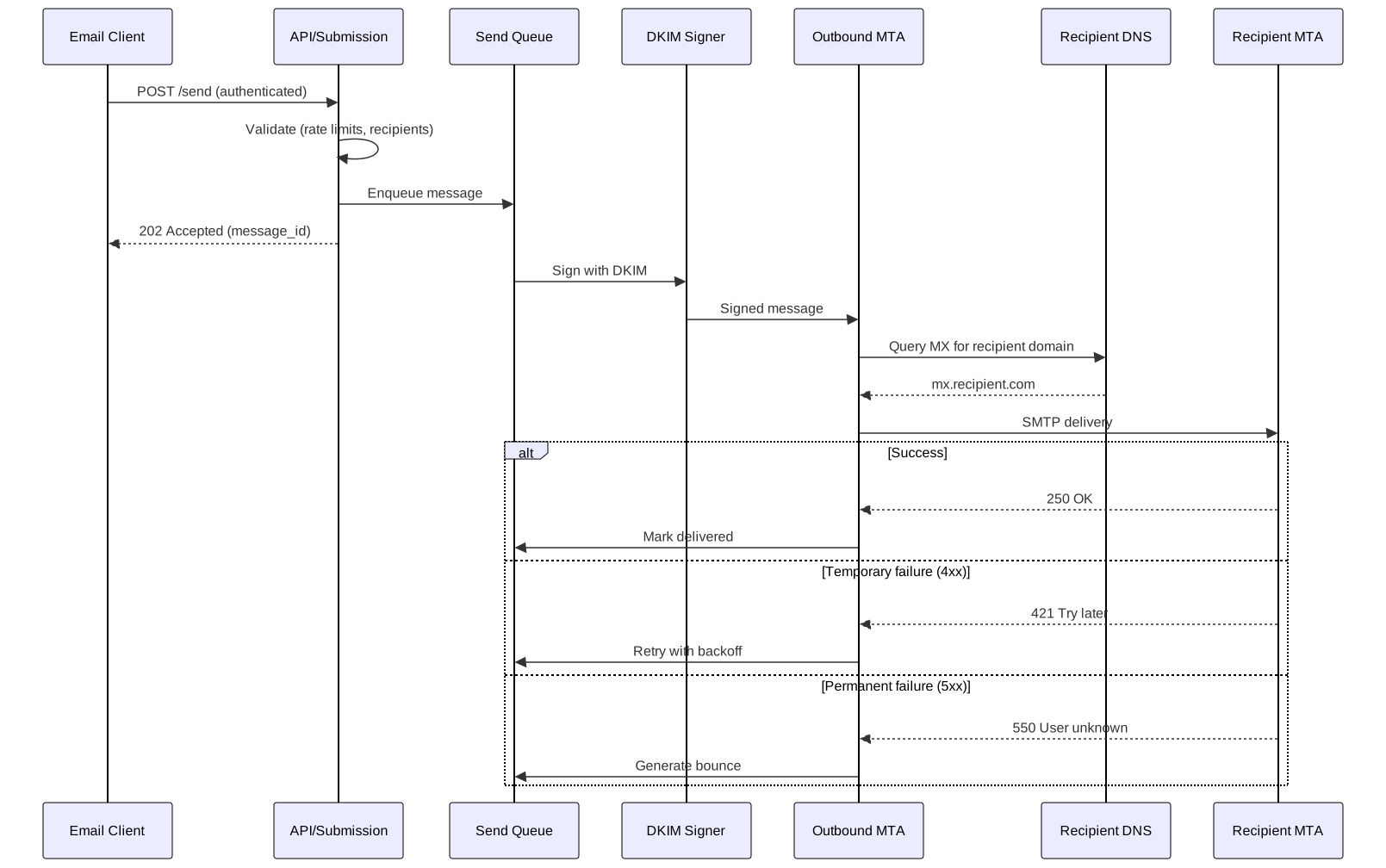
Outbound MTA responsibilities:
- DKIM signing: Cryptographically sign message for authentication
- MX resolution: Look up recipient mail servers
- Connection pooling: Reuse connections to frequent destinations
- Retry management: Exponential backoff for temporary failures
- Bounce handling: Process permanent failures, notify sender
Mailbox Service
Handles message storage, retrieval, and organization:
Key operations:
| Operation | Description | Access Pattern |
|---|---|---|
| List messages | Get messages in folder | Range query by folder + date |
| Get message | Retrieve full message | Point lookup by message_id |
| Move/label | Organize messages | Update metadata |
| Delete | Remove message | Soft delete (trash), hard delete |
| Search | Full-text query | Search index query |
| Sync | IMAP/API delta sync | Cursor-based pagination |
State per message:
interface EmailMessage { messageId: string // Globally unique (RFC 5322 Message-ID) internalId: string // System-assigned UUID mailboxId: string // Owner's mailbox threadId: string // Conversation grouping
// Headers (denormalized for queries) from: EmailAddress to: EmailAddress[] cc: EmailAddress[] subject: string date: Date // From Date header receivedAt: Date // Server receive time
// Threading headers inReplyTo?: string // Message-ID of parent references: string[] // Full ancestor chain
// Content bodyText?: string // Plain text version bodyHtml?: string // HTML version snippet: string // First 200 chars for preview
// Organization labels: string[] // User labels (INBOX, SENT, custom) isRead: boolean isStarred: boolean
// Metadata sizeBytes: number hasAttachments: boolean attachments: AttachmentRef[]
// Spam/security spamScore: number authenticationResults: AuthResult}
interface AttachmentRef { attachmentId: string filename: string contentType: string sizeBytes: number storageUrl: string // S3/GCS URL}Search Service
Full-text search across all message content:
Index structure:
interface SearchDocument { messageId: string mailboxId: string // Partition key for isolation threadId: string
// Searchable fields from: string // Tokenized email + name to: string[] cc: string[] subject: string // Tokenized body: string // Full-text, tokenized attachmentNames: string[]
// Filterable fields labels: string[] date: Date hasAttachment: boolean isRead: boolean isStarred: boolean
// Spam fields spamScore: number}Query capabilities:
- Full-text:
"quarterly report"(phrase match) - Field-specific:
from:alice@example.com - Boolean:
from:alice AND has:attachment - Date range:
after:2024/01/01 before:2024/06/01 - Labels:
label:work -label:newsletters
Threading Service
Groups related messages into conversations:
Algorithm (priority order):
- References header: RFC 5322 specifies References contains Message-IDs of all ancestors
- In-Reply-To header: Direct parent Message-ID
- Subject matching: Same subject (ignoring Re:/Fwd: prefixes) within time window
- Participant overlap: Same sender/recipients, similar timing
Threading data model:
interface Thread { threadId: string mailboxId: string
// Aggregated from messages subject: string // From most recent message snippet: string // From most recent message participants: EmailAddress[] // Union of all From/To/Cc
// Message list messageIds: string[] // Ordered by date messageCount: number
// Thread-level flags hasUnread: boolean isStarred: boolean // Any message starred labels: string[] // Union of all labels
// Timestamps oldestMessageDate: Date newestMessageDate: Date}Edge cases:
- Orphaned replies: Message references unknown Message-ID → create new thread, merge if parent arrives
- Subject collision: Different conversations with same subject → use timing + participants to disambiguate
- Long threads: Threads with 100+ messages → paginate message list
API Design
REST API
List Messages
Endpoint: GET /api/v1/mailboxes/{mailboxId}/messages
Query parameters:
| Parameter | Type | Description |
|---|---|---|
labelIds | string[] | Filter by labels (default: INBOX) |
q | string | Search query |
maxResults | int | Page size (default: 50, max: 500) |
pageToken | string | Cursor for pagination |
includeSpam | bool | Include spam folder |
Response (200 OK):
{ "messages": [ { "id": "msg_abc123", "threadId": "thread_xyz789", "labelIds": ["INBOX", "IMPORTANT"], "snippet": "Hi team, please review the Q4 report...", "from": { "email": "alice@example.com", "name": "Alice Smith" }, "to": [{ "email": "bob@example.com", "name": "Bob Jones" }], "subject": "Q4 Report Review", "date": "2024-12-15T10:30:00Z", "isRead": false, "isStarred": false, "hasAttachments": true, "sizeBytes": 125000 } ], "nextPageToken": "cursor_def456", "resultSizeEstimate": 1250}Get Full Message
Endpoint: GET /api/v1/messages/{messageId}
Query parameters:
| Parameter | Type | Description |
|---|---|---|
format | enum | minimal, metadata, full, raw |
Response (200 OK, format=full):
{ "id": "msg_abc123", "threadId": "thread_xyz789", "labelIds": ["INBOX", "IMPORTANT"], "headers": { "from": "Alice Smith <alice@example.com>", "to": "Bob Jones <bob@example.com>", "subject": "Q4 Report Review", "date": "Sun, 15 Dec 2024 10:30:00 -0800", "message-id": "<unique-id@example.com>", "in-reply-to": "<parent-id@example.com>", "references": "<grandparent@example.com> <parent-id@example.com>" }, "body": { "text": "Hi team,\n\nPlease review the attached Q4 report...", "html": "<html><body><p>Hi team,</p>..." }, "attachments": [ { "id": "att_file123", "filename": "Q4-Report.pdf", "mimeType": "application/pdf", "size": 2500000 } ], "authentication": { "spf": "pass", "dkim": "pass", "dmarc": "pass" }}Send Message
Endpoint: POST /api/v1/messages/send
Request:
{ "to": [{ "email": "bob@example.com", "name": "Bob Jones" }], "cc": [], "bcc": [], "subject": "Project Update", "body": { "text": "Hi Bob,\n\nHere's the update you requested...", "html": "<p>Hi Bob,</p><p>Here's the update you requested...</p>" }, "attachments": [ { "filename": "update.pdf", "mimeType": "application/pdf", "content": "base64-encoded-content" } ], "replyTo": "msg_parent123", "scheduledAt": null}Response (202 Accepted):
{ "id": "msg_new789", "threadId": "thread_xyz789", "labelIds": ["SENT"], "status": "queued"}Search Messages
Endpoint: GET /api/v1/mailboxes/{mailboxId}/messages?q={query}
Query examples:
from:alice@example.com- From specific sender"quarterly report"- Phrase matchhas:attachment larger:5M- With attachment > 5MBafter:2024/01/01 before:2024/06/30- Date rangein:inbox is:unread- Inbox, unread only
Response: Same format as List Messages.
Download Attachment
Endpoint: GET /api/v1/messages/{messageId}/attachments/{attachmentId}
Response: Redirects to signed URL (S3/GCS presigned URL, 15-minute expiry).
Error Responses
| Code | Error | When |
|---|---|---|
| 400 | INVALID_REQUEST | Malformed request body |
| 401 | UNAUTHORIZED | Invalid or expired token |
| 403 | FORBIDDEN | No access to mailbox |
| 404 | NOT_FOUND | Message/mailbox doesn’t exist |
| 413 | ATTACHMENT_TOO_LARGE | Attachment exceeds 25MB limit |
| 429 | RATE_LIMITED | Too many requests |
| 503 | SERVICE_UNAVAILABLE | Temporary outage |
Rate limits:
| Operation | Limit | Window |
|---|---|---|
| Send | 500 messages | per day |
| Send (paid) | 2,000 messages | per day |
| API requests | 1,000 requests | per minute |
| Search | 100 queries | per minute |
IMAP Protocol Support
For desktop client compatibility, expose standard IMAP (RFC 3501):
Supported commands:
| Command | Description |
|---|---|
LOGIN | Authenticate with username/password or OAuth |
SELECT | Open mailbox/folder |
SEARCH | Server-side search |
FETCH | Retrieve message(s) |
STORE | Update flags (read, starred, deleted) |
COPY | Copy to another folder |
EXPUNGE | Permanently delete |
IDLE | Push notifications (RFC 2177) |
IMAP-to-API mapping:
- IMAP folder → API label
- IMAP UID → API message ID
- IMAP flags → API isRead, isStarred, labels
Data Modeling
Message Storage (Cassandra)
Table design for time-series mailbox access:
-- Messages by mailbox and date (primary access pattern)CREATE TABLE messages_by_mailbox ( mailbox_id UUID, label_id TEXT, received_at TIMESTAMP, message_id UUID, thread_id UUID, from_email TEXT, from_name TEXT, subject TEXT, snippet TEXT, is_read BOOLEAN, is_starred BOOLEAN, has_attachments BOOLEAN, size_bytes INT, PRIMARY KEY ((mailbox_id, label_id), received_at, message_id)) WITH CLUSTERING ORDER BY (received_at DESC, message_id ASC);
-- Full message content (point lookup)CREATE TABLE messages ( message_id UUID PRIMARY KEY, mailbox_id UUID, thread_id UUID, raw_headers TEXT, body_text TEXT, body_html TEXT, attachments LIST<FROZEN<attachment>>, authentication_results MAP<TEXT, TEXT>, spam_score FLOAT, created_at TIMESTAMP);
-- Thread aggregationCREATE TABLE threads_by_mailbox ( mailbox_id UUID, label_id TEXT, newest_message_at TIMESTAMP, thread_id UUID, subject TEXT, snippet TEXT, message_count INT, participant_emails SET<TEXT>, has_unread BOOLEAN, PRIMARY KEY ((mailbox_id, label_id), newest_message_at, thread_id)) WITH CLUSTERING ORDER BY (newest_message_at DESC, thread_id ASC);Why Cassandra:
- Time-series optimized (messages ordered by date)
- Partition per mailbox+label enables efficient folder queries
- Linear horizontal scaling
- Tunable consistency (eventual OK for reads, quorum for writes)
Partition sizing:
- Target: < 100MB per partition
- Heavy mailboxes: Partition by (mailbox_id, label_id, month) to bound growth
- Typical mailbox: 10K messages × 1KB metadata = 10MB per label partition
User and Label Metadata (PostgreSQL)
CREATE TABLE users ( id UUID PRIMARY KEY DEFAULT gen_random_uuid(), email VARCHAR(255) UNIQUE NOT NULL, display_name VARCHAR(100), password_hash VARCHAR(255), created_at TIMESTAMPTZ DEFAULT NOW(), last_login_at TIMESTAMPTZ, settings JSONB DEFAULT '{}');
CREATE TABLE mailboxes ( id UUID PRIMARY KEY DEFAULT gen_random_uuid(), user_id UUID REFERENCES users(id) ON DELETE CASCADE, email_address VARCHAR(255) UNIQUE NOT NULL, storage_quota_bytes BIGINT DEFAULT 15000000000, -- 15GB default storage_used_bytes BIGINT DEFAULT 0, message_count INT DEFAULT 0, created_at TIMESTAMPTZ DEFAULT NOW());
CREATE TABLE labels ( id UUID PRIMARY KEY DEFAULT gen_random_uuid(), mailbox_id UUID REFERENCES mailboxes(id) ON DELETE CASCADE, name VARCHAR(100) NOT NULL, type VARCHAR(20) DEFAULT 'user', -- 'system' or 'user' color VARCHAR(7), -- Hex color for UI message_count INT DEFAULT 0, unread_count INT DEFAULT 0, UNIQUE(mailbox_id, name));
-- System labels created per mailbox: INBOX, SENT, DRAFTS, SPAM, TRASH, ALLCREATE INDEX idx_labels_mailbox ON labels(mailbox_id);Attachment Storage (S3/GCS)
Storage path convention:
s3://email-attachments/{mailbox_id}/{year}/{month}/{message_id}/{attachment_id}/{filename}Metadata in database:
CREATE TABLE attachments ( id UUID PRIMARY KEY, message_id UUID NOT NULL, filename VARCHAR(255) NOT NULL, content_type VARCHAR(100), size_bytes BIGINT, storage_bucket VARCHAR(100), storage_key TEXT, checksum_sha256 VARCHAR(64), scanned_at TIMESTAMPTZ, scan_result VARCHAR(20) -- 'clean', 'malware', 'pending');Lifecycle rules:
- Trash attachments: Delete after 30 days
- Spam attachments: Delete after 7 days
- Regular attachments: Keep until message deleted
Search Index (Elasticsearch)
Index mapping:
{ "mappings": { "properties": { "message_id": { "type": "keyword" }, "mailbox_id": { "type": "keyword" }, "thread_id": { "type": "keyword" }, "from_email": { "type": "keyword" }, "from_name": { "type": "text" }, "to_emails": { "type": "keyword" }, "to_names": { "type": "text" }, "cc_emails": { "type": "keyword" }, "subject": { "type": "text", "analyzer": "email_analyzer" }, "body": { "type": "text", "analyzer": "email_analyzer" }, "attachment_names": { "type": "text" }, "labels": { "type": "keyword" }, "date": { "type": "date" }, "size_bytes": { "type": "long" }, "has_attachment": { "type": "boolean" }, "is_read": { "type": "boolean" }, "is_starred": { "type": "boolean" } } }, "settings": { "analysis": { "analyzer": { "email_analyzer": { "type": "custom", "tokenizer": "standard", "filter": ["lowercase", "email_domain_filter"] } } } }}Index per mailbox:
- Shard by mailbox_id for query isolation
- Typical sizing: 1 shard per 10M messages
- Heavy users: Dedicated index with multiple shards
Database Selection Matrix
| Data Type | Store | Rationale |
|---|---|---|
| User profiles, labels | PostgreSQL | ACID, relational queries, moderate scale |
| Message metadata | Cassandra | Time-series access, horizontal scaling |
| Message bodies | Cassandra | Co-located with metadata |
| Attachments | S3/GCS | Object storage, CDN-compatible |
| Search index | Elasticsearch | Full-text search, aggregations |
| Session cache | Redis | Sub-ms latency, TTL support |
| Rate limiting | Redis | Atomic counters, sliding windows |
| Delivery queue | Kafka | Reliable async, retry support |
Low-Level Design
Email Authentication Pipeline
SPF Validation
Sender Policy Framework (RFC 7208) validates sending server authorization:
8 collapsed lines
interface SPFResult { result: "pass" | "fail" | "softfail" | "neutral" | "none" | "temperror" | "permerror" domain: string clientIp: string explanation?: string}
class SPFValidator { async validate(senderDomain: string, clientIp: string): Promise<SPFResult> { // 1. Query TXT record for SPF policy const spfRecord = await this.dns.queryTXT(`${senderDomain}`) // Example: "v=spf1 include:_spf.google.com ~all"
if (!spfRecord || !spfRecord.startsWith("v=spf1")) { return { result: "none", domain: senderDomain, clientIp } }
// 2. Parse and evaluate SPF mechanisms const mechanisms = this.parseSPF(spfRecord)
for (const mechanism of mechanisms) { const match = await this.evaluateMechanism(mechanism, clientIp, senderDomain) if (match) { return { result: this.qualifierToResult(mechanism.qualifier), domain: senderDomain, clientIp, } } }
// 3. Default result if no mechanism matches return { result: "neutral", domain: senderDomain, clientIp } }
private qualifierToResult(qualifier: string): SPFResult["result"] { switch (qualifier) { case "+": return "pass" case "-": return "fail" case "~": return "softfail" case "?": return "neutral" default: return "pass" } }}SPF limitations:
- Only validates envelope sender (MAIL FROM), not header From
- Breaks on forwarding (forwarding server IP not authorized)
- 10 DNS lookup limit to prevent amplification attacks
DKIM Verification
DomainKeys Identified Mail (RFC 6376) validates message integrity:
12 collapsed lines
interface DKIMResult { result: "pass" | "fail" | "neutral" | "temperror" | "permerror" domain: string selector: string headerFields: string[]}
class DKIMVerifier { async verify(message: RawEmail): Promise<DKIMResult> { // 1. Extract DKIM-Signature header const signature = this.extractDKIMSignature(message) if (!signature) { return { result: "neutral", domain: "", selector: "", headerFields: [] } }
// DKIM-Signature: v=1; a=rsa-sha256; d=example.com; s=selector1; // h=from:to:subject:date; bh=base64-body-hash; b=base64-signature
// 2. Fetch public key from DNS const publicKey = await this.dns.queryTXT(`${signature.selector}._domainkey.${signature.domain}`)
// 3. Verify body hash const bodyHash = this.computeBodyHash(message.body, signature.canonicalization.body, signature.algorithm)
if (bodyHash !== signature.bodyHash) { return { result: "fail", domain: signature.domain, selector: signature.selector, headerFields: signature.headers, } }
// 4. Verify header signature const headerData = this.canonicalizeHeaders(message.headers, signature.headers, signature.canonicalization.header)
const valid = this.verifySignature(headerData, signature.signature, publicKey, signature.algorithm)
return { result: valid ? "pass" : "fail", domain: signature.domain, selector: signature.selector, headerFields: signature.headers, } }}DKIM key considerations:
- RSA 2048-bit minimum (1024-bit deprecated)
- Selector rotation: Publish new key, sign with new selector, retire old
- Header field selection: Always include From, To, Subject, Date, Message-ID
DMARC Policy Enforcement
Domain-based Message Authentication, Reporting, and Conformance (RFC 7489):
10 collapsed lines
interface DMARCResult { result: "pass" | "fail" | "none" policy: "none" | "quarantine" | "reject" alignment: { spf: boolean dkim: boolean } domain: string}
class DMARCEvaluator { async evaluate(headerFrom: string, spfResult: SPFResult, dkimResult: DKIMResult): Promise<DMARCResult> { const fromDomain = this.extractDomain(headerFrom)
// 1. Query DMARC policy const dmarcRecord = await this.dns.queryTXT(`_dmarc.${fromDomain}`) // Example: "v=DMARC1; p=reject; rua=mailto:dmarc@example.com"
if (!dmarcRecord) { return { result: "none", policy: "none", alignment: { spf: false, dkim: false }, domain: fromDomain, } }
const policy = this.parseDMARC(dmarcRecord)
// 2. Check alignment (domain in From matches authenticated domain) const spfAligned = spfResult.result === "pass" && this.domainAligns(fromDomain, spfResult.domain, policy.aspf)
const dkimAligned = dkimResult.result === "pass" && this.domainAligns(fromDomain, dkimResult.domain, policy.adkim)
// 3. DMARC passes if either SPF or DKIM is aligned const passes = spfAligned || dkimAligned
return { result: passes ? "pass" : "fail", policy: policy.p, alignment: { spf: spfAligned, dkim: dkimAligned }, domain: fromDomain, } }
private domainAligns( fromDomain: string, authDomain: string, mode: "r" | "s", // relaxed or strict ): boolean { if (mode === "s") { return fromDomain === authDomain } // Relaxed: organizational domain must match return this.getOrgDomain(fromDomain) === this.getOrgDomain(authDomain) }}DMARC policy actions:
| Policy | Action |
|---|---|
p=none | Monitor only, no enforcement |
p=quarantine | Deliver to spam folder |
p=reject | Reject at SMTP level (or discard) |
Spam Filtering Pipeline
Multi-Stage Classification

Naive Bayes Classifier
Core spam detection algorithm:
15 collapsed lines
class NaiveBayesSpamFilter { private spamWordCounts: Map<string, number> = new Map() private hamWordCounts: Map<string, number> = new Map() private totalSpam: number = 0 private totalHam: number = 0
// Training: update counts from labeled messages train(message: string, isSpam: boolean): void { const tokens = this.tokenize(message) const counts = isSpam ? this.spamWordCounts : this.hamWordCounts
for (const token of tokens) { counts.set(token, (counts.get(token) || 0) + 1) }
if (isSpam) this.totalSpam++ else this.totalHam++ }
// Classification: compute P(spam|message) classify(message: string): { isSpam: boolean; score: number } { const tokens = this.tokenize(message)
// Prior probabilities const pSpam = this.totalSpam / (this.totalSpam + this.totalHam) const pHam = 1 - pSpam
// Log probabilities to avoid underflow let logPSpamGivenMessage = Math.log(pSpam) let logPHamGivenMessage = Math.log(pHam)
for (const token of tokens) { // P(token|spam) with Laplace smoothing const spamCount = this.spamWordCounts.get(token) || 0 const hamCount = this.hamWordCounts.get(token) || 0
const pTokenGivenSpam = (spamCount + 1) / (this.totalSpam + 2) const pTokenGivenHam = (hamCount + 1) / (this.totalHam + 2)
logPSpamGivenMessage += Math.log(pTokenGivenSpam) logPHamGivenMessage += Math.log(pTokenGivenHam) }
// Convert back to probability const maxLog = Math.max(logPSpamGivenMessage, logPHamGivenMessage) const pSpamNormalized = Math.exp(logPSpamGivenMessage - maxLog) const pHamNormalized = Math.exp(logPHamGivenMessage - maxLog)
const score = pSpamNormalized / (pSpamNormalized + pHamNormalized)
return { isSpam: score > 0.9, // High threshold to minimize false positives score, } }
private tokenize(text: string): string[] { return text .toLowerCase() .split(/\W+/) .filter((token) => token.length > 2 && token.length < 20) }}Why Naive Bayes works for spam:
- Handles high-dimensional feature spaces (thousands of words) efficiently
- Trains incrementally (user feedback updates model)
- Achieves 99%+ accuracy despite “naive” independence assumption
- Computationally cheap (O(n) where n = tokens in message)
Spammer countermeasures and responses:
| Attack | Response |
|---|---|
| Bayesian poisoning (inject ham words) | Weight tokens by information gain |
| Image-only spam | OCR text extraction |
| Character substitution (V1agra) | Normalization, character n-grams |
| URL shorteners | Expand and analyze destination |
Heuristic Rules (SpamAssassin-style)
8 collapsed lines
interface SpamRule { name: string score: number // Positive = spam indicator test: (message: ParsedEmail) => boolean}
const SPAM_RULES: SpamRule[] = [ { name: "SUBJ_ALL_CAPS", score: 1.5, test: (msg) => msg.subject === msg.subject.toUpperCase() && msg.subject.length > 10, }, { name: "FROM_DISPLAY_MISMATCH", score: 2.0, test: (msg) => { // "PayPal <hacker@evil.com>" - display name doesn't match domain const displayDomain = msg.fromName?.match(/@?(\w+\.\w+)/)?.[1] const actualDomain = msg.from.split("@")[1] return displayDomain && displayDomain !== actualDomain }, }, { name: "MISSING_DATE", score: 1.0, test: (msg) => !msg.headers["date"], }, { name: "FORGED_OUTLOOK_TAGS", score: 3.0, test: (msg) => { // Claims Outlook but missing X-MS headers const ua = msg.headers["x-mailer"] || "" return ua.includes("Outlook") && !msg.headers["x-ms-exchange-organization"] }, }, { name: "URI_MISMATCH", score: 2.5, test: (msg) => { // Link text says paypal.com but href goes elsewhere const links = extractLinks(msg.bodyHtml) return links.some((l) => l.text.includes("paypal.com") && !l.href.includes("paypal.com")) }, },]
function computeHeuristicScore(message: ParsedEmail): number { return SPAM_RULES.filter((rule) => rule.test(message)).reduce((sum, rule) => sum + rule.score, 0)}Message Delivery Queue
Outbound Queue with Retry Logic
15 collapsed lines
interface QueuedMessage { messageId: string recipientDomain: string recipientEmail: string payload: Buffer // DKIM-signed message attempts: number nextAttemptAt: Date createdAt: Date expiresAt: Date // 5 days for bounce generation}
class OutboundQueue { private readonly kafka: KafkaProducer
async enqueue(message: OutboundMessage): Promise<void> { // Partition by recipient domain for connection pooling await this.kafka.send({ topic: "outbound-mail", messages: [ { key: message.recipientDomain, value: JSON.stringify({ messageId: message.id, recipientDomain: message.recipientDomain, recipientEmail: message.recipient, payload: message.signedContent, attempts: 0, nextAttemptAt: new Date(), createdAt: new Date(), expiresAt: new Date(Date.now() + 5 * 24 * 60 * 60 * 1000), }), }, ], }) }}
class DeliveryWorker { private readonly RETRY_DELAYS = [ 0, // Immediate 5 * 60, // 5 minutes 30 * 60, // 30 minutes 2 * 60 * 60, // 2 hours 8 * 60 * 60, // 8 hours 24 * 60 * 60, // 24 hours ]
async processMessage(queued: QueuedMessage): Promise<void> { try { const mxRecords = await this.dns.queryMX(queued.recipientDomain) const sortedMx = mxRecords.sort((a, b) => a.priority - b.priority)
for (const mx of sortedMx) { try { await this.deliverToMx(mx.exchange, queued) await this.markDelivered(queued.messageId) return } catch (error) { if (this.isPermanentError(error)) { throw error // Don't try other MX servers } // Try next MX server continue } }
throw new Error("All MX servers failed") } catch (error) { if (this.isPermanentError(error) || queued.attempts >= 6) { await this.generateBounce(queued, error) await this.markFailed(queued.messageId) } else { // Schedule retry const delay = this.RETRY_DELAYS[queued.attempts + 1] || this.RETRY_DELAYS[5] await this.scheduleRetry(queued, delay) } } }
private isPermanentError(error: any): boolean { // 5xx errors are permanent (except 552 which can be transient) const code = error.responseCode return code >= 500 && code < 600 && code !== 552 }}Retry backoff schedule:
| Attempt | Delay | Cumulative |
|---|---|---|
| 1 | Immediate | 0 |
| 2 | 5 minutes | 5 min |
| 3 | 30 minutes | 35 min |
| 4 | 2 hours | 2h 35m |
| 5 | 8 hours | 10h 35m |
| 6 | 24 hours | 34h 35m |
| Bounce | - | ~5 days |
Threading Algorithm
12 collapsed lines
class ThreadingService { async assignThread(message: IncomingMessage): Promise<string> { // 1. Check References header (RFC 5322) if (message.references?.length > 0) { for (const ref of message.references.reverse()) { const existingThread = await this.findThreadByMessageId(ref) if (existingThread) { return existingThread.threadId } } }
// 2. Check In-Reply-To header if (message.inReplyTo) { const parentThread = await this.findThreadByMessageId(message.inReplyTo) if (parentThread) { return parentThread.threadId } }
// 3. Subject-based matching (fallback) const normalizedSubject = this.normalizeSubject(message.subject) const candidateThreads = await this.findThreadsBySubject(message.mailboxId, normalizedSubject, { withinDays: 30 })
// 4. Filter by participant overlap const messageParticipants = new Set([message.from, ...message.to, ...message.cc])
for (const thread of candidateThreads) { const overlap = thread.participants.filter((p) => messageParticipants.has(p)).length
// Require at least 2 participants in common if (overlap >= 2) { return thread.threadId } }
// 5. Create new thread return this.createThread(message) }
private normalizeSubject(subject: string): string { // Remove Re:, Fwd:, Fw:, etc. prefixes return subject .replace(/^(re|fwd?|aw|sv|antw):\s*/gi, "") .trim() .toLowerCase() }}Frontend Considerations
Mailbox UI State Management
Normalized store for efficient updates:
12 collapsed lines
interface MailboxState { // Normalized entities messages: Record<string, MessageSummary> threads: Record<string, Thread> labels: Record<string, Label>
// View state currentLabelId: string messageOrder: string[] // Thread IDs in current view selectedThreadIds: Set<string>
// Pagination nextPageToken: string | null isLoading: boolean
// Optimistic updates pendingUpdates: Map<string, OptimisticUpdate>}
// Update a single message without re-fetching listfunction updateMessage(state: MailboxState, messageId: string, updates: Partial<MessageSummary>) { const message = state.messages[messageId] if (!message) return state
return { ...state, messages: { ...state.messages, [messageId]: { ...message, ...updates }, }, }}Why normalized:
- Marking read: Update 1 object, not scan array
- Thread operations: Update thread aggregate, individual messages unchanged
- Labels: Add/remove from set, no array reordering
Virtualized Message List
For mailboxes with thousands of messages:
10 collapsed lines
interface VirtualListConfig { containerHeight: number itemHeight: number // Estimated row height overscan: number // Extra rows above/below viewport}
class VirtualMailboxList { private readonly PAGE_SIZE = 50
calculateVisibleRange(scrollTop: number, config: VirtualListConfig): Range { const startIndex = Math.max(0, Math.floor(scrollTop / config.itemHeight) - config.overscan)
const visibleCount = Math.ceil(config.containerHeight / config.itemHeight) const endIndex = startIndex + visibleCount + config.overscan * 2
return { start: startIndex, end: endIndex } }
// Fetch more when approaching end async onScroll(scrollTop: number, scrollHeight: number): Promise<void> { const remainingScroll = scrollHeight - scrollTop - window.innerHeight
if (remainingScroll < 500 && this.state.nextPageToken && !this.state.isLoading) { await this.fetchNextPage() } }}Compose Form with Autosave
15 collapsed lines
interface DraftState { draftId: string | null to: EmailAddress[] cc: EmailAddress[] bcc: EmailAddress[] subject: string body: string attachments: AttachmentUpload[] replyToMessageId: string | null lastSavedAt: Date | null isDirty: boolean}
class ComposeController { private autosaveTimer: NodeJS.Timeout | null = null private readonly AUTOSAVE_DELAY = 2000 // 2 seconds after last change
onFieldChange(field: keyof DraftState, value: any): void { this.state = { ...this.state, [field]: value, isDirty: true }
// Debounce autosave if (this.autosaveTimer) { clearTimeout(this.autosaveTimer) }
this.autosaveTimer = setTimeout(() => this.saveDraft(), this.AUTOSAVE_DELAY) }
async saveDraft(): Promise<void> { if (!this.state.isDirty) return
const response = await this.api.saveDraft({ draftId: this.state.draftId, to: this.state.to, subject: this.state.subject, body: this.state.body, // ... })
this.state = { ...this.state, draftId: response.draftId, lastSavedAt: new Date(), isDirty: false, } }
async send(): Promise<void> { // Optimistic: show "Sending..." immediately this.ui.showSendingIndicator()
try { await this.api.sendMessage({ draftId: this.state.draftId, to: this.state.to, // ... })
// Success: close compose, show "Sent" with undo option this.ui.showSentWithUndo(5000) // 5 second undo window this.close() } catch (error) { this.ui.showError("Failed to send. Message saved as draft.") } }}Offline Support
15 collapsed lines
class OfflineMailbox { private db: IDBDatabase // IndexedDB for local storage
async cacheMessages(messages: MessageSummary[]): Promise<void> { const tx = this.db.transaction("messages", "readwrite") for (const msg of messages) { await tx.objectStore("messages").put(msg) } }
async getMessagesOffline(labelId: string): Promise<MessageSummary[]> { const tx = this.db.transaction("messages", "readonly") const index = tx.objectStore("messages").index("by-label") return index.getAll(labelId) }
// Queue actions when offline async queueAction(action: OfflineAction): Promise<void> { const tx = this.db.transaction("pendingActions", "readwrite") await tx.objectStore("pendingActions").add({ id: crypto.randomUUID(), action, createdAt: new Date(), }) }
// Sync when back online async syncPendingActions(): Promise<void> { const tx = this.db.transaction("pendingActions", "readwrite") const actions = await tx.objectStore("pendingActions").getAll()
for (const { id, action } of actions) { try { await this.executeAction(action) await tx.objectStore("pendingActions").delete(id) } catch (error) { // Keep in queue for retry console.error("Sync failed:", action, error) } } }}Infrastructure
Cloud-Agnostic Components
| Component | Purpose | Options |
|---|---|---|
| MTA | Inbound/outbound SMTP | Postfix, Haraka, custom |
| Message queue | Delivery queue, async processing | Kafka, Pulsar, RabbitMQ |
| Message store | Email body and metadata | Cassandra, ScyllaDB, DynamoDB |
| Search | Full-text indexing | Elasticsearch, OpenSearch, Solr |
| Object store | Attachments | MinIO, Ceph, S3-compatible |
| Relational DB | User, label metadata | PostgreSQL, CockroachDB |
| Cache | Session, rate limiting | Redis, KeyDB, Dragonfly |
AWS Reference Architecture

Service configurations:
| Service | Configuration | Rationale |
|---|---|---|
| MX Pods (Fargate) | 2 vCPU, 4GB, autoscale 10-100 | SMTP is CPU-bound |
| Spam Filter | 4 vCPU, 8GB, GPU optional | ML inference |
| API Gateway | 2 vCPU, 4GB | Stateless REST/GraphQL |
| IMAP Pods | 4 vCPU, 8GB | Connection state |
| Delivery Workers | 2 vCPU, 4GB, Spot | Async, retry-tolerant |
| Keyspaces | On-demand | Managed Cassandra |
| OpenSearch | r6g.xlarge × 3 | Search workload |
| ElastiCache Redis | r6g.large cluster | Session, rate limits |
| MSK | kafka.m5.large × 3 | Message queue |
Email-Specific Infrastructure
MX record configuration:
example.com. IN MX 10 mx1.example.com.example.com. IN MX 10 mx2.example.com.example.com. IN MX 20 mx-backup.example.com.DNS records for authentication:
; SPFexample.com. IN TXT "v=spf1 ip4:203.0.113.0/24 include:_spf.google.com -all"
; DKIMselector1._domainkey.example.com. IN TXT "v=DKIM1; k=rsa; p=MIIBIjANBg..."
; DMARC_dmarc.example.com. IN TXT "v=DMARC1; p=reject; rua=mailto:dmarc@example.com"Scaling Considerations
Inbound throughput:
- Single MTA pod: ~10K messages/minute (connection limited)
- 700K messages/second peak → 4,200 MX pods minimum
- With headroom (2x): ~10,000 MX pods
Outbound throughput:
- Per destination rate limits (Gmail: 500/day per IP for new IPs)
- IP reputation warmup: Start 50/day, increase 2x daily
- Dedicated IPs per sending reputation tier
Search index lag:
- Target: < 30 seconds from receive to searchable
- Indexer throughput: ~5K documents/second per node
- 700K/second peak → 140 indexer pods
Storage growth:
- 3.5PB/day raw (messages + attachments)
- With compression (3:1): ~1.2PB/day
- 15-year retention: ~6.5EB
- Tiered storage: Hot (SSD, 30 days) → Warm (HDD, 1 year) → Cold (S3 Glacier)
Conclusion
This design provides a scalable email system with:
- Reliable delivery via store-and-forward queuing with exponential backoff retries
- Strong authentication through SPF + DKIM + DMARC defense in depth
- Effective spam filtering using ML classification with heuristic rules
- Fast retrieval via time-series optimized storage and full-text search indexing
- Conversation threading using RFC 5322 headers with subject/participant fallback
Key architectural decisions:
- Separate inbound/outbound paths allow independent scaling and different reliability requirements
- Cassandra for messages provides time-series access patterns and horizontal scaling
- Elasticsearch enables sub-second full-text search across billions of messages
- Kafka queues decouple receipt from processing, enabling async spam filtering and indexing
Known limitations:
- Search index lag (up to 30 seconds) means very recent messages may not appear in search
- Spam model requires continuous training on user feedback to adapt to new attacks
- Threading heuristics can fail for long-running threads with subject changes
- Large attachments (>25MB) require chunked upload/download handling
Future enhancements:
- AI-powered smart compose and reply suggestions
- Proactive phishing detection using link analysis
- Federated identity for cross-organization encryption
- Real-time collaborative inbox for team email
Appendix
Prerequisites
- SMTP protocol fundamentals (commands, response codes, envelope vs. headers)
- DNS record types (MX, TXT, CNAME)
- Distributed systems concepts (eventual consistency, partitioning)
- Full-text search fundamentals (inverted indexes, tokenization)
Terminology
| Term | Definition |
|---|---|
| MTA | Mail Transfer Agent; server that routes email between domains (Postfix, Sendmail) |
| MUA | Mail User Agent; email client (Outlook, Thunderbird, web interface) |
| MX record | DNS record specifying mail servers for a domain |
| Envelope | SMTP-level sender/recipient (MAIL FROM, RCPT TO); distinct from message headers |
| SPF | Sender Policy Framework; DNS-based authorization of sending IPs |
| DKIM | DomainKeys Identified Mail; cryptographic message signing |
| DMARC | Domain-based Message Authentication, Reporting, and Conformance; policy layer |
| Bounce | Non-delivery report (NDR); message informing sender of delivery failure |
| Backscatter | Bounces sent to forged sender addresses; a form of spam |
Summary
- Email systems separate inbound (MX servers, spam filtering, storage) from outbound (submission, DKIM signing, delivery queue) flows
- Authentication trifecta (SPF + DKIM + DMARC) prevents spoofing: SPF checks sending IP, DKIM verifies content integrity, DMARC enforces policy
- Naive Bayes achieves 99%+ spam detection by computing P(spam|tokens) with incremental training from user feedback
- Cassandra provides time-series optimized message storage with partition-per-mailbox for efficient folder queries
- Elasticsearch enables sub-500ms full-text search across years of messages with field-specific filtering
- Threading uses RFC 5322 References/In-Reply-To headers with subject and participant matching as fallback
References
Protocol Specifications:
- RFC 5321 - Simple Mail Transfer Protocol - SMTP specification
- RFC 3501 - IMAP4rev1 - IMAP specification
- RFC 5322 - Internet Message Format - Email message format
- RFC 2045-2049 - MIME - Multipurpose Internet Mail Extensions
Authentication Standards:
- RFC 7208 - Sender Policy Framework (SPF)
- RFC 6376 - DomainKeys Identified Mail (DKIM)
- RFC 7489 - DMARC
- NIST Technical Note 1945 - Email Authentication Mechanisms
Spam Filtering:
- A Plan for Spam - Paul Graham - Foundational Bayesian spam filtering paper
- Machine Learning for Email Spam Filtering (PMC) - ML approaches survey
Industry Implementations: