Multi-Tenant Pluggable Widget Framework
Designing a frontend framework that hosts third-party extensions—dynamically loaded at runtime based on tenant configurations. This article covers the architectural decisions behind systems like VS Code extensions, Figma plugins, and Shopify embedded apps: module loading strategies (Webpack Module Federation vs SystemJS), sandboxing techniques (iframe, Shadow DOM, Web Workers, WASM), manifest and registry design, the host SDK API contract, and multi-tenant orchestration that resolves widget implementations per user or organization.

Abstract
A pluggable widget framework is a microkernel architecture: minimal core system + dynamically loaded extensions. The core decisions are:
-
Loading strategy: How does remote code enter the host?
- Module Federation: optimal sharing, webpack-only, trusted code
- SystemJS/import maps: standards-based, flexible, moderate performance
- iframe: complete isolation, highest security, communication overhead
-
Isolation boundary: How much can widgets affect the host?
- Same-origin (Module Federation): full DOM access, shared memory—trust required
- iframe sandbox: separate browsing context, postMessage only
- Shadow DOM: CSS isolation only, same JS context
- WASM sandbox (Figma model): isolated JS engine, strongest security
-
Extension points: Where can widgets appear?
- Contribution points: named slots in the UI that widgets register for
- Declarative via manifest: host reads manifest, renders widget in appropriate slot
-
Multi-tenancy: How do different tenants get different widgets?
- Tenant config service: maps tenant ID → enabled widget IDs
- Registry resolution: widget ID → implementation URL
- Feature flags: toggle widgets per tenant without redeployment
Key numbers:
| Aspect | Module Federation | iframe | WASM Sandbox |
|---|---|---|---|
| Load overhead | ~50ms (shared deps) | ~100-200ms (full context) | ~300-500ms (engine init) |
| Memory per widget | Shared with host | Separate heap (~10-50MB) | Separate (~5-20MB) |
| Communication latency | Microseconds | ~1-5ms (postMessage) | ~0.5-2ms (WASM boundary) |
| Security | Same origin trust | Strong isolation | Strongest isolation |
The Challenge
Why Build a Widget Framework?
Extensibility without deployments: Third parties add features without modifying host code. VS Code has 40,000+ extensions; the core team didn’t build them.
Multi-tenant customization: Enterprise SaaS customers demand unique workflows. Widget A for Tenant X, Widget B for Tenant Y—without forking the codebase.
Ecosystem growth: A platform with extension capabilities attracts developers who build features you never considered.
Browser Constraints
Main thread budget: Loading and initializing widgets competes with the host application. A poorly designed loader blocks the UI during startup.
Memory limits: Each iframe creates a separate JavaScript heap. Loading 10 widgets as iframes can consume 100-500MB—problematic on mobile devices (50-100MB practical limit).
Network overhead: Fetching widget bundles from different origins means separate HTTP connections, no shared caching of common dependencies.
Security Requirements
Untrusted code execution: Third-party developers may write malicious or buggy code. Without isolation, a widget can:
- Access user credentials stored in localStorage
- Modify any DOM element, including login forms
- Make requests to any origin (CSRF)
- Crash the host application
Defense in depth:
| Threat | Mitigation |
|---|---|
| DOM manipulation | iframe sandbox, separate browsing context |
| CSS pollution | Shadow DOM, iframe |
| Data exfiltration | CSP, sandbox restrictions |
| CPU exhaustion | Web Worker isolation, timeout enforcement |
| Memory leaks | Widget lifecycle management, unload on deactivation |
Scale Factors
| Factor | Small Scale | Large Scale |
|---|---|---|
| Widgets loaded | 1-5 | 50-100 |
| Tenants | 1-10 | 10,000+ |
| Widget registry size | 10-20 widgets | 1,000+ widgets |
| Update frequency | Weekly | Continuous |
| Widget developers | Internal team | Third-party ecosystem |
Design Paths
Path 1: Webpack Module Federation

How it works:
Module Federation (Webpack 5+) allows separate webpack builds to share code at runtime. The host declares remotes (external builds to consume) and shared dependencies (libraries to deduplicate).
5 collapsed lines
const { ModuleFederationPlugin } = require("webpack").container
module.exports = { // ... other config plugins: [ new ModuleFederationPlugin({ name: "host", remotes: { // Static remotes (known at build time) widgetA: "widgetA@https://cdn.example.com/widget-a/remoteEntry.js", // Dynamic remotes resolved at runtime widgetB: `promise new Promise(resolve => { const remoteUrl = window.__WIDGET_REGISTRY__["widgetB"]; const script = document.createElement("script"); script.src = remoteUrl; script.onload = () => resolve(window.widgetB); document.head.appendChild(script); })`, }, shared: { react: { singleton: true, requiredVersion: "^18.0.0" }, "react-dom": { singleton: true, requiredVersion: "^18.0.0" }, }, }),2 collapsed lines
],}5 collapsed lines
const { ModuleFederationPlugin } = require("webpack").container
module.exports = { plugins: [ new ModuleFederationPlugin({ name: "widgetA", filename: "remoteEntry.js", exposes: { "./Widget": "./src/Widget", // What this remote offers }, shared: { react: { singleton: true, requiredVersion: "^18.0.0" }, "react-dom": { singleton: true, requiredVersion: "^18.0.0" }, }, }), ],}Runtime loading:
3 collapsed lines
import React, { Suspense, lazy } from "react";
// Dynamic import of federated moduleconst WidgetA = lazy(() => import("widgetA/Widget"));
export function WidgetSlot({ widgetId }: { widgetId: string }) { // In production: resolve widget ID to remote dynamically return ( <Suspense fallback={<WidgetSkeleton />}> <WidgetA /> </Suspense> );}Dependency sharing mechanics:
- Host starts, loads
remoteEntry.jsfor each remote - Remote entry registers available modules and shared dependencies
- When host imports a remote module, federation checks shared scope
- If compatible version exists, reuse; otherwise, load remote’s bundled copy
singleton: trueensures only one instance (critical for React context)
Best for:
- Trusted first-party widgets (internal teams)
- Micro-frontend architectures with shared design systems
- Performance-critical scenarios where bundle size matters
Device/network profile:
- Works well on: Desktop, fast networks, trusted widget sources
- Struggles on: Untrusted third-party code (no isolation), slow networks (remote entry overhead)
Implementation complexity:
| Aspect | Effort |
|---|---|
| Initial setup | High (webpack config complexity) |
| Adding new widgets | Low (configure remote URL) |
| Version management | Medium (shared version negotiation) |
| Security | Low (same-origin trust model) |
Real-world example:
Shopify’s Hydrogen uses Module Federation for composable storefronts. Multiple teams build sections independently; the storefront shell loads them at runtime with shared Remix/React dependencies.
Trade-offs:
- Shared dependencies reduce duplicate downloads (30-50% smaller total payload)
- Same JavaScript context—widgets can access host globals
- Webpack-only (no native Vite support as of 2025; use
vite-plugin-federation) - Version mismatches cause runtime errors
Security consideration: Module Federation provides no isolation. Widgets execute in the same origin with full DOM access. Use only for trusted code or combine with additional sandboxing.
Path 2: iframe Sandbox

How it works:
The <iframe sandbox> attribute creates a separate browsing context with restricted capabilities. By default, a sandboxed iframe:
- Cannot execute scripts
- Cannot submit forms
- Cannot access parent DOM
- Cannot navigate the top-level browsing context
- Cannot use plugins
Capabilities are granted explicitly:
<iframe src="https://widget.example.com/widget-a" sandbox="allow-scripts allow-same-origin" allow="clipboard-read; clipboard-write" csp="script-src 'self'; style-src 'self' 'unsafe-inline'"></iframe>Sandbox attribute options:
| Attribute | Grants |
|---|---|
allow-scripts | JavaScript execution |
allow-same-origin | Treats content as same origin (dangerous with allow-scripts) |
allow-forms | Form submission |
allow-popups | Window.open(), target=“_blank” |
allow-modals | alert(), confirm(), prompt() |
allow-top-navigation | Navigate parent window |
Security warning: Never combine allow-scripts and allow-same-origin for untrusted content. The iframe can remove its own sandbox attribute and escape.
Communication via postMessage:
interface WidgetMessage { type: string requestId: string payload: unknown}
class WidgetBridge { private iframe: HTMLIFrameElement private pendingRequests = new Map<string, { resolve: Function; reject: Function }>() private trustedOrigin: string
constructor(iframe: HTMLIFrameElement, trustedOrigin: string) { this.iframe = iframe this.trustedOrigin = trustedOrigin window.addEventListener("message", this.handleMessage) }
private handleMessage = (event: MessageEvent<WidgetMessage>) => { // CRITICAL: Always validate origin if (event.origin !== this.trustedOrigin) return
const { type, requestId, payload } = event.data
if (type === "API_RESPONSE" && this.pendingRequests.has(requestId)) { const { resolve } = this.pendingRequests.get(requestId)! this.pendingRequests.delete(requestId) resolve(payload) } }
async call(method: string, args: unknown[]): Promise<unknown> { const requestId = crypto.randomUUID()
return new Promise((resolve, reject) => { this.pendingRequests.set(requestId, { resolve, reject })
this.iframe.contentWindow?.postMessage( { type: "API_CALL", requestId, method, args }, this.trustedOrigin, // CRITICAL: Specify target origin )
// Timeout to prevent hanging requests setTimeout(() => { if (this.pendingRequests.has(requestId)) { this.pendingRequests.delete(requestId) reject(new Error(`Widget call timed out: ${method}`)) } }, 5000) }) }}// Inside the iframe: SDK shim that talks to hostconst hostSDK = { async showNotification(message: string): Promise<void> { return callHost("showNotification", [message]) },
async getData(key: string): Promise<unknown> { return callHost("getData", [key]) },}
function callHost(method: string, args: unknown[]): Promise<unknown> { const requestId = crypto.randomUUID()
return new Promise((resolve) => { const handler = (event: MessageEvent) => { if (event.data.requestId === requestId && event.data.type === "API_RESPONSE") { window.removeEventListener("message", handler) resolve(event.data.payload) } } window.addEventListener("message", handler)
window.parent.postMessage( { type: "API_CALL", requestId, method, args }, "*", // Widget doesn't know host origin; host validates on receive ) })}
// Expose SDK to widget code;(window as any).hostSDK = hostSDKBest for:
- Untrusted third-party widgets
- Payment forms, authentication widgets (PCI/SOC2 compliance)
- Widgets that need strong isolation guarantees
Device/network profile:
- Works well on: All devices, any network (self-contained)
- Struggles on: Mobile (memory overhead), many simultaneous widgets
Implementation complexity:
| Aspect | Effort |
|---|---|
| Initial setup | Medium (iframe + postMessage) |
| Adding new widgets | Low (point to URL) |
| Performance tuning | High (message serialization overhead) |
| Security | Low (browser provides isolation) |
Real-world example:
Figma plugins use iframe for UI rendering combined with a WASM sandbox for document manipulation. The iframe displays the plugin UI; a separate QuickJS WASM sandbox runs the logic that reads/writes the Figma document.
Trade-offs:
- Strongest browser-native isolation
- Each iframe creates separate JS heap (10-50MB overhead)
- postMessage serialization adds 1-5ms latency per call
- No shared dependencies (duplicate React, etc.)
- Cross-origin communication requires careful origin validation
Path 3: Shadow DOM + Web Components

How it works:
Shadow DOM creates an encapsulated DOM subtree with its own style scope. Styles inside don’t leak out; external styles don’t leak in.
class WidgetContainer extends HTMLElement { private shadow: ShadowRoot
constructor() { super() // 'closed' prevents external access to shadow root this.shadow = this.attachShadow({ mode: "closed" }) }
async loadWidget(widgetUrl: string) { // Fetch widget bundle const response = await fetch(widgetUrl) const widgetCode = await response.text()
// Create isolated style scope const style = document.createElement("style") style.textContent = await this.fetchWidgetStyles(widgetUrl)
// Create widget container const container = document.createElement("div") container.className = "widget-root"
this.shadow.appendChild(style) this.shadow.appendChild(container)
// Execute widget code in this context // WARNING: No JS isolation—widget code runs in host context const widgetModule = new Function("container", "hostSDK", widgetCode) widgetModule(container, window.hostSDK) }}
customElements.define("widget-container", WidgetContainer)CSS isolation guarantees:
- Widget styles scoped to shadow root
- Host styles don’t affect widget (unless using CSS custom properties)
- Widget cannot style host elements
::part()and CSS variables allow controlled customization
/* Widget internal styles (inside shadow DOM) */.button { /* This .button won't conflict with host's .button */ background: var(--widget-primary, blue); /* Customizable via CSS var */}/* Host can customize via CSS custom properties */widget-container { --widget-primary: red; /* Passes through shadow boundary */}Best for:
- Design system components with style encapsulation
- Trusted widgets that need CSS isolation but not JS isolation
- Web Components-based architectures
Device/network profile:
- Works well on: All modern browsers, any device
- Struggles on: Scenarios requiring JavaScript isolation
Implementation complexity:
| Aspect | Effort |
|---|---|
| Initial setup | Low (native browser API) |
| CSS isolation | Low (automatic) |
| JS isolation | None (same context) |
| Framework integration | Medium (React/Vue wrappers needed) |
Trade-offs:
- Lightweight: No separate heap or context
- CSS isolation is complete
- No JavaScript isolation—widgets can access globals, DOM, etc.
- Requires combining with other techniques for untrusted code
Path 4: WASM Sandbox (Figma Model)

How it works:
Figma’s approach: compile a JavaScript engine (QuickJS) to WebAssembly. Plugin code runs inside this embedded JS engine—completely isolated from the host JavaScript context.
Why QuickJS + WASM?
- No eval(): Running untrusted JS usually requires
eval()ornew Function(), which CSP blocks. QuickJS interprets JS without these. - Capability-based security: WASM provides no default I/O. Plugin only accesses what the host explicitly provides via API.
- Deterministic execution: Same code, same inputs → same outputs. Useful for collaborative features.
5 collapsed lines
import { newQuickJSWASMModule, QuickJSWASMModule, QuickJSContext } from "quickjs-emscripten"
class PluginSandbox { private vm: QuickJSWASMModule private context: QuickJSContext
async initialize() { this.vm = await newQuickJSWASMModule() this.context = this.vm.newContext()
// Expose host API to sandbox this.exposeHostAPI() }
private exposeHostAPI() { const hostAPI = this.context.newObject()
// Expose showNotification const showNotification = this.context.newFunction("showNotification", (msgHandle) => { const message = this.context.getString(msgHandle) // Call actual host notification system window.hostNotifications.show(message) return this.context.undefined })
this.context.setProp(hostAPI, "showNotification", showNotification) this.context.setProp(this.context.global, "figma", hostAPI)
showNotification.dispose() hostAPI.dispose() }
async executePlugin(code: string): Promise<void> { const result = this.context.evalCode(code)11 collapsed lines
if (result.error) { const error = this.context.dump(result.error) result.error.dispose() throw new Error(`Plugin error: ${JSON.stringify(error)}`) } result.value.dispose() }
dispose() { this.context.dispose() this.vm.dispose() }}Two-part plugin architecture (Figma):
- UI iframe: Renders plugin UI using HTML/CSS. Communicates with logic via postMessage.
- WASM sandbox: Runs plugin logic. Has access to Figma document API. No DOM access.
This separation prevents plugins from both manipulating the document AND accessing arbitrary DOM.
Best for:
- Highest security requirements
- Platforms where plugins manipulate sensitive documents
- When you cannot trust third-party code at all
Device/network profile:
- Works well on: Desktop, modern mobile (WASM support universal since 2017)
- Struggles on: Low-memory devices (WASM instance overhead), very complex plugins (QuickJS slower than V8)
Implementation complexity:
| Aspect | Effort |
|---|---|
| Initial setup | Very High (custom sandbox) |
| API surface design | High (every API must be explicitly exposed) |
| Performance tuning | High (WASM boundary crossing) |
| Security | Low (isolation is architectural) |
Trade-offs:
- Strongest isolation (capability-based security)
- 300-500ms initialization overhead (loading WASM module)
- QuickJS performance ~10-30x slower than V8
- Complex to implement; consider using existing libraries (quickjs-emscripten)
- Plugin capabilities are exactly what you expose—no accidental surface
Decision Matrix
| Factor | Module Federation | iframe Sandbox | Shadow DOM | WASM Sandbox |
|---|---|---|---|---|
| JS Isolation | None | Strong | None | Strongest |
| CSS Isolation | None | Complete | Complete | N/A (no DOM) |
| Shared dependencies | Yes | No | Manual | No |
| Load time | Fast (50ms) | Medium (100-200ms) | Fast (10ms) | Slow (300-500ms) |
| Memory per widget | Shared | 10-50MB | Shared | 5-20MB |
| Communication | Direct | postMessage (1-5ms) | Direct | WASM boundary (~1ms) |
| Trust model | Same-origin | Untrusted | Same-origin | Untrusted |
| Browser support | Webpack only | Universal | Universal | Universal |
Decision Framework

The Registry and Manifest
Manifest Structure
Every widget declares its capabilities, entry points, and requirements via a manifest file. This enables the host to:
- Validate widget compatibility before loading
- Render UI contributions without loading widget code
- Enforce permission boundaries
{ "$schema": "https://widgets.example.com/manifest.schema.json", "id": "com.example.video-player", "name": "Premium Video Player", "version": "2.1.0", "description": "HD video player with adaptive streaming", "author": { "name": "Example Corp", "email": "widgets@example.com", "url": "https://example.com" },
"host": { "minVersion": "3.0.0", "maxVersion": "4.x" },
"main": "./dist/widget.js", "styles": "./dist/widget.css", "remoteEntry": "./dist/remoteEntry.js",
"contributes": { "slots": [ { "id": "content-area", "component": "VideoPlayer", "props": { "defaultQuality": "auto" } } ], "commands": [ { "id": "video-player.play", "title": "Play Video" }, { "id": "video-player.pause", "title": "Pause Video" } ], "settings": [ { "id": "video-player.autoplay", "type": "boolean", "default": false, "title": "Autoplay videos" } ] },
"permissions": ["storage.local", "network.fetch", "ui.notifications"],
"dependencies": { "react": "^18.0.0", "react-dom": "^18.0.0" },
"activationEvents": ["onSlot:content-area", "onCommand:video-player.play"],
"sandbox": { "type": "iframe", "allow": ["scripts", "forms"], "csp": "script-src 'self'; style-src 'self' 'unsafe-inline'" }}Key manifest fields:
| Field | Purpose |
|---|---|
id | Globally unique identifier (reverse domain notation) |
host.minVersion | Minimum host version for compatibility |
main | Entry point for widget code |
remoteEntry | Module Federation entry (if applicable) |
contributes.slots | UI contribution points |
contributes.commands | Registered commands |
permissions | Required host capabilities |
activationEvents | When to load the widget |
sandbox | Isolation requirements |
Contribution Points (Slots)
Contribution points are named locations in the host UI where widgets can render content. The host declares available slots; widgets register for slots they want to fill.
interface Slot { id: string multiple: boolean // Can multiple widgets contribute? props: Record<string, unknown> // Props passed to widget}
interface SlotContribution { widgetId: string slotId: string component: string priority: number}
class SlotRegistry { private slots = new Map<string, Slot>() private contributions = new Map<string, SlotContribution[]>()
registerSlot(slot: Slot) { this.slots.set(slot.id, slot) }
registerContribution(contribution: SlotContribution) { const existing = this.contributions.get(contribution.slotId) || [] existing.push(contribution) existing.sort((a, b) => b.priority - a.priority) this.contributions.set(contribution.slotId, existing) }
getContributionsForSlot(slotId: string): SlotContribution[] { const slot = this.slots.get(slotId) if (!slot) return []
const contributions = this.contributions.get(slotId) || [] return slot.multiple ? contributions : contributions.slice(0, 1) }}function ContributionPoint({ slotId }: { slotId: string }) { const contributions = useSlotContributions(slotId)
return ( <div className="contribution-point" data-slot={slotId}> {contributions.map((contribution) => ( <WidgetRenderer key={contribution.widgetId} widgetId={contribution.widgetId} component={contribution.component} /> ))} </div> )}Slot patterns from VS Code:
| Slot Type | Example | Behavior |
|---|---|---|
viewContainer | Sidebar panels | Multiple widgets, tabbed |
view | Tree views | Single widget per view |
statusBarItem | Status bar | Multiple, ordered by priority |
menu | Context menus | Multiple, grouped |
Widget Registry
The registry is a service that maps widget IDs to their manifests and entry points. It handles:
- Widget discovery and search
- Version resolution
- Dependency validation
- URL resolution for loading
interface RegistryEntry { id: string manifest: WidgetManifest versions: { version: string url: string checksum: string publishedAt: Date }[]}
interface ResolvedWidget { id: string version: string manifestUrl: string entryUrl: string checksum: string}
class WidgetRegistry { private baseUrl: string private cache = new Map<string, RegistryEntry>()
constructor(baseUrl: string) { this.baseUrl = baseUrl }
async resolve(widgetId: string, versionConstraint: string = "latest"): Promise<ResolvedWidget> { // Fetch registry entry const entry = await this.fetchEntry(widgetId)
// Resolve version constraint (semver) const version = this.resolveVersion(entry.versions, versionConstraint) if (!version) { throw new Error(`No version matching ${versionConstraint} for ${widgetId}`) }
// Validate host compatibility const manifest = await this.fetchManifest(version.url) this.validateHostCompatibility(manifest)
return { id: widgetId, version: version.version, manifestUrl: `${version.url}/manifest.json`, entryUrl: `${version.url}/${manifest.main}`, checksum: version.checksum, } }
private async fetchEntry(widgetId: string): Promise<RegistryEntry> { if (this.cache.has(widgetId)) { return this.cache.get(widgetId)! }
const response = await fetch(`${this.baseUrl}/widgets/${widgetId}`) if (!response.ok) { throw new Error(`Widget not found: ${widgetId}`) }
const entry = await response.json() this.cache.set(widgetId, entry) return entry }
private resolveVersion( versions: RegistryEntry["versions"], constraint: string, ): RegistryEntry["versions"][0] | undefined { if (constraint === "latest") { return versions[0] // Assumes sorted by version desc }
// Semver matching return versions.find((v) => satisfies(v.version, constraint)) }
private validateHostCompatibility(manifest: WidgetManifest) { const hostVersion = getHostVersion() const { minVersion, maxVersion } = manifest.host
if (minVersion && !gte(hostVersion, minVersion)) { throw new Error(`Widget requires host >= ${minVersion}`) } if (maxVersion && !satisfies(hostVersion, maxVersion)) { throw new Error(`Widget incompatible with host ${hostVersion}`) } }}Registry API design:
GET /widgets # List all widgets (paginated)GET /widgets/{id} # Get widget metadataGET /widgets/{id}/versions # List versionsGET /widgets/{id}@{version} # Get specific versionPOST /widgets # Publish new widget (authenticated)DELETE /widgets/{id}@{version} # Unpublish version (admin)Host SDK (Extension API)
API Contract
The host exposes a controlled API surface that widgets use to interact with the system. This creates a stable contract and security boundary.
interface HostSDK { // Lifecycle readonly version: string onActivate(callback: () => void): Disposable onDeactivate(callback: () => void): Disposable
// UI showNotification(options: NotificationOptions): Promise<void> showModal(options: ModalOptions): Promise<ModalResult> registerCommand(id: string, handler: CommandHandler): Disposable
// Data getData<T>(key: string): Promise<T | undefined> setData<T>(key: string, value: T): Promise<void> subscribeToData<T>(key: string, callback: (value: T) => void): Disposable
// Storage (widget-scoped) storage: { get<T>(key: string): Promise<T | undefined> set<T>(key: string, value: T): Promise<void> delete(key: string): Promise<void> }
// Network (proxied through host) fetch(url: string, options?: RequestInit): Promise<Response>
// Events onEvent(eventType: string, handler: EventHandler): Disposable emitEvent(eventType: string, payload: unknown): void}
interface Disposable { dispose(): void}
interface NotificationOptions { type: "info" | "warning" | "error" message: string duration?: number actions?: { label: string; action: () => void }[]}SDK Implementation for iframe Widgets
class IframeSDKHost { private iframe: HTMLIFrameElement private widgetId: string private handlers = new Map<string, Function>()
constructor(iframe: HTMLIFrameElement, widgetId: string) { this.iframe = iframe this.widgetId = widgetId window.addEventListener("message", this.handleMessage) }
private handleMessage = async (event: MessageEvent) => { // Validate origin matches expected widget origin if (!this.isValidOrigin(event.origin)) return
const { type, requestId, method, args } = event.data if (type !== "SDK_CALL") return
try { const result = await this.executeMethod(method, args) this.respond(requestId, { success: true, result }) } catch (error) { this.respond(requestId, { success: false, error: String(error) }) } }
private async executeMethod(method: string, args: unknown[]): Promise<unknown> { // Permission check const permission = this.getRequiredPermission(method) if (permission && !this.hasPermission(permission)) { throw new Error(`Permission denied: ${permission}`) }
switch (method) { case "showNotification": return this.showNotification(args[0] as NotificationOptions)
case "getData": return this.getData(args[0] as string)
case "setData": return this.setData(args[0] as string, args[1])
case "storage.get": return this.widgetStorage.get(this.widgetId, args[0] as string)
case "fetch": // Proxy fetch to enforce CORS and CSP return this.proxyFetch(args[0] as string, args[1] as RequestInit)
default: throw new Error(`Unknown method: ${method}`) } }
private respond(requestId: string, response: unknown) { this.iframe.contentWindow?.postMessage( { type: "SDK_RESPONSE", requestId, ...response }, "*", // iframe origin already validated on receive ) }
private getRequiredPermission(method: string): string | undefined { const permissionMap: Record<string, string> = { showNotification: "ui.notifications", fetch: "network.fetch", "storage.get": "storage.local", "storage.set": "storage.local", } return permissionMap[method] }}SDK Shim for Widget Side
class WidgetSDK implements HostSDK { private pendingRequests = new Map< string, { resolve: (value: unknown) => void reject: (error: Error) => void } >()
constructor() { window.addEventListener("message", this.handleResponse) }
private handleResponse = (event: MessageEvent) => { const { type, requestId, success, result, error } = event.data if (type !== "SDK_RESPONSE") return
const pending = this.pendingRequests.get(requestId) if (!pending) return
this.pendingRequests.delete(requestId)
if (success) { pending.resolve(result) } else { pending.reject(new Error(error)) } }
private call<T>(method: string, args: unknown[] = []): Promise<T> { return new Promise((resolve, reject) => { const requestId = crypto.randomUUID() this.pendingRequests.set(requestId, { resolve: resolve as any, reject })
window.parent.postMessage({ type: "SDK_CALL", requestId, method, args }, "*")
// Timeout after 10 seconds setTimeout(() => { if (this.pendingRequests.has(requestId)) { this.pendingRequests.delete(requestId) reject(new Error(`SDK call timeout: ${method}`)) } }, 10000) }) }
// Public API implementation get version(): string { return "1.0.0" }
async showNotification(options: NotificationOptions): Promise<void> { return this.call("showNotification", [options]) }
async getData<T>(key: string): Promise<T | undefined> { return this.call("getData", [key]) }
storage = { get: <T>(key: string) => this.call<T>("storage.get", [key]), set: <T>(key: string, value: T) => this.call<void>("storage.set", [key, value]), delete: (key: string) => this.call<void>("storage.delete", [key]), }
// ... other methods}
// Export singletonexport const hostSDK = new WidgetSDK()Multi-Tenant Orchestration
Tenant Configuration Resolution
The tenant config service maps tenant identifiers to their widget configurations. This enables per-tenant customization without code changes.
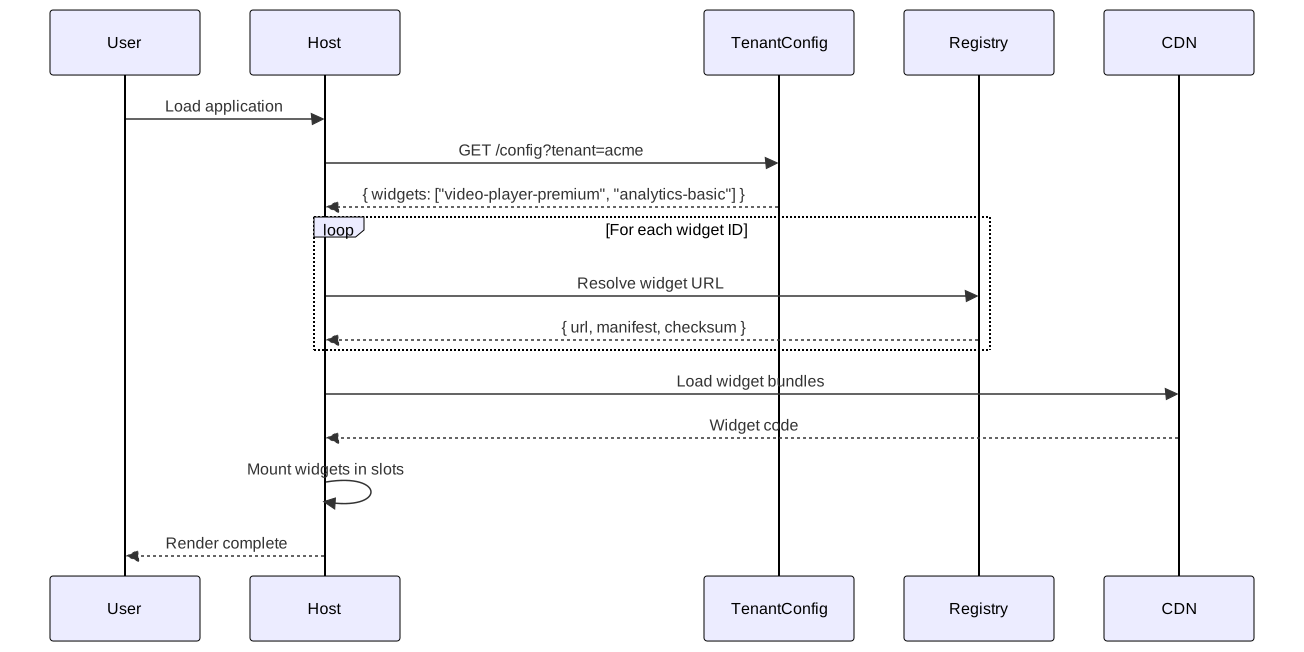
interface TenantWidgetConfig { widgetId: string version?: string // Optional: defaults to "latest" slot: string config?: Record<string, unknown> // Widget-specific config enabled: boolean}
interface TenantConfig { tenantId: string widgets: TenantWidgetConfig[] featureFlags: Record<string, boolean> theme?: ThemeConfig}
class TenantConfigService { private configCache = new Map<string, TenantConfig>() private baseUrl: string
constructor(baseUrl: string) { this.baseUrl = baseUrl }
async getConfig(tenantId: string): Promise<TenantConfig> { // Check cache first if (this.configCache.has(tenantId)) { return this.configCache.get(tenantId)! }
const response = await fetch(`${this.baseUrl}/tenants/${tenantId}/config`) if (!response.ok) { // Fall back to default config return this.getDefaultConfig(tenantId) }
const config = await response.json() this.configCache.set(tenantId, config) return config }
private getDefaultConfig(tenantId: string): TenantConfig { return { tenantId, widgets: [], // No widgets by default featureFlags: {}, } }
async refreshConfig(tenantId: string): Promise<TenantConfig> { this.configCache.delete(tenantId) return this.getConfig(tenantId) }}Widget Loader Orchestration
interface LoadedWidget { id: string version: string slot: string instance: WidgetInstance state: "loading" | "active" | "error" | "inactive"}
class WidgetOrchestrator { private tenantConfig: TenantConfigService private registry: WidgetRegistry private loadedWidgets = new Map<string, LoadedWidget>() private slotRegistry: SlotRegistry
async initialize(tenantId: string) { // 1. Fetch tenant configuration const config = await this.tenantConfig.getConfig(tenantId)
// 2. Filter enabled widgets const enabledWidgets = config.widgets.filter((w) => w.enabled)
// 3. Resolve all widgets in parallel const resolutions = await Promise.allSettled( enabledWidgets.map((w) => this.registry.resolve(w.widgetId, w.version)), )
// 4. Load successfully resolved widgets for (let i = 0; i < resolutions.length; i++) { const resolution = resolutions[i] const widgetConfig = enabledWidgets[i]
if (resolution.status === "fulfilled") { await this.loadWidget(resolution.value, widgetConfig) } else { console.error(`Failed to resolve ${widgetConfig.widgetId}:`, resolution.reason) // Continue loading other widgets } } }
private async loadWidget(resolved: ResolvedWidget, config: TenantWidgetConfig) { const loadedWidget: LoadedWidget = { id: resolved.id, version: resolved.version, slot: config.slot, instance: null!, state: "loading", }
this.loadedWidgets.set(resolved.id, loadedWidget)
try { // Fetch manifest to determine loading strategy const manifest = await this.fetchManifest(resolved.manifestUrl)
// Load based on sandbox type const instance = await this.createWidgetInstance(manifest, resolved, config)
loadedWidget.instance = instance loadedWidget.state = "active"
// Register contribution points this.registerContributions(manifest, resolved.id) } catch (error) { loadedWidget.state = "error" console.error(`Failed to load widget ${resolved.id}:`, error) } }
private async createWidgetInstance( manifest: WidgetManifest, resolved: ResolvedWidget, config: TenantWidgetConfig, ): Promise<WidgetInstance> { const sandboxType = manifest.sandbox?.type || "none"
switch (sandboxType) { case "iframe": return this.createIframeWidget(resolved, manifest, config)
case "shadow-dom": return this.createShadowDomWidget(resolved, manifest, config)
case "wasm": return this.createWasmWidget(resolved, manifest, config)
case "none": default: return this.createFederatedWidget(resolved, manifest, config) } }
private async createIframeWidget( resolved: ResolvedWidget, manifest: WidgetManifest, config: TenantWidgetConfig, ): Promise<IframeWidgetInstance> { const iframe = document.createElement("iframe")
// Apply sandbox restrictions const sandbox = manifest.sandbox! iframe.sandbox.add(...sandbox.allow.map((a) => `allow-${a}`))
// Set CSP via attribute (embedded enforcement) if (sandbox.csp) { iframe.setAttribute("csp", sandbox.csp) }
iframe.src = resolved.entryUrl
return new IframeWidgetInstance(iframe, resolved.id, config.config) }
async unloadWidget(widgetId: string) { const widget = this.loadedWidgets.get(widgetId) if (!widget) return
widget.state = "inactive"
// Cleanup instance await widget.instance.dispose()
// Remove contributions this.slotRegistry.removeContributions(widgetId)
this.loadedWidgets.delete(widgetId) }}Feature Flag Integration
interface FeatureFlagService { isEnabled(flag: string, context: FlagContext): boolean getVariant<T>(flag: string, context: FlagContext): T | undefined}
interface FlagContext { tenantId: string userId?: string environment: "production" | "staging" | "development"}
class WidgetFeatureFlags { private flags: FeatureFlagService
isWidgetEnabled(widgetId: string, tenantConfig: TenantWidgetConfig, context: FlagContext): boolean { // 1. Check tenant config first if (!tenantConfig.enabled) return false
// 2. Check feature flag override const flagKey = `widget.${widgetId}.enabled` if (this.flags.isEnabled(flagKey, context) === false) { return false }
// 3. Check rollout percentage const rolloutFlag = `widget.${widgetId}.rollout` const rollout = this.flags.getVariant<number>(rolloutFlag, context) if (rollout !== undefined) { const userHash = this.hashUser(context.userId || context.tenantId) return userHash < rollout }
return true }
private hashUser(userId: string): number { // Deterministic hash for consistent experience let hash = 0 for (let i = 0; i < userId.length; i++) { hash = (hash << 5) - hash + userId.charCodeAt(i) hash |= 0 } return Math.abs(hash) % 100 }}Browser Constraints
Main Thread Budget
Widget loading competes with the host application for main thread time. Poor loading strategies cause jank.
Loading waterfall (problematic):
[Host init]--[Fetch config]--[Fetch widget A]--[Parse A]--[Fetch widget B]--[Parse B] | [First paint]Optimized loading:
[Host init]--[Fetch config]--[Render host skeleton] | ├──[Fetch A]──[Parse A] └──[Fetch B]──[Parse B] | [Progressive paint]async function loadWidgetsOptimized(widgetConfigs: TenantWidgetConfig[]) { // 1. Render skeleton immediately renderSkeletons(widgetConfigs)
// 2. Start all fetches in parallel const fetchPromises = widgetConfigs.map((config) => fetchWidgetBundle(config.widgetId))
// 3. Process widgets as they complete (not waiting for all) for await (const result of raceSettled(fetchPromises)) { if (result.status === "fulfilled") { // Yield to main thread between widget initializations await yieldToMain() await initializeWidget(result.value) } }}
function yieldToMain(): Promise<void> { return new Promise((resolve) => { if ("scheduler" in window && "yield" in (window as any).scheduler) { ;(window as any).scheduler.yield().then(resolve) } else { setTimeout(resolve, 0) } })}
async function* raceSettled<T>(promises: Promise<T>[]): AsyncGenerator<PromiseSettledResult<T>> { const remaining = new Set(promises.map((p, i) => i))
while (remaining.size > 0) { const results = await Promise.race( Array.from(remaining).map(async (i) => { try { const value = await promises[i] return { index: i, status: "fulfilled" as const, value } } catch (reason) { return { index: i, status: "rejected" as const, reason } } }), )
remaining.delete(results.index) yield results.status === "fulfilled" ? { status: "fulfilled", value: results.value } : { status: "rejected", reason: results.reason } }}Memory Limits
| Device Type | Practical JS Heap Limit | Widget Budget |
|---|---|---|
| Low-end mobile | 50-100MB | 5-10MB per widget |
| Mid-range mobile | 200-300MB | 20-30MB per widget |
| Desktop | 500MB-1GB | 50-100MB per widget |
Memory management strategies:
class WidgetMemoryManager { private readonly maxTotalMemory: number private readonly maxWidgetMemory: number private activeWidgets = new Map<string, WidgetMemoryStats>()
constructor(config: { maxTotalMemory: number; maxWidgetMemory: number }) { this.maxTotalMemory = config.maxTotalMemory this.maxWidgetMemory = config.maxWidgetMemory
// Monitor memory pressure if ("memory" in performance) { this.startMemoryMonitoring() } }
canLoadWidget(estimatedMemory: number): boolean { const currentUsage = this.getTotalUsage() return currentUsage + estimatedMemory <= this.maxTotalMemory }
onWidgetOverMemory(widgetId: string) { console.warn(`Widget ${widgetId} exceeded memory limit`)
// Option 1: Unload widget // this.unloadWidget(widgetId);
// Option 2: Notify widget to reduce memory this.notifyWidget(widgetId, "MEMORY_PRESSURE") }
private startMemoryMonitoring() { setInterval(() => { const memory = (performance as any).memory const usedRatio = memory.usedJSHeapSize / memory.jsHeapSizeLimit
if (usedRatio > 0.9) { // Critical memory pressure this.handleMemoryPressure("critical") } else if (usedRatio > 0.7) { // Warning level this.handleMemoryPressure("warning") } }, 5000) }
private handleMemoryPressure(level: "warning" | "critical") { // Unload inactive widgets first for (const [widgetId, stats] of this.activeWidgets) { if (!stats.visible && level === "critical") { this.unloadWidget(widgetId) } } }}Storage Quotas
Widgets need persistent storage but share quotas with the host:
| Storage Type | Quota | Widget Strategy |
|---|---|---|
| localStorage | 5MB | Avoid; use IndexedDB |
| IndexedDB | 50% of disk (Chrome) | Namespace per widget |
| Cache API | 50% of disk | Careful eviction |
class WidgetStorageManager { private db: IDBDatabase | null = null private readonly storeName = "widget_storage"
async initialize() { this.db = await this.openDatabase() }
private openDatabase(): Promise<IDBDatabase> { return new Promise((resolve, reject) => { const request = indexedDB.open("widget_host", 1)
request.onerror = () => reject(request.error) request.onsuccess = () => resolve(request.result)
request.onupgradeneeded = (event) => { const db = (event.target as IDBOpenDBRequest).result if (!db.objectStoreNames.contains(this.storeName)) { db.createObjectStore(this.storeName, { keyPath: "key" }) } } }) }
async get<T>(widgetId: string, key: string): Promise<T | undefined> { const compositeKey = `${widgetId}:${key}` return this.dbGet(compositeKey) }
async set<T>(widgetId: string, key: string, value: T): Promise<void> { const compositeKey = `${widgetId}:${key}`
// Check quota before write const estimate = await navigator.storage.estimate() const usageRatio = (estimate.usage || 0) / (estimate.quota || 1)
if (usageRatio > 0.9) { // Evict old widget data await this.evictOldData(widgetId) }
return this.dbSet(compositeKey, value) }
async getWidgetUsage(widgetId: string): Promise<number> { // Estimate storage used by this widget const keys = await this.getWidgetKeys(widgetId) let totalSize = 0
for (const key of keys) { const value = await this.dbGet(key) totalSize += new Blob([JSON.stringify(value)]).size }
return totalSize }}Real-World Implementations
VS Code Extensions
Context: Desktop code editor with 40,000+ extensions.
Architecture:
- Extensions run in separate Extension Host process (Node.js)
- UI extensions use webview (Chromium iframe with restricted API)
- Communication via IPC (Inter-Process Communication)
Key design decisions:
| Decision | Rationale |
|---|---|
| Separate process | Misbehaving extensions can’t crash editor |
| Activation events | Lazy loading—extensions load only when needed |
| Contribution points | Declarative UI integration via contributes manifest |
| Sandboxed webviews | HTML panels isolated from VS Code DOM |
Manifest example:
{ "name": "my-extension", "activationEvents": ["onLanguage:javascript"], "contributes": { "commands": [{ "command": "ext.doThing", "title": "Do Thing" }], "menus": { "editor/context": [{ "command": "ext.doThing" }] } }}Outcome: Extensions enhance functionality without affecting editor stability. Process isolation means extension crashes are recoverable.
Figma Plugins
Context: Web-based design tool; plugins manipulate design documents.
Architecture:
- UI layer: Standard iframe for plugin UI
- Logic layer: QuickJS JavaScript engine compiled to WASM
- Document access only through controlled API
Why WASM sandbox?
- Cannot use
eval()(security) - Plugins must not access Figma’s DOM
- Need deterministic execution for collaborative editing
Two-process model:
Plugin UI (iframe) ←→ postMessage ←→ Plugin Logic (WASM) ←→ Figma API ←→ DocumentSecurity properties:
- Plugin cannot access browser APIs directly
- Plugin cannot manipulate Figma’s UI
- All document operations go through audited API
- Plugin code runs in capability-constrained sandbox
Trade-off accepted: QuickJS is ~10-30x slower than V8. Acceptable because document operations are the bottleneck, not JavaScript execution.
Source: How Figma Built the Plugin System
Shopify Embedded Apps
Context: E-commerce platform; apps extend merchant admin functionality.
Architecture:
- Apps run in iframe embedded in Shopify admin
- Communication via App Bridge SDK (postMessage abstraction)
- OAuth for authentication; session tokens for API access
App Bridge SDK:
import { createApp } from "@shopify/app-bridge"import { Redirect, Toast } from "@shopify/app-bridge/actions"
const app = createApp({ apiKey: "api-key", shopOrigin: "myshop.myshopify.com",})
// Show toast notification (rendered by Shopify, not iframe)const toast = Toast.create(app, { message: "Order updated", duration: 5000 })toast.dispatch(Toast.Action.SHOW)
// Navigate within Shopify adminconst redirect = Redirect.create(app)redirect.dispatch(Redirect.Action.ADMIN_PATH, "/orders")Multi-tenancy model:
- Each Shopify store is a tenant
- Apps install per-store with store-specific credentials
- App Bridge passes shop context on every request
Security properties:
- Apps cannot access other stores’ data
- OAuth scopes limit API access per app
- iframe sandbox prevents DOM manipulation
Source: Shopify App Bridge Documentation
Salesforce Lightning Web Components
Context: Enterprise CRM with third-party components from multiple ISVs.
Architecture:
- Components run in Lightning Web Security (LWS) virtual environment
- Namespace isolation:
c-myComponentvspartner-theirComponent - Shadow DOM for style encapsulation
Lightning Web Security:
┌─────────────────────────────────────────┐│ Salesforce Page │├─────────────────────────────────────────┤│ ┌──────────────┐ ┌──────────────┐ ││ │ Namespace A │ │ Namespace B │ ││ │ (Virtual Env)│ │ (Virtual Env)│ ││ │ Component1 │ │ Component2 │ ││ └──────────────┘ └──────────────┘ │└─────────────────────────────────────────┘Security properties:
- Components in different namespaces cannot access each other’s resources
- Distorted global objects prevent prototype pollution
- API calls go through Salesforce proxy with permission checks
Trade-off: Slightly different JavaScript semantics (global object distortion). Most code works unchanged; edge cases require adaptation.
Source: Lightning Web Security Architecture
Common Pitfalls
1. Loading All Widgets Eagerly
The mistake: Fetching and initializing all widgets on page load regardless of visibility.
Example: Dashboard with 20 widgets; user only sees 4 above the fold. Loading all 20 blocks main thread for 2+ seconds.
Why it happens: Simpler implementation; deferred loading requires tracking visibility.
Solution:
class LazyWidgetLoader { private observer: IntersectionObserver private pendingWidgets = new Map<Element, string>()
constructor() { this.observer = new IntersectionObserver( this.handleIntersection, { rootMargin: "100px" }, // Preload slightly before visible ) }
registerSlot(element: Element, widgetId: string) { this.pendingWidgets.set(element, widgetId) this.observer.observe(element) }
private handleIntersection: IntersectionObserverCallback = (entries) => { for (const entry of entries) { if (entry.isIntersecting) { const widgetId = this.pendingWidgets.get(entry.target) if (widgetId) { this.loadWidget(widgetId, entry.target) this.pendingWidgets.delete(entry.target) this.observer.unobserve(entry.target) } } } }}2. Missing Origin Validation in postMessage
The mistake: Handling all messages without checking origin.
// DANGEROUS: No origin checkwindow.addEventListener("message", (event) => { if (event.data.type === "WIDGET_REQUEST") { handleWidgetRequest(event.data) // Attacker can send messages too }})Impact: Attacker opens your site in iframe, sends malicious messages, triggers actions with user’s credentials.
Solution:
const TRUSTED_ORIGINS = new Set(["https://widget1.example.com", "https://widget2.example.com"])
window.addEventListener("message", (event) => { // CRITICAL: Always validate origin if (!TRUSTED_ORIGINS.has(event.origin)) { console.warn("Rejected message from untrusted origin:", event.origin) return }
handleWidgetRequest(event.data)})3. Shared Dependency Version Conflicts
The mistake: Host uses React 18, widget bunled with React 17, both load.
Impact: Two React instances cause context mismatches, hooks fail mysteriously.
Solution:
// webpack.config.js (host)new ModuleFederationPlugin({ shared: { react: { singleton: true, requiredVersion: "^18.0.0", strictVersion: true, // Fail if incompatible }, },})Also validate in registry:
function validateWidgetCompatibility(manifest: WidgetManifest) { const hostReact = "18.2.0" const widgetReact = manifest.dependencies?.react
if (widgetReact && !satisfies(hostReact, widgetReact)) { throw new Error(`Widget requires React ${widgetReact}, host has ${hostReact}`) }}4. No Widget Lifecycle Management
The mistake: Loading widgets but never unloading them when no longer needed.
Impact: Memory grows unbounded; 50 widgets loaded over time, only 5 visible.
Solution:
interface WidgetInstance { activate(): Promise<void> deactivate(): Promise<void> dispose(): Promise<void>}
class WidgetLifecycleManager { private activeWidgets = new Map<string, WidgetInstance>() private visibleWidgets = new Set<string>()
async handleVisibilityChange(widgetId: string, visible: boolean) { const widget = this.activeWidgets.get(widgetId) if (!widget) return
if (visible) { this.visibleWidgets.add(widgetId) await widget.activate() } else { this.visibleWidgets.delete(widgetId) await widget.deactivate()
// Unload after period of invisibility setTimeout(() => { if (!this.visibleWidgets.has(widgetId)) { this.unloadWidget(widgetId) } }, 60000) // 1 minute } }
private async unloadWidget(widgetId: string) { const widget = this.activeWidgets.get(widgetId) if (widget) { await widget.dispose() this.activeWidgets.delete(widgetId) } }}5. Blocking Main Thread During Widget Init
The mistake: Synchronously parsing and executing large widget bundles.
Impact: UI freezes during widget load; user sees blank screen.
Solution:
async function initializeWidgetAsync(code: string, container: Element) { // Parse in chunks using requestIdleCallback const chunks = splitIntoChunks(code, 50000) // 50KB chunks
for (const chunk of chunks) { await new Promise<void>((resolve) => { requestIdleCallback( () => { // Parse chunk parseChunk(chunk) resolve() }, { timeout: 100 }, ) }) }
// Initialize widget after parsing await new Promise<void>((resolve) => { requestAnimationFrame(() => { mountWidget(container) resolve() }) })}Conclusion
Building a multi-tenant pluggable widget framework requires navigating three axes:
- Security vs Performance: iframe/WASM isolation is safest but has overhead; Module Federation is fast but trusts widgets
- Flexibility vs Complexity: More extension points enable richer widgets but increase API surface to maintain
- Per-tenant customization vs Operational simplicity: Feature flags add deployment complexity but enable fine-grained control
Recommended starting points by use case:
| Scenario | Isolation | Loading | Registry |
|---|---|---|---|
| Internal micro-frontends | Module Federation | Module Federation | npm/internal registry |
| Third-party app marketplace | iframe + postMessage | Dynamic script | Custom registry + OAuth |
| High-security (financial) | WASM sandbox | Dynamic fetch | Signed manifests |
| Design tool plugins | WASM (logic) + iframe (UI) | Controlled loader | Curated store |
Key design decisions to make early:
- What’s your trust model? Internal-only vs open marketplace changes everything
- What API surface will you support? Once published, it’s hard to change
- How will you version the host SDK? Widgets depend on stability
- How do you handle widget failures? Graceful degradation vs hard failure
The frameworks that succeed (VS Code, Figma, Shopify) share a common pattern: minimal core, maximal extensibility through well-defined contribution points, and strong isolation boundaries. Start with clear boundaries; relaxing them later is easier than adding them.
Appendix
Prerequisites
- Understanding of JavaScript module systems (ES modules, CommonJS)
- Familiarity with webpack or Vite bundling
- Knowledge of browser security model (same-origin policy, CSP)
- Basic understanding of iframe and postMessage APIs
Terminology
| Term | Definition |
|---|---|
| Module Federation | Webpack 5 feature allowing multiple builds to share code at runtime |
| Contribution Point | Named extension point in host UI where widgets can render |
| Manifest | JSON file declaring widget metadata, capabilities, and requirements |
| Activation Event | Trigger that causes a widget to load (e.g., slot visible, command invoked) |
| Sandbox | Restricted execution environment limiting widget capabilities |
| postMessage | Browser API for cross-origin communication between windows/iframes |
| Shadow DOM | Browser API for encapsulated DOM subtree with style isolation |
| WASM | WebAssembly; binary instruction format for sandboxed execution |
| QuickJS | Lightweight JavaScript engine; can be compiled to WASM for sandboxing |
| Singleton | Shared dependency constraint ensuring only one instance loads |
Summary
- Widget frameworks follow the microkernel pattern: minimal core + pluggable extensions
- Isolation strategies trade security for performance (iframe > WASM > Shadow DOM > Module Federation)
- Manifests declare capabilities declaratively; host renders contributions without loading all code
- Multi-tenancy uses config service + feature flags to determine per-tenant widget sets
- Registry resolves widget IDs to versioned URLs with compatibility validation
- Host SDK provides controlled API surface; widgets cannot access arbitrary host internals
- Memory and main thread budgets constrain how many widgets can load simultaneously
References
Module Federation:
- Webpack Module Federation Documentation - Official webpack docs
- Module Federation Deep Dive - Architecture details
Browser Sandboxing:
- iframe sandbox - MDN - Sandbox attribute reference
- Content Security Policy - MDN - CSP documentation
- Playing Safely in Sandboxed IFrames - web.dev - Security guidance
Shadow DOM:
- Using Shadow DOM - MDN - API reference
- Shadow DOM Encapsulation - CSS-Tricks - Practical guide
Production Implementations:
- VS Code Extension Host - Architecture documentation
- How Figma Built the Plugin System - WASM sandbox approach
- Shopify App Bridge - iframe + SDK pattern
- Salesforce Lightning Web Security - Namespace isolation
Multi-Tenancy:
- ConfigCat Multi-Tenant Feature Flags - Feature flag patterns
- AWS AppConfig Multi-Tenant Configuration - Config service architecture
Communication Patterns:
- Window.postMessage - MDN - API reference
- Secure Cross-Window Communication - Security best practices