Design a Cookie Consent Service
Building a multi-tenant consent management platform that handles regulatory compliance (GDPR, CCPA, LGPD) at scale. Cookie consent services face unique challenges: read-heavy traffic patterns (every page load queries consent status), strict latency requirements (consent checks block page rendering), regulatory complexity across jurisdictions, and the need to merge anonymous visitor consent with authenticated user profiles. This design covers edge-cached consent delivery, anonymous-to-authenticated identity migration, and a multi-tenant architecture serving thousands of websites.

Abstract
Cookie consent design balances three competing forces:
-
Latency vs. compliance — Consent checks happen on every page load and block tracking scripts. Sub-50ms response times require edge caching, but regulations demand audit trails and user-specific consent records.
-
Multi-tenancy vs. isolation — Thousands of websites share infrastructure, but each has unique privacy policies, cookie categories, and regulatory requirements. Tenant configuration must be cacheable yet instantly updatable.
-
Anonymous vs. authenticated — Users browse anonymously before logging in, accumulating consent choices tied to device fingerprints. On authentication, these choices must merge with any existing profile consent without data loss or conflicting states.
The mental model: edge-cached SDK → regional read replica → primary write path → immutable audit log. Consent reads never touch the primary database; writes go through a single path with guaranteed auditability.
| Design Decision | Tradeoff |
|---|---|
| Edge-cached consent SDK | Sub-50ms reads; stale consent possible for up to 60s |
| Device fingerprint for anonymous | Tracks consent pre-login; privacy concerns, regulatory gray area |
| Read replicas per region | Low latency globally; eventual consistency (acceptable for consent) |
| Immutable audit log | Regulatory proof; storage costs, query complexity |
| Tenant-specific cookie categories | Flexible compliance; configuration explosion |
Requirements
Functional Requirements
| Feature | Scope | Notes |
|---|---|---|
| Consent banner rendering | Core | Customizable per tenant, geo-aware |
| Consent collection | Core | Granular per category (essential, functional, analytics, marketing) |
| Consent storage | Core | Persisted with audit trail |
| Consent check API | Core | Called on every page load, must be fast |
| Regulation detection | Core | Auto-detect GDPR, CCPA, LGPD based on user location |
| Multi-tenant configuration | Core | Each website has unique settings |
| Anonymous consent tracking | Core | Device-based consent before login |
| Anonymous-to-authenticated migration | Core | Merge consent on user login |
| Consent withdrawal | Core | As easy as giving consent (GDPR requirement) |
| Consent proof/audit | Core | Immutable record for regulatory audits |
| A/B testing for banners | Extended | Test banner designs, measure consent rates |
| TCF 2.2 support | Extended | IAB Transparency & Consent Framework |
| Google Consent Mode | Extended | Integration with Google services |
Non-Functional Requirements
| Requirement | Target | Rationale |
|---|---|---|
| Availability | 99.99% | Consent blocks page functionality; downtime = broken sites |
| Consent check latency | p99 < 50ms | Consent check is render-blocking |
| Consent update latency | p99 < 200ms | User-triggered, less time-sensitive |
| Read/write ratio | 100:1 | Every page load reads; only banner interactions write |
| Tenant count | 100K+ websites | Multi-tenant SaaS model |
| Daily transactions | 500M+ | Based on OneTrust scale (450M+/day) |
| Data retention | 7 years | GDPR audit requirements |
| Consent accuracy | 100% | Must never serve wrong consent status |
Scale Estimation
Traffic Profile:
| Metric | Value | Calculation |
|---|---|---|
| Websites served | 100,000 | Multi-tenant SaaS |
| Average daily page views per site | 10,000 | Mix of small and large sites |
| Total daily page views | 1B | 100K × 10K |
| Consent checks/day | 1B | 1:1 with page views |
| Consent updates/day | 10M | 1% of visitors interact with banner |
| Peak RPS (reads) | 50K | 1B / 86,400 × 4 (peak multiplier) |
| Peak RPS (writes) | 500 | 10M / 86,400 × 4 |
Storage:
Consent records: 1B unique visitors × 500 bytes = 500GBAudit logs: 10M updates/day × 1KB × 365 days × 7 years = 25TBTenant configurations: 100K × 50KB = 5GBSDK assets: 100K variants × 100KB = 10GB CDNBandwidth:
Consent checks: 50K RPS × 200 bytes = 10MB/sSDK delivery: 10K RPS × 50KB = 500MB/s (CDN handles most)Design Paths
Path A: Edge-First Architecture (Latency-Optimized)
Best when:
- Consent check latency is critical (advertising, analytics-heavy sites)
- Global audience with low tolerance for slow consent
- High page view volume per user session
Architecture:

Key characteristics:
- Consent SDK served from CDN edge
- Consent status cached at edge with short TTL (60s)
- Cache key:
{tenant_id}:{device_fingerprint}:{regulation} - Edge computes regulation based on request geo
Trade-offs:
- ✅ Sub-20ms consent checks from edge cache
- ✅ Scales infinitely at edge
- ✅ Origin protected from read traffic
- ❌ Stale consent for up to 60 seconds after update
- ❌ Cache invalidation complexity on consent change
- ❌ Edge compute costs for SDK execution
Real-world example: OneTrust serves 450M+ consent transactions daily across 250+ CDN locations. Edge caching enables sub-50ms response times globally.
Path B: Server-Side Rendering (Compliance-First)
Best when:
- Regulatory compliance is paramount (financial services, healthcare)
- Real-time consent accuracy required
- Lower traffic volume, higher value per interaction
Architecture:

Key characteristics:
- Consent fetched server-side before page render
- Consent status embedded in initial HTML
- No client-side consent check needed
- Server has full control over what scripts load
Trade-offs:
- ✅ Always accurate consent (no stale cache)
- ✅ Full control over script loading
- ✅ Simpler client-side implementation
- ❌ Higher latency (adds to server response time)
- ❌ Server must handle all consent checks
- ❌ Caching more complex (varies by user)
Real-world example: Banking applications requiring strict PCI-DSS compliance use server-side consent to ensure no unauthorized tracking scripts ever load.
Path Comparison
| Factor | Path A (Edge-First) | Path B (Server-Side) |
|---|---|---|
| Consent check latency | 10-50ms | 50-200ms |
| Consent accuracy | Eventual (60s stale) | Real-time |
| Infrastructure cost | Higher (edge compute) | Lower (centralized) |
| Client complexity | Higher (SDK logic) | Lower |
| Server load | Lower | Higher |
| Best for | High-traffic media/e-commerce | Regulated industries |
This Article’s Focus
This article implements Path A (Edge-First) because:
- Most websites prioritize user experience (fast consent checks)
- 60-second staleness is acceptable for most consent use cases
- Read-heavy traffic pattern (100:1) demands edge caching
- Multi-tenant SaaS requires infrastructure efficiency
Path B details are covered in the Variations section.
High-Level Design
Component Overview
| Component | Responsibility | Technology |
|---|---|---|
| Consent SDK | Client-side consent management | JavaScript, edge-cached |
| Consent Service | Read/write consent operations | Node.js/Go + Redis |
| Regulation Service | Geo-based regulation detection | MaxMind GeoIP + rules engine |
| Tenant Service | Multi-tenant configuration | PostgreSQL + Redis cache |
| Audit Service | Immutable consent logging | Append-only log + S3 |
| Identity Service | Anonymous-to-authenticated migration | Redis + PostgreSQL |
| Banner Service | A/B testing and rendering | Static CDN + configuration |
Request Flow: Consent Check
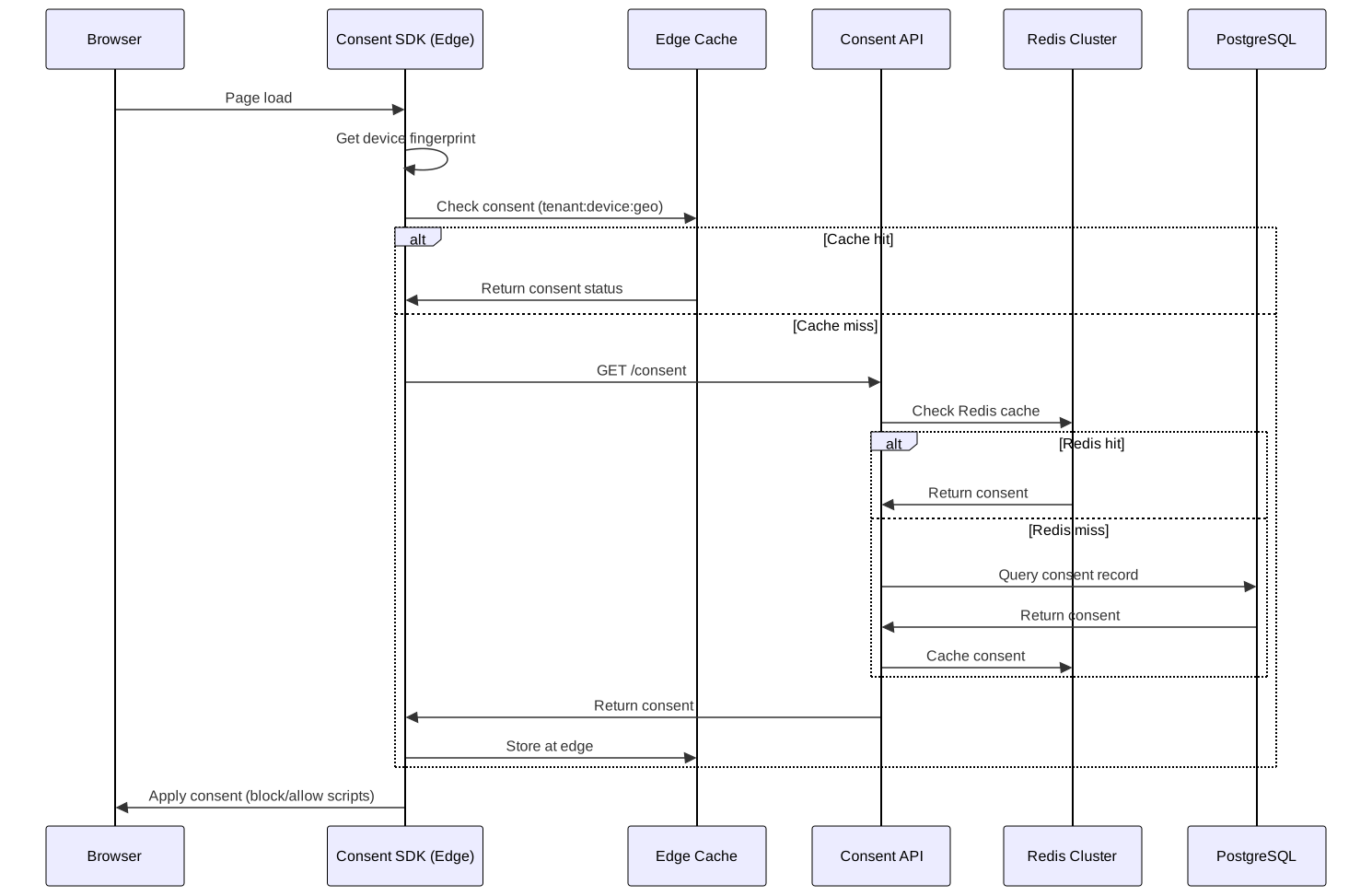
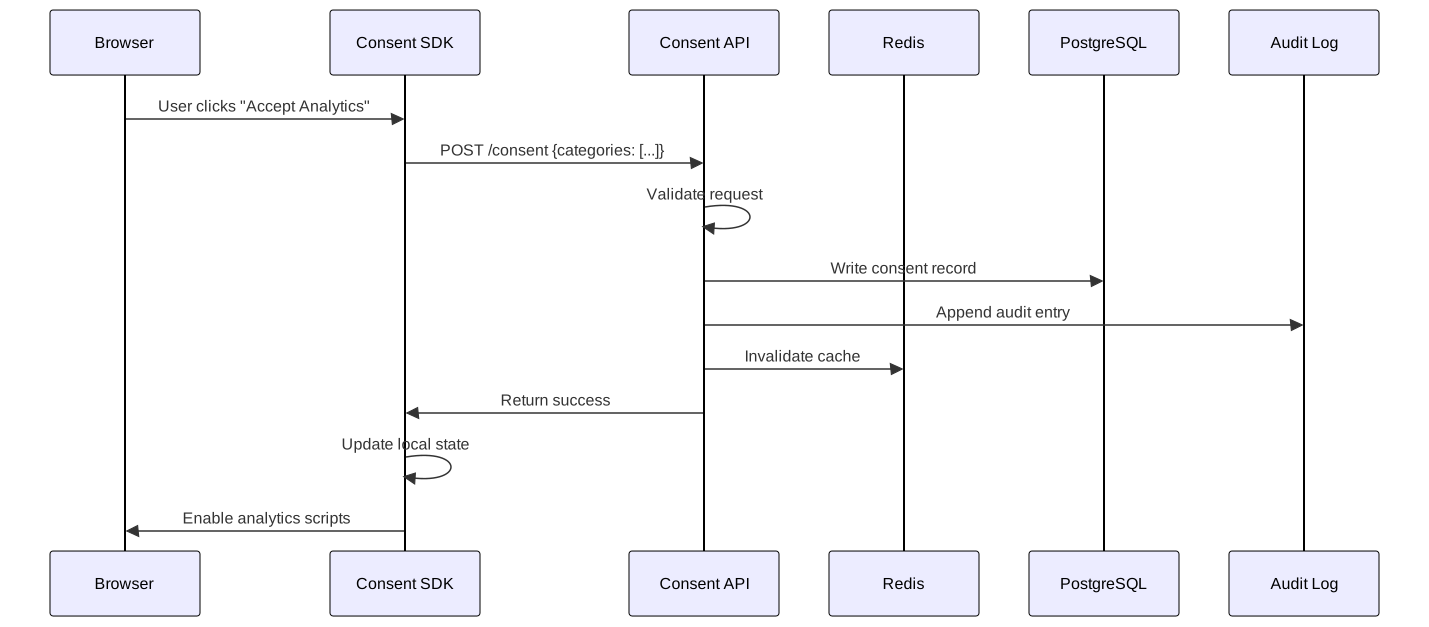
Request Flow: Consent Update
API Design
Consent Check API
GET /api/v1/consentX-Tenant-ID: tenant_abc123X-Device-ID: fp_xyz789X-Geo-Country: DEResponse (200 OK):
{ "consent_id": "con_abc123xyz", "device_id": "fp_xyz789", "user_id": null, "regulation": "gdpr", "status": "partial", "categories": { "essential": { "consented": true, "required": true }, "functional": { "consented": true, "required": false }, "analytics": { "consented": false, "required": false }, "marketing": { "consented": false, "required": false } }, "consent_timestamp": "2024-03-15T10:30:00Z", "policy_version": "v2.3", "expires_at": "2025-03-15T10:30:00Z", "banner_config": { "show_banner": false, "banner_version": "v1.2" }}Cache headers:
Cache-Control: private, max-age=60ETag: "abc123"Vary: X-Device-ID, X-Geo-CountryError responses:
400 Bad Request: Missing tenant ID or device ID404 Not Found: Tenant not configured429 Too Many Requests: Rate limit exceeded
Consent Update API
POST /api/v1/consentX-Tenant-ID: tenant_abc123X-Device-ID: fp_xyz789X-Idempotency-Key: idem_123456
{ "categories": { "functional": true, "analytics": true, "marketing": false }, "policy_version": "v2.3", "user_agent": "Mozilla/5.0...", "consent_method": "banner_button", "banner_version": "v1.2"}Response (201 Created):
{ "consent_id": "con_abc123xyz", "status": "updated", "categories": { "essential": { "consented": true }, "functional": { "consented": true }, "analytics": { "consented": true }, "marketing": { "consented": false } }, "audit_id": "aud_789xyz", "next_renewal": "2025-03-15T10:30:00Z"}Idempotency: Duplicate requests with same idempotency key return cached response.
Consent Withdrawal API
DELETE /api/v1/consent/categories/marketingX-Tenant-ID: tenant_abc123X-Device-ID: fp_xyz789Response (200 OK):
{ "consent_id": "con_abc123xyz", "withdrawn_category": "marketing", "withdrawn_at": "2024-03-15T11:00:00Z", "audit_id": "aud_790xyz"}GDPR requirement: Withdrawal must be as easy as giving consent. Single API call to withdraw specific category.
Identity Migration API
POST /api/v1/consent/migrateX-Tenant-ID: tenant_abc123
{ "device_id": "fp_xyz789", "user_id": "user_456", "migration_strategy": "device_wins_recent"}Response (200 OK):
{ "migration_id": "mig_123abc", "source": { "device_id": "fp_xyz789", "consent_timestamp": "2024-03-15T10:30:00Z" }, "target": { "user_id": "user_456", "consent_timestamp": "2024-03-10T08:00:00Z" }, "result": { "strategy_applied": "device_wins_recent", "merged_categories": { "functional": true, "analytics": true, "marketing": false }, "conflicts_resolved": [ { "category": "analytics", "device_value": true, "user_value": false, "resolved_value": true, "reason": "device consent more recent" } ] }, "audit_id": "aud_791xyz"}Migration strategies:
device_wins_recent: More recent consent wins (default)user_wins: Authenticated user consent always winsmost_restrictive: Use most privacy-preserving choiceprompt_user: Flag conflicts for user resolution
Tenant Configuration API
GET /api/v1/tenants/{tenant_id}/configResponse (200 OK):
{ "tenant_id": "tenant_abc123", "domain": "example.com", "subdomains": ["shop.example.com", "blog.example.com"], "categories": [ { "id": "essential", "name": "Essential Cookies", "description": "Required for basic website functionality", "required": true, "cookies": ["session_id", "csrf_token"] }, { "id": "analytics", "name": "Analytics Cookies", "description": "Help us understand how visitors use our site", "required": false, "cookies": ["_ga", "_gid", "_gat"], "vendors": ["Google Analytics"] } ], "regulations": { "default": "gdpr", "overrides": { "US-CA": "ccpa", "BR": "lgpd" } }, "banner": { "position": "bottom", "theme": "light", "show_reject_all": true, "consent_renewal_days": 365 }, "tcf_enabled": true, "google_consent_mode": true}Data Modeling
Consent Record (PostgreSQL)
CREATE TABLE consent_records ( id UUID PRIMARY KEY DEFAULT gen_random_uuid(), tenant_id VARCHAR(50) NOT NULL, device_id VARCHAR(100) NOT NULL, user_id VARCHAR(100), -- NULL for anonymous
-- Consent state regulation VARCHAR(20) NOT NULL, -- gdpr, ccpa, lgpd policy_version VARCHAR(20) NOT NULL, categories JSONB NOT NULL, status VARCHAR(20) DEFAULT 'partial', -- none, partial, full
-- Metadata ip_country VARCHAR(2), user_agent TEXT, consent_method VARCHAR(50), -- banner_accept, banner_reject, api
-- Timestamps created_at TIMESTAMPTZ DEFAULT NOW(), updated_at TIMESTAMPTZ DEFAULT NOW(), expires_at TIMESTAMPTZ,
-- Constraints UNIQUE (tenant_id, device_id), UNIQUE (tenant_id, user_id) WHERE user_id IS NOT NULL);
-- Indexes for common queriesCREATE INDEX idx_consent_tenant_device ON consent_records(tenant_id, device_id);CREATE INDEX idx_consent_tenant_user ON consent_records(tenant_id, user_id) WHERE user_id IS NOT NULL;CREATE INDEX idx_consent_expires ON consent_records(expires_at) WHERE expires_at IS NOT NULL;Sharding strategy: Shard by tenant_id to co-locate all consent for a website. High-volume tenants may need dedicated shards.
Audit Log (Append-Only)
CREATE TABLE consent_audit ( id BIGSERIAL PRIMARY KEY, consent_id UUID NOT NULL REFERENCES consent_records(id), tenant_id VARCHAR(50) NOT NULL,
-- What changed action VARCHAR(20) NOT NULL, -- create, update, withdraw, migrate old_categories JSONB, new_categories JSONB,
-- Context policy_version VARCHAR(20), ip_address INET, user_agent TEXT, consent_method VARCHAR(50), idempotency_key VARCHAR(100),
-- Immutable timestamp created_at TIMESTAMPTZ DEFAULT NOW(),
-- No updates allowed CONSTRAINT no_updates CHECK (true));
-- Partition by month for efficient archivalCREATE TABLE consent_audit_2024_03 PARTITION OF consent_audit FOR VALUES FROM ('2024-03-01') TO ('2024-04-01');
-- Index for regulatory queriesCREATE INDEX idx_audit_consent ON consent_audit(consent_id, created_at DESC);CREATE INDEX idx_audit_tenant_time ON consent_audit(tenant_id, created_at DESC);Retention policy: Archive to S3 Glacier after 1 year, retain for 7 years total per GDPR requirements.
Tenant Configuration (PostgreSQL + Redis)
CREATE TABLE tenants ( id VARCHAR(50) PRIMARY KEY, domain VARCHAR(255) NOT NULL UNIQUE, subdomains TEXT[],
-- Configuration config JSONB NOT NULL, banner_config JSONB,
-- SDK versioning sdk_version VARCHAR(20) DEFAULT 'latest', custom_sdk_url TEXT,
-- Status status VARCHAR(20) DEFAULT 'active', created_at TIMESTAMPTZ DEFAULT NOW(), updated_at TIMESTAMPTZ DEFAULT NOW());
CREATE INDEX idx_tenants_domain ON tenants(domain);CREATE INDEX idx_tenants_subdomains ON tenants USING GIN(subdomains);Redis cache structure:
# Tenant config (cached for 5 minutes)SETEX tenant:config:tenant_abc123 300 "{...json config...}"
# Consent record (cached for 60 seconds)SETEX consent:tenant_abc123:fp_xyz789 60 "{...consent...}"
# Invalidation on updateDEL consent:tenant_abc123:fp_xyz789Database Selection Matrix
| Data | Store | Rationale |
|---|---|---|
| Consent records | PostgreSQL + Read replicas | ACID, complex queries, regional distribution |
| Consent cache | Redis Cluster | Sub-ms reads, TTL support |
| Audit log | PostgreSQL (partitioned) | Immutable, time-series queries |
| Audit archive | S3 Glacier | Cost-effective long-term storage |
| Tenant config | PostgreSQL + Redis | Infrequent updates, high read frequency |
| SDK assets | S3 + CloudFront | Global distribution, versioning |
| Device fingerprints | Redis | Ephemeral, fast lookup |
Low-Level Design
Consent SDK (Client-Side)
The SDK is the first point of contact for consent management. It must:
- Generate and persist device fingerprints
- Fetch and apply consent status
- Block non-consented scripts
- Handle consent updates
SDK initialization:
14 collapsed lines
interface ConsentConfig { tenantId: string apiEndpoint: string categories: CategoryConfig[] regulation?: "auto" | "gdpr" | "ccpa" | "lgpd" onConsentChange?: (consent: ConsentStatus) => void}
interface ConsentStatus { categories: Record<string, boolean> regulation: string timestamp: string showBanner: boolean}
class ConsentSDK { private config: ConsentConfig private deviceId: string private consent: ConsentStatus | null = null
async init(config: ConsentConfig): Promise<void> { this.config = config this.deviceId = await this.getOrCreateDeviceId()
// Fetch consent status this.consent = await this.fetchConsent()
// Apply consent immediately this.applyConsent(this.consent)
// Show banner if needed if (this.consent.showBanner) { this.renderBanner() } }
private async getOrCreateDeviceId(): Promise<string> { // Check localStorage first let deviceId = localStorage.getItem("_consent_device_id") if (deviceId) return deviceId
// Generate fingerprint deviceId = await this.generateFingerprint() localStorage.setItem("_consent_device_id", deviceId) return deviceId }
private async generateFingerprint(): Promise<string> { // Collect browser signals (privacy-preserving subset) const signals = { userAgent: navigator.userAgent, language: navigator.language, timezone: Intl.DateTimeFormat().resolvedOptions().timeZone,16 collapsed lines
screenResolution: `${screen.width}x${screen.height}`, colorDepth: screen.colorDepth, // Avoid canvas fingerprinting (privacy concern) }
// Hash to create stable identifier const data = JSON.stringify(signals) const hashBuffer = await crypto.subtle.digest("SHA-256", new TextEncoder().encode(data)) const hashArray = Array.from(new Uint8Array(hashBuffer)) return ( "fp_" + hashArray .map((b) => b.toString(16).padStart(2, "0")) .join("") .slice(0, 32) ) }}Script blocking implementation:
9 collapsed lines
interface BlockedScript { src: string category: string type: "script" | "iframe" | "img"}
const blockedScripts: BlockedScript[] = []
function applyConsent(consent: ConsentStatus): void { // Find all scripts with consent requirements const scripts = document.querySelectorAll("script[data-consent-category]")
scripts.forEach((script) => { const category = script.getAttribute("data-consent-category") const consented = consent.categories[category]
if (consented) { // Enable script if (script.getAttribute("data-src")) { script.setAttribute("src", script.getAttribute("data-src")!) script.removeAttribute("data-src") } script.removeAttribute("type") // Remove text/plain blocker } else { // Keep blocked (or block if not already) if (script.getAttribute("src")) { script.setAttribute("data-src", script.getAttribute("src")!) script.removeAttribute("src") script.setAttribute("type", "text/plain") } } })
// Handle dynamically added scripts observeNewScripts(consent)}
function observeNewScripts(consent: ConsentStatus): void { const observer = new MutationObserver((mutations) => { mutations.forEach((mutation) => { mutation.addedNodes.forEach((node) => { if (node.nodeName === "SCRIPT") { const script = node as HTMLScriptElement16 collapsed lines
const category = script.getAttribute("data-consent-category") if (category && !consent.categories[category]) { // Block dynamically added non-consented script script.setAttribute("data-src", script.src) script.removeAttribute("src") script.type = "text/plain" } } }) }) })
observer.observe(document.documentElement, { childList: true, subtree: true, })}Design decisions:
| Decision | Rationale |
|---|---|
| LocalStorage for device ID | Persists across sessions, faster than cookie |
| SHA-256 fingerprint | Stable identifier without invasive fingerprinting |
| MutationObserver for scripts | Catches dynamically injected tracking scripts |
type="text/plain" blocking | Browser ignores script content without removing it |
Anonymous-to-Authenticated Migration
When a user logs in, their anonymous device consent must merge with any existing authenticated consent.
Migration logic:
14 collapsed lines
interface MigrationRequest { tenantId: string deviceId: string userId: string strategy: "device_wins_recent" | "user_wins" | "most_restrictive" | "prompt_user"}
interface ConsentRecord { categories: Record<string, boolean> timestamp: Date source: "device" | "user"}
async function migrateConsent(request: MigrationRequest): Promise<MigrationResult> { const { tenantId, deviceId, userId, strategy } = request
// Fetch both consent records const [deviceConsent, userConsent] = await Promise.all([ getConsentByDevice(tenantId, deviceId), getConsentByUser(tenantId, userId), ])
// If no existing user consent, simply link device consent to user if (!userConsent) { await linkDeviceToUser(tenantId, deviceId, userId) return { migrated: true, conflicts: [] } }
// If no device consent, keep user consent as-is if (!deviceConsent) { return { migrated: false, reason: "no_device_consent" } }
// Merge based on strategy const merged = mergeConsent(deviceConsent, userConsent, strategy)
// Write merged consent await updateUserConsent(tenantId, userId, merged.categories)
// Audit the migration await auditMigration(tenantId, deviceId, userId, deviceConsent, userConsent, merged)
// Invalidate caches await invalidateConsentCache(tenantId, deviceId) await invalidateConsentCache(tenantId, userId)
return merged}
function mergeConsent(device: ConsentRecord, user: ConsentRecord, strategy: string): MergeResult { const categories = new Set([...Object.keys(device.categories), ...Object.keys(user.categories)])
const merged: Record<string, boolean> = {} const conflicts: Conflict[] = []
for (const category of categories) { const deviceValue = device.categories[category] const userValue = user.categories[category]
if (deviceValue === userValue) { merged[category] = deviceValue continue }
// Conflict resolution based on strategy switch (strategy) { case "device_wins_recent": merged[category] = device.timestamp > user.timestamp ? deviceValue : userValue15 collapsed lines
break case "user_wins": merged[category] = userValue ?? deviceValue break case "most_restrictive": merged[category] = deviceValue === false || userValue === false ? false : true break case "prompt_user": conflicts.push({ category, deviceValue, userValue }) break } }
return { categories: merged, conflicts }}Migration flow:
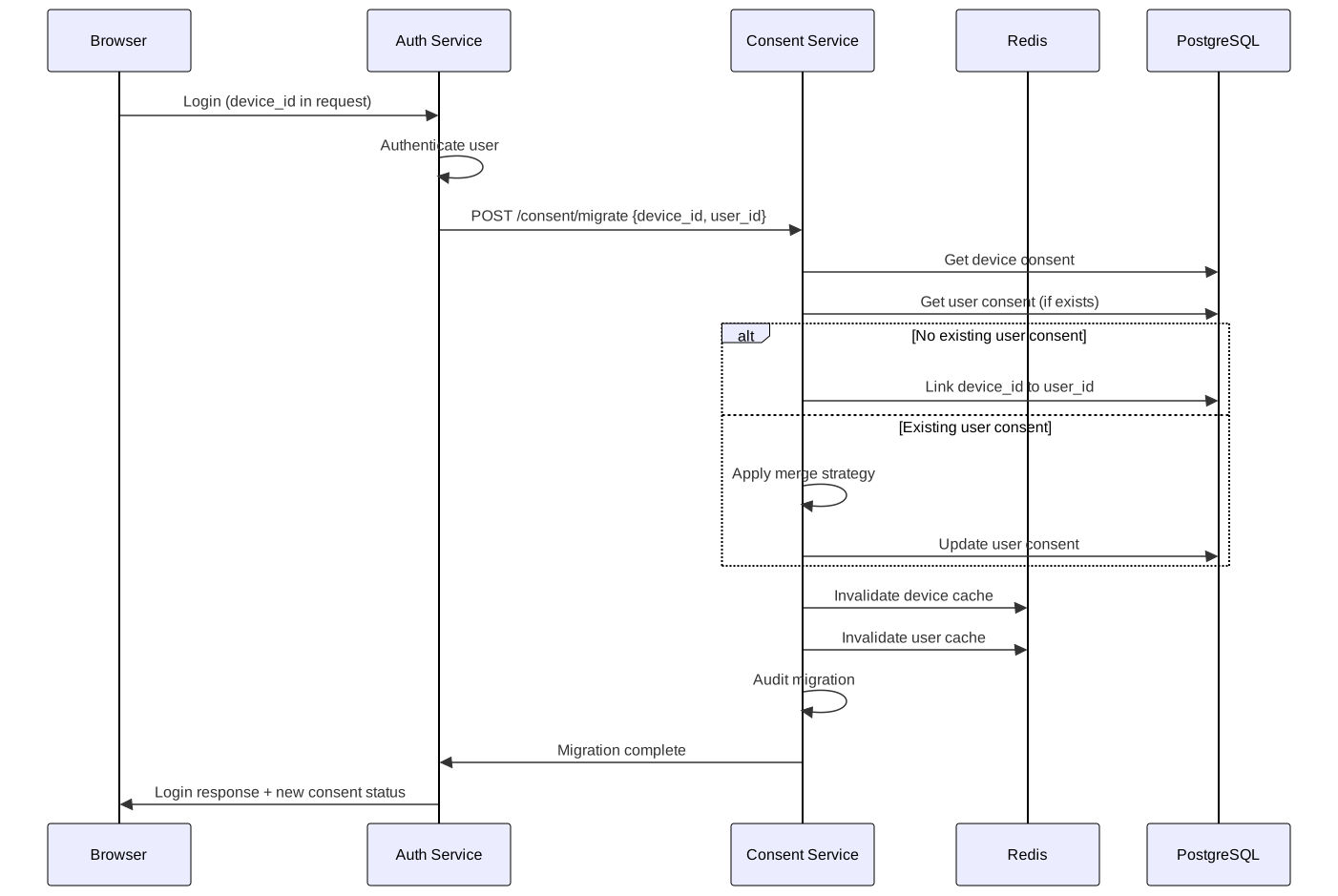
Edge cases:
| Scenario | Handling |
|---|---|
| User has multiple devices | Each device’s consent migrates independently |
| User logs out and back in | Device consent may have changed; re-migrate |
| User clears localStorage | New device ID generated; fresh consent flow |
Conflict with prompt_user | Return conflicts to client; user resolves in UI |
Regulation Detection Service
Automatically detect applicable privacy regulation based on user location.
Detection logic:
11 collapsed lines
import maxmind from "maxmind"
interface RegulationResult { regulation: "gdpr" | "ccpa" | "lgpd" | "none" country: string region?: string confidence: "high" | "medium" | "low"}
const geoDb = await maxmind.open("/data/GeoLite2-City.mmdb")
function detectRegulation(ipAddress: string): RegulationResult { const geo = geoDb.get(ipAddress)
if (!geo || !geo.country) { return { regulation: "gdpr", country: "unknown", confidence: "low" } // Default to strictest regulation when unknown }
const country = geo.country.iso_code const region = geo.subdivisions?.[0]?.iso_code
// GDPR: EU/EEA countries const gdprCountries = [ "AT", "BE", "BG", "HR", "CY", "CZ", "DK", "EE", "FI", "FR", "DE", "GR", "HU", "IE", "IT", "LV", "LT", "LU", "MT", "NL", "PL", "PT", "RO", "SK",16 collapsed lines
"SI", "ES", "SE", // EEA "IS", "LI", "NO", // UK (still applies GDPR-equivalent) "GB", ]
if (gdprCountries.includes(country)) { return { regulation: "gdpr", country, confidence: "high" } }
// CCPA: California residents if (country === "US" && region === "CA") { return { regulation: "ccpa", country, region, confidence: "high" } }
// LGPD: Brazil if (country === "BR") { return { regulation: "lgpd", country, confidence: "high" } }
// Default: no specific regulation (still show banner for best practice) return { regulation: "none", country, confidence: "high" }}
// Tenant-specific overridesfunction applyTenantOverrides(detected: RegulationResult, tenantConfig: TenantConfig): RegulationResult { const override = tenantConfig.regulations.overrides?.[`${detected.country}-${detected.region}`] || tenantConfig.regulations.overrides?.[detected.country]
if (override) { return { ...detected, regulation: override } }
return detected}Regulation behavior matrix:
| Regulation | Consent Model | Default Blocked | Withdrawal |
|---|---|---|---|
| GDPR | Opt-in | All non-essential | Required |
| CCPA | Opt-out | Marketing (if sold) | Required |
| LGPD | Opt-in | All non-essential | Required |
| None | Opt-out | None | Best practice |
Multi-Tenant Configuration Engine
Configuration hierarchy:

Configuration resolution:
9 collapsed lines
interface ResolvedConfig { tenantId: string domain: string categories: CategoryConfig[] banner: BannerConfig regulations: RegulationConfig sdk: SDKConfig}
async function resolveConfig(tenantId: string, domain: string): Promise<ResolvedConfig> { // Check cache first const cacheKey = `tenant:config:${tenantId}:${domain}` const cached = await redis.get(cacheKey) if (cached) return JSON.parse(cached)
// Load tenant base config const tenant = await db.tenants.findById(tenantId) if (!tenant) throw new Error("Tenant not found")
// Apply domain-specific overrides let config = tenant.config if (tenant.domainOverrides?.[domain]) { config = deepMerge(config, tenant.domainOverrides[domain]) }
// Merge with global defaults const resolved = deepMerge(GLOBAL_DEFAULTS, config)
// Cache for 5 minutes await redis.setex(cacheKey, 300, JSON.stringify(resolved))
return resolved}
// Configuration update propagationasync function updateTenantConfig(tenantId: string, updates: Partial<TenantConfig>): Promise<void> { // Update database await db.tenants.update(tenantId, updates)
// Invalidate all cached configs for this tenant const keys = await redis.keys(`tenant:config:${tenantId}:*`) if (keys.length > 0) { await redis.del(...keys)7 collapsed lines
}
// Trigger SDK regeneration if categories changed if (updates.categories) { await sdkBuildQueue.add({ tenantId, reason: "category_update" }) }}Cache Invalidation Strategy
Layered cache invalidation:

Implementation:
7 collapsed lines
interface InvalidationTarget { tenantId: string identifier: string // device_id or user_id type: "device" | "user"}
async function invalidateConsentCache(target: InvalidationTarget): Promise<void> { const { tenantId, identifier, type } = target
// 1. Invalidate Redis cache const redisKey = `consent:${tenantId}:${identifier}` await redis.del(redisKey)
// 2. Invalidate CDN edge cache const edgeKey = `consent/${tenantId}/${identifier}` await cdnPurge(edgeKey)
// 3. Publish invalidation event for any connected clients await pubsub.publish(`consent:invalidate:${tenantId}`, { identifier, type, timestamp: Date.now(), })}
// SDK listens for invalidation eventsfunction setupInvalidationListener(tenantId: string): void { const eventSource = new EventSource(`/api/v1/consent/events?tenant=${tenantId}`)
eventSource.onmessage = (event) => { const data = JSON.parse(event.data) if (data.identifier === currentDeviceId) { // Refetch consent immediately4 collapsed lines
refreshConsent() } }}Cache TTLs:
| Cache Layer | TTL | Rationale |
|---|---|---|
| Edge CDN | 60s | Balance freshness vs. origin load |
| Redis (consent) | 60s | Match edge TTL |
| Redis (config) | 300s | Config changes less frequent |
| Client localStorage | Session | Refresh on page load |
Frontend Considerations
Banner Performance
Render-blocking mitigation:
5 collapsed lines
<!DOCTYPE html><html> <head> <!-- Preconnect to consent API --> <link rel="preconnect" href="https://consent.example.com" />
<!-- Inline critical consent check --> <script> // Minimal inline script to check localStorage ;(function () { const consent = localStorage.getItem("_consent_status") if (consent) { window.__CONSENT_STATUS = JSON.parse(consent) } })() </script>
<!-- Async load full SDK --> <script async src="https://cdn.consent.example.com/sdk/v1/consent.js"></script>8 collapsed lines
</head> <body> <!-- Banner placeholder to prevent CLS --> <div id="consent-banner-placeholder" style="height: 0; transition: height 0.3s;"></div>
<!-- Rest of page content --> </body></html>Layout shift prevention:
/* Reserve space for banner to prevent CLS */#consent-banner-placeholder { position: fixed; bottom: 0; left: 0; right: 0; height: 0; transition: height 0.3s ease-out;}
#consent-banner-placeholder.visible { height: 200px; /* Match actual banner height */}
/* Alternative: overlay banner (no layout shift) */.consent-banner-overlay { position: fixed; bottom: 0; left: 0; right: 0; z-index: 9999; /* Doesn't affect layout */}State Management
9 collapsed lines
interface ConsentState { // Consent data status: ConsentStatus | null loading: boolean error: Error | null
// UI state bannerVisible: boolean preferencesOpen: boolean
// Pending changes pendingCategories: Record<string, boolean>}
const consentStore = createStore<ConsentState>({ status: null, loading: true, error: null, bannerVisible: false, preferencesOpen: false, pendingCategories: {},})
// Actionsfunction updateCategory(category: string, value: boolean): void { consentStore.update((state) => ({ ...state, pendingCategories: { ...state.pendingCategories, [category]: value, }, }))}
async function saveConsent(): Promise<void> { const { pendingCategories } = consentStore.get()
consentStore.update((state) => ({ ...state, loading: true }))
try { const result = await api.updateConsent(pendingCategories) consentStore.update((state) => ({ ...state,16 collapsed lines
status: result, pendingCategories: {}, bannerVisible: false, loading: false, }))
// Persist to localStorage localStorage.setItem("_consent_status", JSON.stringify(result))
// Apply to scripts applyConsent(result) } catch (error) { consentStore.update((state) => ({ ...state, error, loading: false, })) }}Google Consent Mode Integration
14 collapsed lines
interface GoogleConsentState { ad_storage: "granted" | "denied" ad_user_data: "granted" | "denied" ad_personalization: "granted" | "denied" analytics_storage: "granted" | "denied"}
function mapConsentToGoogle(consent: ConsentStatus): GoogleConsentState { return { ad_storage: consent.categories.marketing ? "granted" : "denied", ad_user_data: consent.categories.marketing ? "granted" : "denied", ad_personalization: consent.categories.marketing ? "granted" : "denied", analytics_storage: consent.categories.analytics ? "granted" : "denied", }}
function initGoogleConsentMode(consent: ConsentStatus): void { // Initialize with default (denied) before consent known window.dataLayer = window.dataLayer || [] function gtag(...args: any[]) { dataLayer.push(args) }
gtag("consent", "default", { ad_storage: "denied", ad_user_data: "denied", ad_personalization: "denied", analytics_storage: "denied", wait_for_update: 500, // Wait for consent check })
// Update once consent is known const googleConsent = mapConsentToGoogle(consent) gtag("consent", "update", googleConsent)}
// On consent changefunction updateGoogleConsent(consent: ConsentStatus): void { const googleConsent = mapConsentToGoogle(consent) gtag("consent", "update", googleConsent)}Google Consent Mode parameters:
| Parameter | Maps to | Description |
|---|---|---|
| ad_storage | Marketing cookies | Storage for advertising |
| ad_user_data | Marketing cookies | Sending user data for ads |
| ad_personalization | Marketing cookies | Personalized advertising |
| analytics_storage | Analytics cookies | Storage for analytics |
Infrastructure Design
Cloud-Agnostic Components
| Component | Purpose | Requirements |
|---|---|---|
| CDN | SDK delivery, edge caching | Global PoPs, cache purge API |
| Key-value store | Consent cache | Sub-ms reads, TTL support |
| Relational DB | Consent records, tenant config | ACID, read replicas |
| Object storage | Audit archives, SDK assets | Versioning, lifecycle policies |
| Message queue | Async processing | Durability, dead letter queue |
| Geo database | IP to location | Low latency, regular updates |
AWS Reference Architecture

Service configuration:
| Service | Configuration | Rationale |
|---|---|---|
| CloudFront | 250+ PoPs, Lambda@Edge | Global low-latency SDK delivery |
| Lambda@Edge | 128MB, 5s timeout | Regulation detection at edge |
| API Gateway | 10K RPS, WAF | Rate limiting, DDoS protection |
| ECS Fargate | 2 vCPU, 4GB, Auto-scale 2-50 | Consent API servers |
| ElastiCache | Redis Cluster, 3 nodes, r6g.large | Sub-ms consent cache |
| RDS PostgreSQL | Multi-AZ, db.r6g.xlarge | Primary consent store |
| Read Replicas | eu-west-1, ap-south-1 | Regional read latency |
| S3 | Intelligent Tiering | Audit logs with lifecycle |
Multi-Region Deployment

Design decisions:
| Decision | Rationale |
|---|---|
| Single write region | Simplifies consistency, GDPR compliance (EU data) |
| Regional read replicas | <50ms read latency globally |
| Local Redis per region | Sub-ms cache hits, no cross-region calls |
| Async replication | Acceptable for consent (eventual consistency) |
Self-Hosted Alternatives
| Managed Service | Self-Hosted Option | Trade-off |
|---|---|---|
| CloudFront | Fastly/Cloudflare | More edge compute options |
| ElastiCache | Redis Cluster on EC2 | More control, operational burden |
| RDS PostgreSQL | PostgreSQL on EC2 | Custom extensions, cost at scale |
| Lambda@Edge | Cloudflare Workers | Better cold start, different pricing |
Variations
Server-Side Consent (Path B)
For regulated industries requiring real-time consent accuracy:
11 collapsed lines
import { ConsentService } from './consent-service';
interface ServerRenderContext { request: Request; consent: ConsentStatus; allowedScripts: string[];}
async function renderPageWithConsent( request: Request, pageComponent: Component): Promise<Response> { // Extract device ID from cookie const deviceId = request.cookies.get('_consent_device_id');
// Fetch consent server-side const consent = await consentService.getConsent( TENANT_ID, deviceId, request.headers.get('cf-ipcountry') );
// Determine which scripts to include const allowedScripts = getScriptsForConsent(consent);
// Render page with consent context const html = renderToString( <ConsentContext.Provider value={consent}> <Page component={pageComponent} scripts={allowedScripts} /> </ConsentContext.Provider> );
// Set consent cookie for client-side access const response = new Response(html); response.headers.set( 'Set-Cookie', `_consent_status=${JSON.stringify(consent)}; Path=/; SameSite=Lax` );
return response;14 collapsed lines
}
function getScriptsForConsent(consent: ConsentStatus): string[] { const scripts: string[] = ['essential.js'];
if (consent.categories.analytics) { scripts.push('analytics.js'); } if (consent.categories.marketing) { scripts.push('marketing.js'); }
return scripts;}IAB TCF 2.2 Support
For publishers requiring TCF compliance:
14 collapsed lines
interface TCFConsent { tcString: string // Base64-encoded TC string gdprApplies: boolean purposeConsents: Record<number, boolean> vendorConsents: Record<number, boolean> specialFeatureOptins: Record<number, boolean>}
function generateTCString(consent: ConsentStatus): string { // TCF 2.2 requires specific format const tcData = { version: 2, created: consent.timestamp, lastUpdated: consent.timestamp, cmpId: 123, // Registered CMP ID cmpVersion: 1, consentScreen: 1, consentLanguage: "EN", vendorListVersion: 123, tcfPolicyVersion: 4, isServiceSpecific: false, useNonStandardStacks: false, purposeConsents: mapCategoryToTCFPurpose(consent.categories), vendorConsents: {}, // Populated from GVL }
return encodeTCString(tcData)}
function mapCategoryToTCFPurpose(categories: Record<string, boolean>): Record<number, boolean> { // TCF Purpose mapping return { 1: categories.essential, // Store/access information 2: categories.functional, // Select basic ads 3: categories.marketing, // Create personalized ads profile 4: categories.marketing, // Select personalized ads 5: categories.marketing, // Create personalized content profile 6: categories.functional, // Select personalized content 7: categories.analytics, // Measure ad performance 8: categories.analytics, // Measure content performance 9: categories.analytics, // Apply market research 10: categories.functional, // Develop and improve products 11: categories.essential, // Use limited data to select content }}
// Expose TC string via __tcfapifunction setupTCFAPI(tcfConsent: TCFConsent): void { window.__tcfapi = (command, version, callback, parameter) => { switch (command) { case "getTCData": callback({ tcData: tcfConsent, success: true }) break10 collapsed lines
case "addEventListener": // Register listener for consent changes consentListeners.push(callback) break case "removeEventListener": // Remove listener break } }}Consent Rate A/B Testing
9 collapsed lines
interface BannerVariant { id: string position: "top" | "bottom" | "center" layout: "minimal" | "detailed" showRejectAll: boolean primaryColor: string}
async function getBannerVariant(tenantId: string, deviceId: string): Promise<BannerVariant> { // Check if device already assigned to variant const existingVariant = await redis.get(`ab:${tenantId}:${deviceId}`) if (existingVariant) return JSON.parse(existingVariant)
// Get active experiment const experiment = await db.experiments.findActive(tenantId) if (!experiment) return DEFAULT_BANNER
// Deterministic assignment based on device ID const hash = hashDeviceId(deviceId) const bucket = hash % 100
const variant = experiment.variants.find((v) => bucket >= v.startBucket && bucket < v.endBucket)
// Store assignment await redis.setex(`ab:${tenantId}:${deviceId}`, 86400 * 30, JSON.stringify(variant))
return variant}
// Track consent events for A/B analysisasync function trackConsentEvent( tenantId: string, deviceId: string, variantId: string, action: "accept_all" | "reject_all" | "customize" | "close",): Promise<void> { await analytics.track({ event: "consent_action",8 collapsed lines
properties: { tenantId, variantId, action, timestamp: Date.now(), }, })}A/B test metrics:
| Metric | Description | Target |
|---|---|---|
| Consent rate | Users accepting any non-essential | 60-80% |
| Full consent rate | Users accepting all categories | 30-50% |
| Interaction rate | Users engaging with banner | 70-90% |
| Time to decision | Seconds from banner show to action | <10s |
Conclusion
Cookie consent services must balance regulatory compliance, user experience, and technical performance:
-
Edge-first architecture: CDN-cached SDK and consent status enable sub-50ms consent checks. Origin servers handle only writes and cache misses.
-
Multi-tenant isolation: Tenant configuration cached at multiple layers. Each website has independent categories, regulations, and banner designs without infrastructure overhead.
-
Anonymous-to-authenticated migration: Device fingerprints track consent before login. On authentication, consent merges based on configurable strategies (most recent, most restrictive, or user choice).
-
Regulatory flexibility: Geo-detection applies GDPR, CCPA, or LGPD rules automatically. Tenant overrides handle edge cases and business requirements.
-
Immutable audit trail: Every consent change logged with full context. Partitioned tables and S3 archival support 7-year retention for regulatory audits.
What this design optimizes for:
- Read latency (sub-50ms consent checks)
- Regulatory compliance (audit trail, withdrawal support)
- Multi-tenant efficiency (shared infrastructure, isolated configuration)
- Anonymous user tracking (device fingerprint based)
What it sacrifices:
- Real-time consent accuracy (60s stale window acceptable)
- Write complexity (single primary region)
- Device fingerprint privacy (regulatory gray area)
Known limitations:
- Device fingerprint changes on browser update/reinstall
- Cross-device consent requires user authentication
- TCF 2.2 vendor list management adds operational complexity
- A/B testing may conflict with regulatory “don’t manipulate consent” guidance
Appendix
Prerequisites
- Distributed systems fundamentals (caching, replication)
- Privacy regulations basics (GDPR, CCPA concepts)
- CDN and edge computing patterns
- Database sharding and read replicas
Terminology
| Term | Definition |
|---|---|
| CMP | Consent Management Platform - system for collecting and managing user consent |
| TCF | Transparency & Consent Framework - IAB standard for consent communication |
| TC String | Transparency and Consent String - encoded consent record per TCF spec |
| Device Fingerprint | Browser/device characteristics hashed to create persistent identifier |
| GVL | Global Vendor List - IAB-maintained list of advertising vendors |
| DPO | Data Protection Officer - organization’s privacy compliance lead |
Summary
- Edge-cached SDK delivers consent checks in sub-50ms globally; writes route to single primary region
- Multi-tenant architecture isolates configuration per website while sharing infrastructure; tenant config cached at edge and Redis layers
- Anonymous consent tracked via device fingerprint before login; migrates to authenticated profile with configurable merge strategies
- Regulation detection uses MaxMind GeoIP to auto-apply GDPR, CCPA, or LGPD rules; tenant overrides support edge cases
- Immutable audit log records every consent change with full context; partitioned by month, archived to S3 after 1 year, retained 7 years
- Read replicas per region reduce global latency; eventual consistency (sub-60s) acceptable for consent use cases
References
- GDPR Article 6 - Lawfulness of Processing - Legal basis for consent
- GDPR Article 7 - Conditions for Consent - Consent requirements
- IAB TCF 2.2 Specification - Technical specification
- Google Consent Mode Documentation - Integration guide
- CNIL Cookie Guidelines - French DPA recommendations
- OneTrust Performance Architecture - Industry reference
- Cloudflare OneTrust Case Study - Scale benchmarks
- ePrivacy Directive - EU cookie law
- CCPA Text - California privacy law