Design a Payment System
Building a payment processing platform that handles card transactions, bank transfers, and digital wallets with PCI DSS compliance, idempotent processing, and real-time fraud detection. Payment systems operate under unique constraints: zero tolerance for duplicate charges, regulatory mandates (PCI DSS), and sub-second fraud decisions. This design covers the complete payment lifecycle—authorization, capture, settlement—plus reconciliation, refunds, and multi-gateway routing.

Abstract
Payment system design revolves around four competing constraints:
-
Exactly-once processing — Network failures and retries must never result in duplicate charges. Idempotency keys + request fingerprinting make every operation safely retriable.
-
PCI compliance scope reduction — Cardholder data (PAN, CVV) must never touch your servers if avoidable. Tokenization at the edge (via Stripe Elements, Adyen Web Components) keeps sensitive data out of your environment.
-
Latency under fraud scrutiny — Fraud decisions must complete in <100ms to avoid checkout abandonment, while evaluating 1000+ signals per transaction.
-
Financial accuracy — Every fund movement (authorization hold, capture, refund, chargeback) must be recorded in a double-entry ledger. Reconciliation ensures external settlements match internal records.
The mental model: tokenize → authorize → capture → settle → reconcile. Each stage has distinct timing, failure modes, and rollback procedures.
| Design Decision | Trade-off |
|---|---|
| Edge tokenization | Removes PAN from scope; adds client SDK complexity |
| Idempotency keys | Safe retries; requires key management and storage |
| Smart routing | Higher auth rates; multi-processor operational overhead |
| Async settlement | Handles scale; delayed confirmation visibility |
| Double-entry ledger | Audit-ready; write amplification |
Requirements
Functional Requirements
| Feature | Scope | Notes |
|---|---|---|
| Card payments | Core | Visa, Mastercard, Amex via card networks |
| Bank transfers | Core | ACH (US), SEPA (EU), wire transfers |
| Digital wallets | Core | Apple Pay, Google Pay (tokenized) |
| Authorization + Capture | Core | Separate or combined (auth-capture) |
| Refunds | Core | Full and partial, with reason codes |
| Recurring payments | Core | Subscription billing with retry logic |
| Multi-currency | Extended | FX conversion at capture time |
| Split payments | Extended | Marketplace payouts |
| Disputes/Chargebacks | Extended | Evidence submission, representment |
| 3D Secure | Core | SCA compliance for EU/PSD2 |
Non-Functional Requirements
| Requirement | Target | Rationale |
|---|---|---|
| Availability | 99.99% | Revenue-critical; Stripe maintains 99.999% |
| Authorization latency | p99 < 2s | Card network round-trip + fraud scoring |
| Fraud decision latency | p99 < 100ms | Inline with authorization; cannot delay checkout |
| Duplicate charge rate | 0% | Non-negotiable; idempotency required |
| Data consistency | Strong | Financial data requires ACID guarantees |
| PCI DSS compliance | Level 1 | Required for >6M transactions/year |
| Settlement accuracy | 100% | Reconciliation must match external records |
Scale Estimation
Traffic Profile:
| Metric | Typical | Peak (Black Friday) |
|---|---|---|
| Transactions/day | 10M | 50M |
| TPS (average) | 115 TPS | 580 TPS |
| TPS (peak) | 500 TPS | 2,000 TPS |
| Auth requests/sec | 1,000 RPS | 5,000 RPS |
Reference: Visa processes 1,700-8,500 TPS average, with peak capacity of 65,000+ TPS.
Storage:
Transactions: 10M/day × 2KB = 20GB/dayYearly: 7.3TBWith 7-year retention: ~50TB
Ledger entries: 10M × 4 entries (avg) × 500B = 20GB/dayEvent stream: 10M × 1KB = 10GB/dayLatency Budget:
Total authorization: 2000ms budget├── API processing: 50ms├── Fraud scoring: 100ms├── Tokenization lookup: 20ms├── Network to processor: 50ms├── Processor to card network: 500ms├── Issuer decision: 800ms├── Response path: 480msDesign Paths
Path A: Integrated Payment Gateway (Build In-House)
Best when:
- High transaction volume (>$1B annually)—interchange savings justify engineering cost
- Regulatory requirements demand data residency
- Unique payment flows that don’t fit third-party APIs
Architecture:

Key characteristics:
- Direct acquiring bank relationships
- Full control over routing decisions
- In-house tokenization and vault
- Custom fraud rules and ML models
Trade-offs:
- ✅ Lower per-transaction cost at scale (save 0.1-0.3%)
- ✅ Full customization of payment flows
- ✅ Data residency control
- ❌ PCI DSS Level 1 scope (audit, penetration testing, quarterly scans)
- ❌ 12-18 month build time minimum
- ❌ Requires dedicated security and compliance team
Real-world example: Shopify built Shop Pay in-house, processing $12B+ in GMV (2023). Justified by volume and unique merchant financing features. Required dedicated payments engineering team of 50+.
Path B: Third-Party Payment Platform (Stripe, Adyen)
Best when:
- Speed to market is critical
- Transaction volume <$500M annually
- Engineering focus should be on product, not payments infrastructure
Architecture:

Key characteristics:
- PCI scope reduced to SAQ-A (minimal questionnaire)
- Built-in fraud detection (Stripe Radar)
- Payment method coverage (cards, wallets, BNPL)
- Automatic card network compliance updates
Trade-offs:
- ✅ Days to integrate, not months
- ✅ PCI compliance handled by provider
- ✅ Built-in fraud detection
- ✅ Global payment method coverage
- ❌ Higher per-transaction fees (2.9% + $0.30 typical)
- ❌ Less control over routing and failover
- ❌ Vendor lock-in risk
Real-world example: Figma uses Stripe for all payments. At their scale (~$600M ARR), the 2.9% fee is acceptable given engineering leverage—zero payment engineers needed on staff.
Path C: Hybrid with Payment Orchestration
Best when:
- Multiple payment providers needed (regional coverage, redundancy)
- Authorization rate optimization is critical
- Gradual migration from one provider to another
Architecture:

Key characteristics:
- Single API, multiple backend processors
- Intelligent routing based on card type, geography, cost
- Automatic failover on processor outage
- A/B testing payment flows
Trade-offs:
- ✅ Redundancy and failover
- ✅ Route optimization (Adyen reports 26% cost savings with smart routing)
- ✅ Gradual provider migration
- ❌ Additional integration layer complexity
- ❌ Token portability challenges between providers
- ❌ Orchestration platform cost
Real-world example: eBay uses Adyen’s intelligent payment routing, achieving 26% average cost savings on US debit transactions and 0.22% uplift in authorization rates.
Path Comparison
| Factor | Path A (Build) | Path B (Third-Party) | Path C (Orchestration) |
|---|---|---|---|
| Time to market | 12-18 months | Days-weeks | 1-3 months |
| PCI scope | Level 1 (full) | SAQ-A (minimal) | SAQ-A (minimal) |
| Per-transaction cost | Lowest at scale | Highest (2.9%+) | Middle |
| Engineering effort | High (50+ FTEs) | Low (1-2 FTEs) | Medium (5-10 FTEs) |
| Customization | Full | Limited | Medium |
| Best for | High-volume, unique needs | Startups, SMBs | Enterprise, multi-region |
This Article’s Focus
This article focuses on Path B (Third-Party) with elements of Path C (Smart Routing) because:
- Most engineering teams should not build payment infrastructure
- Third-party platforms handle PCI compliance, fraud, and card network changes
- Smart routing concepts apply regardless of implementation
The architecture sections show how to integrate third-party providers while maintaining control over critical concerns like idempotency, reconciliation, and ledger accuracy.
High-Level Design
Component Overview
| Component | Responsibility | Technology |
|---|---|---|
| Payment API | Idempotent payment operations | REST API + Idempotency keys |
| Token Service | Map payment methods to tokens | Stripe.js / Adyen Web Components |
| Smart Router | Select optimal processor | Rule engine + ML routing |
| Fraud Engine | Real-time risk scoring | ML model (Stripe Radar) |
| Authorization Service | Card network communication | Processor SDK |
| Capture Service | Settlement initiation | Async job processor |
| Ledger Service | Double-entry bookkeeping | PostgreSQL + event sourcing |
| Reconciliation Service | Match internal vs external | Batch jobs + anomaly detection |
| Webhook Handler | Process async events | Idempotent consumer |
Payment Lifecycle
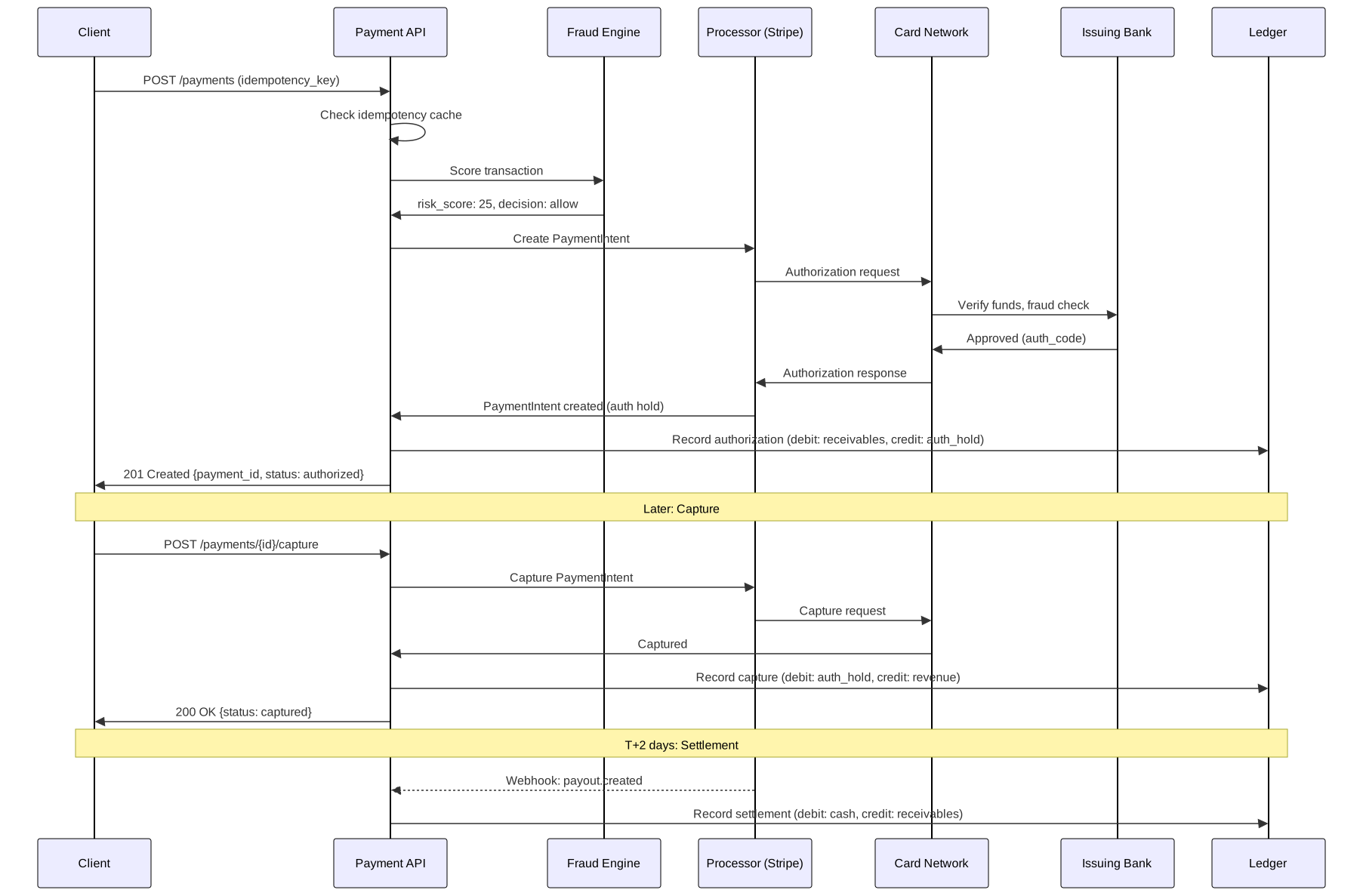
Authorization vs Capture Timing
| Pattern | Use Case | Auth Window |
|---|---|---|
| Auth + immediate capture | Digital goods, subscriptions | N/A (single request) |
| Auth then capture | E-commerce (ship then charge) | 7 days (Visa), 30 days (others) |
| Auth with delayed capture | Hotels, car rentals | Up to 31 days |
| Incremental auth | Hotels (room service additions) | Within original auth window |
Design note: Visa shortened online Merchant-Initiated Transaction (MIT) windows from 7 to 5 days as of April 2024. Always capture within the network’s window or risk auth expiration.
API Design
Create Payment
POST /api/v1/paymentsIdempotency-Key: pay_abc123_user_456Authorization: Bearer {api_key}Content-Type: application/json
{ "amount": 9999, "currency": "usd", "payment_method_token": "pm_tok_visa_4242", "capture_method": "automatic", "description": "Order #12345", "metadata": { "order_id": "ord_789", "customer_email": "user@example.com" }, "idempotency_key": "pay_abc123_user_456"}Response (201 Created):
{ "id": "pay_xyz789", "object": "payment", "amount": 9999, "currency": "usd", "status": "succeeded", "payment_method": { "id": "pm_tok_visa_4242", "type": "card", "card": { "brand": "visa", "last4": "4242", "exp_month": 12, "exp_year": 2025 } }, "captured": true, "receipt_url": "https://pay.example.com/receipts/pay_xyz789", "created_at": "2024-03-15T10:00:00Z", "metadata": { "order_id": "ord_789" }}Error Responses:
| Code | Condition | Response |
|---|---|---|
400 Bad Request | Invalid amount, currency | {"error": {"code": "invalid_amount"}} |
402 Payment Required | Card declined | {"error": {"code": "card_declined", "decline_code": "insufficient_funds"}} |
409 Conflict | Idempotency key reused with different params | {"error": {"code": "idempotency_conflict"}} |
429 Too Many Requests | Rate limit exceeded | {"error": {"code": "rate_limited"}} |
Authorize Only (Separate Capture)
POST /api/v1/paymentsIdempotency-Key: auth_abc123
{ "amount": 9999, "currency": "usd", "payment_method_token": "pm_tok_visa_4242", "capture_method": "manual"}Response:
{ "id": "pay_xyz789", "status": "requires_capture", "amount_capturable": 9999, "capture_before": "2024-03-22T10:00:00Z"}Capture Payment
POST /api/v1/payments/{payment_id}/captureIdempotency-Key: cap_abc123
{ "amount_to_capture": 9999}Partial capture: Capture less than authorized amount. Remaining authorization is automatically released.
Refund Payment
POST /api/v1/payments/{payment_id}/refundsIdempotency-Key: ref_abc123
{ "amount": 2500, "reason": "customer_request", "metadata": { "support_ticket": "TKT-456" }}Response:
{ "id": "ref_abc456", "payment_id": "pay_xyz789", "amount": 2500, "status": "pending", "reason": "customer_request", "estimated_arrival": "2024-03-20"}Refund timing: Card refunds take 5-10 business days to appear on customer statement. ACH refunds take 3-5 business days.
Webhook Events
POST /webhooks/paymentsStripe-Signature: t=1234567890,v1=abc123...
{ "id": "evt_123", "type": "payment_intent.succeeded", "data": { "object": { "id": "pi_xyz", "amount": 9999, "status": "succeeded" } }, "created": 1234567890}Critical webhook events:
| Event | Action Required |
|---|---|
payment_intent.succeeded | Mark order as paid, trigger fulfillment |
payment_intent.payment_failed | Notify customer, retry logic |
charge.refunded | Update order status, adjust inventory |
charge.dispute.created | Alert fraud team, gather evidence |
payout.paid | Reconcile settlement |
Data Modeling
Payment Schema (PostgreSQL)
5 collapsed lines
-- Core payment recordCREATE TABLE payments ( id UUID PRIMARY KEY DEFAULT gen_random_uuid(), external_id VARCHAR(100) UNIQUE NOT NULL, idempotency_key VARCHAR(255) UNIQUE NOT NULL,
-- Amount amount_cents BIGINT NOT NULL CHECK (amount_cents > 0), currency VARCHAR(3) NOT NULL, amount_captured_cents BIGINT DEFAULT 0, amount_refunded_cents BIGINT DEFAULT 0,
-- Status status VARCHAR(30) NOT NULL DEFAULT 'pending', capture_method VARCHAR(20) NOT NULL,
-- Payment method (tokenized reference) payment_method_id UUID REFERENCES payment_methods(id), payment_method_type VARCHAR(20) NOT NULL,
-- Customer customer_id UUID REFERENCES customers(id),
-- Processor details processor VARCHAR(30) NOT NULL, processor_payment_id VARCHAR(100), auth_code VARCHAR(20), decline_code VARCHAR(50),
-- Risk risk_score INTEGER, risk_level VARCHAR(20),
-- Metadata description TEXT, metadata JSONB DEFAULT '{}',
-- Timestamps created_at TIMESTAMPTZ DEFAULT NOW(), authorized_at TIMESTAMPTZ, captured_at TIMESTAMPTZ, canceled_at TIMESTAMPTZ,
-- Constraints11 collapsed lines
CONSTRAINT valid_status CHECK (status IN ( 'pending', 'requires_action', 'requires_capture', 'processing', 'succeeded', 'failed', 'canceled' )));
-- Indexes for common queriesCREATE INDEX idx_payments_customer ON payments(customer_id, created_at DESC);CREATE INDEX idx_payments_status ON payments(status, created_at DESC);CREATE INDEX idx_payments_processor ON payments(processor_payment_id);CREATE INDEX idx_payments_idempotency ON payments(idempotency_key);Double-Entry Ledger Schema
-- Accounts in the chart of accountsCREATE TABLE accounts ( id UUID PRIMARY KEY DEFAULT gen_random_uuid(), code VARCHAR(20) UNIQUE NOT NULL, name VARCHAR(100) NOT NULL, type VARCHAR(20) NOT NULL, -- asset, liability, revenue, expense currency VARCHAR(3) NOT NULL, is_active BOOLEAN DEFAULT true);
-- Ledger entries (immutable)CREATE TABLE ledger_entries ( id UUID PRIMARY KEY DEFAULT gen_random_uuid(), transaction_id UUID NOT NULL, account_id UUID NOT NULL REFERENCES accounts(id), entry_type VARCHAR(10) NOT NULL, -- debit or credit amount_cents BIGINT NOT NULL CHECK (amount_cents > 0), currency VARCHAR(3) NOT NULL, description TEXT, metadata JSONB DEFAULT '{}', created_at TIMESTAMPTZ DEFAULT NOW(),
-- Reference to source payment_id UUID REFERENCES payments(id), refund_id UUID REFERENCES refunds(id), payout_id UUID REFERENCES payouts(id));
CREATE INDEX idx_ledger_transaction ON ledger_entries(transaction_id);CREATE INDEX idx_ledger_account ON ledger_entries(account_id, created_at DESC);CREATE INDEX idx_ledger_payment ON ledger_entries(payment_id);Ledger Entry Examples
Authorization (hold funds):
Transaction: AUTH-001├── DEBIT accounts_receivable $100.00└── CREDIT authorization_hold $100.00Capture (recognize revenue):
Transaction: CAP-001├── DEBIT authorization_hold $100.00└── CREDIT revenue $100.00Settlement (receive cash):
Transaction: SET-001├── DEBIT cash $97.10 (after fees)├── DEBIT processing_fees $2.90└── CREDIT accounts_receivable $100.00Refund:
Transaction: REF-001├── DEBIT revenue $50.00└── CREDIT accounts_receivable $50.00Token Vault Schema
-- Minimal schema for tokenized payment methods-- Actual PAN/CVV stored in PCI-compliant vault (Stripe, external)CREATE TABLE payment_methods ( id UUID PRIMARY KEY DEFAULT gen_random_uuid(), customer_id UUID NOT NULL REFERENCES customers(id), processor VARCHAR(30) NOT NULL, processor_token VARCHAR(100) NOT NULL, -- Stripe pm_xxx
-- Non-sensitive metadata type VARCHAR(20) NOT NULL, -- card, bank_account, wallet card_brand VARCHAR(20), -- visa, mastercard, amex card_last4 VARCHAR(4), card_exp_month INTEGER, card_exp_year INTEGER, card_funding VARCHAR(20), -- credit, debit, prepaid
-- Billing billing_name VARCHAR(100), billing_country VARCHAR(2), billing_postal_code VARCHAR(20),
-- Status is_default BOOLEAN DEFAULT false, is_active BOOLEAN DEFAULT true,
created_at TIMESTAMPTZ DEFAULT NOW(), updated_at TIMESTAMPTZ DEFAULT NOW(),
UNIQUE(customer_id, processor_token));PCI scope note: This schema stores only tokens and non-sensitive metadata. The actual card numbers (PAN) are stored by Stripe/Adyen in their PCI-compliant vaults. Your database never sees or stores raw card data.
Database Selection Matrix
| Data | Store | Rationale |
|---|---|---|
| Payments | PostgreSQL | ACID, complex queries, audit requirements |
| Ledger entries | PostgreSQL | Strong consistency, immutable append-only |
| Idempotency keys | Redis + PostgreSQL | Fast lookup (Redis), durable record (PG) |
| Payment method tokens | PostgreSQL | Referential integrity with customers |
| Event stream | Kafka | High throughput, replay capability |
| Reconciliation snapshots | S3 + Parquet | Cost-effective analytics storage |
| Rate limiting | Redis | Sub-ms counters |
Low-Level Design
Idempotency Implementation
Idempotency prevents duplicate charges when clients retry failed requests. Stripe’s implementation serves as the industry reference.
Request flow:

Implementation:
14 collapsed lines
import { Redis } from "ioredis"import { createHash } from "crypto"
interface IdempotencyRecord { key: string request_hash: string response: any status: "processing" | "complete" | "error" created_at: Date expires_at: Date}
const redis = new Redis(process.env.REDIS_URL)const IDEMPOTENCY_TTL = 24 * 60 * 60 // 24 hours (Stripe's window)
export async function checkIdempotency( key: string, requestBody: object,): Promise<{ exists: boolean; response?: any; conflict?: boolean }> { const requestHash = hashRequest(requestBody)
// Check Redis first (fast path) const cached = await redis.get(`idem:${key}`)
if (!cached) { // Key doesn't exist, allow processing return { exists: false } }
const record: IdempotencyRecord = JSON.parse(cached)
// Key exists, check if parameters match if (record.request_hash !== requestHash) { // Same key, different request = conflict return { exists: true, conflict: true } }
// Same key, same request if (record.status === "processing") { // Request in flight, return 409 to trigger retry return { exists: true, conflict: true } }
// Return cached response return { exists: true, response: record.response }}
export async function startIdempotentRequest(key: string, requestBody: object): Promise<boolean> { const requestHash = hashRequest(requestBody)
// Atomic set-if-not-exists const result = await redis.set( `idem:${key}`, JSON.stringify({ key, request_hash: requestHash, status: "processing", created_at: new Date(), }), "EX", IDEMPOTENCY_TTL, "NX", // Only set if not exists )16 collapsed lines
return result === "OK"}
export async function completeIdempotentRequest( key: string, response: any, status: "complete" | "error",): Promise<void> { const cached = await redis.get(`idem:${key}`) if (!cached) return
const record: IdempotencyRecord = JSON.parse(cached) record.response = response record.status = status
await redis.setex(`idem:${key}`, IDEMPOTENCY_TTL, JSON.stringify(record))
// Also persist to PostgreSQL for durability await db.idempotency_records.upsert({ key, request_hash: record.request_hash, response: JSON.stringify(response), status, expires_at: new Date(Date.now() + IDEMPOTENCY_TTL * 1000), })}
function hashRequest(body: object): string { return createHash("sha256").update(JSON.stringify(body)).digest("hex")}Payment controller with idempotency:
7 collapsed lines
import { checkIdempotency, startIdempotentRequest, completeIdempotentRequest } from "./idempotency-service"
export async function createPayment(req: Request): Promise<Response> { const idempotencyKey = req.headers.get("Idempotency-Key")
if (!idempotencyKey) { return errorResponse(400, "idempotency_key_required") }
// Check for existing request const check = await checkIdempotency(idempotencyKey, req.body)
if (check.conflict) { return errorResponse(409, "idempotency_conflict") }
if (check.exists && check.response) { // Return cached response (including errors) return new Response(JSON.stringify(check.response), { status: check.response.status_code || 200, headers: { "Idempotent-Replayed": "true" }, }) }
// Start processing (atomic lock) const acquired = await startIdempotentRequest(idempotencyKey, req.body) if (!acquired) { // Another request is processing, retry later return errorResponse(409, "request_in_progress") }
try { // Process payment const payment = await processPayment(req.body)
// Cache successful response await completeIdempotentRequest(idempotencyKey, payment, "complete")
return successResponse(201, payment) } catch (error) { // Cache error response (prevents retry storms) await completeIdempotentRequest(idempotencyKey, { error: error.message }, "error")
throw error }}Design decisions:
| Decision | Rationale |
|---|---|
| 24-hour TTL | Matches Stripe; long enough for debugging, short enough to not accumulate |
| Hash request body | Detects different requests with same key |
| Cache errors too | Prevents retry storms for permanent failures |
| Redis + PostgreSQL | Redis for speed, PostgreSQL for durability and audit |
Fraud Detection Pipeline
Real-time fraud scoring must complete within 100ms to avoid impacting checkout latency.
Scoring architecture:

Feature examples (1000+ per transaction):
| Category | Features |
|---|---|
| Velocity | Transactions/hour from this card, IP, device |
| Historical | Days since first transaction, avg transaction amount |
| Geolocation | Distance from billing address, IP geolocation mismatch |
| Card | BIN country, funding type (credit/debit/prepaid) |
| Device | Browser fingerprint, screen resolution, timezone |
| Behavioral | Time on page before purchase, mouse movement patterns |
Stripe Radar reference:
- 0-99 risk score (0 = lowest risk)
- Default block threshold: 75
- Elevated risk threshold: 65
- Decision time: <100ms
- False positive rate: ~0.1%
- Evaluates 1000+ characteristics per transaction
- Models retrained monthly (0.5% recall improvement per retraining)
3D Secure integration:
9 collapsed lines
interface ThreeDSResult { authentication_status: "success" | "failed" | "attempted" | "not_supported" liability_shift: boolean eci: string // Electronic Commerce Indicator}
export async function handle3DSChallenge( paymentIntentId: string, returnUrl: string,): Promise<{ requires_action: boolean; redirect_url?: string }> { const pi = await stripe.paymentIntents.retrieve(paymentIntentId)
if (pi.status === "requires_action") { // 3DS challenge required return { requires_action: true, redirect_url: pi.next_action?.redirect_to_url?.url, } }
return { requires_action: false }}3D Secure 2.0 flows:
| Flow | Description | User Experience |
|---|---|---|
| Frictionless | Risk-based auth, no user input | Instant (invisible) |
| Challenge | Biometrics, OTP, push notification | 10-30 seconds |
3DS benefits: Visa research shows 85% reduction in checkout times and 75% reduction in cart abandonment compared to 3DS 1.0. Required for PSD2 SCA compliance in EU.
Reconciliation Service
Reconciliation ensures internal ledger matches external settlements. Discrepancies indicate bugs, fraud, or processor errors.
Reconciliation process:

Implementation:
14 collapsed lines
interface SettlementRecord { external_id: string amount_cents: number currency: string type: "charge" | "refund" | "chargeback" settled_at: Date fees_cents: number}
interface ReconciliationResult { matched: number unmatched_internal: SettlementRecord[] unmatched_external: SettlementRecord[] amount_discrepancy_cents: number}
export async function reconcileSettlement(date: Date, processor: string): Promise<ReconciliationResult> { // 1. Fetch processor settlement report const externalRecords = await fetchSettlementReport(processor, date)
// 2. Fetch internal ledger entries const internalRecords = await fetchLedgerEntries(date, processor)
// 3. Match by external ID const matched: string[] = [] const unmatchedExternal: SettlementRecord[] = [] const unmatchedInternal: SettlementRecord[] = []
const internalMap = new Map(internalRecords.map((r) => [r.external_id, r]))
for (const ext of externalRecords) { const internal = internalMap.get(ext.external_id)
if (!internal) { // Transaction in processor report but not in our ledger unmatchedExternal.push(ext) continue }
// Verify amounts match if (internal.amount_cents !== ext.amount_cents) { unmatchedExternal.push(ext) unmatchedInternal.push(internal) continue }
matched.push(ext.external_id) internalMap.delete(ext.external_id) }
// Remaining internal records not in processor report for (const [, record] of internalMap) { unmatchedInternal.push(record) }
// Calculate total discrepancy const externalTotal = externalRecords.reduce((sum, r) => sum + r.amount_cents, 0) const internalTotal = internalRecords.reduce((sum, r) => sum + r.amount_cents, 0)
return { matched: matched.length, unmatched_internal: unmatchedInternal, unmatched_external: unmatchedExternal, amount_discrepancy_cents: externalTotal - internalTotal, }}
// Alert on discrepancies16 collapsed lines
export async function handleReconciliationBreaks(result: ReconciliationResult): Promise<void> { if (result.unmatched_external.length > 0) { await alertFinanceTeam({ type: "unmatched_external", count: result.unmatched_external.length, transactions: result.unmatched_external, }) }
if (Math.abs(result.amount_discrepancy_cents) > 100) { // $1 threshold await alertFinanceTeam({ type: "amount_discrepancy", amount_cents: result.amount_discrepancy_cents, }) }}Common reconciliation breaks:
| Break Type | Cause | Resolution |
|---|---|---|
| Missing in ledger | Webhook missed, race condition | Replay webhook, manual entry |
| Missing in processor | Auth expired, voided | Close internal record |
| Amount mismatch | Partial capture, FX | Verify capture amount |
| Duplicate | Idempotency failure | Refund duplicate |
| Timing | Settlement date rollover | Verify dates |
Smart Routing Implementation
Smart routing optimizes for authorization rate, cost, or both by selecting the best processor per transaction.
11 collapsed lines
interface RoutingDecision { processor: "stripe" | "adyen" | "paypal" reason: string expected_auth_rate: number expected_cost_bps: number // basis points}
interface TransactionContext { card_brand: string card_country: string card_funding: "credit" | "debit" | "prepaid" amount_cents: number currency: string merchant_country: string}
export function routeTransaction(ctx: TransactionContext): RoutingDecision { // Rule 1: US debit cards - route to lowest-cost network if (ctx.card_country === "US" && ctx.card_funding === "debit") { return { processor: "adyen", // Intelligent routing for US debit reason: "us_debit_cost_optimization", expected_auth_rate: 0.96, expected_cost_bps: 50, // vs 150+ for credit } }
// Rule 2: European cards - route to Adyen for local acquiring if (["DE", "FR", "GB", "NL", "ES", "IT"].includes(ctx.card_country)) { return { processor: "adyen", reason: "eu_local_acquiring", expected_auth_rate: 0.94, expected_cost_bps: 180, // Lower cross-border fees } }
// Rule 3: High-value transactions - route to processor with best auth rate if (ctx.amount_cents > 100000) { // > $1000 return { processor: "stripe", reason: "high_value_auth_optimization", expected_auth_rate: 0.92, expected_cost_bps: 290, } }
// Default: Stripe return { processor: "stripe", reason: "default", expected_auth_rate: 0.9,16 collapsed lines
expected_cost_bps: 290, }}
// Failover on processor errorexport async function processWithFailover(ctx: TransactionContext, paymentData: PaymentData): Promise<PaymentResult> { const primary = routeTransaction(ctx) const processors = [primary.processor, ...getFailoverProcessors(primary.processor)]
for (const processor of processors) { try { return await processPayment(processor, paymentData) } catch (error) { if (isRetryableError(error)) { continue // Try next processor } throw error // Non-retryable (e.g., card declined) } }
throw new Error("All processors failed")}Routing optimization results (Adyen reference):
- US debit routing: 26% average cost savings
- Authorization rate uplift: 0.22%
- Some merchants: 55% cost savings
Frontend Considerations
PCI Scope Reduction
The primary frontend concern is keeping card data out of your servers entirely.
Tokenization at edge:
8 collapsed lines
// payment-form.tsx (React example)import { loadStripe } from "@stripe/stripe-js";import { Elements, CardElement, useStripe, useElements } from "@stripe/react-stripe-js";
const stripePromise = loadStripe(process.env.NEXT_PUBLIC_STRIPE_KEY);
function CheckoutForm() { const stripe = useStripe(); const elements = useElements();
const handleSubmit = async (e: FormEvent) => { e.preventDefault();
// Card data goes directly to Stripe, never touches your server const { error, paymentMethod } = await stripe.createPaymentMethod({ type: "card", card: elements.getElement(CardElement), billing_details: { name: "Customer Name", }, });
if (error) { setError(error.message); return; }
// Only the token (pm_xxx) goes to your backend const response = await fetch("/api/payments", { method: "POST", body: JSON.stringify({ payment_method_token: paymentMethod.id, amount: 9999, }), }); };
return ( <form onSubmit={handleSubmit}>11 collapsed lines
<CardElement /> <button type="submit">Pay $99.99</button> </form> );}
export function CheckoutPage() { return ( <Elements stripe={stripePromise}> <CheckoutForm /> </Elements> );}PCI scope impact:
| Approach | PCI Level | Effort |
|---|---|---|
| Direct card handling | SAQ-D (400+ questions) | Months of compliance work |
| Stripe.js iframe | SAQ-A (22 questions) | Hours |
| Redirect to hosted page | SAQ-A | Minimal |
3D Secure Challenge Handling
9 collapsed lines
import { loadStripe } from "@stripe/stripe-js"
export async function handle3DSChallenge(clientSecret: string): Promise<{ success: boolean; error?: string }> { const stripe = await loadStripe(process.env.NEXT_PUBLIC_STRIPE_KEY)
// This opens the 3DS challenge in a modal/redirect const { error, paymentIntent } = await stripe.confirmCardPayment(clientSecret, { payment_method: paymentMethodId, })
if (error) { // 3DS failed or user canceled return { success: false, error: error.message } }
if (paymentIntent.status === "succeeded") { return { success: true } }
if (paymentIntent.status === "requires_action") { // Additional action needed (rare edge case) return await handle3DSChallenge(paymentIntent.client_secret) }
return { success: false, error: "Unexpected payment status" }}Error Handling UX
const ERROR_MESSAGES: Record<string, string> = { card_declined: "Your card was declined. Please try a different card.", insufficient_funds: "Insufficient funds. Please try a different card.", expired_card: "Your card has expired. Please update your payment method.", incorrect_cvc: "The CVC code is incorrect. Please check and try again.", processing_error: "A processing error occurred. Please try again.", rate_limited: "Too many attempts. Please wait a moment and try again.",}
export function getErrorMessage(declineCode: string): string { return ERROR_MESSAGES[declineCode] || "Payment failed. Please try again."}Infrastructure Design
Cloud-Agnostic Components
| Component | Purpose | Requirements |
|---|---|---|
| API Gateway | Rate limiting, auth | High availability, DDoS protection |
| Application servers | Payment processing | Horizontal scaling, idempotent |
| Primary database | Payments, ledger | ACID, strong consistency |
| Cache | Idempotency, sessions | Sub-ms latency |
| Message queue | Async processing | Exactly-once, durable |
| Event stream | Audit, analytics | High throughput, retention |
| Secrets manager | API keys, encryption keys | HSM-backed, audit logging |
AWS Reference Architecture

Service configuration:
| Service | Configuration | Rationale |
|---|---|---|
| RDS PostgreSQL | db.r6g.xlarge, Multi-AZ, encrypted | ACID, HA, compliance |
| ElastiCache Redis | r6g.large, cluster mode, 3 nodes | Idempotency, low latency |
| ECS Fargate | 2 vCPU, 4GB, auto-scaling 2-20 | Predictable performance |
| SQS FIFO | 3000 msg/sec | Exactly-once webhooks |
| KMS | Customer-managed keys | Encryption key control |
| CloudWatch | 1-minute metrics, alarms | Observability |
Self-Hosted Alternatives
| Managed Service | Self-Hosted | Trade-off |
|---|---|---|
| RDS PostgreSQL | PostgreSQL on EC2 | More control, operational burden |
| ElastiCache | Redis Cluster on EC2 | Cost at scale |
| SQS FIFO | Kafka | Higher throughput, complexity |
| Secrets Manager | HashiCorp Vault | Full control, operational overhead |
Variations
ACH/Bank Transfer Processing
ACH has fundamentally different timing and failure modes than cards.
interface ACHPayment { routing_number: string account_number: string // tokenized account_type: "checking" | "savings"}
export async function initiateACHPayment( payment: ACHPayment, amount: number,): Promise<{ status: string; estimated_settlement: Date }> { // ACH is batch-processed, not real-time const transfer = await stripe.paymentIntents.create({ amount, currency: "usd", payment_method_types: ["us_bank_account"], payment_method_data: { type: "us_bank_account", us_bank_account: { routing_number: payment.routing_number, account_number: payment.account_number, account_holder_type: "individual", }, }, })
return { status: "processing", estimated_settlement: addBusinessDays(new Date(), 3), // Same-day ACH: same day }}ACH timing:
| Type | Submission Deadline | Settlement |
|---|---|---|
| Same-Day ACH | 4:45 PM ET | Same day by 5 PM |
| Next-Day ACH | 2:15 PM ET | Next business day |
| Standard ACH | Varies | 2-3 business days |
ACH failure modes:
- NSF (Non-Sufficient Funds): Returns after 2-3 days
- Account closed: Returns after settlement attempt
- Invalid account: Returns within 24 hours
Subscription/Recurring Billing
11 collapsed lines
interface Subscription { id: string customer_id: string plan_id: string status: "active" | "past_due" | "canceled" current_period_end: Date payment_method_id: string}
const RETRY_SCHEDULE = [1, 3, 5, 7] // Days after failure
export async function processSubscriptionRenewal(subscription: Subscription): Promise<void> { const plan = await getPlan(subscription.plan_id)
try { const payment = await createPayment({ amount: plan.amount_cents, currency: plan.currency, customer_id: subscription.customer_id, payment_method_id: subscription.payment_method_id, idempotency_key: `sub_${subscription.id}_${subscription.current_period_end.toISOString()}`, })
if (payment.status === "succeeded") { await extendSubscription(subscription.id) } } catch (error) { if (isDeclinedError(error)) { await markSubscriptionPastDue(subscription.id) await scheduleRetry(subscription.id, RETRY_SCHEDULE[0]) await notifyCustomerPaymentFailed(subscription.customer_id) } }}
async function handleRetry(subscriptionId: string, attemptNumber: number): Promise<void> { const subscription = await getSubscription(subscriptionId)
try { await processSubscriptionRenewal(subscription) } catch (error) { if (attemptNumber < RETRY_SCHEDULE.length) { await scheduleRetry(subscriptionId, RETRY_SCHEDULE[attemptNumber]) } else { // Final attempt failed await cancelSubscription(subscriptionId, "payment_failed") await notifyCustomerCanceled(subscription.customer_id) }2 collapsed lines
}}Multi-Currency and FX
interface FXQuote { from_currency: string to_currency: string rate: number expires_at: Date}
export async function getQuote(fromCurrency: string, toCurrency: string, amount: number): Promise<FXQuote> { // FX rates are volatile, quote expires quickly const rate = await fetchCurrentRate(fromCurrency, toCurrency)
return { from_currency: fromCurrency, to_currency: toCurrency, rate, expires_at: new Date(Date.now() + 60 * 1000), // 60 second quote }}
export async function captureWithFX(paymentId: string, quote: FXQuote): Promise<void> { if (new Date() > quote.expires_at) { throw new Error("FX quote expired") }
// Lock in rate at capture time await capturePayment(paymentId, { fx_rate: quote.rate, settlement_currency: quote.to_currency, })}Conclusion
Payment system design requires balancing competing concerns across multiple dimensions:
-
Idempotency is non-negotiable — Every payment operation must be safely retriable. Idempotency keys with request hashing prevent duplicate charges during network failures or client retries.
-
PCI scope reduction saves engineering effort — Edge tokenization (Stripe.js, Adyen Web Components) keeps card data off your servers, reducing PCI questionnaire from 400+ questions to 22.
-
Fraud decisions must be fast — Sub-100ms scoring using ML models (Stripe Radar processes 1000+ features per transaction) balances security with checkout conversion.
-
Double-entry ledger ensures audit readiness — Every fund movement (auth, capture, refund, settlement) recorded with debits equaling credits enables reconciliation and compliance.
-
Smart routing optimizes cost and auth rates — Multi-processor setups with intelligent routing can achieve 26%+ cost savings (Adyen US debit routing) while improving authorization rates.
What this design optimizes for:
- Zero duplicate charges (idempotency)
- PCI scope minimization (edge tokenization)
- High authorization rates (smart routing)
- Financial accuracy (double-entry ledger)
- Operational resilience (failover, reconciliation)
What it sacrifices:
- Simplicity (multi-processor complexity)
- Latency (fraud scoring adds ~100ms)
- Cost (third-party processor fees vs in-house)
Known limitations:
- Webhook reliability depends on processor—implement webhook replay mechanisms
- FX rates are volatile—quote expiration must be enforced
- Chargeback handling requires manual evidence gathering
- ACH failures surface days after initiation
Appendix
Prerequisites
- RESTful API design principles
- Database transactions and ACID guarantees
- Distributed systems basics (idempotency, exactly-once delivery)
- Basic understanding of card payment networks
Terminology
- PAN (Primary Account Number): The 16-digit card number
- PCI DSS (Payment Card Industry Data Security Standard): Security standard for card data handling
- SAQ (Self-Assessment Questionnaire): PCI compliance verification form
- Interchange: Fee paid by acquirer to issuer on each transaction (1.4-2.6% typical)
- Authorization: Hold placed on cardholder’s available credit
- Capture: Finalization of authorized transaction for settlement
- Settlement: Transfer of funds from issuer to acquirer to merchant
- 3D Secure: Protocol for authenticating card-not-present transactions
- SCA (Strong Customer Authentication): EU PSD2 requirement for two-factor auth
- ACH (Automated Clearing House): US bank-to-bank transfer network
- Chargeback: Disputed transaction reversed by card network
Summary
- Payment systems require idempotent operations with 24-hour key retention (Stripe’s standard)
- Edge tokenization (Stripe.js/Adyen Web Components) reduces PCI scope from SAQ-D to SAQ-A
- Fraud scoring must complete in <100ms, evaluating 1000+ features per transaction
- Double-entry ledger tracks every fund movement: authorization holds, captures, refunds, settlements
- Smart routing across multiple processors can achieve 26% cost savings on US debit
- Reconciliation matches internal ledger against processor settlements daily
- 3D Secure 2.0 enables frictionless authentication with 85% checkout time reduction
References
- Stripe API Documentation - Comprehensive payment API reference
- Stripe: Designing robust APIs with idempotency - Idempotency key implementation patterns
- Stripe Radar: Machine learning for fraud detection - ML fraud scoring architecture
- PCI Security Standards Council - PCI DSS 4.0 requirements
- Adyen: Intelligent Payment Routing - Smart routing cost savings data
- Stripe: 3D Secure 2 Guide - 3DS implementation patterns
- Nacha: How ACH Payments Work - ACH network specifications
- Visa: Credit Card Processing - Card network processing details
- Martin Fowler: Patterns of Enterprise Application Architecture - Double-entry accounting patterns