Design Amazon Shopping Cart
A system design for an e-commerce shopping cart handling millions of concurrent users, real-time inventory, dynamic pricing, and distributed checkout. This design focuses on high availability during flash sales, consistent inventory management, and seamless guest-to-user cart transitions.

Abstract
Shopping cart systems must solve three interconnected problems: cart state persistence (guest vs authenticated users, cross-device sync, cart merge on login), inventory accuracy (preventing overselling during concurrent access while maintaining availability), and checkout atomicity (coordinating payment, inventory deduction, and order creation across distributed services).
The core architectural decisions:
- Two-tier cart storage: Redis for sub-millisecond reads during browsing; persistent database for durability and cross-device sync
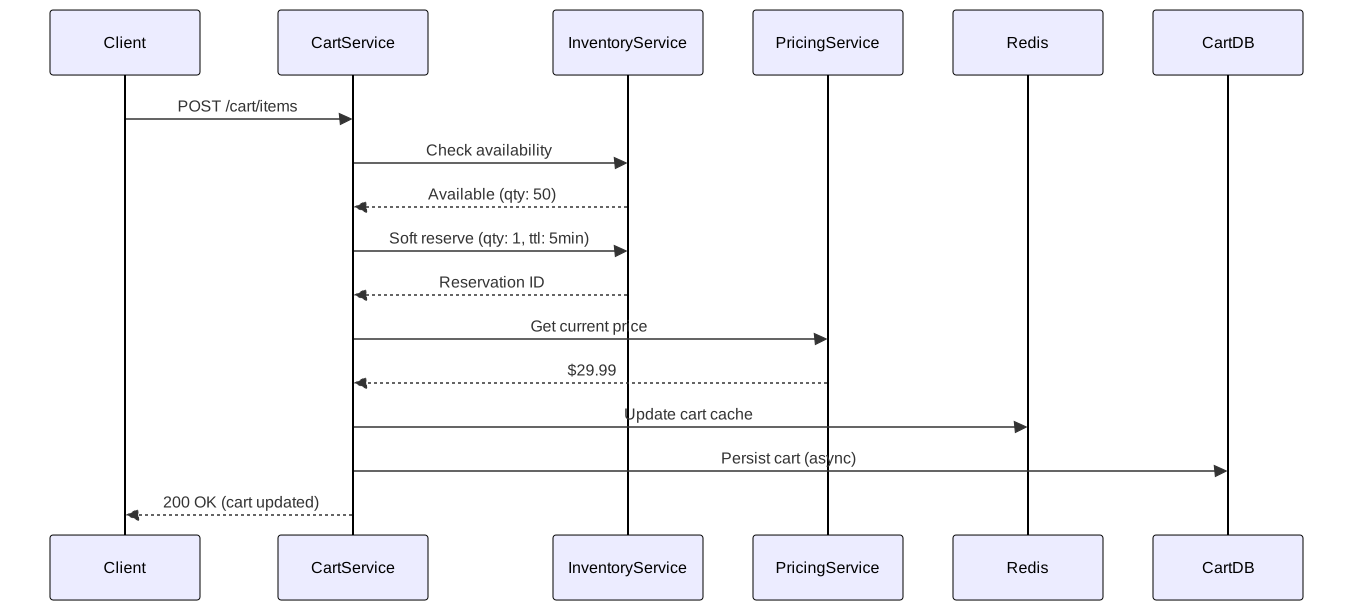
- Soft reservations with expiry: Reserve inventory on add-to-cart (5-minute TTL), convert to hard reservation only after payment confirmation—prevents inventory lock-up from abandoned carts
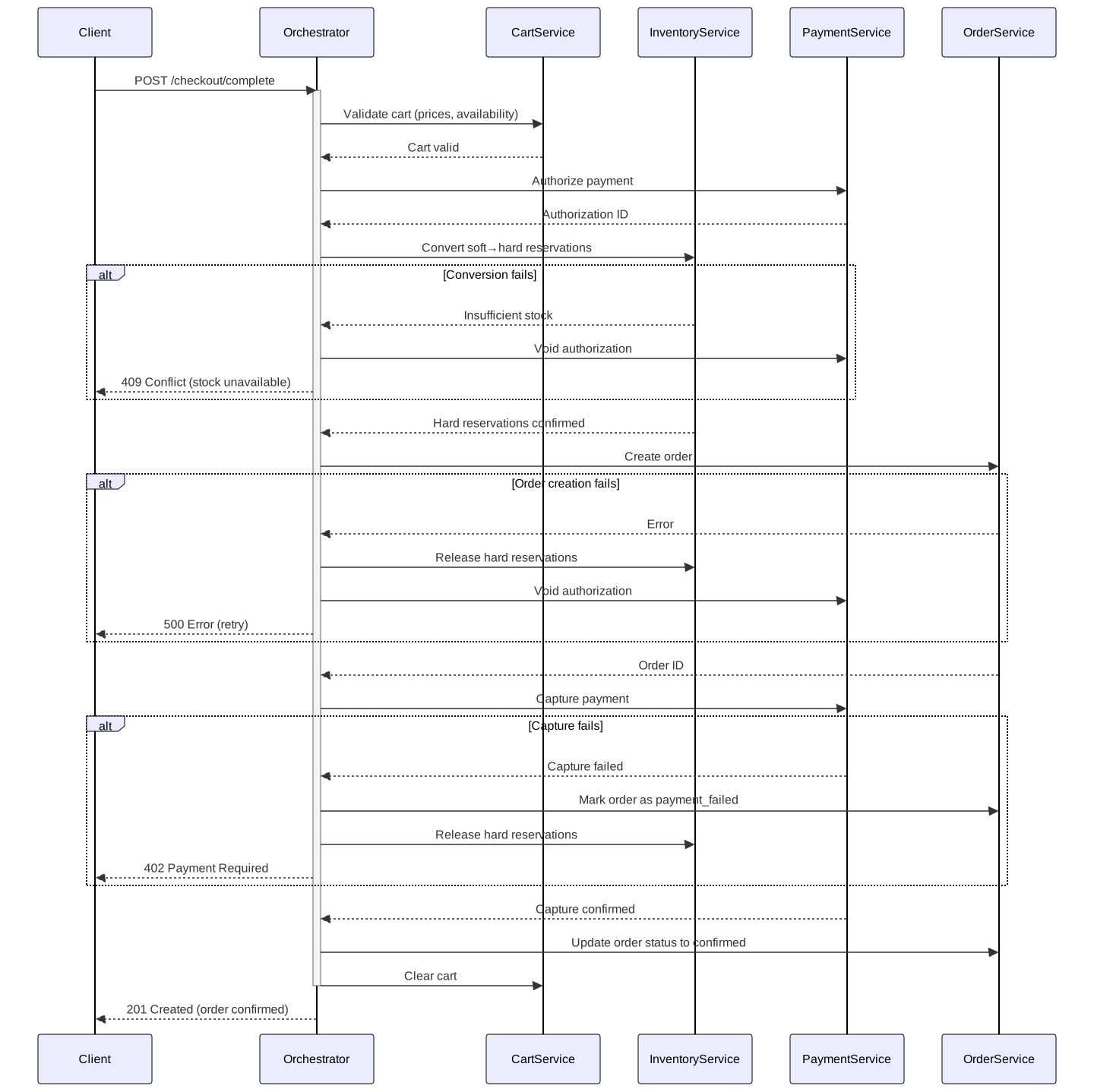
- Saga pattern for checkout: Orchestrated sequence of payment authorization → inventory hard reservation → order creation, with compensating transactions on failure
- Eventually consistent inventory display, strongly consistent checkout: Accept stale counts on product pages for availability; enforce consistency only during checkout
| Dimension | Optimizes For | Sacrifices |
|---|---|---|
| Redis cart cache | Read latency (<1ms) | Durability (requires DB backup) |
| Soft reservations | Inventory turnover | Checkout may fail if reservation expires |
| Saga orchestration | Reliability, debuggability | Latency (sequential steps) |
| Hash-based sharding | Even distribution | Cross-user queries |
Requirements
Functional Requirements
| Feature | Scope | Notes |
|---|---|---|
| Add/remove/update cart items | Core | Real-time quantity validation against inventory |
| Guest cart with persistence | Core | Survives browser close, 30-day expiry |
| Cart merge on login | Core | Combine guest + user cart, resolve quantity conflicts |
| Real-time price updates | Core | Price at checkout reflects current price, not add-time |
| Inventory soft reservation | Core | Prevent checkout failures from out-of-stock |
| Coupon/promotion application | Core | Stackable rules, exclusivity handling |
| Multi-step checkout | Core | Address → Payment → Review → Confirm |
| Abandoned cart recovery | Extended | Email/push notifications with cart link |
| Wishlist/Save for Later | Extended | Move items between cart and wishlist |
Non-Functional Requirements
| Requirement | Target | Rationale |
|---|---|---|
| Availability | 99.99% (4 nines) | Revenue-critical; 1 hour downtime = millions in lost sales |
| Cart read latency | p99 < 50ms | Instant feedback on cart interactions |
| Cart write latency | p99 < 200ms | Acceptable for add/remove operations |
| Checkout latency | p99 < 3s | End-to-end including payment processing |
| Peak throughput | 100K cart ops/sec | Flash sale scenarios |
| Data durability | 99.999999999% | Cart data must not be lost |
| Consistency | Eventual (display), Strong (checkout) | Hybrid model per operation type |
Scale Estimation
Users:
- DAU: 50M
- Peak concurrent users: 5M (10% of DAU during flash sales)
- Carts per user: 1 active
Traffic:
- Cart views: 50M DAU × 10 views/day = 500M/day = ~6K RPS average
- Cart modifications: 50M DAU × 3 ops/day = 150M/day = ~1.7K RPS average
- Peak multiplier (flash sale): 50x → 300K cart views/sec, 85K modifications/sec
- Checkouts: 5M/day = ~60 checkouts/sec average, 3K/sec peak
Storage:
- Cart record: ~2KB (metadata + 10 items average)
- Active carts: 50M × 2KB = 100GB
- Historical carts (90-day retention): 100GB × 3 = 300GB
- With replication (3x): ~1TB total
Inventory:
- SKUs: 100M products
- Inventory checks: 500M/day (1 per cart view)
- Reservation writes: 150M/day
Design Paths
Path A: Consistency-First (Financial/Limited-Inventory)
Best when:
- High-value items where overselling has significant cost (electronics, luxury goods)
- Limited inventory flash sales (concert tickets, limited editions)
- Regulatory requirements for inventory accuracy
Architecture:
- Strong consistency for all inventory operations
- Synchronous inventory checks before cart add
- Pessimistic locking during checkout
Trade-offs:
- ✅ Zero overselling
- ✅ Accurate inventory counts everywhere
- ❌ Higher latency (lock contention)
- ❌ Lower throughput under load
- ❌ Checkout failures increase during traffic spikes
Real-world example: Ticketmaster uses strong consistency for seat inventory. During high-demand events, this leads to “waiting room” queuing to serialize access and prevent overselling reserved seating.
Path B: Availability-First (High-Volume Retail)
Best when:
- Large inventory buffers make overselling rare
- Customer experience (speed) more important than perfect accuracy
- Compensation for overselling is acceptable (refund + coupon)
Architecture:
- Eventually consistent inventory reads
- Optimistic updates with conflict resolution at checkout
- Accept occasional overselling, handle via backorder/compensation
Trade-offs:
- ✅ Sub-millisecond cart operations
- ✅ Handles extreme traffic spikes gracefully
- ✅ Better user experience (no waiting)
- ❌ Occasional overselling (typically <0.1%)
- ❌ Requires robust compensation workflow
Real-world example: Amazon accepts minor overselling on most products. When it occurs, customers receive an apology email with a discount code and the option to wait for restock or cancel. The revenue from faster checkout far exceeds compensation costs.
Path Comparison
| Factor | Path A: Consistency-First | Path B: Availability-First |
|---|---|---|
| Inventory accuracy | 100% | 99.9%+ |
| Cart add latency | 50-200ms | <10ms |
| Peak throughput | 10K ops/sec | 100K+ ops/sec |
| Checkout failure rate | Higher (locks timeout) | Lower (optimistic) |
| Operational complexity | Lower | Higher (compensation flows) |
| Best for | Tickets, luxury, limited | General retail, commodities |
This Article’s Focus
This article focuses on Path B (Availability-First) because it represents the architecture of most large-scale e-commerce systems (Amazon, Shopify, Walmart). Path A patterns are noted where inventory criticality requires them.
High-Level Design
Service Architecture

Cart Service
Manages cart lifecycle: creation, item management, persistence, and merge operations.
Responsibilities:
- CRUD operations on cart items
- Guest cart token generation and management
- Cart merge on user authentication
- Price/availability validation coordination
- Cart expiration scheduling
Data Flow - Add to Cart:
Inventory Service
Manages stock levels, reservations, and availability across warehouses.
Key Concepts:
- Available For Sale (AFS): Physical stock minus hard reservations
- Available For Reservation (AFR): AFS minus soft reservations
- Soft Reservation: Temporary hold with TTL, automatically releases
- Hard Reservation: Committed hold after payment, triggers fulfillment
Reservation State Machine:

Checkout Orchestrator
Coordinates the multi-step checkout process using the Saga pattern.
Saga Steps:
- Validate Cart: Confirm items still in stock at current prices
- Authorize Payment: Place hold on payment method
- Convert Reservations: Soft → Hard for all cart items
- Create Order: Generate order record
- Confirm Payment: Capture authorized amount
- Trigger Fulfillment: Send to warehouse
Compensation Actions (on failure):
- Payment capture failed → Release hard reservations, void authorization
- Reservation conversion failed → Void payment authorization
- Order creation failed → Release reservations, void authorization
Pricing Service
Evaluates pricing rules, promotions, and coupons in real-time.
Rule Evaluation Order:
- Base price (from catalog)
- Sale price (time-based overrides)
- Quantity discounts (buy 3, get 10% off)
- Coupon codes (user-applied)
- Cart-level promotions (free shipping over $50)
- Loyalty discounts (member pricing)
Conflict Resolution:
- Exclusive promotions marked in rule metadata
- Priority field determines evaluation order
- “Best for customer” mode: apply combination yielding maximum discount
API Design
Cart Endpoints
Get Cart
GET /api/v1/cartAuthorization: Bearer {token} | X-Guest-Token: {guest_token}Response (200 OK):
{ "cart_id": "cart_abc123", "user_id": "user_xyz789", "items": [ { "item_id": "item_001", "product_id": "prod_12345", "product_name": "Wireless Headphones", "variant_id": "var_black_medium", "quantity": 2, "unit_price": 79.99, "line_total": 159.98, "image_url": "https://cdn.example.com/headphones.jpg", "availability": { "status": "in_stock",24 collapsed lines
"quantity_available": 45, "reservation_expires_at": "2024-01-15T10:35:00Z" }, "applied_promotions": [ { "promotion_id": "promo_winter_sale", "name": "Winter Sale 20% Off", "discount_amount": 31.99 } ] } ], "summary": { "subtotal": 159.98, "discount_total": 31.99, "shipping_estimate": 0.0, "tax_estimate": 10.24, "total": 138.23 }, "applied_coupons": [], "created_at": "2024-01-15T09:00:00Z", "updated_at": "2024-01-15T10:30:00Z", "expires_at": "2024-02-14T09:00:00Z"}Design Decisions:
availabilityembedded per item: Frontend can show stock warnings without additional callsreservation_expires_atexposed: Client can show countdown timer encouraging checkoutsummarypre-calculated: Avoids client-side price calculation errors- Pagination not needed: Carts rarely exceed 50 items; full payload < 10KB
Add Item to Cart
POST /api/v1/cart/itemsAuthorization: Bearer {token} | X-Guest-Token: {guest_token}Content-Type: application/jsonIdempotency-Key: {uuid}Request:
{ "product_id": "prod_12345", "variant_id": "var_black_medium", "quantity": 2}Response (201 Created):
{ "item_id": "item_001", "product_id": "prod_12345", "quantity": 2,12 collapsed lines
"unit_price": 79.99, "line_total": 159.98, "reservation": { "reservation_id": "res_abc123", "expires_at": "2024-01-15T10:35:00Z" }, "cart_summary": { "item_count": 2, "subtotal": 159.98, "total": 138.23 }}Error Responses:
| Status | Condition | Body |
|---|---|---|
| 400 | Invalid product/variant ID | {"error": "INVALID_PRODUCT", "message": "Product not found"} |
| 409 | Insufficient inventory | {"error": "INSUFFICIENT_STOCK", "available": 1, "requested": 2} |
| 409 | Duplicate add (idempotency) | Returns original response |
| 429 | Rate limit exceeded | {"error": "RATE_LIMITED", "retry_after": 60} |
Rate Limits: 60 requests/minute per user (prevents cart bombing attacks)
Update Item Quantity
PATCH /api/v1/cart/items/{item_id}Request:
{ "quantity": 3}Behavior:
quantity: 0removes the item- Validates against available inventory
- Updates soft reservation (extends TTL if increasing, releases delta if decreasing)
Apply Coupon
POST /api/v1/cart/couponsRequest:
{ "code": "SAVE20"}Response (200 OK):
{ "coupon": { "code": "SAVE20", "description": "20% off your order", "discount_type": "percentage", "discount_value": 20, "applied_discount": 27.99 }, "cart_summary": { "subtotal": 159.98, "discount_total": 59.98, "total": 110.24 }}Error Responses:
| Status | Condition |
|---|---|
| 400 | Invalid/expired coupon |
| 409 | Coupon not combinable with existing promotions |
| 409 | Minimum order value not met |
Checkout Endpoints
Initialize Checkout
POST /api/v1/checkoutAuthorization: Bearer {token}Request:
{ "cart_id": "cart_abc123"}Response (201 Created):
{ "checkout_id": "checkout_xyz789", "status": "pending", "cart_snapshot": { "items": [...], "summary": {...}5 collapsed lines
}, "required_steps": ["address", "payment", "review"], "completed_steps": [], "expires_at": "2024-01-15T11:00:00Z"}Design Decisions:
cart_snapshotcaptured at checkout init: Prices locked for checkout durationexpires_atenforced: 30-minute checkout session prevents indefinite reservation holds- Steps returned by server: Enables A/B testing checkout flows without client changes
Submit Shipping Address
PUT /api/v1/checkout/{checkout_id}/addressRequest:
{ "shipping_address": { "name": "John Doe", "line1": "123 Main St", "line2": "Apt 4B", "city": "Seattle", "state": "WA", "postal_code": "98101", "country": "US", "phone": "+1-206-555-0123" }, "billing_same_as_shipping": true}Response includes:
- Validated/normalized address
- Updated shipping options with real costs
- Tax calculation based on destination
Submit Payment and Complete
POST /api/v1/checkout/{checkout_id}/completeIdempotency-Key: {uuid}Request:
{ "payment_method_id": "pm_card_visa_4242", "accept_terms": true}Response (201 Created):
{ "order_id": "order_abc123", "status": "confirmed", "confirmation_number": "AMZ-2024-ABC123", "estimated_delivery": "2024-01-18", "total_charged": 138.23, "payment": {4 collapsed lines
"method": "Visa ending in 4242", "transaction_id": "txn_xyz789" }}Idempotency Behavior:
- Same
Idempotency-Keywithin 24 hours returns cached response - Prevents duplicate charges on network retries or user double-clicks
Data Modeling
Cart Schema
Primary Store: PostgreSQL (ACID guarantees, complex merge queries)
5 collapsed lines
-- Cart tableCREATE TABLE carts ( id UUID PRIMARY KEY DEFAULT gen_random_uuid(), user_id UUID REFERENCES users(id), guest_token VARCHAR(64) UNIQUE, status VARCHAR(20) DEFAULT 'active', created_at TIMESTAMPTZ DEFAULT NOW(), updated_at TIMESTAMPTZ DEFAULT NOW(), expires_at TIMESTAMPTZ, merged_into_cart_id UUID REFERENCES carts(id),
CONSTRAINT user_or_guest CHECK ( (user_id IS NOT NULL AND guest_token IS NULL) OR (user_id IS NULL AND guest_token IS NOT NULL) ));
-- Cart items tableCREATE TABLE cart_items ( id UUID PRIMARY KEY DEFAULT gen_random_uuid(), cart_id UUID NOT NULL REFERENCES carts(id) ON DELETE CASCADE, product_id UUID NOT NULL, variant_id UUID NOT NULL, quantity INT NOT NULL CHECK (quantity > 0),15 collapsed lines
unit_price_at_add DECIMAL(10,2) NOT NULL, reservation_id UUID, added_at TIMESTAMPTZ DEFAULT NOW(), updated_at TIMESTAMPTZ DEFAULT NOW(),
UNIQUE (cart_id, product_id, variant_id));
-- Indexes for common access patternsCREATE INDEX idx_carts_user ON carts(user_id) WHERE user_id IS NOT NULL;CREATE INDEX idx_carts_guest ON carts(guest_token) WHERE guest_token IS NOT NULL;CREATE INDEX idx_carts_expires ON carts(expires_at) WHERE status = 'active';CREATE INDEX idx_cart_items_cart ON cart_items(cart_id);CREATE INDEX idx_cart_items_reservation ON cart_items(reservation_id) WHERE reservation_id IS NOT NULL;Design Decisions:
user_idvsguest_tokenmutual exclusion: Clean separation of authenticated vs guest cartsunit_price_at_add: Audit trail for price changes between add and checkoutreservation_idnullable: Not all cart items require reservation (digital goods)- Soft delete via
merged_into_cart_id: Preserves guest cart history for analytics
Cart Cache Structure (Redis)
# Cart metadata (Hash)HSET cart:{cart_id} user_id "user_xyz789" item_count 3 subtotal 259.97 updated_at 1705312200
# Cart items (Hash - one per item)HSET cart:{cart_id}:item:{item_id} product_id "prod_12345" variant_id "var_black_medium" quantity 2 unit_price 79.99 reservation_id "res_abc123" reservation_expires 1705312500
# Guest token to cart mappingSET guest:{guest_token} cart_abc123 EX 2592000 # 30 days
# Cart expiration sorted set (for cleanup workers)ZADD cart_expirations 1705312500 cart_abc123TTL Strategy:
- Cart metadata: 30 days (matches business retention policy)
- Reservation entries: 5 minutes (align with soft reservation TTL)
- Guest token mapping: 30 days
Inventory Schema
Primary Store: PostgreSQL with read replicas
3 collapsed lines
-- Inventory by locationCREATE TABLE inventory_entries ( id UUID PRIMARY KEY DEFAULT gen_random_uuid(), product_id UUID NOT NULL, variant_id UUID NOT NULL, location_id UUID NOT NULL, quantity_on_hand INT NOT NULL DEFAULT 0, quantity_reserved INT NOT NULL DEFAULT 0, quantity_available INT GENERATED ALWAYS AS (quantity_on_hand - quantity_reserved) STORED, updated_at TIMESTAMPTZ DEFAULT NOW(),
UNIQUE (product_id, variant_id, location_id), CHECK (quantity_reserved <= quantity_on_hand));
-- Reservations tableCREATE TABLE inventory_reservations ( id UUID PRIMARY KEY DEFAULT gen_random_uuid(),12 collapsed lines
inventory_entry_id UUID NOT NULL REFERENCES inventory_entries(id), cart_id UUID NOT NULL, quantity INT NOT NULL, type VARCHAR(10) NOT NULL CHECK (type IN ('soft', 'hard')), created_at TIMESTAMPTZ DEFAULT NOW(), expires_at TIMESTAMPTZ, -- NULL for hard reservations order_id UUID, -- Set when converted to hard reservation
INDEX idx_reservations_entry (inventory_entry_id), INDEX idx_reservations_cart (cart_id), INDEX idx_reservations_expires (expires_at) WHERE type = 'soft');Consistency Approach:
quantity_availableas generated column: Always consistent with underlying values- Reservation updates use
SELECT FOR UPDATE: Prevents race conditions - Read replicas used for availability display (eventual consistency acceptable)
Reservation Cache (Redis)
# Soft reservation with automatic expirySET reservation:{res_id} '{"inventory_entry_id":"inv_123","cart_id":"cart_abc","quantity":2}' EX 300 # 5 minutes
# Fast lookup: cart → reservationsSADD cart_reservations:{cart_id} res_001 res_002EXPIRE cart_reservations:{cart_id} 300
# Fast lookup: inventory → reservations (for availability calculation)SADD inventory_reservations:{inventory_entry_id} res_001 res_002EXPIRE inventory_reservations:{inventory_entry_id} 300Why Redis for reservations:
- Automatic TTL expiration handles cleanup without background jobs
- Sub-millisecond lookups for availability checks
- SADD operations for atomic reservation tracking
Database Selection Summary
| Data Type | Store | Rationale |
|---|---|---|
| Cart (persistent) | PostgreSQL | ACID for merge operations, complex queries |
| Cart (cache) | Redis Cluster | Sub-ms reads, automatic expiration |
| Inventory | PostgreSQL + replicas | Strong consistency writes, scaled reads |
| Reservations | Redis + PostgreSQL | Redis for speed, PG for durability |
| Orders | PostgreSQL | ACID required for financial records |
| Price rules | PostgreSQL + cache | Complex queries, Redis for hot paths |
Low-Level Design: Cart Merge
Cart merge occurs when a guest user authenticates. The system must combine items from both carts while handling conflicts.
Merge Algorithm

Merge Implementation
15 collapsed lines
interface CartItem { productId: string variantId: string quantity: number reservationId?: string}
interface MergeResult { mergedCart: Cart addedItems: CartItem[] updatedItems: Array<{ item: CartItem; previousQty: number }> conflicts: Array<{ guestItem: CartItem; reason: string }>}
async function mergeGuestCart( userId: string, guestToken: string, strategy: "sum" | "max" | "keep_user" = "sum",): Promise<MergeResult> { return await db.transaction(async (tx) => { // Load both carts with row-level locks const [userCart, guestCart] = await Promise.all([ tx.query("SELECT * FROM carts WHERE user_id = $1 FOR UPDATE", [userId]), tx.query("SELECT * FROM carts WHERE guest_token = $1 FOR UPDATE", [guestToken]), ])
if (!guestCart) { return { mergedCart: userCart, addedItems: [], updatedItems: [], conflicts: [] } }
const result: MergeResult = { mergedCart: userCart || (await createUserCart(tx, userId)), addedItems: [], updatedItems: [], conflicts: [], }
for (const guestItem of guestCart.items) { const existingItem = result.mergedCart.items.find( (i) => i.productId === guestItem.productId && i.variantId === guestItem.variantId, )
if (!existingItem) { // Transfer item to user cart21 collapsed lines
await transferItem(tx, guestItem, result.mergedCart.id) result.addedItems.push(guestItem) } else { // Handle conflict based on strategy const newQty = resolveQuantity(existingItem.quantity, guestItem.quantity, strategy) const maxAllowed = await getMaxQuantity(guestItem.productId, guestItem.variantId)
if (newQty > maxAllowed) { result.conflicts.push({ guestItem, reason: `Quantity capped at ${maxAllowed} (max per order)`, }) }
if (newQty !== existingItem.quantity) { await updateItemQuantity(tx, existingItem.id, Math.min(newQty, maxAllowed)) result.updatedItems.push({ item: existingItem, previousQty: existingItem.quantity }) }
// Release guest item's reservation (will be replaced by user cart's) if (guestItem.reservationId) { await releaseReservation(guestItem.reservationId) } } }
// Mark guest cart as merged await tx.query("UPDATE carts SET status = $1, merged_into_cart_id = $2 WHERE id = $3", [ "merged", result.mergedCart.id, guestCart.id, ])
return result })}
function resolveQuantity(userQty: number, guestQty: number, strategy: string): number { switch (strategy) { case "sum": return userQty + guestQty case "max": return Math.max(userQty, guestQty) case "keep_user": return userQty }}Merge Edge Cases
| Scenario | Handling |
|---|---|
| Guest item now out of stock | Add to cart with unavailable flag; notify user |
| Price changed since guest add | Use current price; show price change notice |
| Guest item discontinued | Add to “saved items” instead; notify user |
| Combined quantity exceeds limit | Cap at limit; show conflict message |
| Guest cart has applied coupon | Validate coupon for user; may not transfer (user-specific coupons) |
Low-Level Design: Checkout Saga
The checkout process spans multiple services that must coordinate atomically despite having independent databases.
Saga Orchestration
Saga State Machine
10 collapsed lines
enum CheckoutState { INITIATED = "initiated", CART_VALIDATED = "cart_validated", PAYMENT_AUTHORIZED = "payment_authorized", INVENTORY_RESERVED = "inventory_reserved", ORDER_CREATED = "order_created", PAYMENT_CAPTURED = "payment_captured", COMPLETED = "completed", COMPENSATION_REQUIRED = "compensation_required", FAILED = "failed",}
interface CheckoutSaga { id: string cartId: string state: CheckoutState authorizationId?: string orderId?: string failedStep?: string compensationSteps: string[] createdAt: Date updatedAt: Date}
async function executeCheckoutSaga(checkoutId: string): Promise<Order> { const saga = await loadSaga(checkoutId)
try { // Each step is idempotent and checks current state before executing if (saga.state === CheckoutState.INITIATED) { await validateCart(saga) await transitionState(saga, CheckoutState.CART_VALIDATED) }
if (saga.state === CheckoutState.CART_VALIDATED) { saga.authorizationId = await authorizePayment(saga) await transitionState(saga, CheckoutState.PAYMENT_AUTHORIZED) }
21 collapsed lines
if (saga.state === CheckoutState.PAYMENT_AUTHORIZED) { await convertReservations(saga) await transitionState(saga, CheckoutState.INVENTORY_RESERVED) }
if (saga.state === CheckoutState.INVENTORY_RESERVED) { saga.orderId = await createOrder(saga) await transitionState(saga, CheckoutState.ORDER_CREATED) }
if (saga.state === CheckoutState.ORDER_CREATED) { await capturePayment(saga) await transitionState(saga, CheckoutState.PAYMENT_CAPTURED) }
if (saga.state === CheckoutState.PAYMENT_CAPTURED) { await clearCart(saga) await transitionState(saga, CheckoutState.COMPLETED) }
return await loadOrder(saga.orderId) } catch (error) { saga.failedStep = saga.state await transitionState(saga, CheckoutState.COMPENSATION_REQUIRED) await executeCompensation(saga) throw error }}
async function executeCompensation(saga: CheckoutSaga): Promise<void> { // Compensate in reverse order of completed steps if (saga.orderId && saga.state !== CheckoutState.PAYMENT_CAPTURED) { await markOrderFailed(saga.orderId) }
if (saga.state >= CheckoutState.INVENTORY_RESERVED) { await releaseHardReservations(saga.cartId) }
if (saga.authorizationId) { await voidAuthorization(saga.authorizationId) }
await transitionState(saga, CheckoutState.FAILED)}Idempotency Implementation
8 collapsed lines
interface IdempotencyRecord { key: string requestHash: string response: any statusCode: number createdAt: Date expiresAt: Date}
async function withIdempotency<T>( key: string, request: any, handler: () => Promise<T>,): Promise<{ result: T; statusCode: number; cached: boolean }> { const requestHash = hashRequest(request)
// Check for existing response const existing = await redis.get(`idempotency:${key}`) if (existing) { const record: IdempotencyRecord = JSON.parse(existing) if (record.requestHash === requestHash) { return { result: record.response, statusCode: record.statusCode, cached: true } } // Same key, different request = error throw new ConflictError("Idempotency key reused with different request") }
// Lock the key during processing const lockAcquired = await redis.set(16 collapsed lines
`idempotency:${key}`, JSON.stringify({ requestHash, status: "processing" }), "NX", "EX", 300, // 5 minute lock )
if (!lockAcquired) { // Another request is processing with same key throw new ConflictError("Request already in progress") }
try { const result = await handler() const record: IdempotencyRecord = { key, requestHash, response: result, statusCode: 201, createdAt: new Date(), expiresAt: new Date(Date.now() + 24 * 60 * 60 * 1000), // 24 hours }
await redis.set(`idempotency:${key}`, JSON.stringify(record), "EX", 86400) return { result, statusCode: 201, cached: false } } catch (error) { await redis.del(`idempotency:${key}`) throw error }}Frontend Considerations
Cart Data Structure
Naive approach:
// ❌ Array-based: O(n) lookups for quantity updatesinterface Cart { items: CartItem[]}Optimized approach:
// ✅ Normalized: O(1) lookups, efficient updatesinterface CartState { items: Record<string, CartItem> // itemId → CartItem itemOrder: string[] // Maintains display order summary: CartSummary appliedCoupons: Coupon[] reservationTimers: Record<string, number> // itemId → expiresAt}Why normalized:
- Quantity update: Update single object, no array scan
- Remove item: Delete from
items, filteritemOrder - Reorder: Modify
itemOrderonly - React renders: Reference equality checks work correctly
Optimistic Updates with Rollback
10 collapsed lines
import { useMutation, useQueryClient } from "@tanstack/react-query"
function useAddToCart() { const queryClient = useQueryClient()
return useMutation({ mutationFn: addItemToCart,
onMutate: async (newItem) => { // Cancel outgoing refetches await queryClient.cancelQueries({ queryKey: ["cart"] })
// Snapshot previous state const previousCart = queryClient.getQueryData(["cart"])
// Optimistically update queryClient.setQueryData(["cart"], (old: CartState) => ({ ...old, items: { ...old.items, [newItem.itemId]: { ...newItem, status: "pending", // Visual indicator }, }, itemOrder: [...old.itemOrder, newItem.itemId], summary: recalculateSummary(old, newItem), }))
return { previousCart } },
onError: (err, newItem, context) => { // Rollback on error queryClient.setQueryData(["cart"], context.previousCart) showToast({ type: "error", message: err.code === "INSUFFICIENT_STOCK" ? `Only ${err.available} available` : "Failed to add item", })21 collapsed lines
},
onSuccess: (data, newItem) => { // Update with server response (includes reservation info) queryClient.setQueryData(["cart"], (old: CartState) => ({ ...old, items: { ...old.items, [newItem.itemId]: { ...data.item, status: "confirmed", }, }, summary: data.cartSummary, })) },
onSettled: () => { // Refetch to ensure consistency queryClient.invalidateQueries({ queryKey: ["cart"] }) }, })}Reservation Countdown Timer
5 collapsed lines
function useReservationTimer(expiresAt: string | null) { const [timeLeft, setTimeLeft] = useState<number | null>(null); const [isExpired, setIsExpired] = useState(false);
useEffect(() => { if (!expiresAt) return;
const updateTimer = () => { const remaining = new Date(expiresAt).getTime() - Date.now(); if (remaining <= 0) { setIsExpired(true); setTimeLeft(0); } else { setTimeLeft(Math.ceil(remaining / 1000)); } };
updateTimer(); const interval = setInterval(updateTimer, 1000); return () => clearInterval(interval); }, [expiresAt]);
return { timeLeft, isExpired };}11 collapsed lines
// Usage in componentfunction CartItem({ item }: { item: CartItemData }) { const { timeLeft, isExpired } = useReservationTimer(item.reservationExpiresAt);
return ( <div className={isExpired ? 'item-expired' : ''}> {/* ... item display ... */} {timeLeft !== null && timeLeft < 300 && ( <div className="reservation-warning"> Reserved for {formatTime(timeLeft)} - complete checkout soon </div> )} {isExpired && ( <div className="reservation-expired"> Reservation expired - item may become unavailable </div> )} </div> );}Real-Time Price Updates
10 collapsed lines
function useCartPriceSync(cartId: string) { const queryClient = useQueryClient()
useEffect(() => { const ws = new WebSocket(`wss://api.example.com/cart/${cartId}/updates`)
ws.onmessage = (event) => { const update = JSON.parse(event.data)
switch (update.type) { case "price_change": queryClient.setQueryData(["cart"], (old: CartState) => { const item = old.items[update.itemId] if (!item) return old
const priceDiff = update.newPrice - item.unitPrice return { ...old, items: { ...old.items, [update.itemId]: { ...item, unitPrice: update.newPrice, lineTotal: update.newPrice * item.quantity, priceChanged: priceDiff !== 0, priceDiff, }, }, summary: recalculateSummary(old, update),16 collapsed lines
} }) break
case "item_unavailable": queryClient.setQueryData(["cart"], (old: CartState) => ({ ...old, items: { ...old.items, [update.itemId]: { ...old.items[update.itemId], available: false, availableQuantity: update.availableQuantity, }, }, })) showToast({ type: "warning", message: `${old.items[update.itemId].name} is now out of stock`, }) break
case "reservation_expired": queryClient.invalidateQueries({ queryKey: ["cart"] }) break } }
return () => ws.close() }, [cartId, queryClient])}Infrastructure Design
Cloud-Agnostic Architecture
Compute
| Component | Concept | Requirements |
|---|---|---|
| Cart Service | Stateless API servers | Auto-scaling, health checks |
| Checkout Orchestrator | Stateful workflow engine | Durable execution, retry support |
| Background Workers | Job processors | At-least-once delivery, idempotency |
Data Stores
| Data | Concept | Requirements |
|---|---|---|
| Cart (hot) | In-memory cache | Sub-ms reads, TTL support, clustering |
| Cart (persistent) | Relational DB | ACID, complex queries, replication |
| Inventory | Relational DB | Strong consistency, row-level locking |
| Reservations | KV store with TTL | Automatic expiration, high throughput |
| Orders | Relational DB | ACID, audit trail |
Messaging
| Use Case | Concept | Requirements |
|---|---|---|
| Cart events | Message queue | At-least-once, ordering per cart |
| Inventory updates | Event stream | Fan-out to multiple consumers |
| Abandoned cart | Delayed queue | Scheduled delivery |
AWS Reference Architecture

AWS Service Mapping
| Component | AWS Service | Configuration |
|---|---|---|
| Cart API | ECS Fargate | 2-50 tasks, auto-scaling on CPU |
| Cart cache | ElastiCache Redis | r6g.large, cluster mode, 3 shards |
| Cart DB | RDS PostgreSQL | db.r6g.xlarge, Multi-AZ, 2 read replicas |
| Reservations | DynamoDB | On-demand, TTL enabled |
| Checkout saga | Step Functions | Express workflow (30 min max) |
| Event bus | SQS + EventBridge | Standard queue, 14-day retention |
| Background workers | Lambda | 1024MB, 15-min timeout |
| CDN | CloudFront | Price class 100 (US/EU) |
| WAF | AWS WAF | Rate limiting, SQL injection protection |
Multi-Region Deployment
For high availability during peak events:

Failover Strategy:
- Route 53 health checks detect primary failure
- Global Accelerator reroutes traffic to secondary
- RDS replica promoted to primary (RPO: ~1 minute)
- Redis cache rebuilt from database (acceptable for carts)
Self-Hosted Alternatives
| Managed Service | Self-Hosted Option | When to Self-Host |
|---|---|---|
| ElastiCache | Redis Cluster on EC2 | Specific modules (RedisGraph, RedisJSON) |
| RDS PostgreSQL | PostgreSQL on EC2 | Cost at scale, specific extensions |
| DynamoDB | ScyllaDB / Cassandra | Multi-cloud, cost optimization |
| Step Functions | Temporal.io | Complex workflows, long-running sagas |
| SQS | RabbitMQ / Redis Streams | Specific routing needs |
Conclusion
This shopping cart design prioritizes availability and user experience over perfect consistency, accepting that:
- Eventual consistency for display is acceptable when strong consistency is enforced at checkout
- Soft reservations with expiry prevent inventory lock-up while providing reasonable purchase assurance
- Saga orchestration provides reliable distributed transactions with clear compensation paths
- Multi-tier caching delivers sub-millisecond cart reads while maintaining durability
Key tradeoffs accepted:
- Occasional checkout failures when reservations expire (mitigated by clear countdown UX)
- Rare overselling on flash sales (handled via backorder/compensation)
- Higher operational complexity from distributed architecture (justified by scale requirements)
What this design does NOT address:
- Multi-currency pricing (requires additional currency service)
- Subscription/recurring purchases (different cart model)
- B2B bulk ordering (different quantity/pricing rules)
- Marketplace multi-seller carts (complex checkout splitting)
Appendix
Prerequisites
- Distributed systems fundamentals (CAP theorem, eventual consistency)
- Database concepts (ACID, sharding, replication)
- API design principles (REST, idempotency)
- Basic understanding of payment processing flows
Terminology
| Term | Definition |
|---|---|
| AFS (Available For Sale) | Physical inventory minus hard reservations |
| AFR (Available For Reservation) | AFS minus soft reservations |
| Soft Reservation | Temporary inventory hold with automatic expiry (typically 5 minutes) |
| Hard Reservation | Committed inventory allocation after payment confirmation |
| Saga | Pattern for distributed transactions using compensating actions |
| Idempotency Key | Client-generated UUID ensuring duplicate requests return same response |
| Cart Merge | Process of combining guest cart with authenticated user’s cart |
Summary
- Two-tier storage (Redis + PostgreSQL) balances latency and durability for cart operations
- Soft/hard reservation model prevents inventory lock-up while providing checkout assurance
- Saga orchestration with compensation ensures reliable multi-service checkout
- Eventually consistent inventory reads with strongly consistent checkout enables scale
- Normalized frontend state with optimistic updates delivers responsive UX
- Multi-region deployment with failover provides 99.99% availability target
References
- Shopify Engineering: BFCM Readiness - How Shopify handles 80K+ checkouts/minute
- Microservices.io: Saga Pattern - Distributed transaction patterns
- AWS: Serverless E-commerce Architecture - Reference implementation
- InfoQ: Shopify Flash Sale Architecture - Pod-based scaling
- Modern Treasury: Idempotency in Payments - Payment idempotency patterns
- Baymard Institute: Checkout Usability - UX research with 70% abandonment baseline
- Microsoft: Soft Reservation Capabilities - Inventory reservation patterns
- Queue-it: Overselling Prevention - Flash sale inventory challenges